



Der Maschinenraum: Bass mit der linken Hand

Lesson time: (9min 24sec)
Paddy Milner bringt dir ein klassisches Blues-Bassmuster für die linke Hand über die 12-taktige Form bei, mit Übungstipps und einer Variation, um es weiterzuentwickeln.
Course preview
This lesson is part of the course Spiel authentisches Blues-Piano
Watch a preview of the full course below.
Lesson transcript:
Introduction to Blues Piano: Lesson on Left Hand Pattern
Welcome back to this Introduction to Blues Piano course. In this lesson, we're going to be looking at our first left hand pattern, which is a very authentic left hand pattern that piano players have been using for decades.
Historical Context
This pattern is featured on loads of classic records by renowned artists like:
- Johnny Johnson
- Pine Top Perkins
The Left Hand Pattern
The left hand pattern is very simple, and it goes like this:
- Start with two notes together: C and G
- Followed by another two notes together: C and A
We are playing it with a shuffle rhythm:
- Two notes together, then another two notes with that interval.
Technique
- Keep the bottom note: Stay on C.
- Change the top note: Alternate between G and A.
Note: Using different fingers for the top notes requires no hand movement. While you could use your thumb for the G, that movement is best to avoid, as a good piano player is an efficient one. Less movement requires less energy.
Applying the Pattern to 12 Bar Blues
To apply this pattern to our blank canvas of the 12 bar blues, we play:
- 4 bars of C
- 2 bars of F
- Then transpose the bass line up to F:
- Move the pattern up to the F chord: F (fifth) and D (sixth).
- Up to G: G (fifth) and E (sixth).
Example Playthrough
If I play that bass line over the whole 12-bar sequence, it sounds like this:
- 1, 2, A
- 1, 2, 3...
- 4 (3 bars)
- Up to F6
- Down to C (7, 8)
- Up to G9
- Down to F
- Back to C
- G for the last bar
- Back to C to start the sequence again.
So there you go! That is an authentic left hand pattern.
Practicing the Pattern
To practice:
- Make it automatic and fluent.
- Changing between chords should have no gaps.
Practice Tips:
- You can practice the whole sequence.
- Focus on a bar of each chord:
- Example: A bar of C (2, 3, 4), then a bar of F, then back to C.
Once it feels natural, try not to look at the keys.
- Start at a slower tempo. Using a metronome can help.
- Ensure a steady tempo; master the changes before increasing speed.
As you practice:
- Start slowly, focusing on the transition to F, ensure there is no break.
- Gradually increase speed while maintaining fluency.
Importance of a Steady Left Hand
This left hand is essential as it serves as the engine room and rhythm section underneath what you will learn for the right hand. Ideally, if you can read a book while playing the left hand pattern, you're in a good place!
Additional Practice
- Change between chords: Focus on transitions like C to G and G to F.
- You can also reduce practice to two beats each to get accustomed to the chord changes.
Adding Variations
As you become comfortable, consider adding a seventh:
- In the key of C, this would be B flat.
- In F, it's E flat.
- In G, it would be F.
Demonstration
I'll demonstrate this with some right hand ideas (not for you to learn yet) to show how the left hand fits in with it.
Listen for the little variation in the left hand, it's not every time, but you'll hear it.
Conclusion
You've just learned how to incorporate a left hand pattern into your blues piano playing. Keep practicing those transitions and variations, and you'll be right on track!
About the instructor
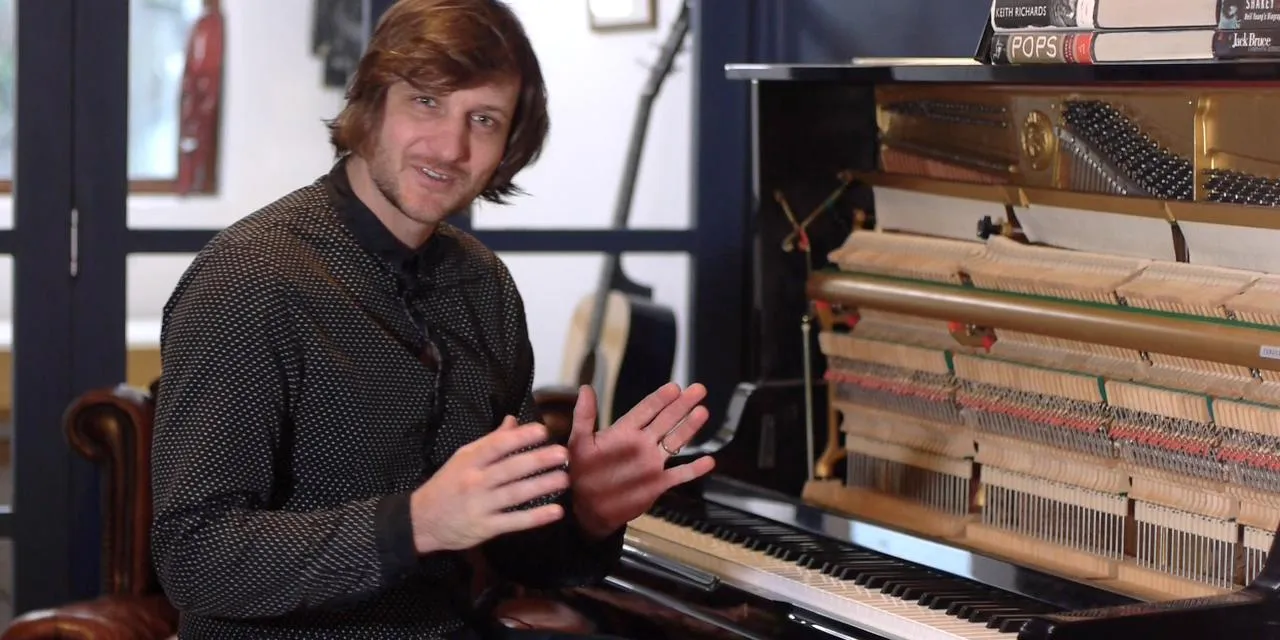
Paddy Milner gilt als einer der besten Blues-Pianisten der Welt – derzeit ist er der Stammkeyboarder von Sir Tom Jones, nach mehreren Jahren an der Seite des großartigen, verstorbenen Jack Bruce –, aber er ist auch ein hervorragender eigenständiger Songwriter und ein unverwechselbarer Sänger. Lies einfach das Lob von Größen wie Dave Brubeck weiter unten! Sein Spiel war auf dem Soundtrack des Kinohits 'Rocketman' von 2019 zu hören. Zweimal wurde er bei den British Blues Awards als bester Keyboarder ausgezeichnet, und als Gründungsmitglied der Ronnie Scott's Blues Explosion hat er eine langjährige Residency im weltberühmten Club Ronnie Scott's. Seine aktuelle Band LONDONOLA spielt selbst geschriebene britische Musik mit einer kräftigen Portion New-Orleans-Geist, und sein gemeinsames Projekt JAWBONE geht seit der Veröffentlichung des gleichnamigen Debütalbums von Stärke zu Stärke. „Ich liebe es... da ist einer, der wirklich Klavier spielen kann" - Dave Brubeck „Ich kann es nur wärmstens empfehlen. Irgendwie fängt alles an, sich viel besser anzufühlen!" - Jack Bruce „Der beste Blues-Pianist Europas..." - Blues Access, USA „Beeindruckend und originell" - The Times „Blendend" - The Independent In seinen Kursen zerlegt Paddy den authentischen Blues-Shuffle, Slow Blues, Boogie-Woogie, Rock 'n' Roll und das New-Orleans-Piano – bis hin zu drei klassischen Boogie-Woogie-Songs –, damit du diese Stile bei einem der Allerbesten des Fachs lernst. read more