



BONUS: Lerne, Ian Durys "Sex & Drugs & Rock & Roll" auf der Blues-Mundharmonika zu spielen

Mit
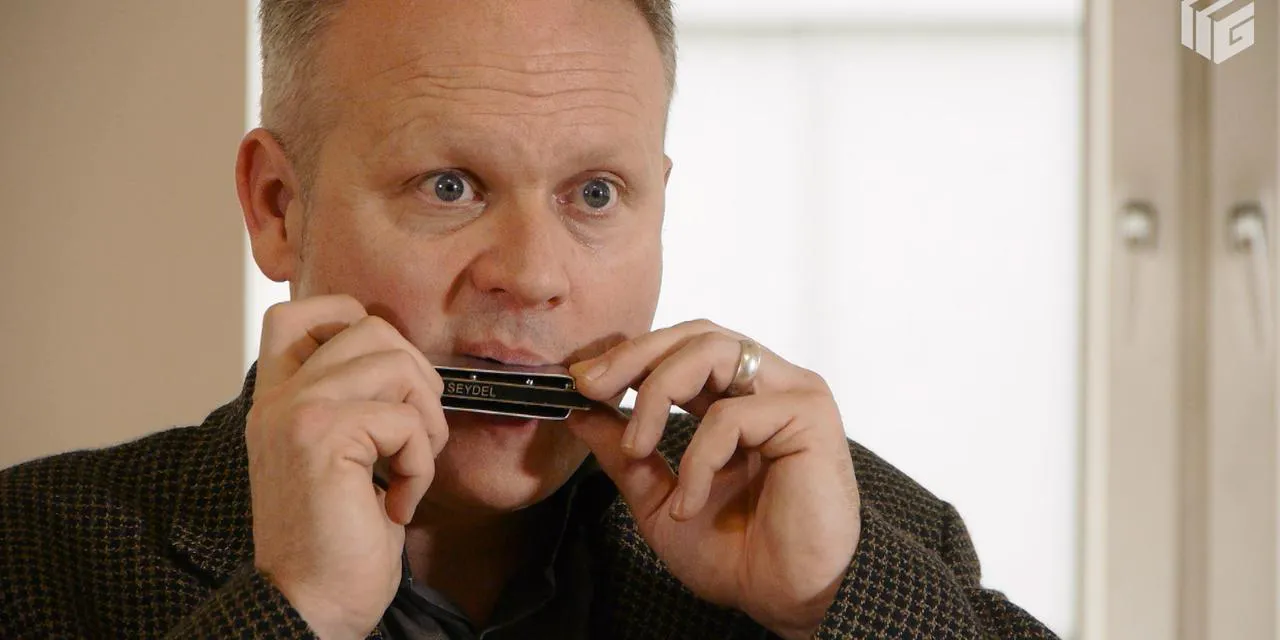
Mat WalklateMat Walklate unterrichtet Ian Durys 'Sex & Drugs & Rock & Roll' auf einer diatonischen C-Mundharmonika, mit Tongue Blocking und Bendings in der zweiten Position.
Das steckt im Kurs
11 Lektionen (1h 4m) · 2 gratis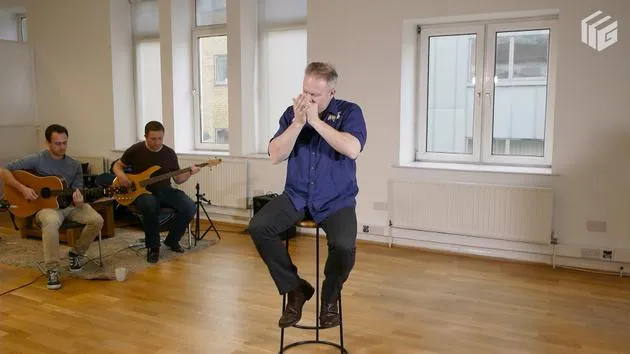
01. Blues spielen, eine Demonstration
Gratis-Lektion2:14
02. Wiederholung der G-Blues-Tonleiter
2:31
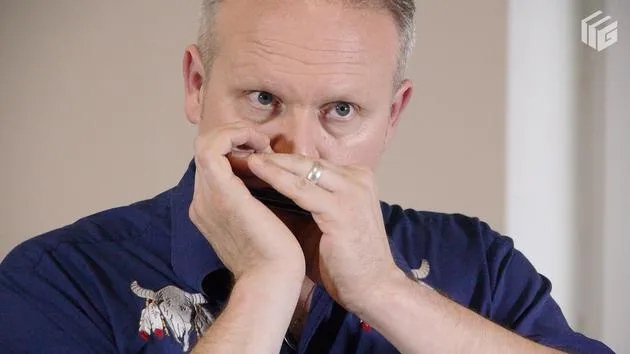
03. Noten-Bending für zusätzliche Töne
9:12
04. Einfaches 12-bar Solo
3:50
05. Solieren mit dem Grundton der Akkorde einer Blues-Progression
5:57
06. Vibrato
6:37
07. Interessantere Soli entwickeln
7:43
08. Fortgeschrittenes Tongue Blocking
10:22
09. Blues-Tonleitern in der ersten Lage
5:48
10. Blues-Tonleitern in dritter Position
6:22
11. BONUS: Lerne, Ian Durys "Sex & Drugs & Rock & Roll" auf der Blues-Mundharmonika zu spielen
Du bist hier3:36
Transkript der Lektion
Harmonical Course Introduction
Hello, my name is Matt.
I've just finished recording a harmonica course for musicgurus.com and I'm going to play you a little tune.
Now, this tune involves a lot of the techniques that you can find out about in this course, such as:
- Tongue blocking
- Note bending
The Tune: Sex and Drugs and Rock and Roll
The tune is called Sex and Drugs and Rock and Roll.
So, to play Sex and Drugs and Rock and Roll on your diatonic harmonica:
- We're in second position.
- We're playing in the key of G on a C harmonica.
Technique Breakdown
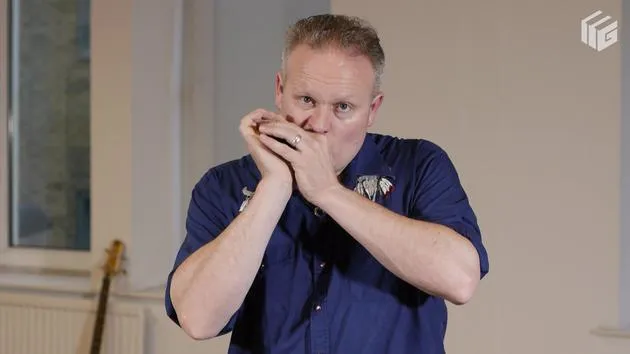
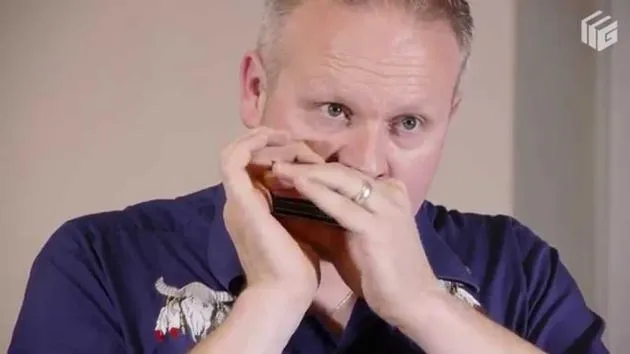
I'm starting off using the tongue blocking technique on:
- Number four, draw.
If you slow it down, what you hear is:
"1, 2, 3, 4 draw altogether."
Then, 1, 2, and 3 are cut off by the tongue.
Next, you go to:
- Five blow
- Five draw
- Five blow again
- Four draw
- Four blow
- Three draw
Each time you're playing a chord and then blocking the chord off.
The next part of the song starts the same way, going up to six blow, which is the same as the first part.
Ending the Tune
To finish off that last part, I've stopped doing the tongue blocking because I find it easier to get the two bends on hole number three by going back to lip pursing.
Some people can do it with tongue blocking. Fair play to them, but I prefer lip pursing.
Last Bit Breakdown
- Tongue slap, four draw.
- Tongue slap, four blow.
- Going back to lip pursing for:
- Three draw
- Two draw to finish.
Putting It All Together
So, to put it all back together again at a slow pace, let's try again.
To put it all together at a slow pace, a little bit faster, like so.
So, head over to musicgurus.com for a free download of the tab and to look at the rest of my harmonica course.
11 Lektionen
1 Std. 4 Min. strukturierte Videolektionen
Erweiterte Videofunktionen
Verlangsamen, Passagen loopen, mitlesen
Handy, Tablet & Desktop
Üben, wo du willst
100 % Zufriedenheitsgarantie
30 Tage Geld-zurück-Garantie
Lern deinen Guru kennen
Lern deinen Guru kennen
Mat Walklate ist ein in Manchester ansässiger Mundharmonikaspieler und Lehrer, der im Blues und Folk zu Hause ist und außerdem Flöte, Whistle und Uilleann Pipes spielt und singt. Er gewann 1992 die British Blues Harmonica Championship und 1993 das All-Britain Fleadh Cheoil an der Mundharmonika und ist ein von Seydel unterstützter Künstler.
In einer dreißigjährigen Laufbahn ist er mit Bands wie The Moochers und der Irish-Music-Gruppe The House Devils durch Europa getourt, hat zwischen 2001 und 2021 rund vierzehn Alben aufgenommen und gemischt – darunter Sea of Blues und Traditional Harmonica – und tritt heute im Duo mit dem Sänger und Gitarristen Alex Haynes sowie an der Seite des Blues-Gelehrten Dr Tom Attah auf. Er unterrichtet Mundharmonika am Leeds Conservatoire und privat.
Auf MusicGurus führen dich seine Kurse von deinen ersten Tönen auf einer C-Mundharmonika – Ansatz, die Cross-Harp-Position, Bending und deine erste Improvisation – bis hin zu flüssigem Blues-Spiel, mit Vibrato, alternativen Positionen und der Phrasierung, die ein Solo zum Singen bringt.







