



Vibrato

Mit
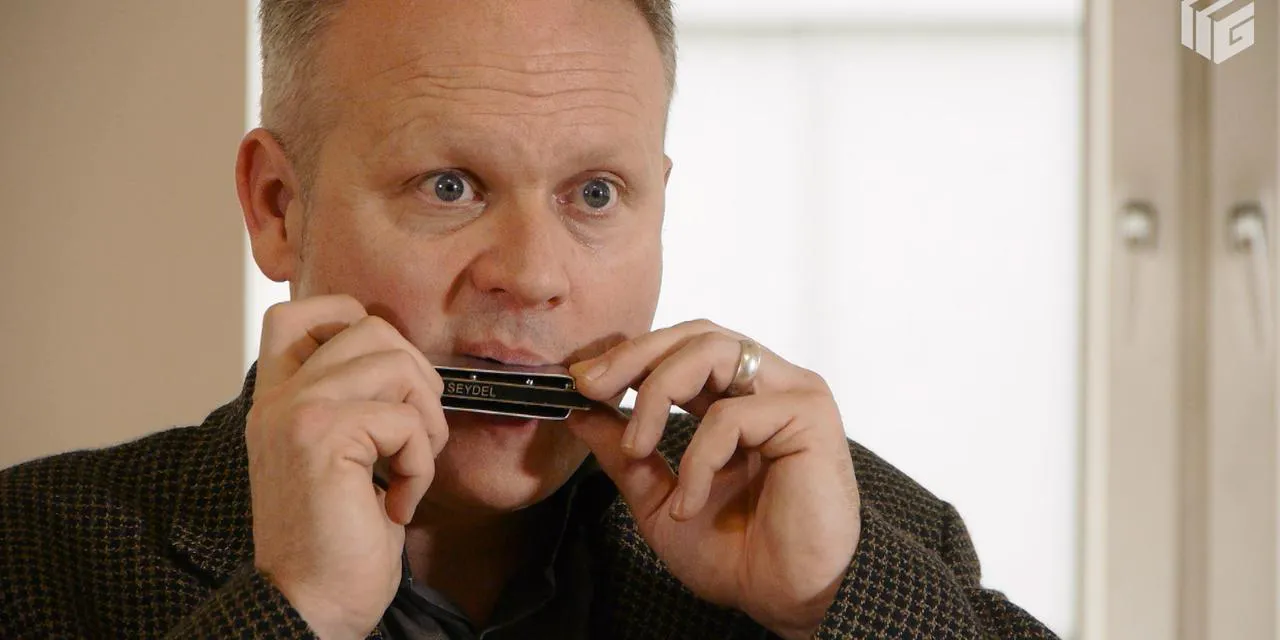
Mat WalklateMat Walklate lehrt das Hand-Vibrato auf der Mundharmonika – wie du deine Hände wölbst und die rechte öffnest und schließt, um den Daumen drehend, um den Ton zu formen.
Das steckt im Kurs
11 Lektionen (1h 4m) · 2 gratis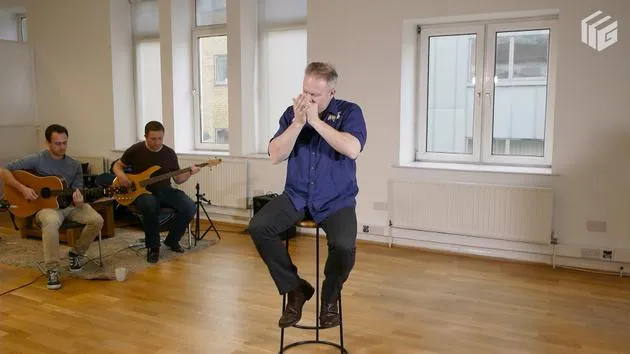
01. Blues spielen, eine Demonstration
Gratis-Lektion2:14
02. Wiederholung der G-Blues-Tonleiter
2:31
03. Noten-Bending für zusätzliche Töne
9:12
04. Einfaches 12-bar Solo
3:50
05. Solieren mit dem Grundton der Akkorde einer Blues-Progression
5:57
06. Vibrato
Du bist hier6:37
07. Interessantere Soli entwickeln
7:43
08. Fortgeschrittenes Tongue Blocking
10:22
09. Blues-Tonleitern in der ersten Lage
5:48
10. Blues-Tonleitern in dritter Position
6:22
11. BONUS: Lerne, Ian Durys "Sex & Drugs & Rock & Roll" auf der Blues-Mundharmonika zu spielen
Gratis-Lektion3:36
Transkript der Lektion
Vibrato on the Harmonica
Hello, my name is Matt. In this lesson, we're going to look at making vibrato on the harmonica. The most straightforward technique involves using your hands.
Hand Positioning
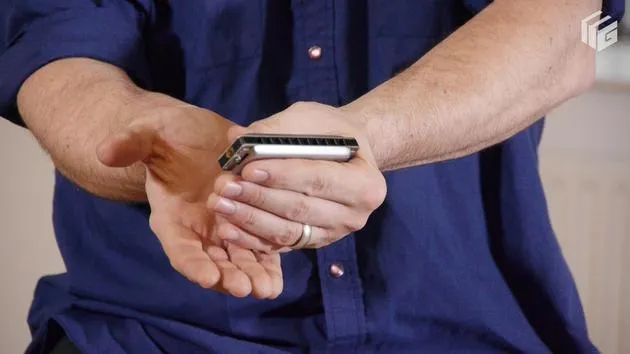
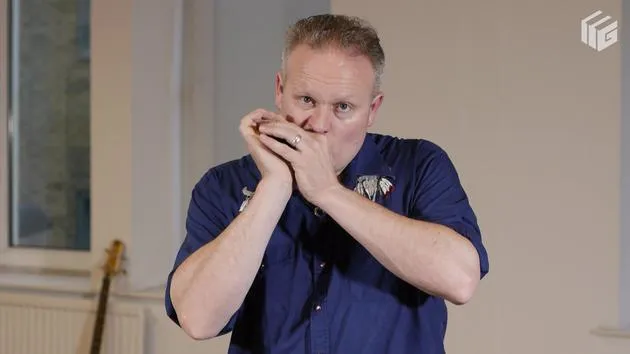
If you are right-handed like me:
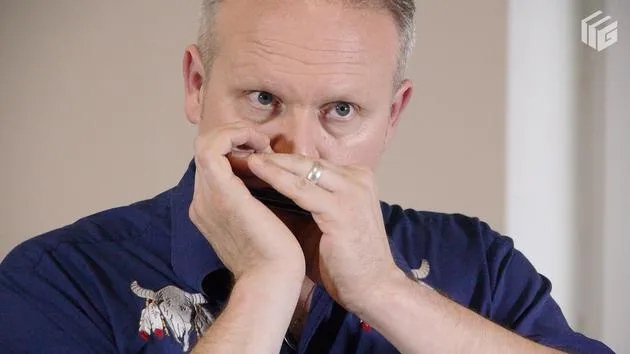
- Hold the harmonica in your left hand.
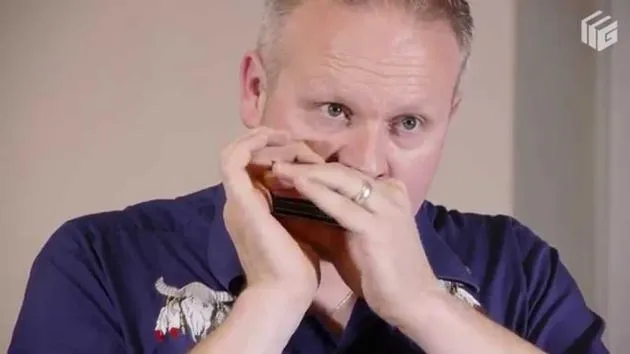
- Put little finger to little finger.
- Bring your left hand's little finger across to the bottom of your right hand fingers.
- Place your right thumb either on the end of the harmonica or on the tips of your left hand fingers, whichever is comfortable.
Then, bring the whole thing up to meet you like this, keeping your right arm fairly vertical.
To recap:
- Little finger to little finger.
- Left hand's little finger across.
- Right thumb on the harmonica or on the tips of your left fingers.
Now you can bring the whole setup up to meet you like this while keeping your right arm fairly vertical.
Creating Vibrato
To create the vibrato:
- Open and close your right hand, pivoting on your thumb.
- Keep your fingers together at all times.
A key aspect is making good contact between:
- Your right hand
- Your left hand
Demonstration
Let's demonstrate this on the four blow note.
Tip: Unlike any other technique, start slowly and build up your speed gradually. This will help you master the technique and perform it at different speeds.
You can also shape the notes by:
- Pushing your hands together
- Opening your right hand
Think of it as a plunger mute in a trumpet, or like this kind of business. But more often, this technique is used for vibrato.
Caution: If you want to go crazy fast with your vibrato, you'll need to detach your right hand, but be careful not to detach your teeth as well!
Alternative Technique
Another method is more favored by players of the Chromatic Harmonicas (the one with the push button). Here's how it works:
- The left hand does the same thing, but the right hand goes underneath, as if you were carrying a tray of drinks.
- Perform the vibrato with your left hand's fingers and shape the notes by moving both hands.
Different Types of Vibrato
- In Front of the Harmonica: The techniques we've discussed so far.
- Behind the Harmonica: This type of vibrato is harder to do and demonstrate because it occurs internally but sounds like this: [sound demonstration].
This is achieved by a combination of the throat and the diaphragm.
Demonstration Without the Harmonica
Let's see what happens if I take the harmonica out while still doing the vibrato:
- [Sound illustration]
That's what's happening now. It's like breathing in, almost resembling a backward cough. It also works when you blow out.
If I demonstrate it without the harmonica, it sounds inaudible. That's why I'm showing you the breathing-in method. But it works both ways. If you can immediately switch without any trouble, that's great! But most people cannot do that.
A Gradual Approach to Vibrato
If you find it challenging, here's another approach:
- Start off by saying "K" on the four draw.
- As you breathe in, say "K, K, K, K" nice and slow.
- Once you can maintain that steady pace, move it further down in your throat until it becomes "Coo."
So it will sound like this: [demonstration of K to Coo transition]
Then, try to force it even further down toward the top of your rib cage, transitioning to a stronger sound: [demonstration of further downward sound].
Steps to Achieve Vibrato
- Start with "K"
- Move to "Coo"
- Push it further down
Here are the three sounds:
- K
- Ku
- [Vibrato sound]
This is about the best I can do to help you achieve that vibrato. While this technique has its place and sounds well, you can be much more subtle with the diaphragm vibrato.
Understanding Your Diaphragm
If you're unsure where your diaphragm is or you want to exercise it, simply:
- Take a deep breath and exhale while feeling: [demonstration of diaphragm]
At least you'll know where it is. Best of luck with your practice!
Closing Performance
To finish, here's a little bit of a tune featuring some vibrato. This piece was made famous by a great harmonica player of the 50s, 60s, and 70s called Big Walter Horton, and it's called Easy.
11 Lektionen
1 Std. 4 Min. strukturierte Videolektionen
Erweiterte Videofunktionen
Verlangsamen, Passagen loopen, mitlesen
Handy, Tablet & Desktop
Üben, wo du willst
100 % Zufriedenheitsgarantie
30 Tage Geld-zurück-Garantie
Lern deinen Guru kennen
Lern deinen Guru kennen
Mat Walklate ist ein in Manchester ansässiger Mundharmonikaspieler und Lehrer, der im Blues und Folk zu Hause ist und außerdem Flöte, Whistle und Uilleann Pipes spielt und singt. Er gewann 1992 die British Blues Harmonica Championship und 1993 das All-Britain Fleadh Cheoil an der Mundharmonika und ist ein von Seydel unterstützter Künstler.
In einer dreißigjährigen Laufbahn ist er mit Bands wie The Moochers und der Irish-Music-Gruppe The House Devils durch Europa getourt, hat zwischen 2001 und 2021 rund vierzehn Alben aufgenommen und gemischt – darunter Sea of Blues und Traditional Harmonica – und tritt heute im Duo mit dem Sänger und Gitarristen Alex Haynes sowie an der Seite des Blues-Gelehrten Dr Tom Attah auf. Er unterrichtet Mundharmonika am Leeds Conservatoire und privat.
Auf MusicGurus führen dich seine Kurse von deinen ersten Tönen auf einer C-Mundharmonika – Ansatz, die Cross-Harp-Position, Bending und deine erste Improvisation – bis hin zu flüssigem Blues-Spiel, mit Vibrato, alternativen Positionen und der Phrasierung, die ein Solo zum Singen bringt.







