



Eine Sample-Bibliothek verwalten
Mit
John WatsonLerne, wie du Spuren & deine Sample-Bibliothek in Ableton Live einrichtest. Verstehe, wie du deine Samples stimmst.
Das steckt im Kurs
14 Lektionen (2h 26m) · 2 gratis
01. Erste Schritte & Setup
3:21
02. Eine Sample-Bibliothek verwalten
Du bist hier4:34
03. Ableton-Einstellungen
1:14
04. Samples verwenden: die Geräte Simpler und Sampler
7:04
05. Samples in deinem Track verwenden (trimmen, dehnen, stimmen, EQ)
12:56
06. Gesampelte Streicher und Flöten hinzufügen
7:28
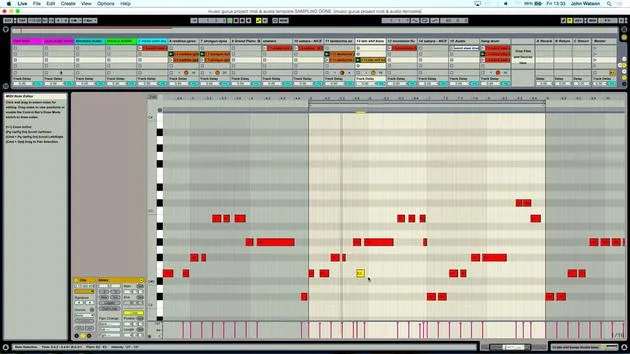
07. Gesampelten Rhythmus hinzufügen: Kicks und Snares
25:07
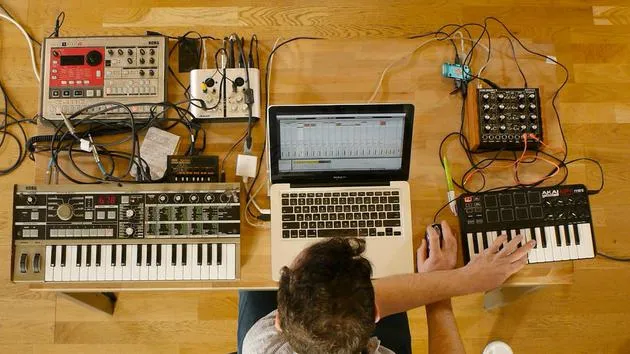
08. Externe Instrumente sampeln - Drumcomputer und Synth
12:28
09. Die Parts in der Session-Ansicht aufbauen
13:55
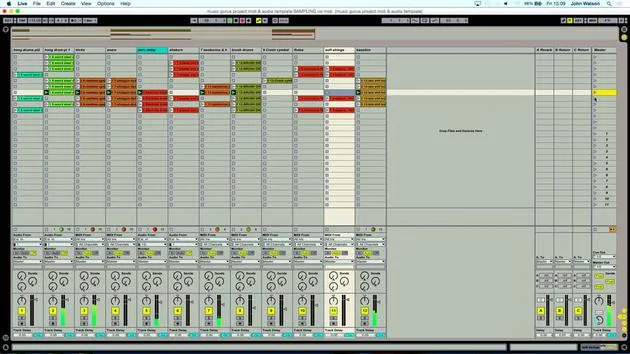
10. Den Song in die Arrange-Ansicht aufnehmen
4:34
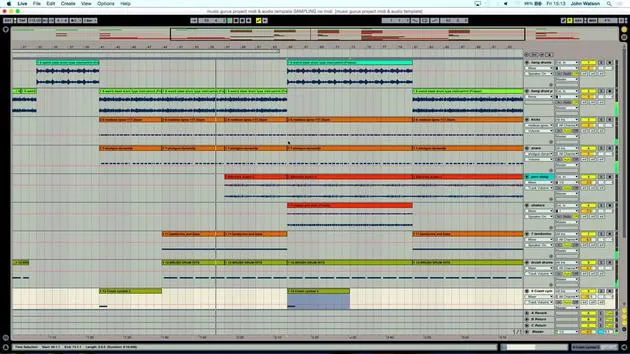
11. Feinabstimmung der Songstruktur
5:35
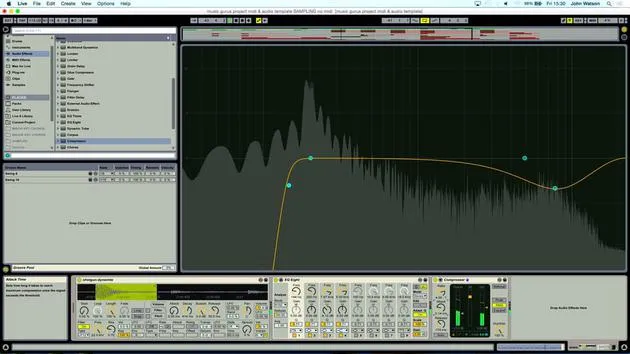
12. Den Track mischen: Effekte
21:24
13. Letzte Anpassungen
13:14
14. BONUS: Deinen Track mastern und auf Soundcloud hochladen
Gratis-Lektion13:31
Transkript der Lektion
Ableton Setup for Music Production
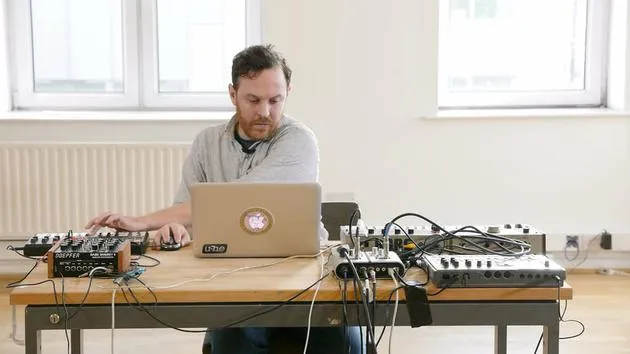
Okay, so I'd like to talk a little bit about the setup that I've got going on in Ableton here.
Audio Tracks Configuration
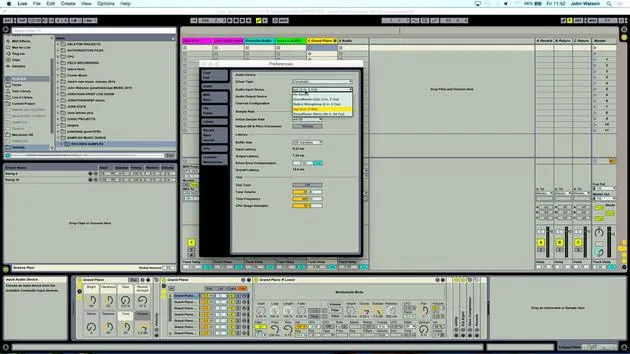
I've got a bunch of different audio tracks. Some of them have been configured to take an input signal from any of these devices. For example, I've got the MicroKorg coming in on channels one and two.
- When I record any of these devices, I've obviously got only two inputs on the sound card, so I'll be swapping them over as needed.
Samples Folder
This is a rough template here. I've also got a Samples Folder prepared for these tutorials. Let's explore what's inside:
- Bass Samples: Various samples primarily from old records or things I've picked up in charity shops.
"There are possible copyright issues, so you've got to be a little bit wary about using someone else's samples here."
Example Samples
- For example, I have a Lalo Schifrin bass line. I can't use that because of copyright issues, but I could liberate one of the bass notes from here and put it onto a keyboard.
- I've got a bass sound, and moving over to the drum loops, there's a nice little hi-hat loop. I'm pretty sure I could use that and cut it up, which would work rhythmically with another beat focused on the kick and snare.
Field Recordings
I've also got some field recordings:
- Wind Chimes
- A recording of an instrument called a Hang Drum, played in the park. This might work really nicely in this tutorial.
- Carnival Crowds, military drums, and fireworks, which could create some interesting percussive sounds.
Percussion Section
Under Percussion, you can hear a bunch of different percussive sounds including:
- Congas
- Bongos
What I tried to do is grab sounds that have a lot of space and are on their own, effectively in solo. For instance, you could layer this up with a snare when creating a beat.
Strings and Vocal Samples
In the Strings section, we have ensemble instruments and several vocal bits and pieces.
"With regards to the record samples rather than the field recordings, I've got to be able to mask these quite well."
Tuning Samples
Another thing to mention is that I have a Grand Piano from Ableton's Factory Instruments. This is crucial for ensuring that my samples are in tune:
- I know that this instrument has been designed to replicate a grand piano accurately. My C will be a C, ensuring that when tuning any of my samples, whether field recordings or records, I'm aware that they might not be in tune.
So, that's really the setup!
14 Lektionen
2 Std. 26 Min. strukturierte Videolektionen
Erweiterte Videofunktionen
Verlangsamen, Passagen loopen, mitlesen
Handy, Tablet & Desktop
Üben, wo du willst
100 % Zufriedenheitsgarantie
30 Tage Geld-zurück-Garantie
Lern deinen Guru kennen
Lern deinen Guru kennen
Nach einem Praktikum bei Dave Allen, dem Produzenten von Depeche Mode und The Cure, ließ sich John dazu inspirieren, in London Music Technology zu studieren. Seine Musikkarriere nahm nach einem erfolgreichen Vertrag bei CookShop Records Fahrt auf, wo er 9 Singles und 2007 ein Album veröffentlichte, das begeisterte Kritiken von Q, Uncut und Lowdown Magazine sowie Airplay bei XFM und Radio One erhielt.
John begann seine Ausbildung zum Tontechniker 2005 im Bonafide-Studio, wo er sein Können verfeinerte, und gründete noch im selben Jahr Jackdaw Recordings. Er hat mit vielen erfolgreichen Künstlern zusammengearbeitet und begann 2007, für den Pop-Musiker Patrick Wolf zu spielen, mit Auftritten in führenden Häusern in Großbritannien und international – darunter The Astoria und das Shepherds Bush Empire.
Von seinem Londoner Studio aus schreibt John heute Musik, mit zwei weiteren Veröffentlichungen bei CookShop, macht Tontechnik für namhafte Künstler und gestaltet Sounddesign für TV-Spots, Film, Theater und Unternehmensvideos.
Genau diese seltene Mischung aus Songwriter, Produzent und aktivem Studiotechniker bringt John in seinen Unterricht ein. In Creative Composition & Production in Ableton Live und Creative Sampling & Production in Ableton Live zeigt er dir, wie er aus rohen Ideen fertige, veröffentlichungsreife Tracks macht – das Schreiben, das Sampling, das Sounddesign und das praktische technische Know-how hinter einer professionellen Platte.







