



Gerollte Dominantseptakkorde
Lesson time: (8min 35sec)
Paddy betrachtet eine Idee, die Booker in seinem gesamten Werk verwendet: den G7 mit einem gerollten Motiv zu umreißen. Sie kommt in Come Rain or Shine und Papa was a Rascal vor
Course preview
This lesson is part of the course Spiele authentisches New-Orleans-Piano
Watch a preview of the full course below.
Lesson transcript:
James Booker's Dominant Seventh Idea
So let's look at a great little James Booker idea that he uses a lot throughout everything he does. It simply outlines a dominant seventh chord.
Breaking It Down
We're on the chord of G7 here, but he goes via the major seventh. If you play that kind of faster, often what he does is go down and then back up again.
- That kind of thing, or perhaps just...
He uses that in all kinds of different contexts on different feels and different keys.
Example: "Come Rain or Come Shine"
First of all, let's look at it in his beautiful version of "Come Rain or Come Shine," which gives me goosebumps every time I hear it.
Let's look at it from sort of halfway through the A section. We're going from the G7 to the C minor. I'll play you a few chords, a few bars, and demonstrate the way he might use it.
So here we go, etc.
- He uses it a lot in those few bars.
- For example, on the G.
- Again, there we go on the D7.
- And then on the B.
That's another great lick that we'll look at as well, into the E minor with a little carry on the run down the blues scale in E minor. So there's a nice little example of using that riff in "Come Rain or Come Shine."
Other Contexts
You could also use it in, for example, a faster tune. Like he uses it in "Papa Was a Rascal" a lot. If we got the rough feel like this in that kind of context...
I know that perhaps wasn't exactly James Booker's feel, but just kind of demonstrating the use of that riff in the right hand.
- Using it a lot on that.
- That kind of thing, which is the kind of St. Louis blues quote that he does on that tune.
So even use it on there. Maybe continue on into a blues scale kind of thing. You could use it in "Junco Partner," perhaps on the five.
Practicing the Riff
So, you could just simply repeat it and go into another one of his riffs. Let's really break this riff down and look at how we can practice it.
- We have looked at it; it's essentially outlining that dominant seventh going via the major sevenths.
- Notice I'm sliding off. At a slow tempo, it doesn't sound like I'm sliding, but at a fast tempo, you'll be sliding off that F sharp to the F.
Two Sections
So perhaps break it into two sections:
- Practice that as kind of one movement.
- Don't think of it as individual notes. It's kind of one movement.
Then there's the second half, essentially that. If you're just going down, it's with those notes added at the end.
Gradual Tempo Increase
Really practice that at a slow tempo, gradually increase the tempo until you've got it under your fingers.
Remember, it's definitely a riff that you don't have to use strictly in time.
- It doesn't have to be played on the beat; it can just be played in free time over the groove you're on.
- It doesn't have to be dividing the beats or the bar up like that.
You can play it totally free time at whatever speed you want to do it at. You could do it slowly or you could do it fast.
Conclusion
Have fun with that book of lick. It's a good one!
About the instructor
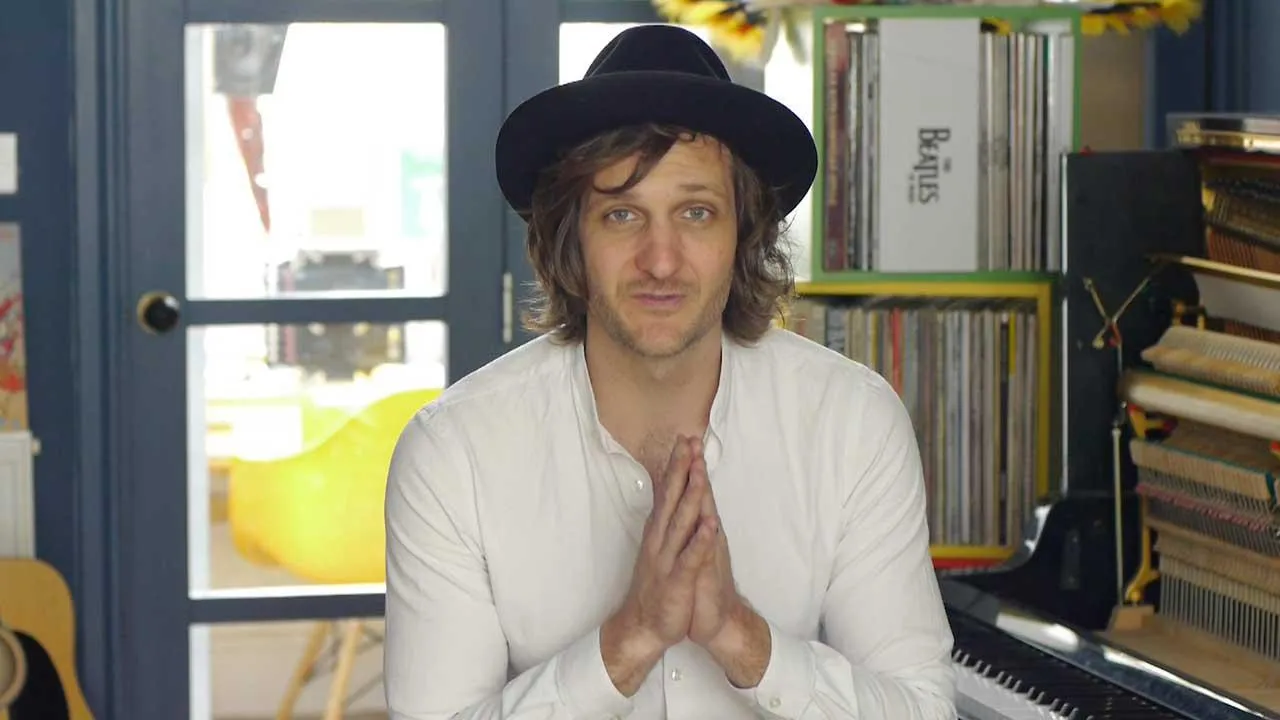
Paddy Milner gilt als einer der besten Blues-Pianisten der Welt – derzeit ist er der Stammkeyboarder von Sir Tom Jones, nach mehreren Jahren an der Seite des großartigen, verstorbenen Jack Bruce –, aber er ist auch ein hervorragender eigenständiger Songwriter und ein unverwechselbarer Sänger. Lies einfach das Lob von Größen wie Dave Brubeck weiter unten! Sein Spiel war auf dem Soundtrack des Kinohits 'Rocketman' von 2019 zu hören. Zweimal wurde er bei den British Blues Awards als bester Keyboarder ausgezeichnet, und als Gründungsmitglied der Ronnie Scott's Blues Explosion hat er eine langjährige Residency im weltberühmten Club Ronnie Scott's. Seine aktuelle Band LONDONOLA spielt selbst geschriebene britische Musik mit einer kräftigen Portion New-Orleans-Geist, und sein gemeinsames Projekt JAWBONE geht seit der Veröffentlichung des gleichnamigen Debütalbums von Stärke zu Stärke. „Ich liebe es... da ist einer, der wirklich Klavier spielen kann" - Dave Brubeck „Ich kann es nur wärmstens empfehlen. Irgendwie fängt alles an, sich viel besser anzufühlen!" - Jack Bruce „Der beste Blues-Pianist Europas..." - Blues Access, USA „Beeindruckend und originell" - The Times „Blendend" - The Independent In seinen Kursen zerlegt Paddy den authentischen Blues-Shuffle, Slow Blues, Boogie-Woogie, Rock 'n' Roll und das New-Orleans-Piano – bis hin zu drei klassischen Boogie-Woogie-Songs –, damit du diese Stile bei einem der Allerbesten des Fachs lernst. read more