



The Rascals - Love's a beautiful thing
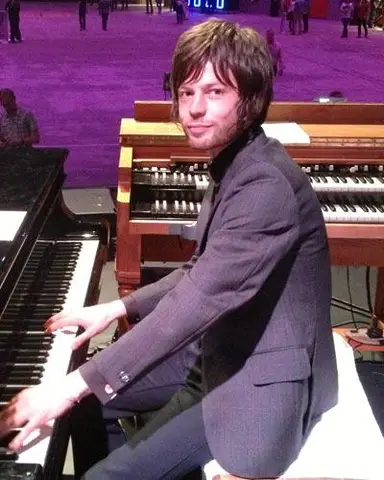
Lesson time: (6min 3sec)
Joe Glossop schlüsselt ein Stück von The Rascals in der Tonart F auf und übernimmt Felix Cavalieres Hammond-Ansatz - Zugriegel-Einstellungen für Strophe und Refrain plus eine Prise perkussives Spiel.
Course preview
This lesson is part of the course Authentische Hammond-Sprache für Rock und R&B
Watch a preview of the full course below.
Lesson transcript:
Exploring a Tune by The Rascals
So we're gonna have a look at a tune by the Rascals now, just for another bit of particularly Hammond sort of rock band technique. You might not have heard of Felix Cavaliere or the Rascals. He was the Hammond player in the Rascals. They were around in the mid-60s to late-60s and they kind of did soul-infused rock, an American band. Felix Cavaliere is a very effective player, simple, but really effective. He got the right tones and used them really well in a band context.
Key and Sound
- The tune is in the key of F.
- For the chorus, we will use a full sound on the B flat.
- In the verse, we'll use a less toppy sound, a bulky full sound, but not many high harmonics.
- On the bottom, we'll use just the eight for some percussive playing.
I've thrown this percussive element in. It isn't really on the record, but it's a good chance to try it in this part.
Listen to the Record:
Please listen to the record rather than just play the part so you can understand what's going on.
Chords
The chords in the verse are:
- B flat 6
- A flat 6
- Then it rests back on an F7.
We're not going to play the F; we're going to do a bit of recursive stuff instead.
Verse and Chorus
So, that's the verse and the chorus. Again, you need to hear it in context. The way he uses those two parts, two very different sounds in the verse, is brilliant. It's all on stop.
The Brake Box
You can see here, this is the brake box for my Leslie. When that's engaged, it cuts the motors to the slow motors. So, fast is still fast.
- When I go to slow instead of slow, press brake still.
- The vibrato would be a bit more easy to hit.
- The bass pin is still slowing down; it takes a long time to slow down.
- See, the treble horns have just come to life there.
Then I was slow. Press brake still. The bass takes a lot longer to speed up and slow down.
Sound Switching
This continual adjustment is a big part of playing in a band with parts. It's not so much that you're doing anything crazily complicated as a player, but you're using the instrument to lift sections.
- You're dropping out and coming back in with this sound or that sound.
- You've got to be ready to switch the parts at the right time.
Conclusion
At the end of the verse, here's where you change to this set of drawbars from the second set and switch to Leslie at the same time as the chords change in time.
There's not a lot going on in terms of the playing, but what you've got to consider is everything else. It's a bit like driving a car, I suppose, you've got the pedals to think about as well. All those things come together.
In essence, this is organ playing in a band context, all about the sounds, switching them, and the economy of the instrument.
About the instructor
Joe Glossop ist ein Keyboarder aus Sheffield, der sich an der Hammond-Orgel einen Namen gemacht hat. Derzeit hat er den Orgelplatz in Tom Jones' Tourband inne und hat mit Van Morrison und James Hunter gespielt, ebenso an Klavier und Rhodes. Seine Kurse holen den echten Hammond-Sound aus jedem Keyboard heraus: die Zugriegel-Registrierung, das Leslie, den Walking Bass der linken Hand und das Begleit- und Solovokabular der Soul-Jazz-, Blues- und Rock-Orgeltraditionen, von Jimmy Smith bis Booker T. read more