



Half Tone/Whole Scales In Your Blues

With
Ron SayerRon Sayer shows how to use the half-whole tone scale over bar four of a 12-bar blues to add some outside spice as you lead into the IV chord.
What's in the course
12 lessons (1h 27m) · 2 free
01. ‘Welcome To The Course’ Jam
Free lesson2:21
02. Using Arpeggios In Your Blues
Free lesson8:23
03. Half Tone/Whole Scales In Your Blues
You are here8:49
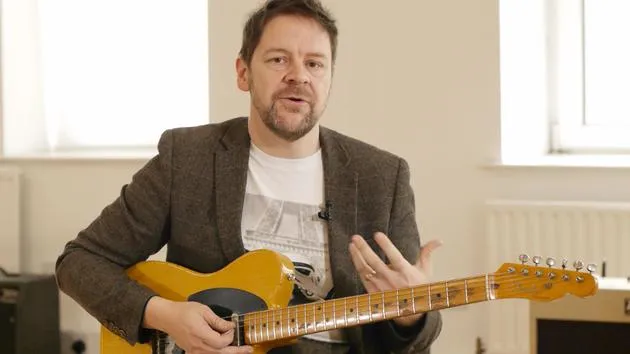
04. Diminished 7th Arpeggios In Your Blues
10:14
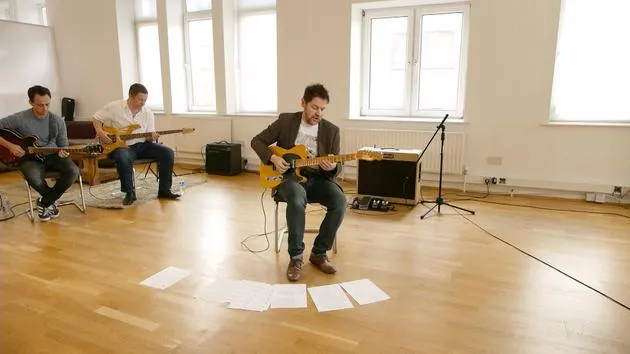
05. More Diminished 7th Arpeggios
10:32
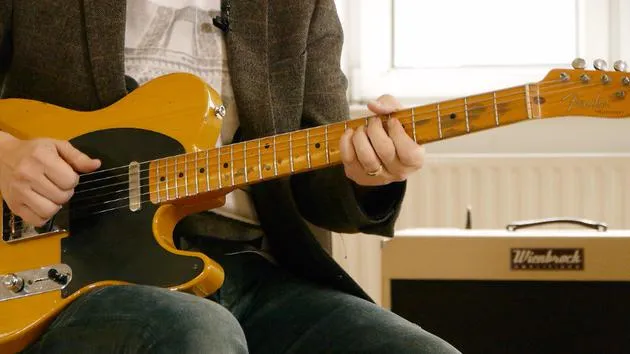
06. Sliding 9th To 6th Chords In Your Blues
8:16
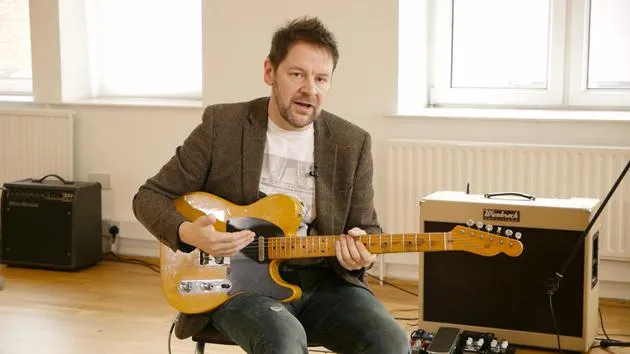
07. Quartal Harmony Blues Scale
4:46
08. 9th Chord Blues Scale
3:24
09. Minor 7th & Quartal Chords In Your Blues
4:36
10. Major 7th Arpeggios in your Minor Blues
12:48
11. Altered Scales In Your Minor Blues
9:56
12. BONUS LESSON: Santana - Black Magic Woman
3:16
Lesson transcript
Enhancing Your Blues Playing with Half Whole Tone Scales
Hello again! In this installment of our series, we'll explore adding some spice to your blues playing by using half whole tone scales over bar four in the 12-bar blues progression.
Understanding Half Whole Tone Scales
Half whole tone scales are exactly what they sound like. You're essentially moving up from a particular note in half tones and then whole tones. Here's how it works:
- Pattern: One note, two notes, one note, two notes, and so on.
Application Over Bar Four
When applying this over bar four, it will lead into the IV chord. To start, you want to play from the third of D, specifically from F sharp. Here's a brief overview:
- Starting Note: F sharp
- Scale Usage: Familiarize yourself with this scale, as it will add some depth to your sound over bar four.
This technique is reminiscent of Robin Ford's style, who often utilizes this device to transition between chords. Bar four is an excellent place to experiment with more unconventional notes as you lead back to a strong chord.
Demonstration
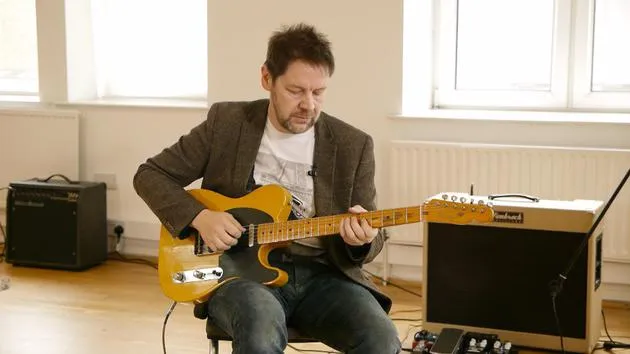
I'll now demonstrate how to use the half whole tone scale over bar four. Listen out for it in the following example:
- Count-in: One, two, three.
Example Licks
Lick 1: The Rundown to the IV Chord
Here's the first of three example licks you can play using the half whole tone scale. It's a simple rundown to land on the IV chord:
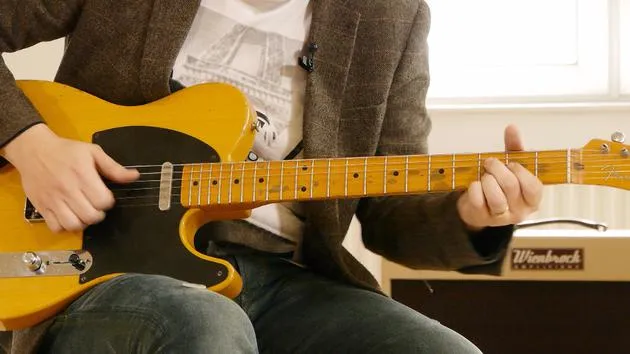
- Starting Position: Fifth fret
- Move: From the fifth to the sixth, back to the fifth again.
- Description: Run down the scale until you reach D, landing nicely on the IV chord.
Let's hear that again with the music:
- Count-in: Two, three, four.
Lick 2: Up and Down on D and G Strings
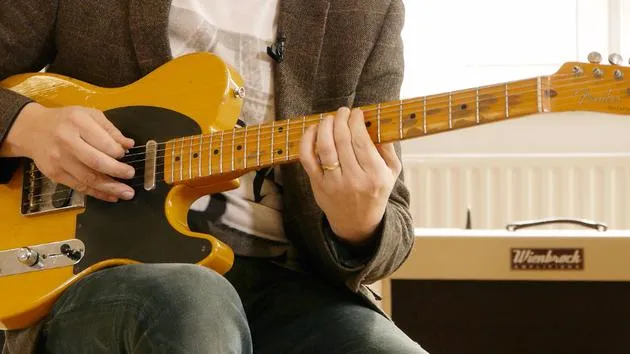
The second lick will again aim for the IV chord but will focus on the D and G strings, using a more sneaky up-and-down pattern:
- Start on the seventh fret on the D.
- Move to the fifth fret on the G.
- Then back to the seventh fret on the D.
- Continue this pattern with:
- Seventh and ninth frets
- Eighth and tenth frets
- Repeat down to the fifth and seventh
- And down to the fourth and sixth frets
Let's illustrate that once more before we add some music:
- Count-in: One, two, three, four.
Lick 3: Using Double Stopping
The third lick is a bit different as it utilizes double stopping to play the lick and make use of the half whole tone scales:
-
Starting Position: Ninth fret on the E and G strings.
-
Pattern: Run down the scale, finishing nicely with a sound that resembles a D7 chord.
-
Bonus Tip: It's particularly effective to slide from the fifth to the third fret as you play.
Let's try this with some music:
- Count-in: One, two, three.
Conclusion
We'll repeat that one more time so you can better understand where it sits in the overall progression. Remember, it's always beneficial to lead into your lines with some double stops beforehand to create a smoother transition and a more cohesive sound in your playing.
- Count-in: One, two, three, four.
Happy practicing!
12 lessons
1h 27m of structured video lessons
Advanced video features
Slow down, loop a passage, follow along
Mobile, tablet & desktop
Practise wherever you are
100% satisfaction guarantee
30-day money-back guarantee
Meet your guru
Meet your guru
Ron Sayer is a guitarist's guitarist on the UK blues circuit and a mentor to players including Oli Brown and Sol Philcox. He has been nominated four times at the British Blues Awards - for the album 'Better Side', the single 'Don't Make Me Stay', and his co-writing on Oli Brown's 'Here I Am' - and has won Guitarist of the Year. In his courses he breaks down the phrasing, tone and feel behind electric blues lead playing.







