BONUS RIFF: Learn how to play Pride & Joy by Stevie Ray Vaughan

With
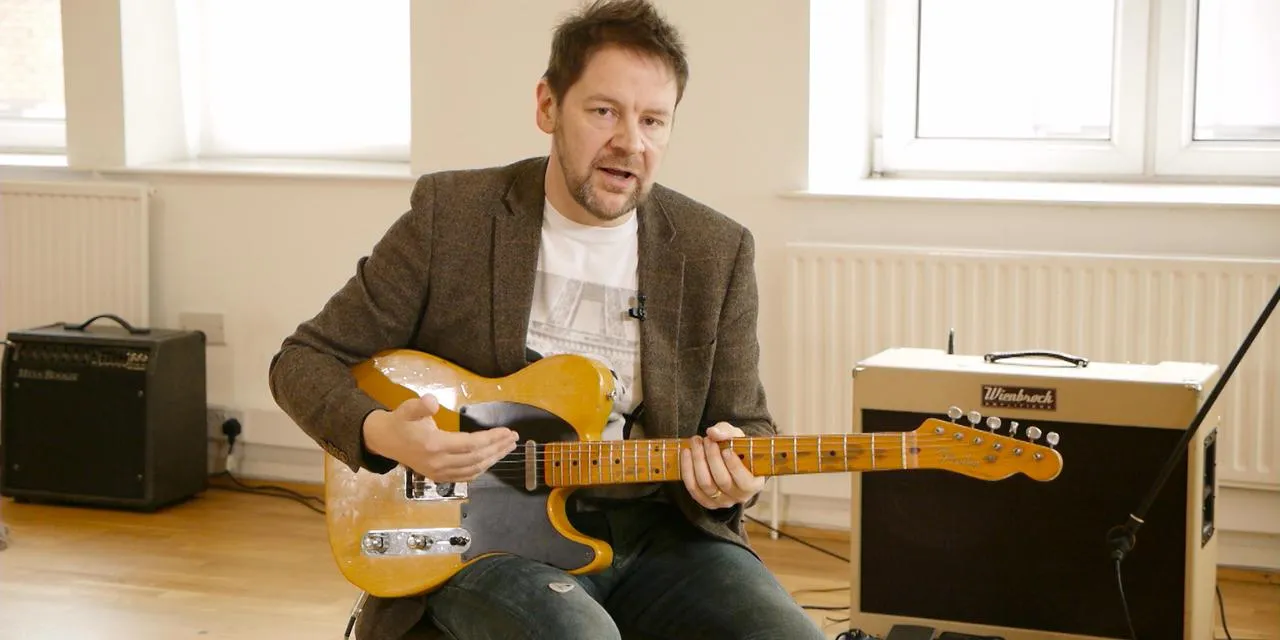
Ron SayerRon Sayer uses Stevie Ray Vaughan's 'Pride and Joy' to teach left-hand damping over a 12-bar boogie riff full of open strings.
What's in the course
12 lessons (1h 8m) · 1 free
01. Pentatonic And Blues Scale Shapes: A Review
Free lesson6:59
02. A Different Pentatonic Shape!
5:10
03. Adding Flat 5th, Major 6th To The Pentatonic Scale
3:45
04. Mixing Major & Minor Pentatonics.
4:41
05. The Hybrid Blues Scale
4:26

06. Using double stops
6:35
07. Double Stops with passing notes
4:18
08. Ways To Play: 7th Chords
6:26

09. Ways To Play: 9th Chords
4:49
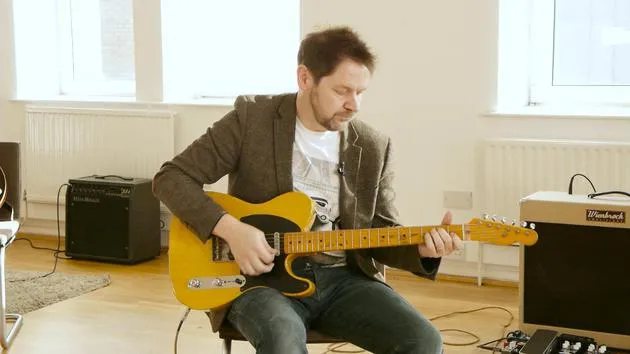
10. Cool chords
10:42
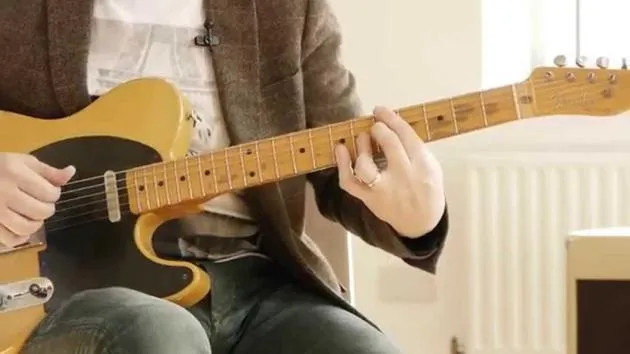
11. Turnaround Variations
5:25
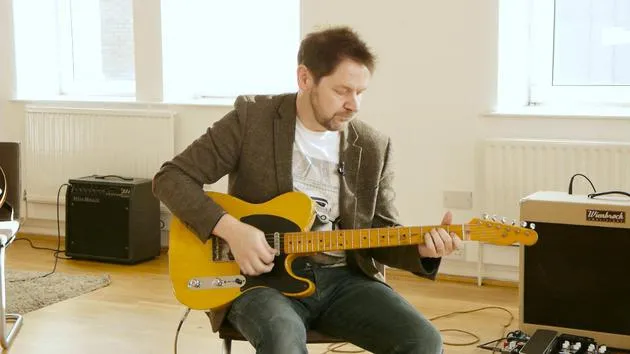
12. BONUS RIFF: Learn how to play Pride & Joy by Stevie Ray Vaughan
You are here5:30
Lesson transcript
Left Hand Damping with Ron Sayer
Hi, I'm Ron Sayer from musicgurus.com. Today, I'm going to use Steve Ray Vaughan's "Pride and Joy" to give you a little lesson on left hand damping.
Introduction to Left Hand Damping
Left hand damping is a tricky little technique, but it requires some work, like most things worth learning. Here's what you need to do:
- Ensure your left hand dampens all the notes that you're not going to use.
- In "Pride and Joy", the riff is a fairly standard 12-bar boogie, but it also includes quite a lot of open strings.
The Riff Explained
Let's break down the riff:
-
Starting Note:
- Begin with the low E string.
- The top strings of the guitar are hit in between every note.
For example:
- On the low notes, you'll play E, followed by an upstroke hitting the open strings.
Very slow version might not sound much like it, but that's how it goes. It starts off like this:
(Play the notes here) -
Technique:
- You can start with an upstroke hitting the open strings, then hit the low string.
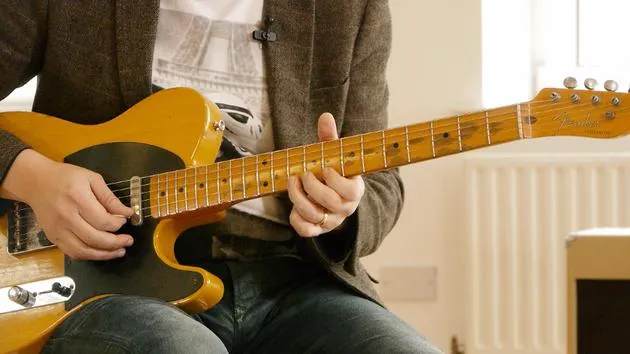
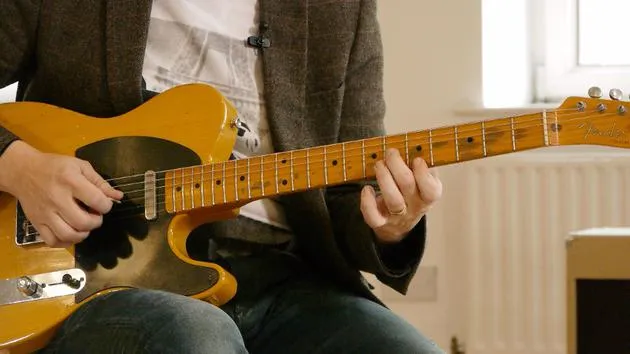
- Your left hand should dampen the first string across the A, D, G, B, and E strings, only allowing the E string to sound.
The goal is to create a "grunt" by hitting all the strings, not just going straight to the notes. If you are just hitting the low E, it won't sound the same.
- To practice:
- Hit a string, then damp the rest.
-
Continuing the Riff:
- The next note is on the third fret of the G string. Repeat the damping technique.
Remember to:
- Dampen every string that you're not using.
- Include an upstroke between each note to let the open strings ring.
E Sus Chord
Now, let's look at this part of the riff:
-
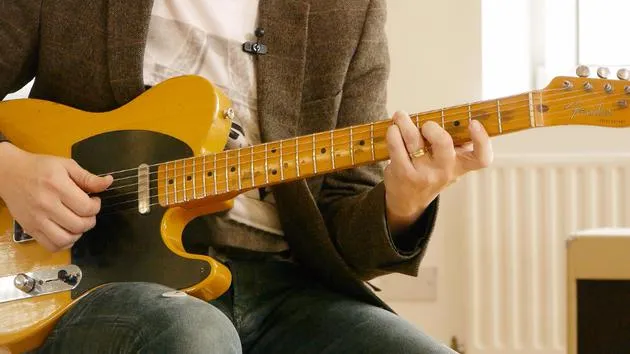
It incorporates an E sus chord, where you use your third finger across the A, D, G, and then go back to an E7.
So it goes:
(Play the E sus and E7 chords here)
Summary of the Riff
Putting it all together, it sounds like this when played slowly:
(Play the whole segment together slowly)
Key Takeaway
The essential part of left hand damping is that you can practice any scale while ensuring you hit one note each time and dampen the others. For example:
- Try practicing a G pentatonic scale with this technique.
Conclusion
I hope this lesson gave you some insight into left hand damping.
If you enjoyed this lesson and want to explore more techniques, pop over to musicgurus.com. There, you'll find plenty of interesting material to help make your guitar playing more engaging!
12 lessons
1h 8m of structured video lessons
Advanced video features
Slow down, loop a passage, follow along
Mobile, tablet & desktop
Practise wherever you are
100% satisfaction guarantee
30-day money-back guarantee
Meet your guru
Meet your guru
Ron Sayer is a guitarist's guitarist on the UK blues circuit and a mentor to players including Oli Brown and Sol Philcox. He has been nominated four times at the British Blues Awards - for the album 'Better Side', the single 'Don't Make Me Stay', and his co-writing on Oli Brown's 'Here I Am' - and has won Guitarist of the Year. In his courses he breaks down the phrasing, tone and feel behind electric blues lead playing.