



Overrated, Bob Graceful & Kung Fu Drummer (Lesson)
James walks you through 'Overrated', a heavy rock piece in the vein of Foo Fighters, built on triads and bold fortissimo playing.

What's in the course
32 lessons (2h 17m) · 1 free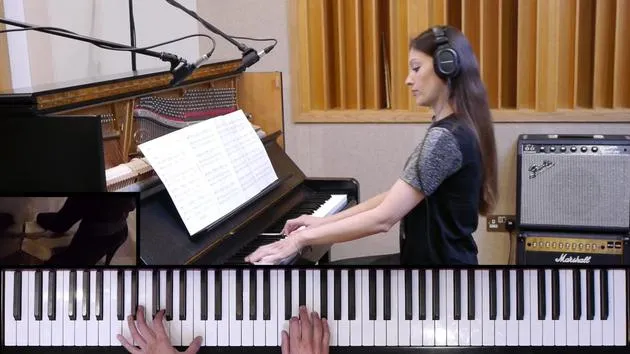
01. Unfaithful, Rihanna (Performance)
Free lesson1:40
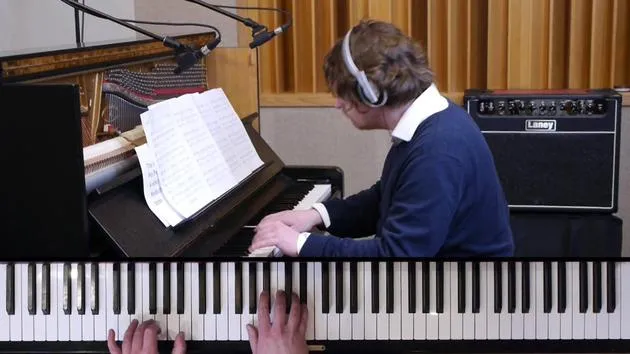
02. Unfaithful, Rihanna (Performance by Jono)
1:35
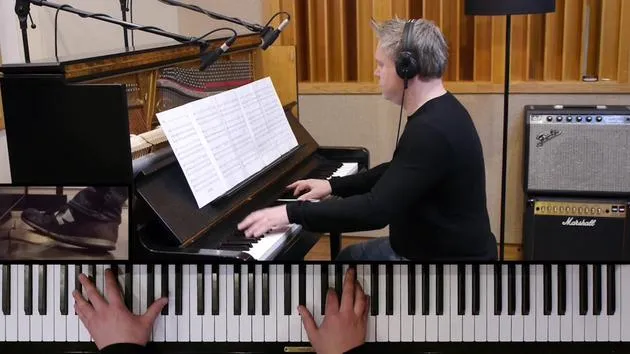
03. Skyfall, Adele (Performance)
4:54
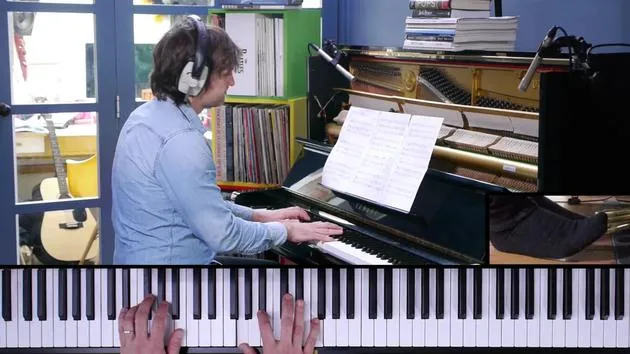
04. The Dock Of The Bay, Otis Redding (Performance)
2:19
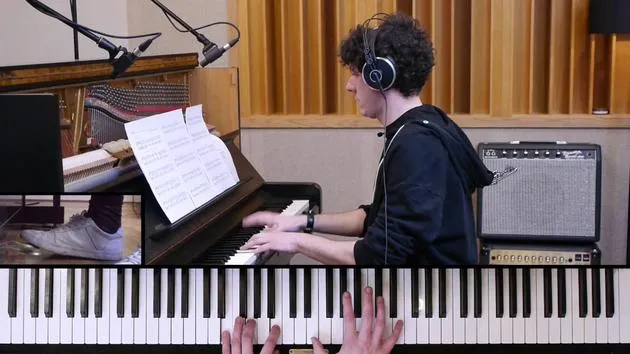
05. Overrated, Bob Graceful & Kung Fu Drummer (Performance)
2:06
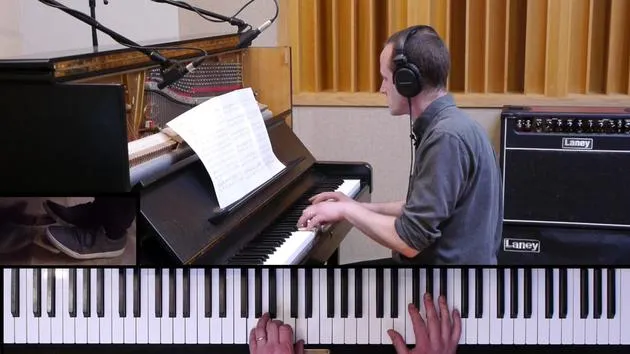
06. Reggae Island, Noam Lederman (Performance)
1:59
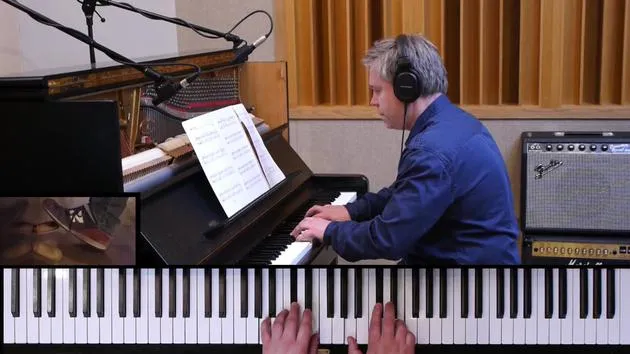
07. Maiden Voyage, Joe Bennett (Performance)
2:05
01. Unfaithful, Rihanna (Lesson)
7:19
02. Unfaithful, Rihanna (Lesson by Jono)
8:00
03. Skyfall, Adele (Lesson)
8:49
04. The Dock Of The Bay, Otis Redding (Lesson)
13:50
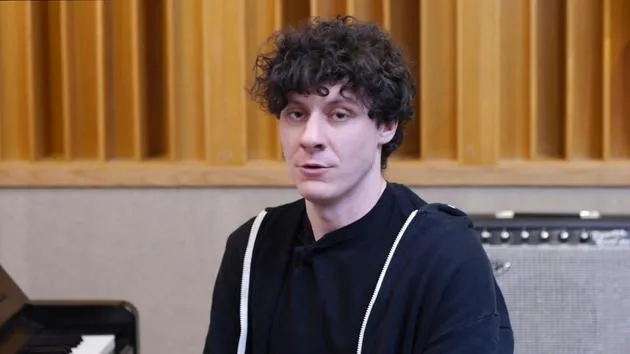
05. Overrated, Bob Graceful & Kung Fu Drummer (Lesson)
You are here10:10
06. Reggae Island, Noam Lederman (Lesson)
12:38
07. Maiden Voyage, Joe Bennett (Lesson)
5:33
Lesson transcript
Rock School Grade Three: Lesson Breakdown of "Overrated"
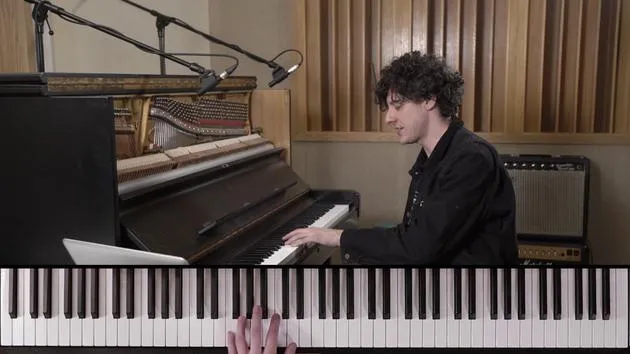
Hey, how you doing? I'm James, and today we're going to break down the piece Overrated, which has a heavy rock feel, think Foo Fighters and Biffy Clyro vibes. We're looking at:
- Big guitar riffs
- Lots of fortissimo playing
This is going to be really fun to play!
Triads as the Foundation
The whole piece is basically based around triads, especially in the beginning.
Guitar Emulation
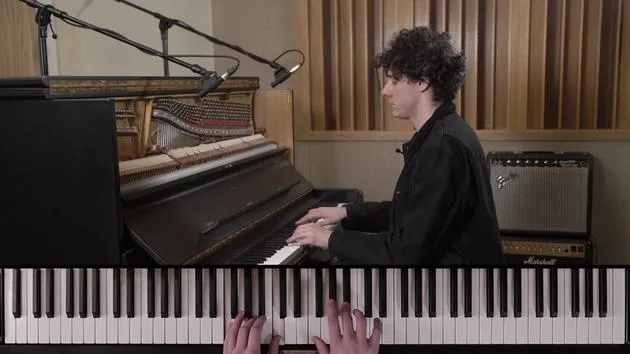
I don't know about you, but I can imagine this on a guitar, with heavy distortion cranked up. Unfortunately, we don't have distortion on pianos, but we can try to emulate that by really digging in.
- Bar Four: Hit these notes hard!
- We want to smash it!
These actions are being played by the entire band, so we want to join in with them. When everyone is playing the same thing at the same time, that can be really awesome. Make sure to hit everything together with the same articulation and vibe.
Melody in Octaves
When we get to section B, we have the melody.
- The melody is played in octaves throughout most of the tune, except during the solo.
- This octave playing gives it extra reach, making it sound fuller and bigger.
Hand Position
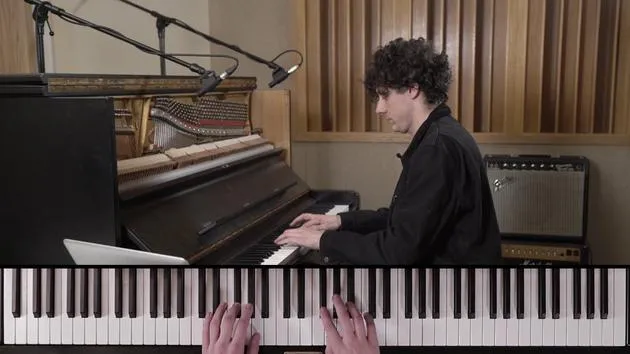
When you're using your right hand to play, you'll be using your thumb and fifth finger for the entire melody. Be mindful that:
- Playing in octaves is different from fingering individual notes.
- The handshape has to move in unison, which can be tricky at first.
Practice Tips
- Slow it down and play along with the metronome. The piece is at 125 BPM, so consider starting around 80 or 90 BPM, depending on your comfort level.
- Break it down into smaller sections.
Fortunately, the left hand throughout the piece plays the same rhythm. The triads may be changing (E triad, A triad in inversion, back to E, and then B and A), making it easier to focus on your right hand.
Autopilot Technique
If I play the melody for you, notice how the left hand stays constant.
In the C section (bridge), this means we can create what we call "autopilot," allowing us to focus on the melody of the right hand while keeping the left hand steady. Watch out for changes in:
- Bar 34: Rhythm changes.
- Bar 38: During the solo.
The solo in the right hand consists of mostly repeated notes in unison, followed by an arpeggiated scale in bar 35. Keep an eye on the minims at the end with the left hand; they can catch you off guard.
Pedal Use and Texture
Simulating Guitar Sounds
There's significant pedal use in this piece. We're trying to simulate the sound of guitars.
- Guitar Dynamics: Overdrive creates a big wash of sound, blending with drums.
- Cymbals: Heavy crashes add to the texture.
Pedal Experimentation
Let's compare playing with and without the pedal.
- Without Pedal: A more distinct sound.
- With Pedal: A richer, more blended sound.
In my opinion, the second option allows you to create a big wall of sound where the previous notes are not decaying away, allowing you to build on top of that.
Dynamics and Climax
Loud and Energetic
There aren't any written dynamics, but as you can guess, we're looking for mostly fortissimo and forte playing.
- Rock gigs are loud, and keyboard players often get drowned out, so we need to play loud as well.
Bar 27 represents the climax of the melody. Despite the piece being loud, I recommend making this section even bigger as it's the most exciting part just before the solo.
Soloing Tips
For the solo, consider bringing the volume down slightly before building it up. This is your chance to showcase your abilities as an improviser.
- Improvisation Strategy:
- Play along with the backing track.
- Use the triad shapes in the written melody to create your unique ideas.
Recap of Key Points
- Be a Rock Player: Make it loud and full!
- Octaves: Get them singing. Don't get overwhelmed; slow it down.
- Left Hand Consistency: Mostly the same except for the specified points.
- Pedal: Use it wisely for an anthemic sound; let sounds blur together but don't overdo it.
- Improvise: Experiment when practicing, but stick to what's written if you're taking the exam.
That's all from me. Thank you, and see you next time!
32 lessons
2h 17m of structured video lessons
Advanced video features
Slow down, loop a passage, follow along
Mobile, tablet & desktop
Practise wherever you are
100% satisfaction guarantee
30-day money-back guarantee







