



Chord voicings - Grade 3
A look at piano chord voicings, starting with a Cmaj7 cluster shape and how your voicings shape the sound when comping jazz and funk.

What's in the course
32 lessons (2h 17m) · 1 free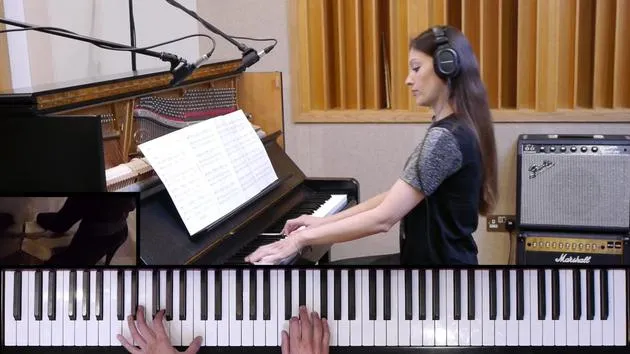
01. Unfaithful, Rihanna (Performance)
Free lesson1:40
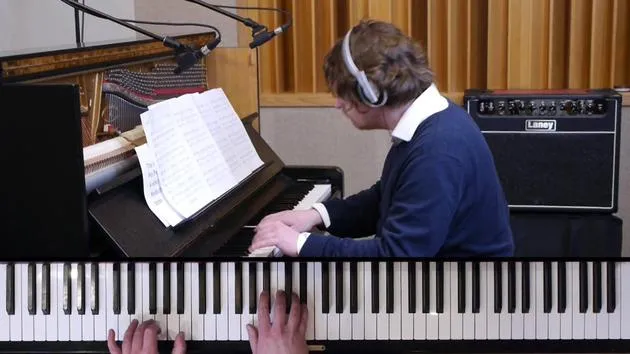
02. Unfaithful, Rihanna (Performance by Jono)
1:35
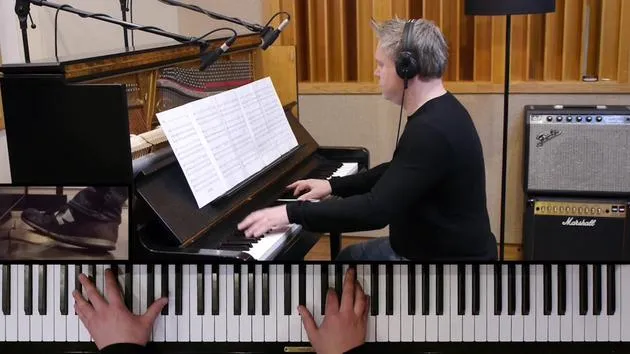
03. Skyfall, Adele (Performance)
4:54
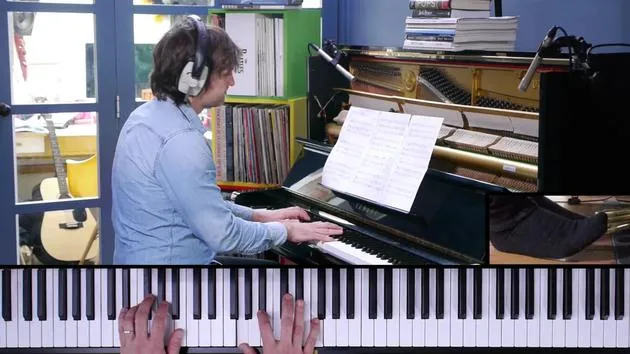
04. The Dock Of The Bay, Otis Redding (Performance)
2:19
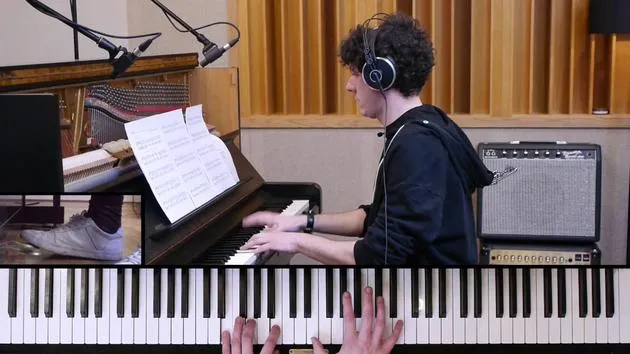
05. Overrated, Bob Graceful & Kung Fu Drummer (Performance)
2:06
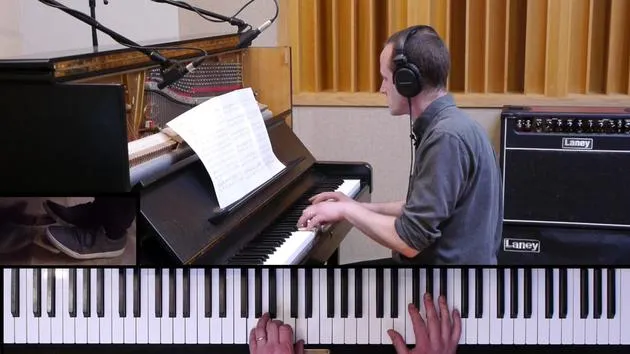
06. Reggae Island, Noam Lederman (Performance)
1:59
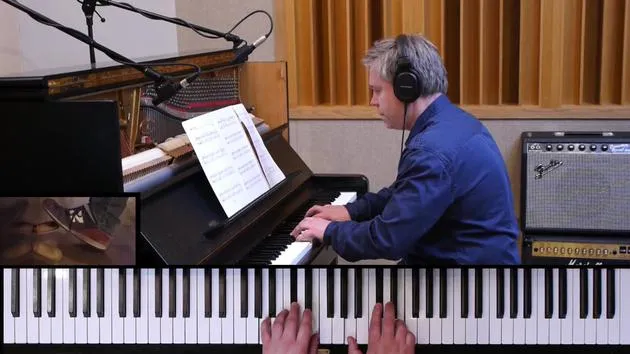
07. Maiden Voyage, Joe Bennett (Performance)
2:05
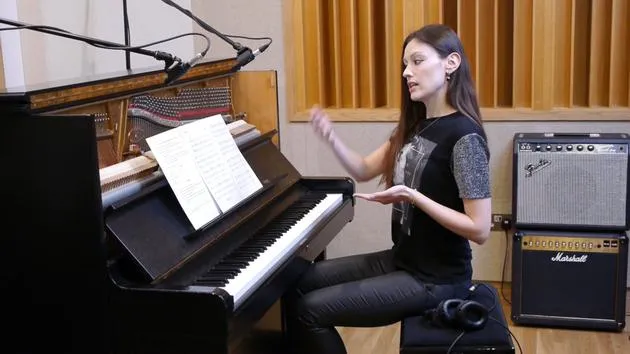
01. Unfaithful, Rihanna (Lesson)
7:19
02. Unfaithful, Rihanna (Lesson by Jono)
8:00
03. Skyfall, Adele (Lesson)
8:49
04. The Dock Of The Bay, Otis Redding (Lesson)
13:50
05. Overrated, Bob Graceful & Kung Fu Drummer (Lesson)
10:10
06. Reggae Island, Noam Lederman (Lesson)
12:38
07. Maiden Voyage, Joe Bennett (Lesson)
5:33
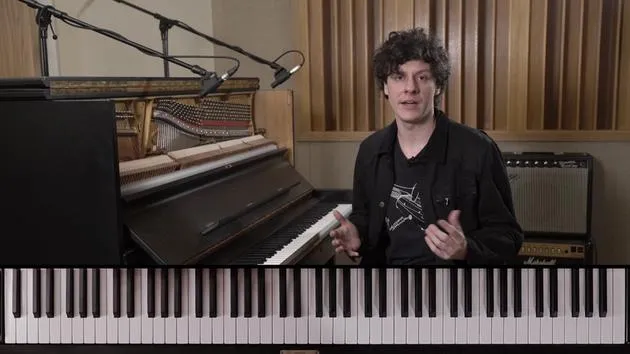
Lesson transcript
Chord Voicings
Okay, and now we're going to move on to chord voicings.
C Major 7
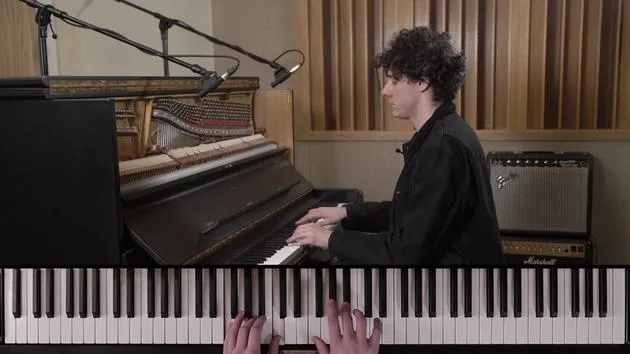
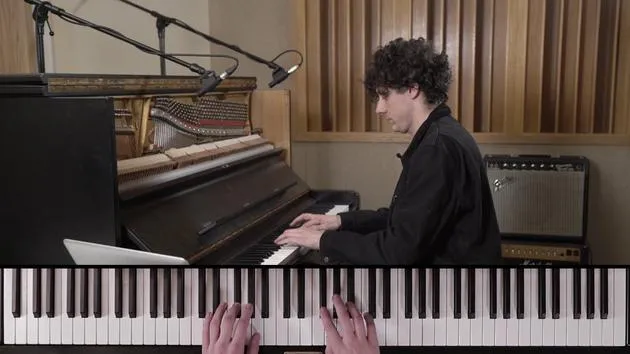
Now, we have two sets of voicings here in different shapes. The first one is C major 7.
Cluster at the Top
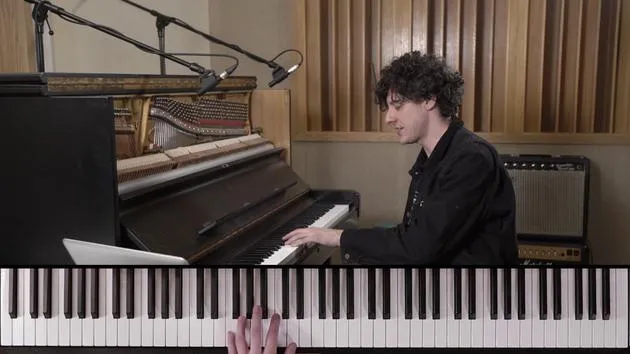
This is an interesting voicing because it has this cluster at the top. One of the important things about being a piano player is the voicings you play, especially if you're playing jazz or funk or anything that involves quite a lot of what we call comping, which is a rhythmic way of playing voicings.
- Clusters: A cluster is something that's a semitone or a tone apart.
- In this first and second example, they give the kind of juice.
- They make things sound really nice, you know.
So we've got that on its own. It sounds quite nasty, quite abrasive. But when we throw in the rest of the chord, it sounds great.
- Second Voicing: That's the same with the second one here, it's even nicer.
- We still have this very kind of nasty, clashy sort of sound.
- But then when we surround it with the rest of the harmony, it sounds lovely.
Summary of Voicings
- C Major 7 Voicings:
- These three voicings of C major 7 are essential.
C Dominant 9, Sus 4
The second set we have is a C dominant 9, sus 4.
Understanding Sus Chords
- Sus is short for suspended.
- The fourth means we play the fourth and not the third.
- A very simple example would be a C sus chord, where the sus sound is the F.
This type of chord always feels like it kind of wants to go somewhere. It's a very apprehensive kind of sound.
Breakdown of Dominant 9
The voicing we have here is C dominant 9:
- Dominant: This means it's using the flat 7th.
- 9: This means we're adding the 9th on top.
- Sus 4: This means instead of playing a major third, we play a fourth.
Now, here are the three voicings I use on a regular basis:
- First Voicing: Description here.
- Second Voicing: Description here.
- Final Voicing: Description here.
This second voicing, which you're playing in the left hand, creates a really dense cluster. There's a lot going on here, which makes such a juicy sound.
- If you hit the bass as well, it's a great sound.
Recap of Voicings
So, let's recap these three again.
Conclusion for Grade 3
That about covers it for Grade 3. We have:
- Scales
- Arpeggios
- Voicings
And some really interesting harmony with:
- Dominant nines within the voicings
- Major 9 sharp 11s
- Chromatic scales
- Harmonic minors
- Lydian scales, too.
It can be a little bit overwhelming. But don't worry, many of these things, like we've said, are just different scales in different keys. It's the same concept:
- Remember, C Lydian is G major.
- The sus chord is just playing the fourth instead of a third.
It's not too hard; you're only really one step away from something you don't know.
Closing Thoughts
The great thing about some of this jazz harmony is that it's not too complicated. You just have to break it down.
Hopefully, we've done that today. So, good luck!
See you next time.
32 lessons
2h 17m of structured video lessons
Advanced video features
Slow down, loop a passage, follow along
Mobile, tablet & desktop
Practise wherever you are
100% satisfaction guarantee
30-day money-back guarantee







