



Arpeggios / broken chords - Grade 3
Learn to play your Grade 3 arpeggios and broken chords hands together, with tips on coordinating the two fingerings and building speed slowly.

What's in the course
32 lessons (2h 17m) · 1 free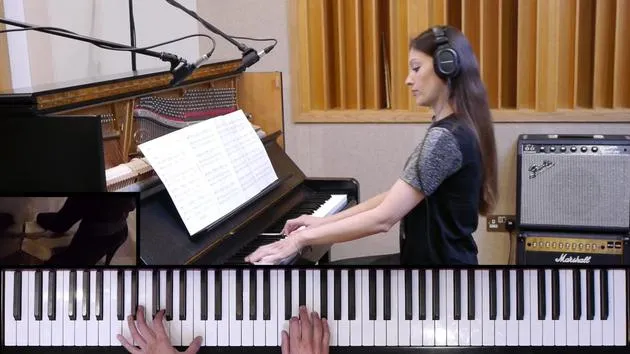
01. Unfaithful, Rihanna (Performance)
Free lesson1:40
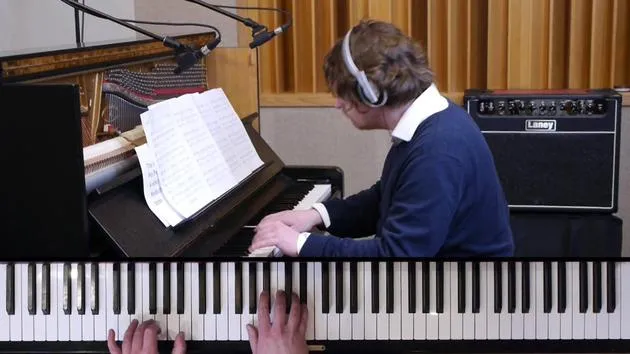
02. Unfaithful, Rihanna (Performance by Jono)
1:35
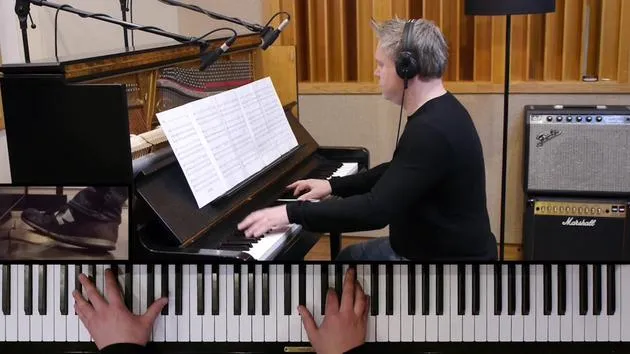
03. Skyfall, Adele (Performance)
4:54
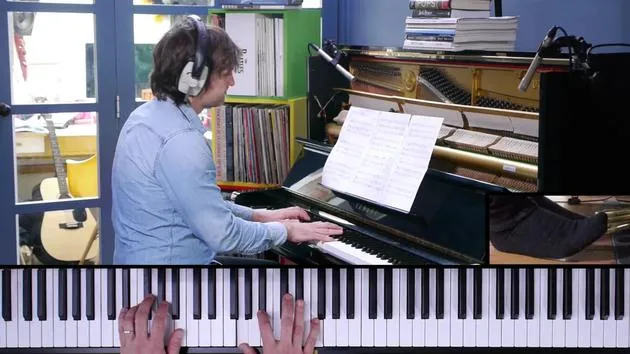
04. The Dock Of The Bay, Otis Redding (Performance)
2:19
05. Overrated, Bob Graceful & Kung Fu Drummer (Performance)
2:06
06. Reggae Island, Noam Lederman (Performance)
1:59
07. Maiden Voyage, Joe Bennett (Performance)
2:05
01. Unfaithful, Rihanna (Lesson)
7:19
02. Unfaithful, Rihanna (Lesson by Jono)
8:00
03. Skyfall, Adele (Lesson)
8:49
04. The Dock Of The Bay, Otis Redding (Lesson)
13:50
05. Overrated, Bob Graceful & Kung Fu Drummer (Lesson)
10:10
06. Reggae Island, Noam Lederman (Lesson)
12:38
07. Maiden Voyage, Joe Bennett (Lesson)
5:33
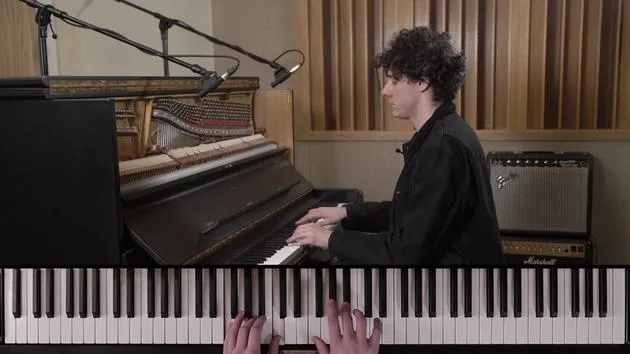
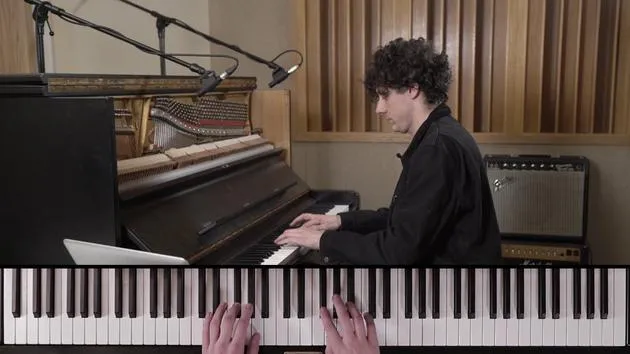
Lesson transcript
Arpeggios in Grade Three
Now we're on to arpeggios. In grade three, we are learning to put arpeggios hands together, much like when scales became hands together.
Understanding Arpeggios
This can be tricky because there are two different fingerings happening in two different hands. Fortunately, they are doing the same thing at the same time.
- They are not as challenging compared to the contrary motion arpeggios.
- However, they can still be quite difficult.
As with everything, practice them hands separately at first. Take them nice and slowly, and then work your way up.
Specific Arpeggios to Practice
I'm going to give you:
- E flat major arpeggio
- C minor arpeggio
One of the more interesting arpeggios here is number five: C major seventh arpeggio.
C Major Seventh Arpeggio
Now, C major seven is actually the same chords as the C major scale. It also has a very jazzy sound. It's the kind of thing that you would hear a lot in jazz music.
"It's that lovely major seventh sound that gives so much of jazz its wonderful character and quality."
The difficult thing about this arpeggio is that you've got the fourth finger involved as well.
- Typically, we only use the fifth, third, and first fingers in the left hand.
- In the right hand, we use the 1, 3, and 5 fingers.
C Major 9th, Sharp 11 Arpeggio
Some more interesting arpeggios here too!
"What's that? Oh, that's weird, right?"
Actually, you've already played that scale before. That's the Lydian scale we played before.
Instead of it being simple, we have the chord tones of that scale.
- This is the C major sharp 11 arpeggio in both the right hand and the left hand.
Understanding the C Major 7, 9th Sharp 11 Arpeggio
A good way to think about the C major 7, 9th sharp 11 arpeggio is that it combines:
- A C major triad
- A B minor triad
This results in a very beautiful, bright sound.
"This is the Lydian concept."
Rather than:
- It's a very popular sound often used in a lot of film music.
So, when you're hearing those American family films, have a listen.
"You'll always hear that thing often played by strings. It's a very warm, lush, beautiful sound."
Learning this is great if you're ever looking to go into theatre work or anything involving film.
32 lessons
2h 17m of structured video lessons
Advanced video features
Slow down, loop a passage, follow along
Mobile, tablet & desktop
Practise wherever you are
100% satisfaction guarantee
30-day money-back guarantee







