



Fab Stomp, Deirdre Cartwright (Lección)

Qué incluye el curso
29 lecciones (1h 50m) · 1 gratis
01. Make You Feel My Love, Adele (Interpretación)
1:26
02. The Long and Winding Road, The Beatles (Interpretación)
Lección gratis1:43
03. Read All About It, Part III, Emeli Sande (Interpretación)
1:58
04. ICAUFO, Joe Bennett (Interpretación)
1:23
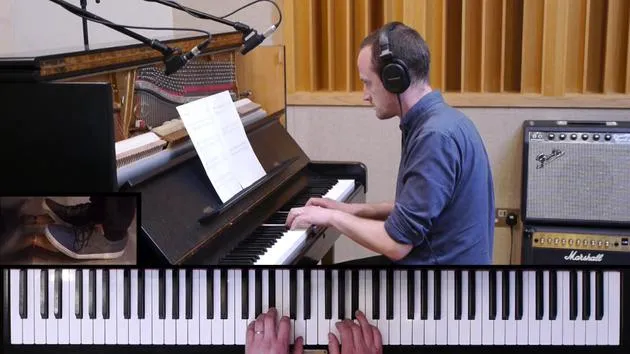
05. Umbra Bella, Simon Troup (Interpretación)
1:07
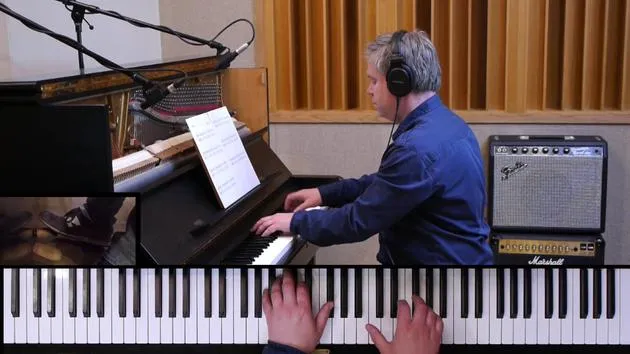
06. Fab Stomp, Deirdre Cartwright (Interpretación)
1:15


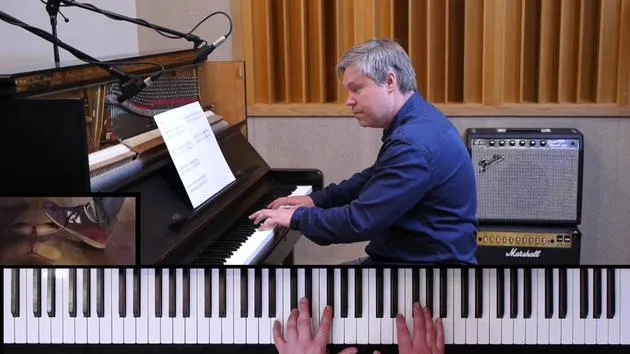
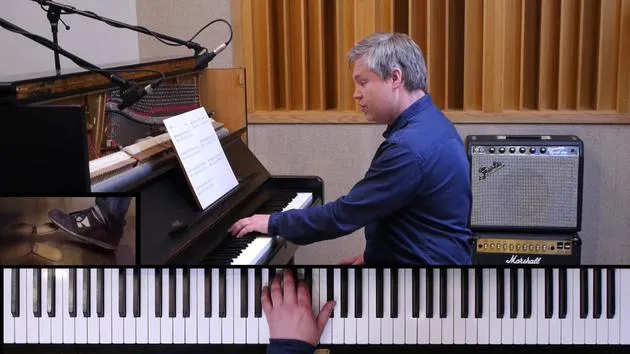
Transcripción de la lección
Grade One Music Lesson: The Fab Stomp
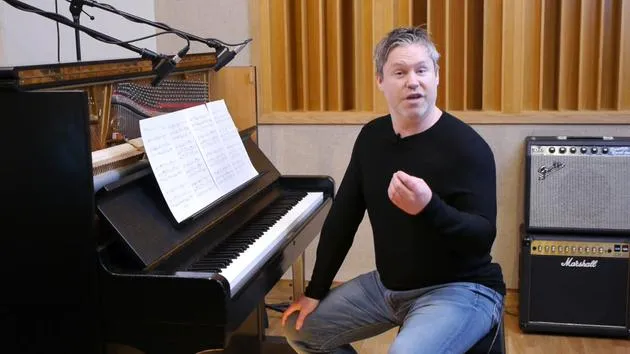
Hi, everyone! How's it going? Today, we are looking at Grade One and we've got The Fab Stomp right here in front of me. It's a really catchy song with a kind of 60s vibe.
Influences and Vibe
If you read the information sheet, you'll see mentioned bands such as:
- The Beatles
- Freddie and The Dreamers
- Dave Clark 5
These are all iconic bands from the 60s, and this piece recreates that innocent, poppy joy that was a signature of 60s rock and roll. The song definitely has that vibe!
Chord Progression
Even the chords we're using reflect this:
- D
- C
- G
This is a classic chord progression that was frequently used in the 60s and 70s.
Key Signature
Talking about the piece:
- Key: D Major
- Sharps: F sharp and C sharp
Interestingly enough, even with that key signature, we don't actually play any C sharps until the B section, where we transition into the dominant key.
Notation and Rhythms
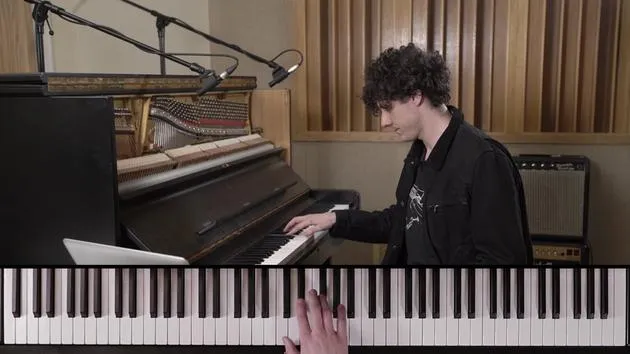
In the first bar, you'll see all the Cs are given a natural sign to make them C natural. This creates something like this (play here).
Rhythmic Idiosyncrasies:
- There's a dotted note
- A quaver, followed by another dotted quaver
These rhythms create an interesting effect. Try to bring out the melody strongly! Imagine you're a guitarist rather than a keyboardist, as back then, they didn't have much piano in those songs.
Engaging with the Track
You are in the band right now! Your role is to play the melody and sync along with the track. So, put your headphones on, play through, and immerse yourself in the music. Even at Grade One, you're given a chance to show keen interest in the musical shape of the song.
Structure of the Piece
- A section: A repeat of the four-bar phrase.
- B section: Suddenly in the key of A Major.
- Pay attention to the rhythms here, as they go against the beat with syncopated rhythms against the left hand.
C Section
At the C section, we shift to the dark key of B minor, moving from off-beat to straight crotchets. Be careful not to rush this; hold the long sustained chords:
- Count: 2, 3, 4
Make sure to maintain that rhythm as you transition:
- 2, 3, 4
- Crescendo at the end
Chord Voicing
This chord can be tricky:
- Use your fifth finger (pinky), fourth finger, two, and one.
For chord shapes, consider the following:
- A and G together: I would play this as described.
Notice that C naturals return after the A Major section. Pay attention, because we have a dominant seventh chord here, adding that G natural, which brings us back to the home key of D major.
Left Hand Roles
As we delve deeper into the piece, you'll notice:
- The left hand plays chords throughout, supporting the melody in the right hand with robust chords.
- These are three-voiced chords, also known as triads. Most triads are based on the root, the third, and the fifth of the chord.
Familiarization with Chords
For example, in bar one, you'll find this D major chord:
- F sharp ? thumb
- D ? second finger
- A ? little finger
This then transitions smoothly to the second chord and the G major in root position.
Full Voicing Practice
Get familiar with those shapes and try for full voicing of the chords:
- Strive for a nice ringing sound from those three notes.
Shoulder Movement
I recommend a bit of shoulder movement while playing chords to avoid stiffness and to engage with the music.
Left Hand Practice
Try practicing the left hand alone while playing along with the track. Your goal is to achieve vibrant and strong voicings:
- 1, 2, 5 for the first chord
- 1, 2, 5 then find the shape of the G major.
Conclusion
That's repeated all the way through the piece. As we move up to the B section in A major, remember to practice those triads and suspended chords.
I hope you enjoy playing this piece! Immerse yourself in the music and experience the vibe it's creating. Best of luck with your learning on this piece!
Many thanks!
29 lecciones
1h 50m de lecciones en vídeo estructuradas
Funciones de vídeo avanzadas
Ralentiza, repite un pasaje, sigue la partitura
Móvil, tablet y ordenador
Practica donde quieras
Garantía de satisfacción 100%
30 días de garantía de devolución







