



Introducción a escalas, arpegios y voicings: por qué son útiles
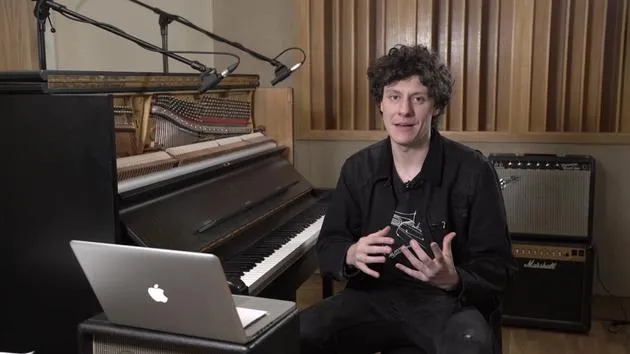
James explica por qué merece la pena practicar escalas, arpegios y voicings, y cómo cada uno de ellos construye la técnica que hay detrás de los grados de Rockschool.
Qué incluye el curso
29 lecciones (1h 50m) · 1 gratis
01. Make You Feel My Love, Adele (Interpretación)
1:26
02. The Long and Winding Road, The Beatles (Interpretación)
Lección gratis1:43
03. Read All About It, Part III, Emeli Sande (Interpretación)
1:58
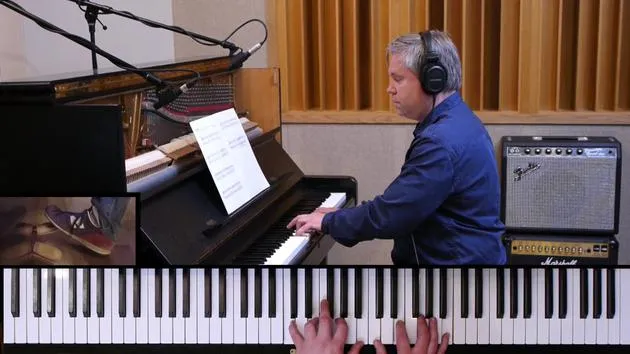
04. ICAUFO, Joe Bennett (Interpretación)
1:23
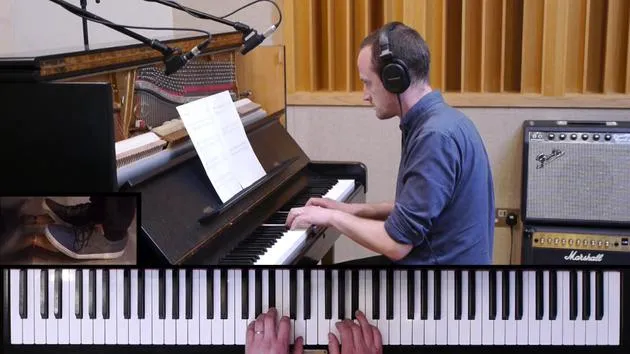
05. Umbra Bella, Simon Troup (Interpretación)
1:07
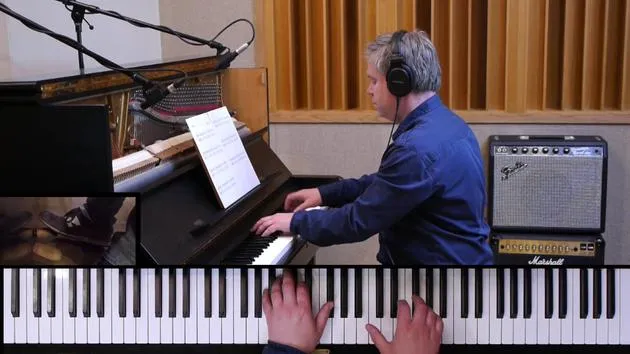
06. Fab Stomp, Deirdre Cartwright (Interpretación)
1:15

Transcripción de la lección
Technical Exercises for Rock School
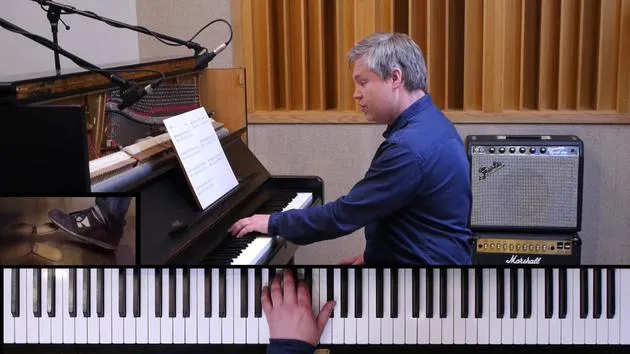
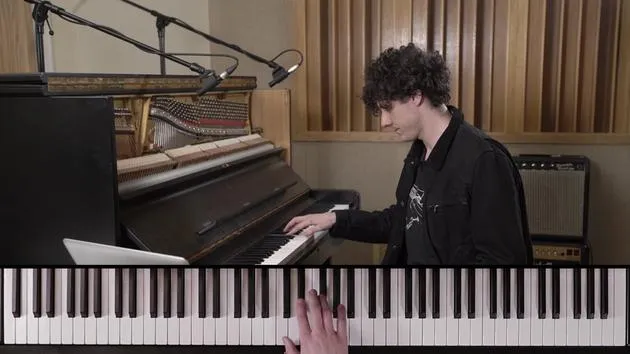
Hey, guys, it's James here. I'm going to take you through the technical exercises for Rock School. This is a general video that applies to all grades. We'll talk about:
- Scales
- Arpeggios
- Voicings
Why Learn Scales, Arpeggios, and Voicings?
The simple answer is technique. Improving our technique allows us to:
- Play more complicated pieces
- Sound better
- Play in time
- Enjoy the experience of being a musician
The Functions of Scales, Arpeggios, and Voicings
- Scales help us play smooth lines.
- Arpeggios allow us to break our flow within the hand, letting us stretch wide distances.
- Voicings involve playing chords that accompany ourselves or others.
A big part of being a jazz player, pop player, funk, rock, or any discipline is about playing chords and accompanying ourselves and others.
Making Practice Enjoyable
While scales and arpeggios can seem a bit dry at times, going up and down the piano repeatedly, there can also be something quite meditative about it.
Tips for Engaging Practice
- Start Your Sessions: Use the first five to ten minutes of your practice session for these exercises.
- Don't Dread It: They don't have to be something you regret. They can actually be fun.
- Move to the Fun Stuff: After knocking out a few exercises, you can move on to playing, improvising, etc.
Developing Improvisation Skills
Using scales and arpeggios is also a great way to develop your improvisation skills.
- When improvising or performing, I often use chord tones and patterns based on scales and arpeggios.
- Although I'm not strictly thinking about them while playing, the knowledge I've learned comes to the surface instinctively in real settings.
The Takeaway
This applies to any aspect of playing music, but particularly technique, as it's the fastest way to make a good piece sound great. The more fun you have playing, the more you'll want to practice.
So, I highly recommend you get stuck into scales. It's not all boring, I promise, and the payoff will be huge!
29 lecciones
1h 50m de lecciones en vídeo estructuradas
Funciones de vídeo avanzadas
Ralentiza, repite un pasaje, sigue la partitura
Móvil, tablet y ordenador
Practica donde quieras
Garantía de satisfacción 100%
30 días de garantía de devolución







