



Arpegios / acordes quebrados - Grade 1
Una guía para principiantes sobre cómo tocar arpegios como acordes quebrados - subiendo por el 1, el 3 y el 5 de cada acorde, y por qué esta habilidad te ayuda a construir frases al piano.

Qué incluye el curso
29 lecciones (1h 50m) · 1 gratis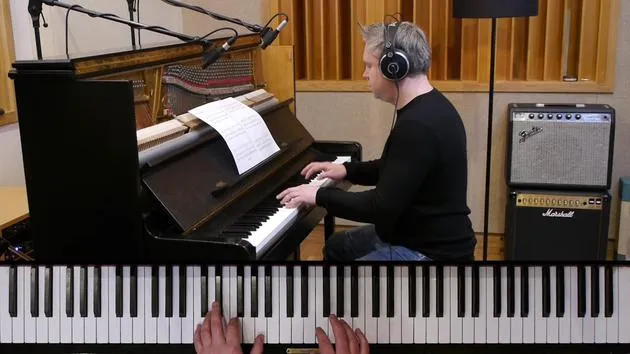
01. Make You Feel My Love, Adele (Interpretación)
1:26
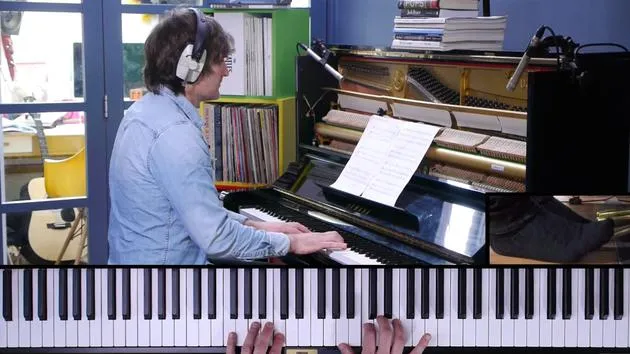
02. The Long and Winding Road, The Beatles (Interpretación)
Lección gratis1:43
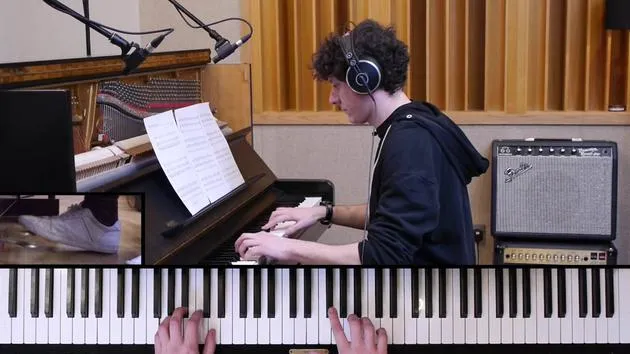
03. Read All About It, Part III, Emeli Sande (Interpretación)
1:58
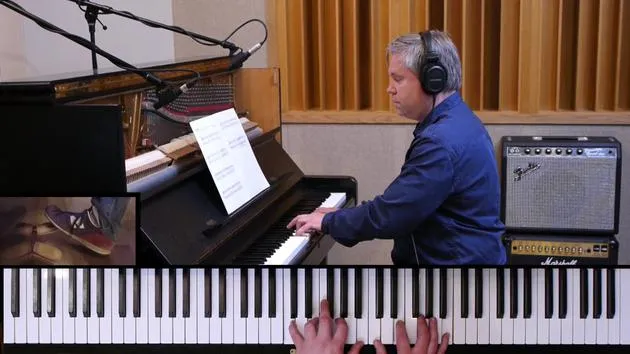
04. ICAUFO, Joe Bennett (Interpretación)
1:23
05. Umbra Bella, Simon Troup (Interpretación)
1:07
06. Fab Stomp, Deirdre Cartwright (Interpretación)
1:15

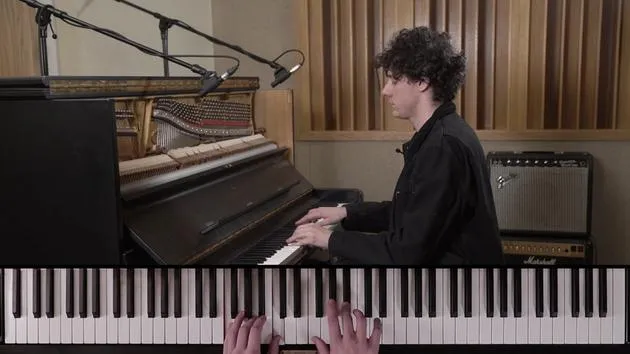
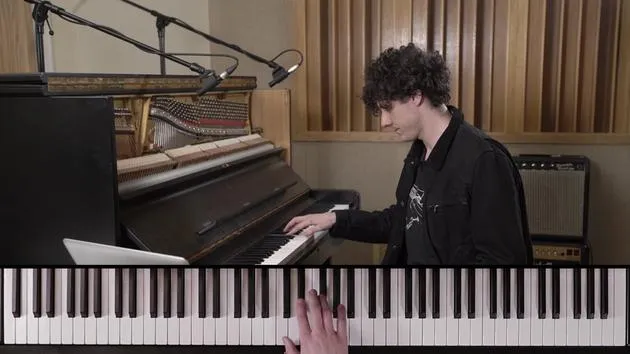
Transcripción de la lección
Arpeggios and Broken Chords
Okay, so for arpeggios, we have broken chords.
What are Broken Chords?
Broken chords are literally what they sound like. We're playing a chord in a broken way.
How to Play Broken Chords:
- Go up the 1, the 3, and the 5, and then carry on up the chord.
- The fingering is less important for these than for scales.
- A good rule of thumb is to use 1, 3, and 5 on each of the notes that you're playing.
Importance of Broken Chords
Broken chords are important because they are a great way of building phrases.
- When we're playing as a piano player in a band, we're often playing chords, and chords are broken chords played together.
- A lot of pop music and a lot of rock music features very arpeggioic broken chords.
- Being able to play these well means you can really fulfill your role within the rock band or pop band and make everything sound great.
Technique Development
So, broken chords are a really, really good way of developing technique and playing musical lines within rock and pop music.
Example of a Broken Chord: C Augmented Arpeggio
One of the broken chords I want to point out to you here is number nine: the C augmented arpeggio.
- Augmented basically means that the fifth, which is the G, we raise or augment (make sharp).
- It has quite a sinister sound; it's a little bit eerie and unsettling.
- It often feels like it wants to resolve somewhere.
- Important: Make sure you can still use the same fingering if you like, but be aware that that is a G sharp, not a G in a normal C broken chord.
Example of a Diminished Chord
The other one, which is basically the opposite of an augmented chord, is a diminished chord.
- This is like a C minor chord, except that we are making the fifth flat instead of sharp.
- The fingering for this one can be slightly more difficult. I would recommend using:
- The hardest thing is making that reach from the G flat to the C.
- You can either use the fourth or the third finger.
Key to Success
The key is just to make sure that line is nice and smooth, as it's quite a much wider gap than the others we've been used to so far.
29 lecciones
1h 50m de lecciones en vídeo estructuradas
Funciones de vídeo avanzadas
Ralentiza, repite un pasaje, sigue la partitura
Móvil, tablet y ordenador
Practica donde quieras
Garantía de satisfacción 100%
30 días de garantía de devolución







