



Escalas - Grade 1
Trabaja las escalas de Grade 1 con las manos por separado: F y G mayor, más D y E menor natural, con digitaciones sugeridas para adquirir buenos hábitos desde el principio.

Qué incluye el curso
29 lecciones (1h 50m) · 1 gratis
01. Make You Feel My Love, Adele (Interpretación)
1:26
02. The Long and Winding Road, The Beatles (Interpretación)
Lección gratis1:43
03. Read All About It, Part III, Emeli Sande (Interpretación)
1:58
04. ICAUFO, Joe Bennett (Interpretación)
1:23
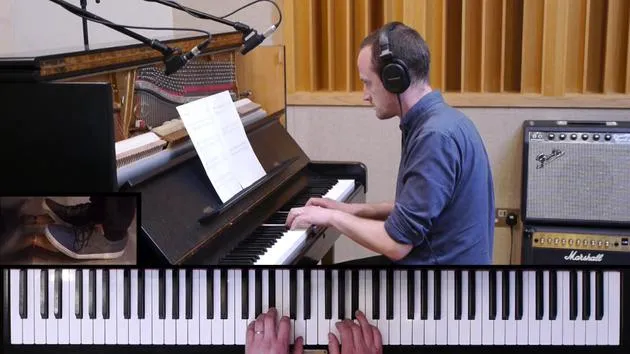
05. Umbra Bella, Simon Troup (Interpretación)
1:07
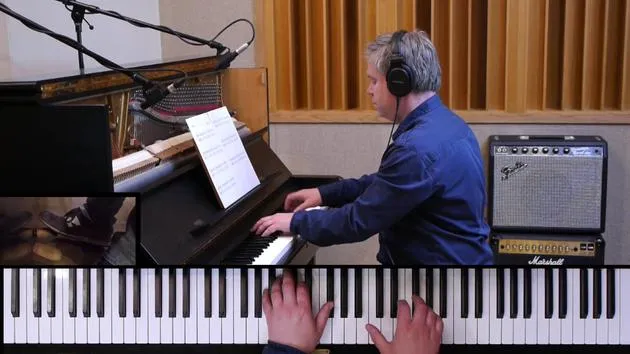
06. Fab Stomp, Deirdre Cartwright (Interpretación)
1:15

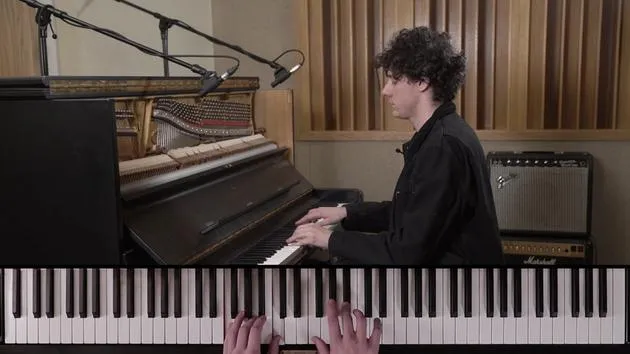
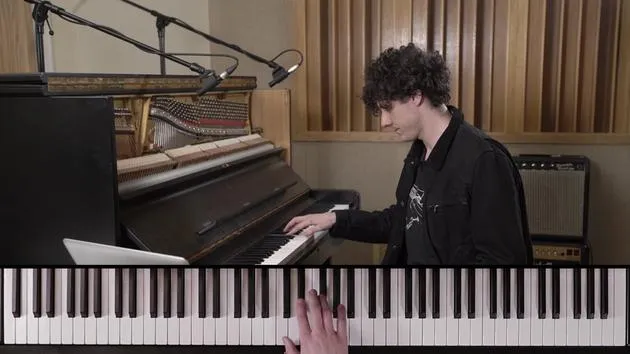
Transcripción de la lección
Grade One Technical Exercises
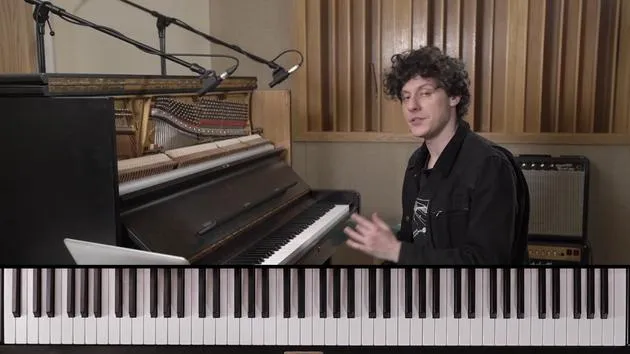
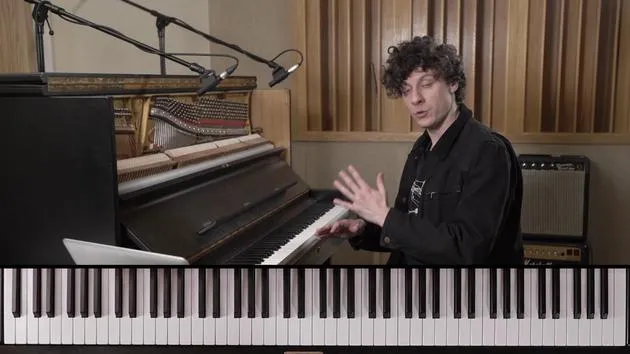
Hey guys, I'm going to take you through the grade one technical exercises today, which are the scales, arpeggios, and voicings.
Major and Minor Scales
As you probably know, there are major and minor scales within this syllabus. In these exercises, we have a handful of different scales which we're playing hand separately:
- F Major
- G Major
- D Natural Minor
- E Natural Minor
F Major Scale
The F major scale goes as follows:
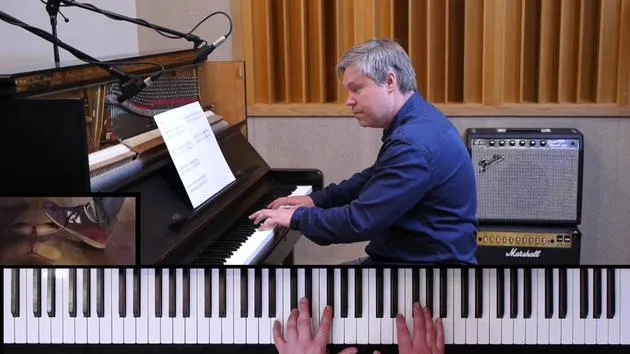
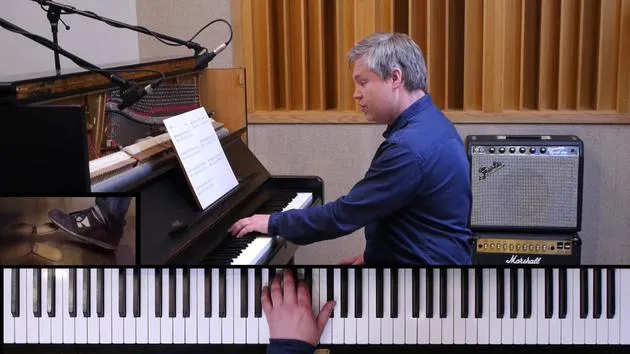
- Right hand fingering: 2, 3, 4
- Format: 1, 2, 3, 4
- Continuing: 1, 2, 3
If we're staying in one octave, the fingering for going up is:
- 4 (using the thumb)
- Left hand: 5, 4, 3, 2, 1
- Then: 3, 2, 1
This is a very common fingering for most scales.
Note: All these fingerings are a guide. As long as the scale is played smoothly, you can technically use any fingering you like. However, this is usually the best way to start practicing the fingering correctly early on. Especially now at grade one!
When you start taking future grades or developing your playing as a musician in a more advanced way, you'll really be thankful that you put in the work now. Bad habits can form later on.
G Major Scale
The G major scale is slightly different from F and features a much more common fingering.
- Right hand: [Insert fingering here]
- Left hand: [Insert fingering here]
As mentioned, the fingerings are advised but not essential.
Minor Scales
Minor scales come in three different formats:
- Natural Minor
- Harmonic Minor
- Melodic Minor
We are using the Natural Minor this time. The Natural minor is basically the same thing as an A major scale, just starting on a different note.
D Natural Minor
For example, D Natural Minor, which we have here, is actually the same as C major, just starting on D. This might help when learning these scales, as you've already played it before, making it easier to move on to a different tonality using the same parent scale.
- Natural Minor goes as follows: [Insert fingering here]
- E Natural Minor:
You might be pleased to know that E Natural Minor is the same as G major.
Tip: To find the natural minor of a chord or scale, it's basically A minor third lower. For example, if you have G, you go down an A minor third to E. This confirms that G major is the same as E natural minor. Hopefully, that helps as a little shortcut in learning some of these scales.
The Dorian Scale
The next scale we have is called the Dorian scale. The Dorian scale is the second mode of the major scale.
- If we have C major, D Dorian would be C major starting on D.
The scale we have here is C Dorian, which basically means it's a B flat major scale starting on C.
This scale is similar to a natural minor scale, with a couple of differences.
- The main difference is we start off the same going into a natural sixth and seventh:
- 1, 2, 3, 4, 5, 6, 7
- The seventh is flattened to B flat.
Differences Between Natural Minor and Harmonic Minor
There are many scales in this grade one syllabus, and all the fingerings are laid out. I'm not going to go through every one, but one of the more interesting ones is distinguishing between natural minor and harmonic minor.
- We have D Natural Minor
- We have C Harmonic Minor
The main difference is that natural minor is the same as a major scale that is a minor third higher. So in D, we're basically playing an F major scale starting on D. It uses exactly the same notes but starts in a different place.
A harmonic minor is almost exactly the same as a natural minor, except the final note is sharp.
I like to think of it as a slightly Middle Eastern or Mediterranean sort of sound that occurs at the end of the scale.
Dorian Scale Recap
Another interesting scale in this grade one is the Dorian scale. Without getting too much into the nitty-gritty, it is the second mode.
- It's a B flat major scale starting on C, similar to that minor scale we talked about earlier.
So, just watch out for that one as well.
29 lecciones
1h 50m de lecciones en vídeo estructuradas
Funciones de vídeo avanzadas
Ralentiza, repite un pasaje, sigue la partitura
Móvil, tablet y ordenador
Practica donde quieras
Garantía de satisfacción 100%
30 días de garantía de devolución







