


Lead Boots

With
Tommy Webb
What's in the course
50 lessons (1h 52m) · 1 free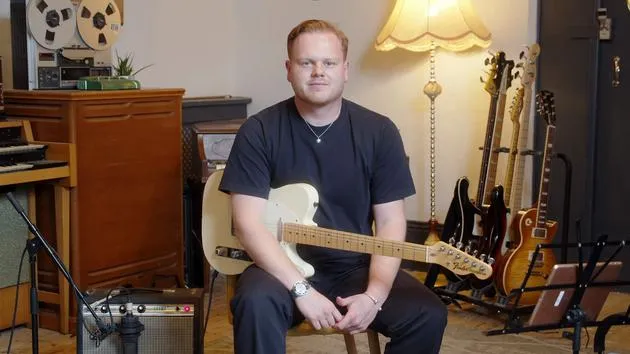
01. Intro to the Indie guitar sound
Free lesson2:09
02. Melody using B&C notes
3:45
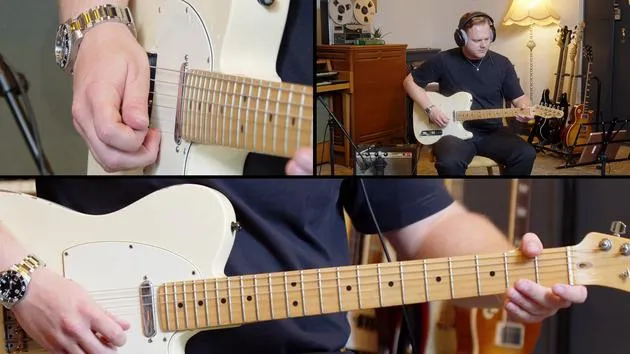
03. Melody using B&C notes (performance)
0:55
04. Melody using alternate picking
2:36
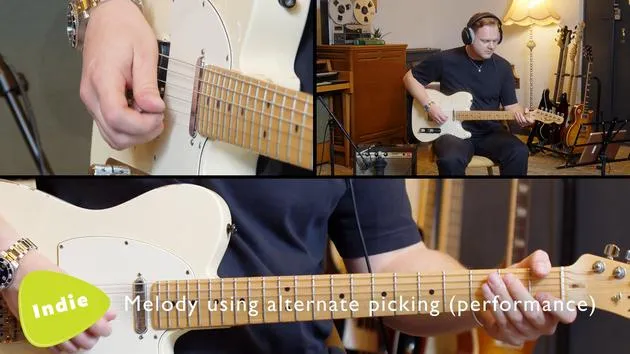
05. Melody using alternate picking (performance)
0:55
06. Melody using alternate picking & D note
2:47
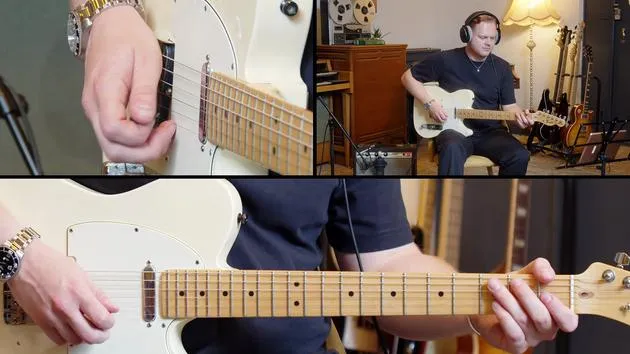
07. Melody using alternate picking & D note (performance)
0:51
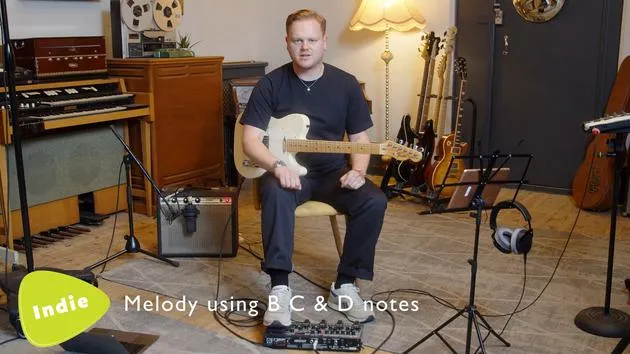
01. Melody using B C & D notes
4:16
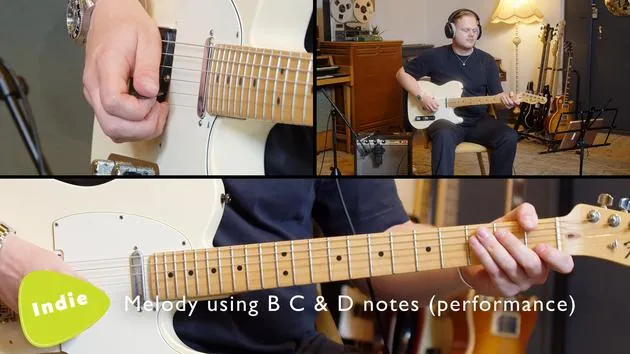
02. Melody using B C & D notes (performance)
0:58
03. Melody using E note
2:08
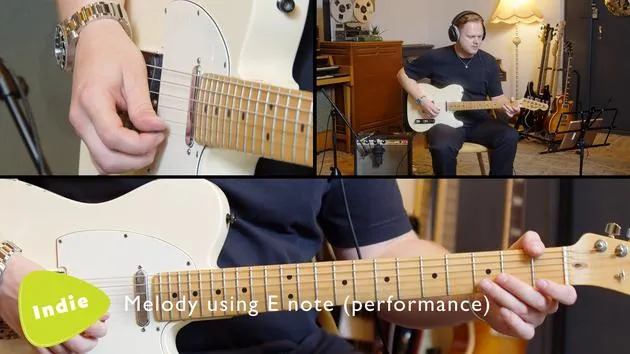
04. Melody using E note (performance)
0:46
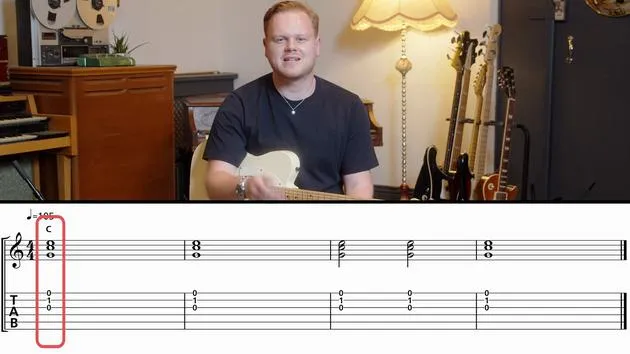
05. Rhythm part using C chord
2:00
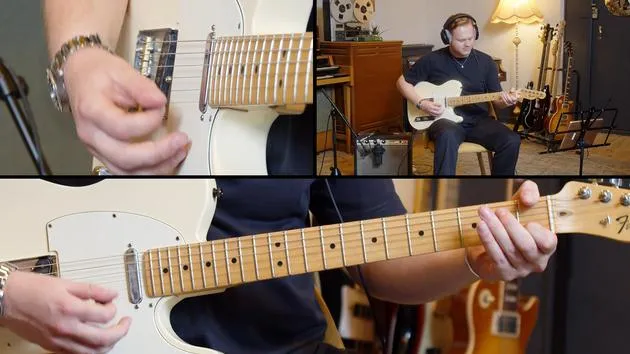
06. Rhythm part using C chord (performance)
0:48
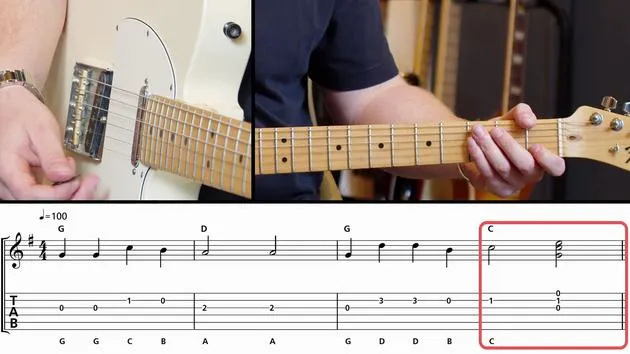
07. Parka Life bars 5-8
1:57
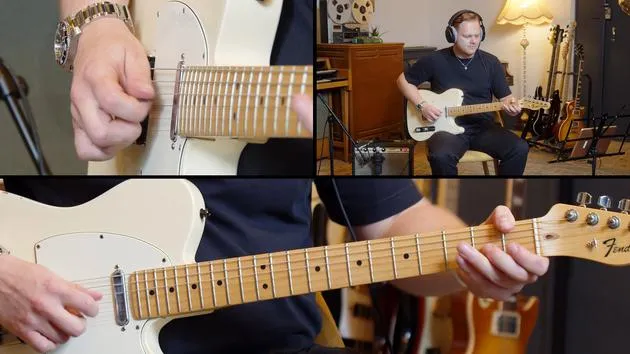
08. Parka Life bars 5-8 (performance)
0:50
09. Summary of Indie section
0:21
01. Intro to Pieces
1:00
02. Rock City
5:51
03. Rock City (performance)
0:50
04. Party People
7:20
05. Party People (performance)
0:46
06. Road to Nashville
6:08
07. Road to Nashville (performance)
0:47
08. Lead Boots
You are here6:33
09. Lead Boots (performance)
0:49
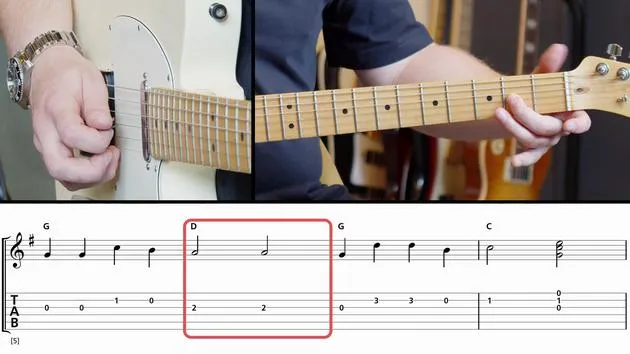
10. Parka Life
5:01
11. Parka Life (performance)
0:43
12. Represent
5:23
13. Represent (performance)
0:46
Lesson transcript
Metal Guitar Lesson Transcript
We've made it to metal. This is where things get really exciting: really overdriven and distorted guitars.
Starting Off
We're going to start learning some really heavy riffs here. So:
- Turn your amp to the distorted channel or increase the gain.
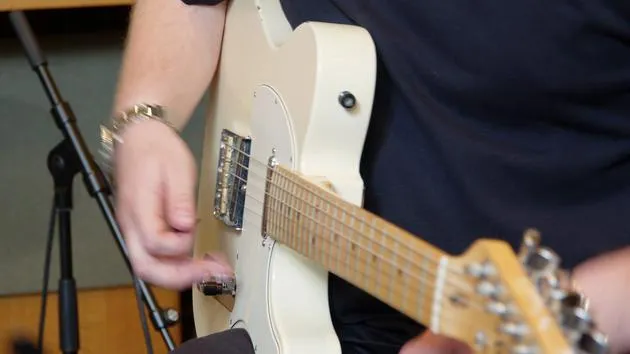
- Make sure you're using your bridge pickup - the aggressive-sounding pickup. This is all the way down or all the way to the right on a Telecaster.
We're aiming for this kind of sound in this song.
Key Signature and Technique
Every F we see is going to be an F, as indicated by the key signature at the start of the music.
We're going to be playing a finger per fret for this song as always, but this time finger one is going to be on fret two, so we're shifting up one position.
Chords and Strumming
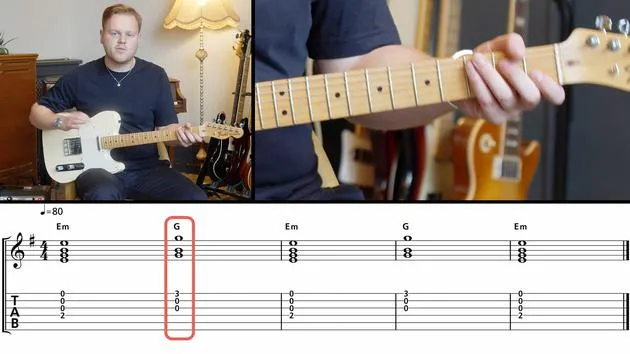
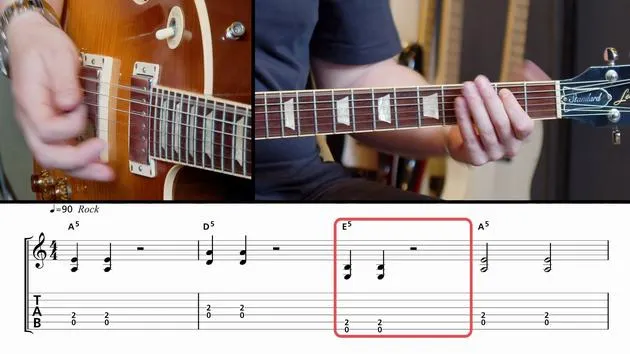
We're starting off with an E5 chord (an E power chord). We've seen these a lot before, and it's really important to have:
- Tight and accurate strumming.
This means we don't want any unwanted strings ringing out. With this amount of distortion, it's going to make the guitar sound muddy with no clarity.
"I'll give you an example of how we don't want it to sound. You can't really tell what's going on. It sounds like a blur of notes."
Instead, we should aim for the E string and the A string with fret 2 on the A string, played with your first finger.
Practicing Accuracy
The key thing to practice at home is your accuracy with the pick. Make sure you're looking at the strings, and you can't see any of the other strings moving apart from E and A.
We're playing:
- Two quarter notes of the E followed by a two-beat rest (or a half-note rest). This should be completely silent, just like that.
Use your fingers to dampen the strings as well as your palm here, so the note dies completely.
Bars Breakdown
- Bar 2: Same as Bar 1.
- Bar 3: Down to an A5 chord. This is the shape we've been playing, just pushed down a string. We have the second fret on the D string and the open A.
This is a dotted half note. A dotted note is the original value of the note plus half of itself (so 2 plus 1). This note will last for three beats long.
We finish off with a quarter note rest. Beat 4 is going to be silent.
- Count: 1, 2, 3 (again using our palm to finish that note off).
Bar 4 is the same as bars 1 and 2, so we should be comfortable now to try and play through that.
"I'll slow the speed down a bit. Let's see if we can play through that."
Melody Section
- 1, 2, 3, 4
- 1, 2
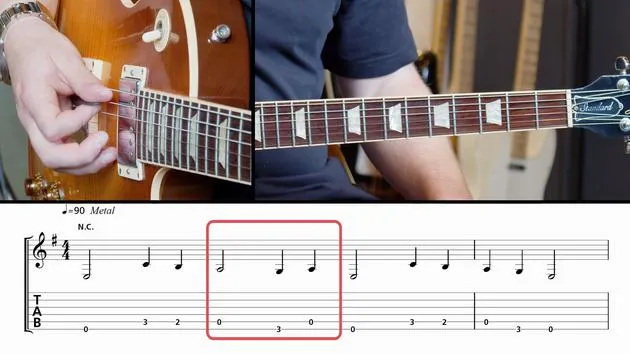
We then move on to the melody. You can see it's the melody because we're playing single notes, and also because you see the nc, meaning no chord above.
- We're playing E (open E) on the low E string. A lot of metal riffs will be played on this E string as it produces the lowest sounding string and can get the heaviest sound.
Bar Breakdown
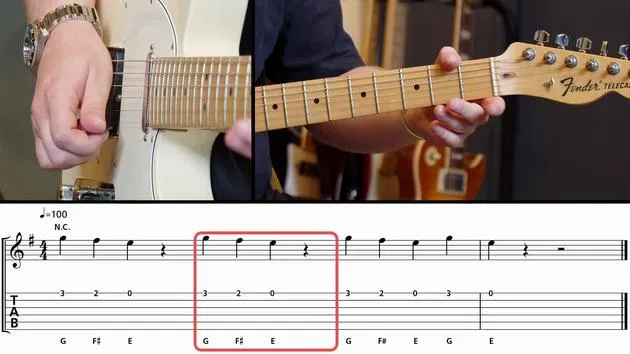
- Bar 1: E (low E string) to fret 3 (G), back to the open E string. Beat 4 should be silent (quarter note rest).
- Bar 2: Same start (E to G), finishing off on an A (lasting for two beats).
- Bar 3: A descending lick in quarter notes with a B (fret 2) followed by an open A, then a G on the third fret, leading to an F# (fret 2).
- Bar 4: Same as bar 1.
Practice Instructions
Let's try to stick that together at home. Take it bar by bar, making sure you can loop those at least five times before you move on to the next bar.
"We'll count along together and try to slow the tempo down a bit to see if we can go from start to finish."
Count: 1, 2, 3, 4.
Line 3 Summary
Bars one and two of line three are the same.
- We're playing a B (second fret on the A string with our first finger) going to a C (third fret with our middle finger).
In Bar 3: We're going up to the E string, playing G twice followed by F#. After the rest on beat three, you'll notice that bar four is the same as bar four in line two.
Let's try that line through together at a slower tempo. Count out loud while we do it.
"So, 1, 2, 3, 4...repeat."
Line 4 Overview
Line four is very similar to line one with our power chords E going to A. However, this time in bar four, we have a descending lick (G, F#, and E) in quarter notes.
- Play this with your middle finger on fret 3, your first finger on fret 2, and the open E lasting for two beats to finish.
Here's how it should sound:
- Count: 1, 2, 3, 4... repeat.
Final Thoughts
As always, you can loop each section and each bar with the interactive sheet music. Take it at your own pace and build up gradually.
"Remember, it's not a race. Building good technique is more important than speed right now."
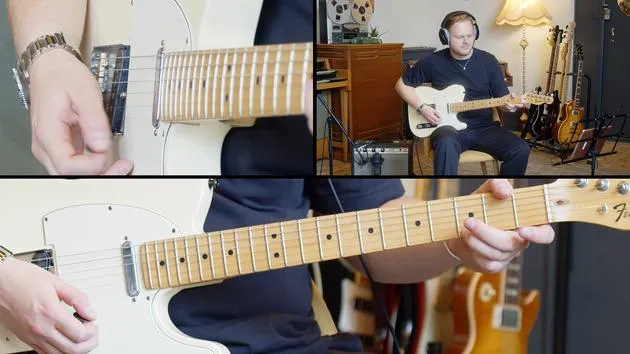
When you feel ready, join me with the interactive music, and let's play through this song together!
50 lessons
1h 52m of structured video lessons
Advanced video features
Slow down, loop a passage, follow along
Mobile, tablet & desktop
Practise wherever you are
100% satisfaction guarantee
30-day money-back guarantee
Meet your guru
Meet your guru
Tommy Webb is a London-based guitarist who completed a BA(Hons) Degree in guitar at the Academy of Contemporary Music in Guildford, studying under Sandy Beales (One Direction, Wheatus) and Nicolas Meier (Jeff Beck). His own playing moves freely across rock, pop, indie, hip-hop, country and metal - the exact ground his guitar methods cover.
Tommy has worked with a wide range of artists and bands across the country, including Jarki Monno and Indira May, sharing stages and sessions with guitarists Paul Murray (Jess Glynne, Zak Abel) and Adam Chetwood (Paolo Nutini, Mark Ronson), and drummers Alex Woodward (Black Honey), Luke Robinson and “Bambi Music” (N-Dubz, Lethal Bizzle, Wretch 32, Tinie Tempah).
On stage, he has performed at the Jazz Cafe opening for soul singer Jocelyn Brown, plus venues and festivals including Ronnie Scott's, Troy Bar, The Watford Colosseum, Camden Assembly, Kensington Roof Gardens, Notting Hill Arts Club, Meraki Festival and Sundown Festival.
On record and radio, Tommy has played live sessions for BBC Three Counties Introducing, Vibe FM and Pulse 88, with tracks featured on BBC Radio 1 and Radio 2. He has recorded at studios including South Lanes Brighton, Hempstead Road and Titan Studios with producers such as Steph Carter (Gallows, Lyoness) and TMS / Froe Barnes (Lewis Capaldi, Dua Lipa).
In his guitar methods, Tommy passes all of that working-musician know-how on to you - teaching the techniques, tones and feel behind real styles, from rock and pop to indie, hip-hop, country and metal, so you can play the music you actually love.