


Melody using B C & D notes
With
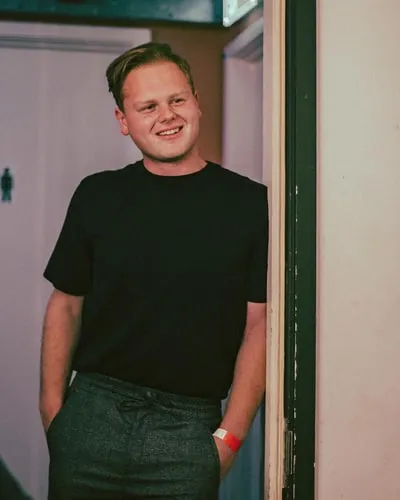
Tommy Webb
What's in the course
50 lessons (1h 52m) · 1 free
01. Intro to the Indie guitar sound
Free lesson2:09
02. Melody using B&C notes
3:45
03. Melody using B&C notes (performance)
0:55
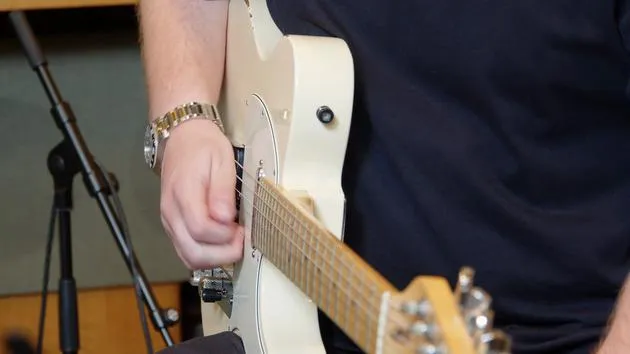
04. Melody using alternate picking
2:36
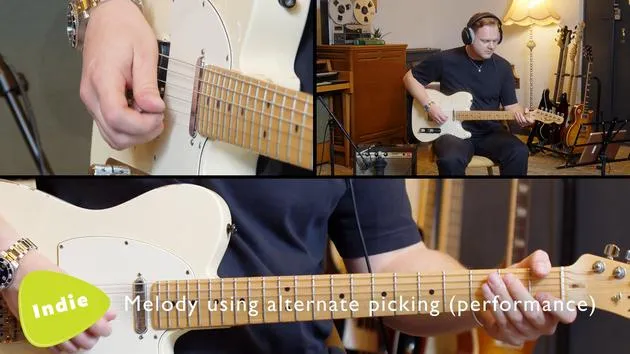
05. Melody using alternate picking (performance)
0:55
06. Melody using alternate picking & D note
2:47
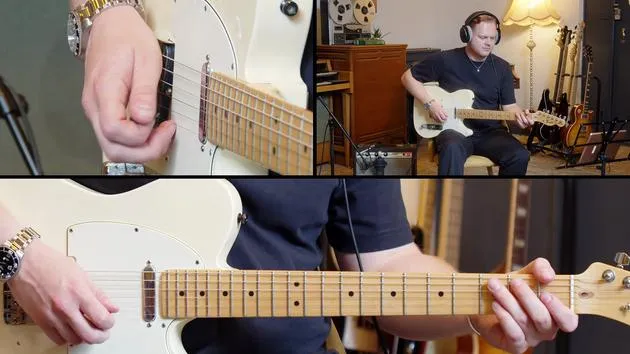
07. Melody using alternate picking & D note (performance)
0:51
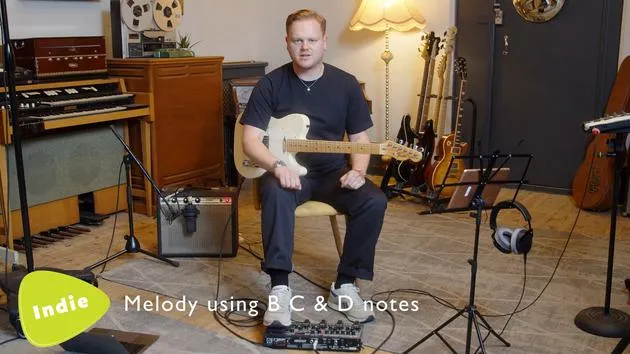
01. Melody using B C & D notes
You are here4:16
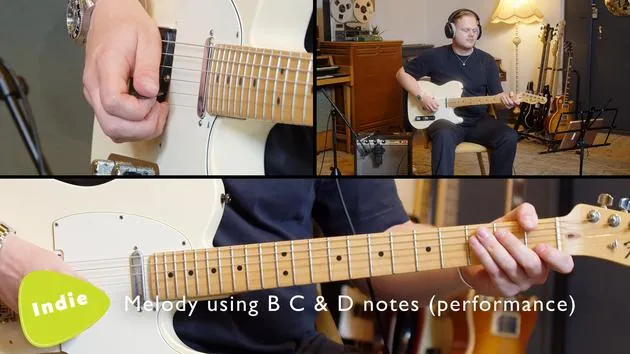
02. Melody using B C & D notes (performance)
0:58
03. Melody using E note
2:08
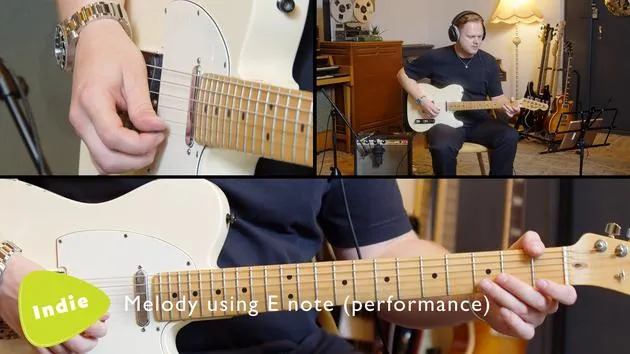
04. Melody using E note (performance)
0:46
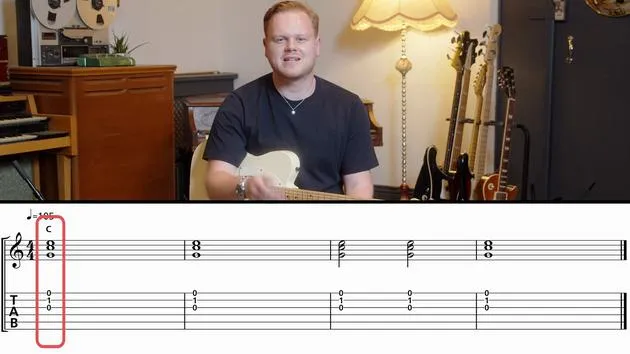
05. Rhythm part using C chord
2:00
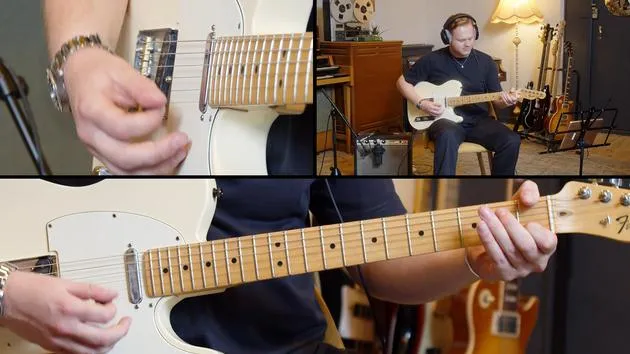
06. Rhythm part using C chord (performance)
0:48
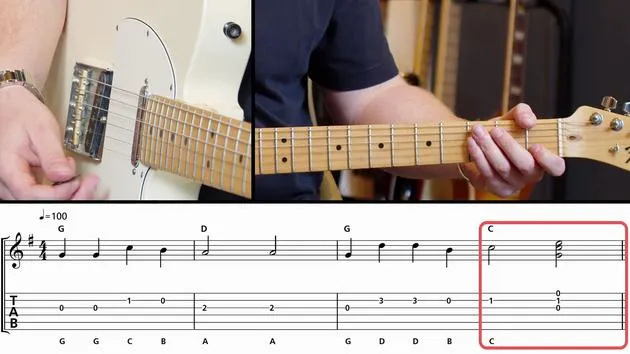
07. Parka Life bars 5-8
1:57
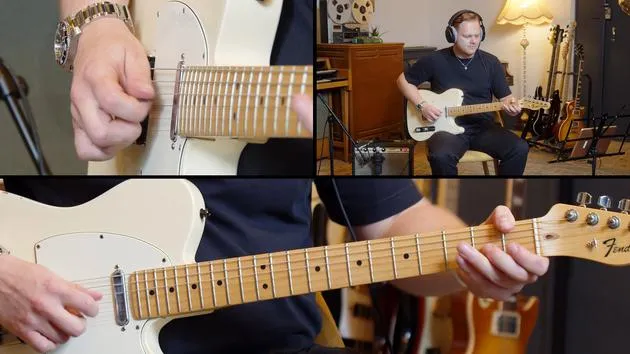
08. Parka Life bars 5-8 (performance)
0:50
09. Summary of Indie section
0:21
01. Intro to Pieces
1:00
02. Rock City
5:51
03. Rock City (performance)
0:50
04. Party People
7:20
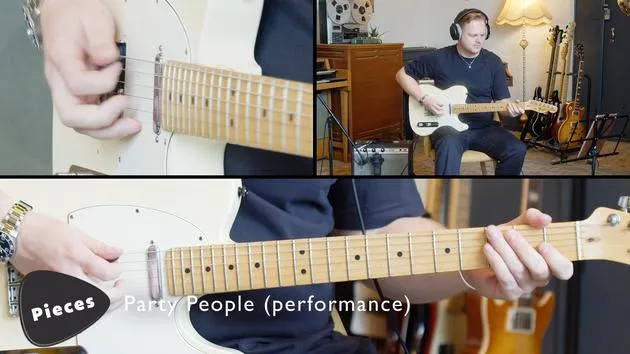
05. Party People (performance)
0:46
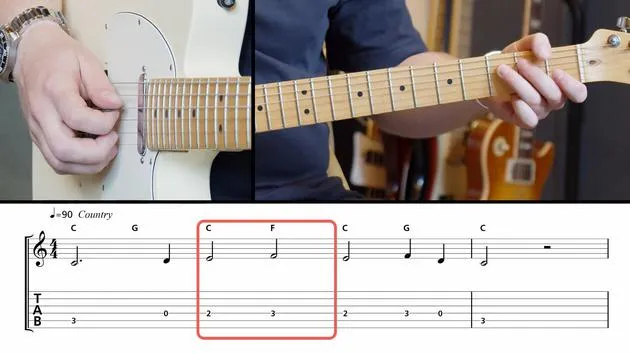
06. Road to Nashville
6:08
07. Road to Nashville (performance)
0:47
08. Lead Boots
6:33
09. Lead Boots (performance)
0:49
10. Parka Life
5:01
11. Parka Life (performance)
0:43
12. Represent
5:23
13. Represent (performance)
0:46
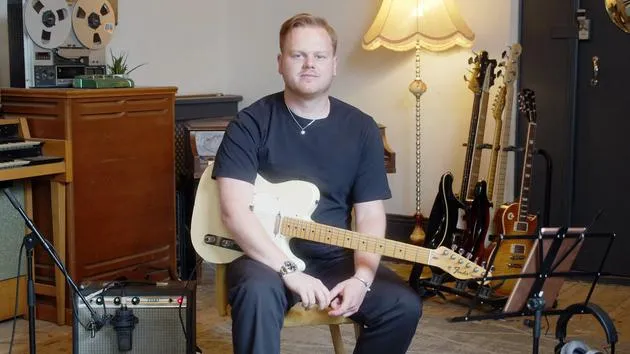
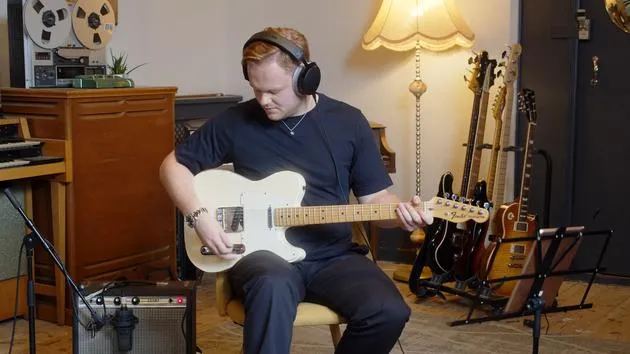
Lesson transcript
Indie Music and Guitar Techniques
We discussed earlier that indie music uses a lot of different sounds, and that's what makes the style so interesting. We can achieve these sounds by using a pedal.
Essential Pedal Sounds
On my board, the main kinds of sounds are:
- Overdrive or Distortion: This changes the amp from being clean to really rocky and big.
- Modulation: This warps the signal, allowing you to get those stranger, more experimental sounds. You can hear the wobble in the notes.
- Delay: This acts like an echo. Imagine going under a tunnel and shouting; the note repeats and carries on.
In indie music, it's very common for guitarists to turn them all on and just make some noise.
Multi-Effects vs. Individual Pedals
You can get pedals individually or as a multi-effects unit, which means multiple pedals in one. I like that option because it's easy to carry around and ready to go. However, you can also build your own boards by buying one sound at a time:
- Distortion: This might just be one box that you then plug into a modulation box, which is a different unit.
- It doesn't always have to come as one unit.
Of course, if you don't have this equipment, it's not the end of the world. These are just tools we can experiment with later on as you get deeper into your guitar playing.
Reinforcing Guitar Skills
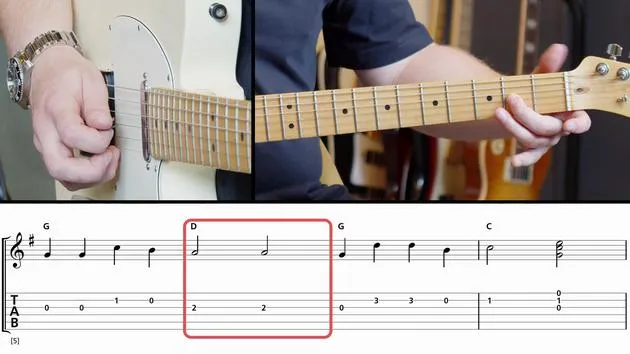
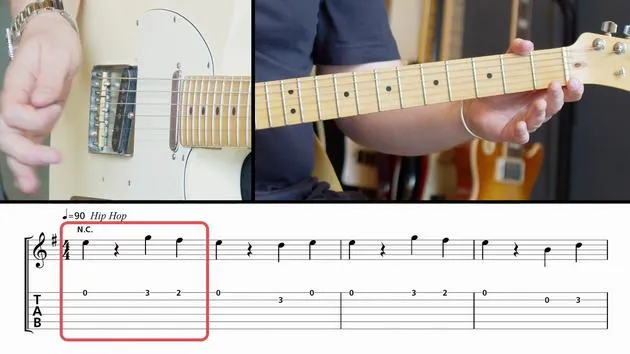
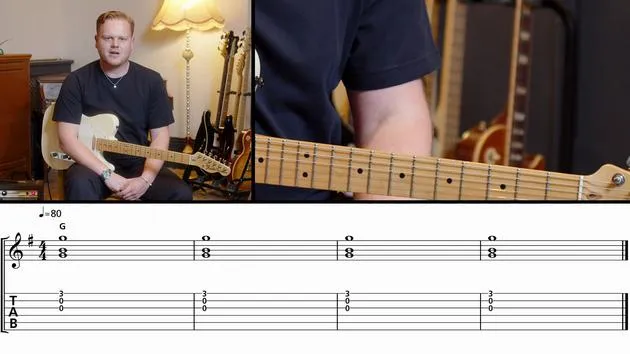
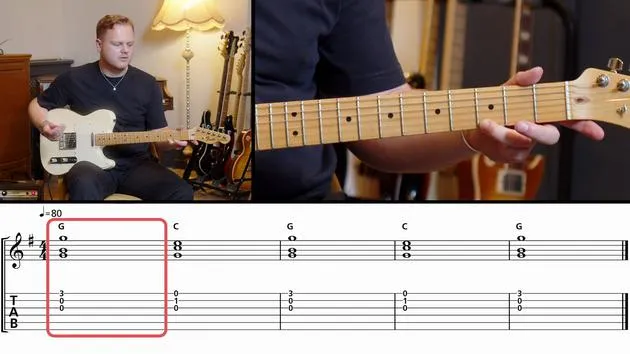
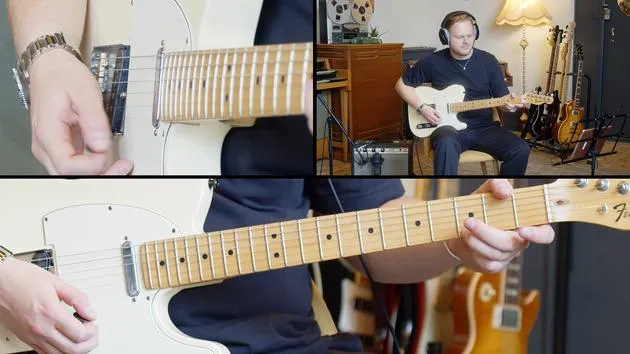
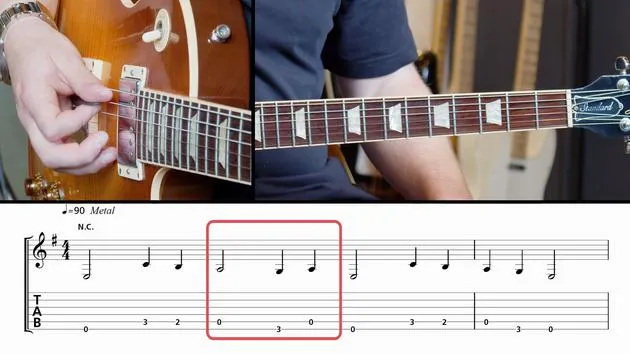
Looking at Example One in Indie Part Two, we're not learning anything new; we're reinforcing the skills we've already picked up along this course.
Analyzing the Example
- We can see a mixture of rests, note lengths, and different notes on the neck.
- We're including the new D that we learnt on the B string, but taking a first look:
- We have quarter notes alternating between fretted notes and rests.
- We'll play the open B string going to C, but in between, we've got a quarter note rest.
Using Both Hands for Muting
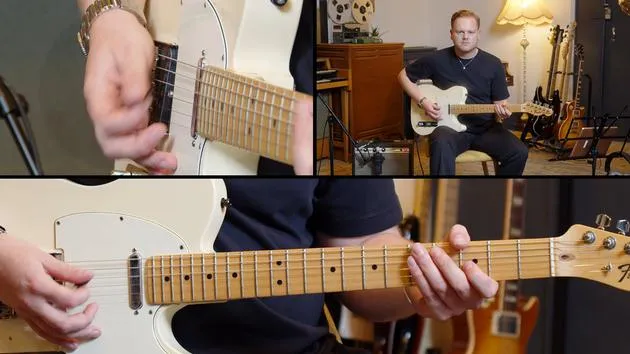
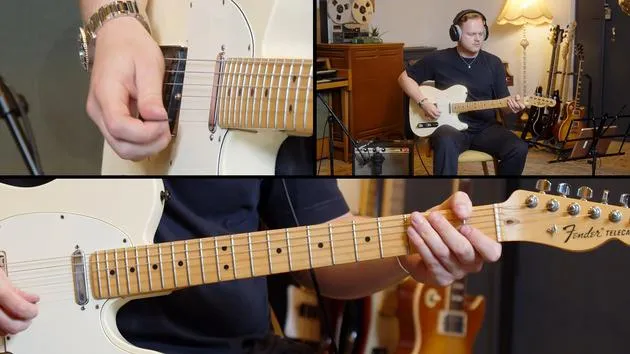
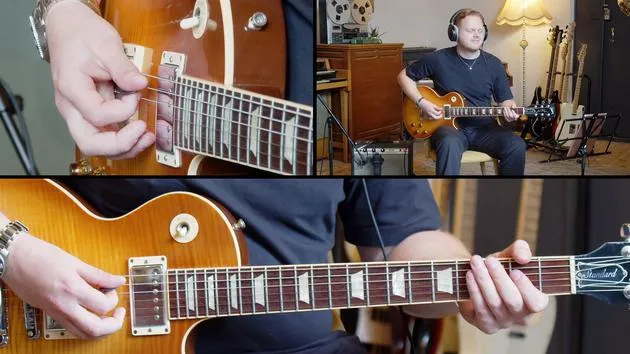
Now is a great time to start using both hands when fretting notes. Here's how to do it:
- Lift up your finger from the note to stop it.
- Use your palm on the bridge to stop the note as well.
- You can also use other fingers if you're playing an open string.
What I'm doing here is applying no pressure; I'm just resting my hand on top of the string to stop the note.
Practice Exercise
Let's take some time to play with that.
- Play the open B string.
- Use a finger to stop the note.
Key Tip: Keep your finger resting and don't lift it up; otherwise, the note will come back. Very slightly, but it's noticeable.
Moving Through the Example
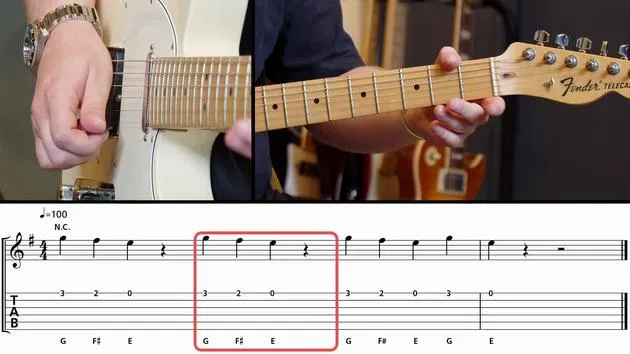
In Bar Two, we've got that new D note. We will:
- Use alternate picking, going from D to the first fret, then C to the open string.
- In Bar Three, we've got half notes and quarter notes. We know this now, and we're getting really familiar with it, so we'll blast through it.
Steps for this bar:
- Second fret: on the G string (which is A)
- Open B, back to that A on the G string
- Finish off with a whole note, open G
This is simple stuff for us, and we should be really comfortable with it.
Tempo Practice
Now, we're going to try and go from start to finish at a slightly slower tempo. Then you can build up to the tempo of the backing track.
Let's give it a go together:
Key Skills: Muting
The key skill we're practicing here is muting with both hands.
- I would like you to practice muting with your left hand, then with your right, and lastly, both together.
- Let's practice that on the low E string.
Getting Comfortable with Muting
Practice first with your left hand, then your right, and then both to achieve a really deadened sound. You can practice this in any spare time you have‚ maybe when you first pick up the guitar.
Final Tip: You only need to do it a handful of times to get it under your fingers, but it's a great technique to start working on.
50 lessons
1h 52m of structured video lessons
Advanced video features
Slow down, loop a passage, follow along
Mobile, tablet & desktop
Practise wherever you are
100% satisfaction guarantee
30-day money-back guarantee
Meet your guru
Meet your guru
Tommy Webb is a London-based guitarist who completed a BA(Hons) Degree in guitar at the Academy of Contemporary Music in Guildford, studying under Sandy Beales (One Direction, Wheatus) and Nicolas Meier (Jeff Beck). His own playing moves freely across rock, pop, indie, hip-hop, country and metal - the exact ground his guitar methods cover.
Tommy has worked with a wide range of artists and bands across the country, including Jarki Monno and Indira May, sharing stages and sessions with guitarists Paul Murray (Jess Glynne, Zak Abel) and Adam Chetwood (Paolo Nutini, Mark Ronson), and drummers Alex Woodward (Black Honey), Luke Robinson and “Bambi Music” (N-Dubz, Lethal Bizzle, Wretch 32, Tinie Tempah).
On stage, he has performed at the Jazz Cafe opening for soul singer Jocelyn Brown, plus venues and festivals including Ronnie Scott's, Troy Bar, The Watford Colosseum, Camden Assembly, Kensington Roof Gardens, Notting Hill Arts Club, Meraki Festival and Sundown Festival.
On record and radio, Tommy has played live sessions for BBC Three Counties Introducing, Vibe FM and Pulse 88, with tracks featured on BBC Radio 1 and Radio 2. He has recorded at studios including South Lanes Brighton, Hempstead Road and Titan Studios with producers such as Steph Carter (Gallows, Lyoness) and TMS / Froe Barnes (Lewis Capaldi, Dua Lipa).
In his guitar methods, Tommy passes all of that working-musician know-how on to you - teaching the techniques, tones and feel behind real styles, from rock and pop to indie, hip-hop, country and metal, so you can play the music you actually love.