



Melody using dotted half note
With
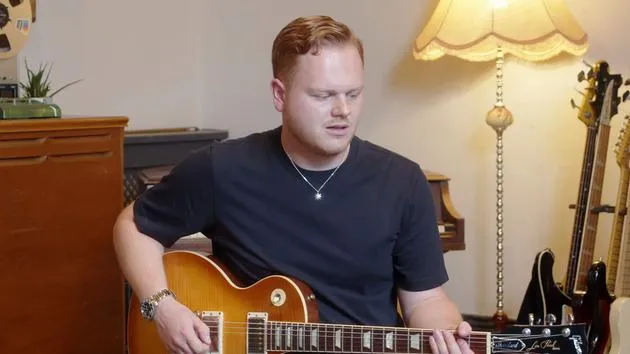
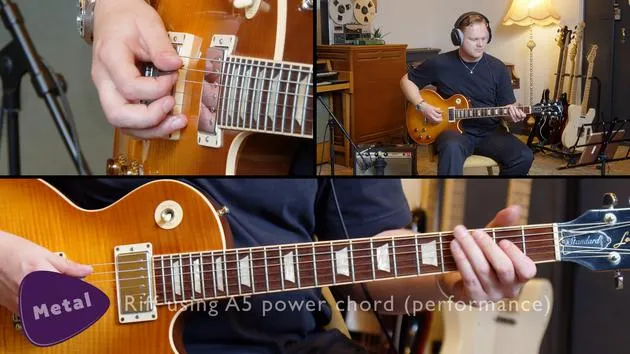
Tommy WebbTommy Webb explains dotted notes - how a dot adds half a note's value - using a country-style melody built on the dotted half note.
What's in the course
30 lessons (0h 55m) · 1 free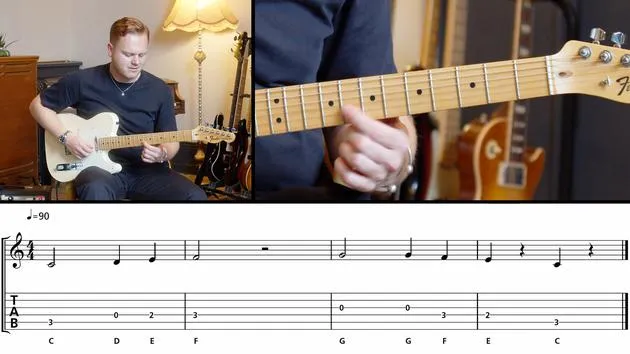
01. Melody using G note
3:33
02. Melody using G note (performance)
0:57
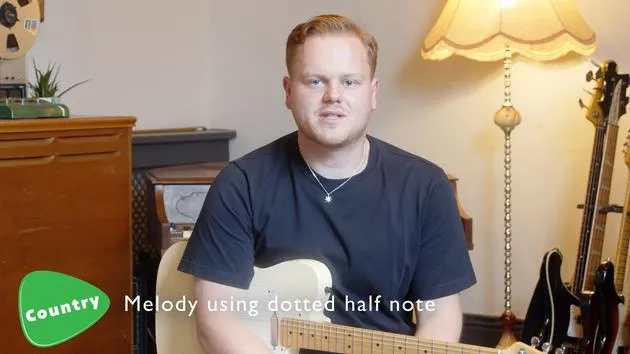
03. Melody using dotted half note
You are here2:14
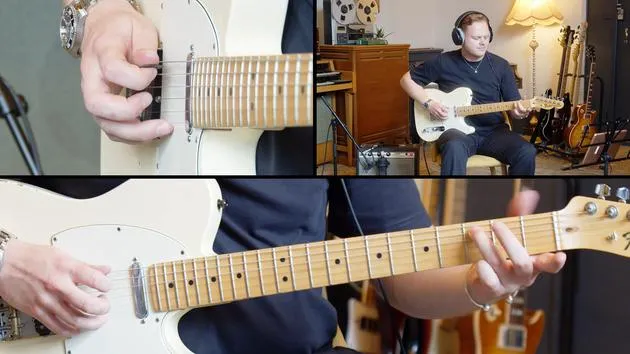
04. Melody using dotted half note (performance)
0:53
05. Melody using A note
3:59
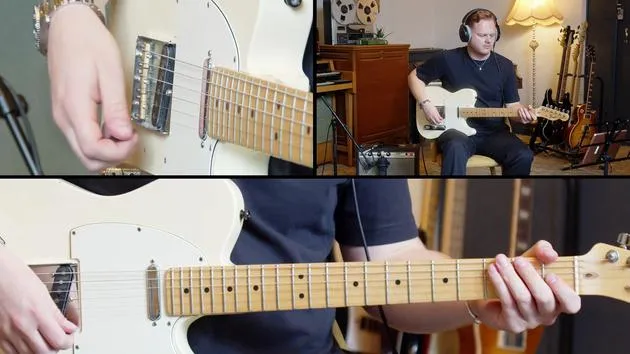
06. Melody using A note (performance)
0:53
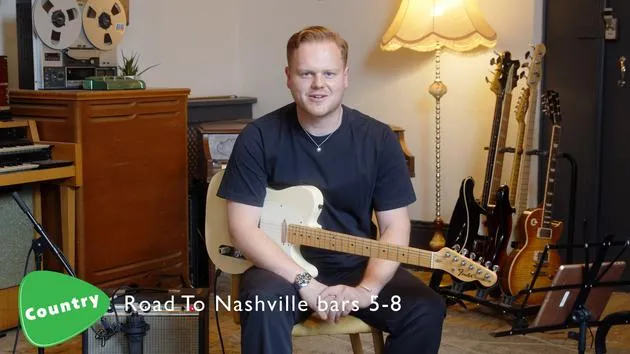
07. Road To Nashville bars 5-8
2:49
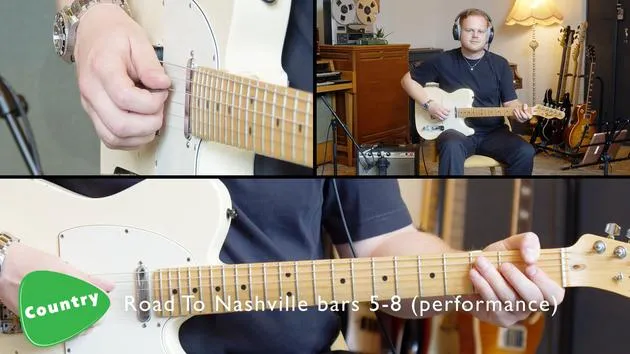
08. Road To Nashville bars 5-8 (performance)
1:04
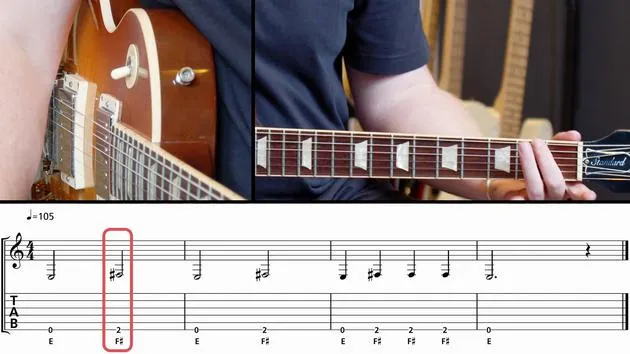
01. Riff using F# note
3:47
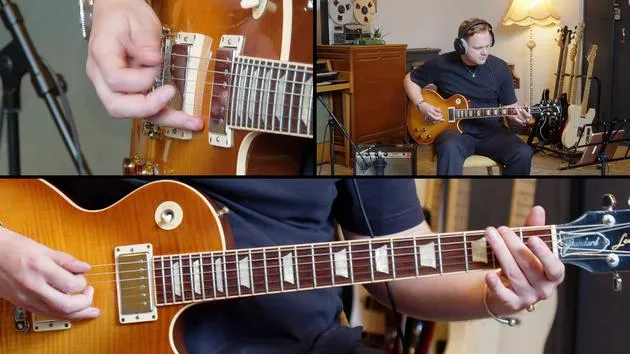
02. Riff using F# note (performance)
0:47
03. Riff using a key signature
2:00
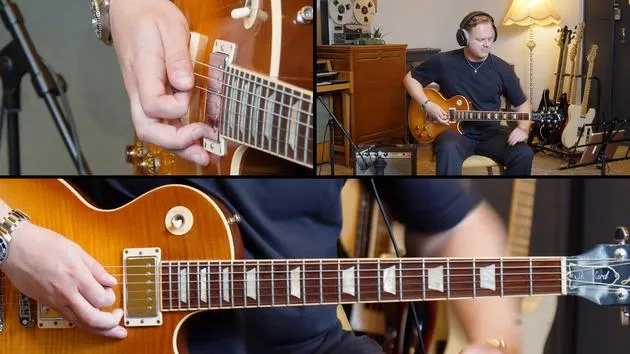
04. Riff using a key signature (performance)
0:51
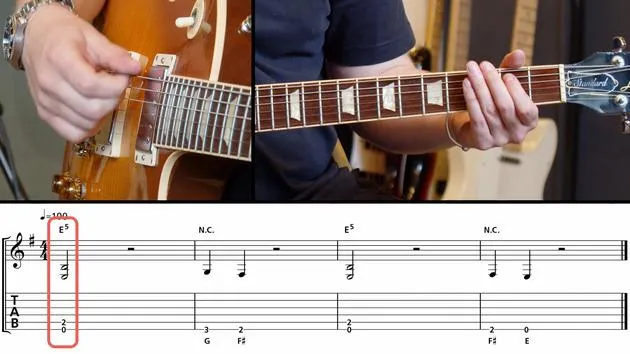
05. Riff combining power chords and single notes
2:07
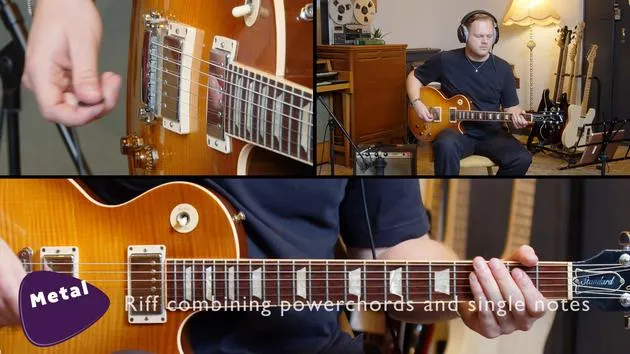
06. Riff combining power chords and single notes (performance)
0:49
07. Lead Boots bars 13-16
3:07
08. Lead Boots bars 13-16 (performance)
0:56
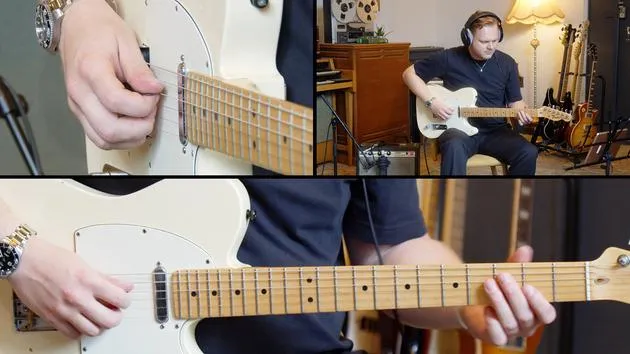
Lesson transcript
Understanding Dotted Notes
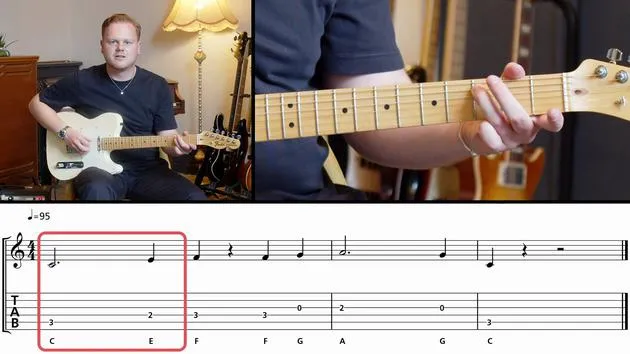
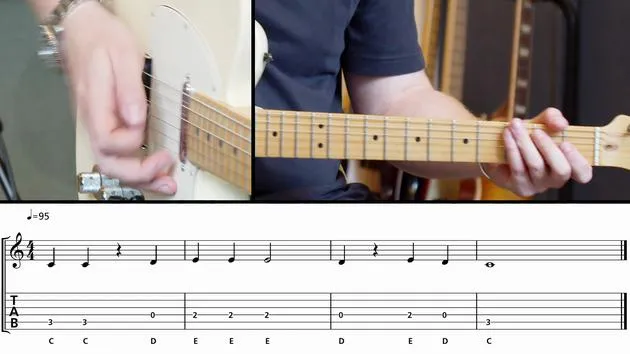
Example 2 is our first look at dotted notes. We can think of this easily as the note value you're seeing. The dot is half of that note's value:
-
If we had a dotted half note, it would be:
2 beats + 1 beat = 3 beats. -
If we had a dotted whole note, it would be:
4 beats + 2 beats = 6 beats long. -
A dotted quarter note would be:
1 beat + ¬Ω beat = 1.5 beats.
Analyzing the Example
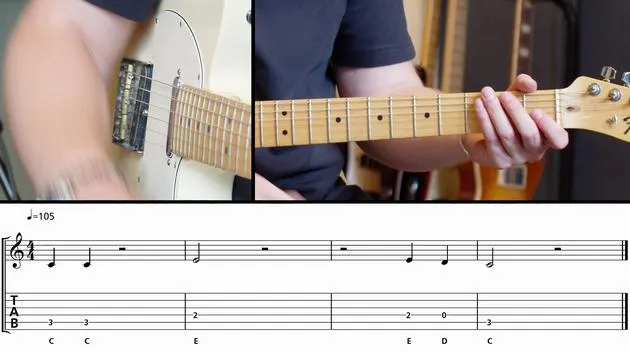
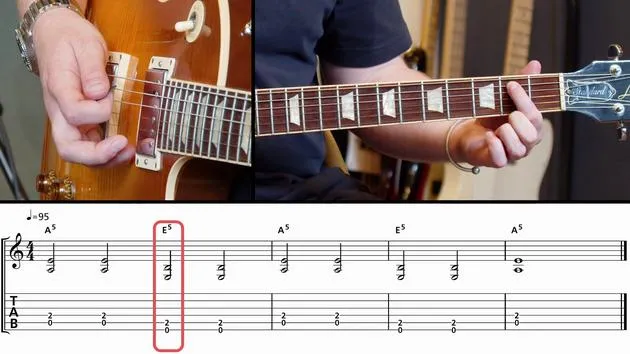
In bar one, the first note is C. We've got a dotted half note, so let's work that out together:
- Half note = 2 beats
- Half of a half note = 1 beat
Adding them together gives us 3 beats.
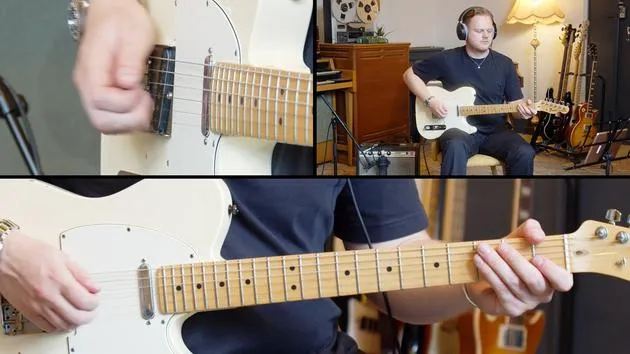
Therefore, we're going to count to three and play that C again on beat four. It will sound like this:
1, 2, 3, 4.
1, 2, 3, 4.
You can hear that we have an extra beat on that dotted half note.
Breakdown of the Bars
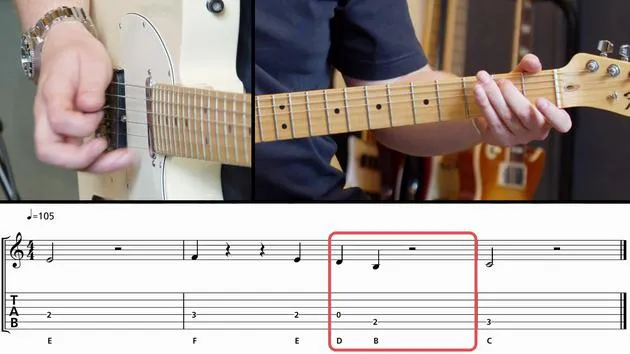
- Bar 1: C played as a dotted half note
- Bar 2: C played as a quarter note
- Bar 3: F
- Bar 4: C (again)
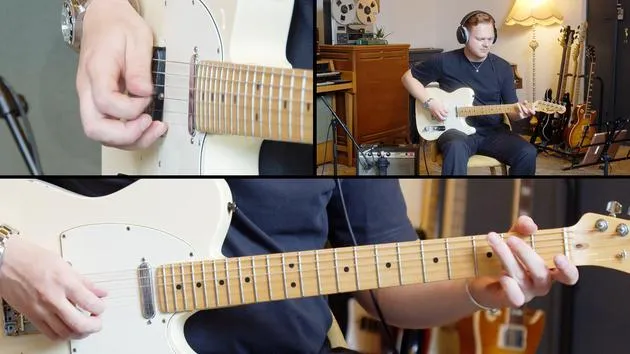
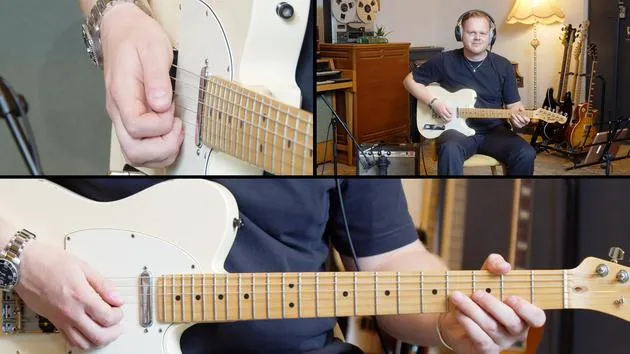
As we mentioned previously, we're rolling our finger down to the third fret. We're not going to lift our finger up; we're just rolling it down to the D string and back up to the A string.
Example Practice
To practice this, we'll play it together:
1, 2, 3, 4.
1, 2, 3, 4.
1, 2, 3, 4.
1, 2, 3, 4.
1, 2, 3, 4.
The Importance of Rolling Fingers
Hopefully, you can hear why the rolled finger technique is beneficial.
Watch what happens when I lift my finger:
(Play with a big gap)
You can hear the time it takes for me to lift my finger and put it back down.
Now, here's when I roll my finger:
(Play with a smooth transition)
You can hear much more blending between the two. This technique reduces the gap, minimizing pauses between notes.
It's a good idea to experiment with this approach‚ not all the time, but look for little shortcuts to make each note blend into the next.
30 lessons
0h 55m of structured video lessons
Advanced video features
Slow down, loop a passage, follow along
Mobile, tablet & desktop
Practise wherever you are
100% satisfaction guarantee
30-day money-back guarantee
Meet your guru
Meet your guru
Tommy Webb is a London-based guitarist who completed a BA(Hons) Degree in guitar at the Academy of Contemporary Music in Guildford, studying under Sandy Beales (One Direction, Wheatus) and Nicolas Meier (Jeff Beck). His own playing moves freely across rock, pop, indie, hip-hop, country and metal - the exact ground his guitar methods cover.
Tommy has worked with a wide range of artists and bands across the country, including Jarki Monno and Indira May, sharing stages and sessions with guitarists Paul Murray (Jess Glynne, Zak Abel) and Adam Chetwood (Paolo Nutini, Mark Ronson), and drummers Alex Woodward (Black Honey), Luke Robinson and “Bambi Music” (N-Dubz, Lethal Bizzle, Wretch 32, Tinie Tempah).
On stage, he has performed at the Jazz Cafe opening for soul singer Jocelyn Brown, plus venues and festivals including Ronnie Scott's, Troy Bar, The Watford Colosseum, Camden Assembly, Kensington Roof Gardens, Notting Hill Arts Club, Meraki Festival and Sundown Festival.
On record and radio, Tommy has played live sessions for BBC Three Counties Introducing, Vibe FM and Pulse 88, with tracks featured on BBC Radio 1 and Radio 2. He has recorded at studios including South Lanes Brighton, Hempstead Road and Titan Studios with producers such as Steph Carter (Gallows, Lyoness) and TMS / Froe Barnes (Lewis Capaldi, Dua Lipa).
In his guitar methods, Tommy passes all of that working-musician know-how on to you - teaching the techniques, tones and feel behind real styles, from rock and pop to indie, hip-hop, country and metal, so you can play the music you actually love.







