


Riff using a key signature
With
Tommy Webb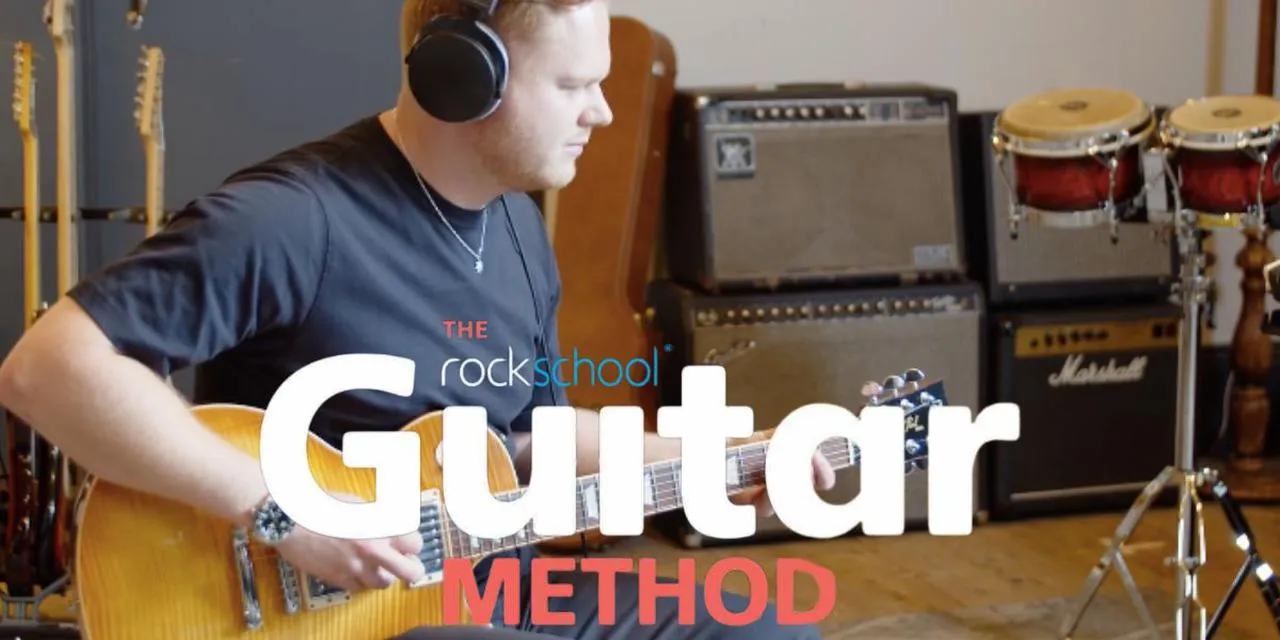
What's in the course
30 lessons (0h 55m) · 1 free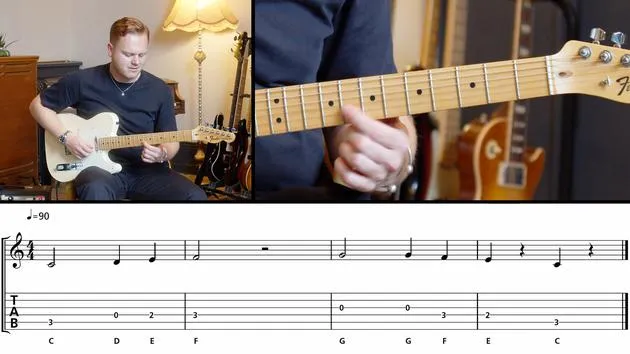
01. Melody using G note
3:33
02. Melody using G note (performance)
0:57
03. Melody using dotted half note
2:14
04. Melody using dotted half note (performance)
0:53
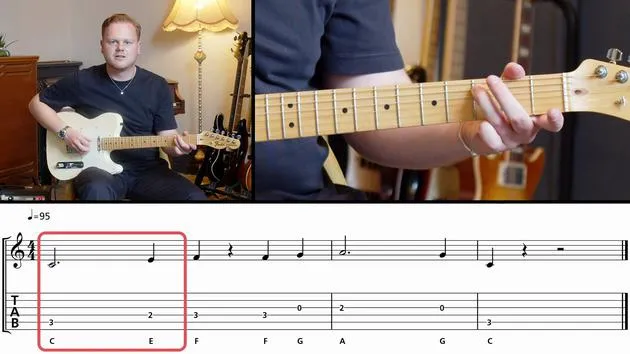
05. Melody using A note
3:59
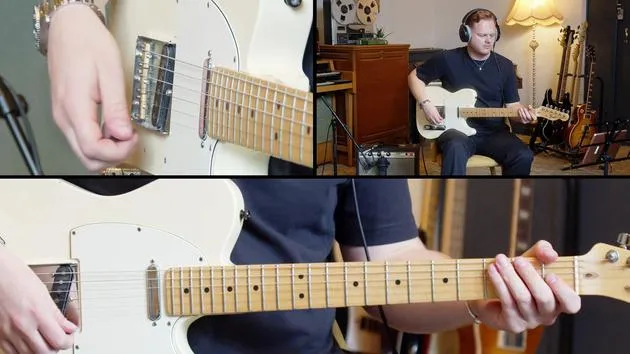
06. Melody using A note (performance)
0:53
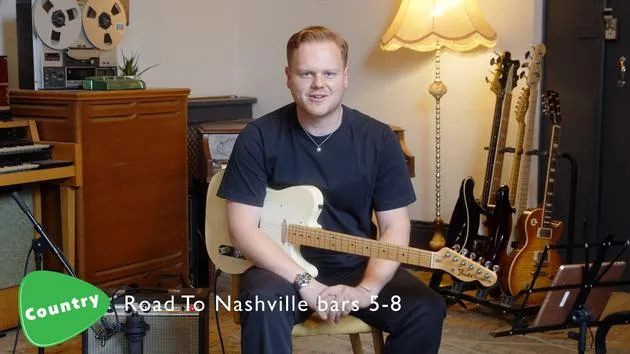
07. Road To Nashville bars 5-8
2:49
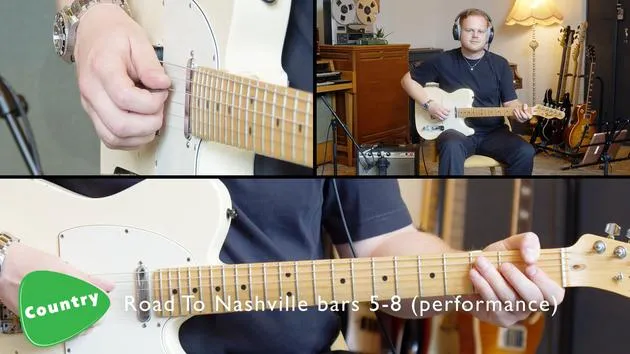
08. Road To Nashville bars 5-8 (performance)
1:04
01. Riff using F# note
3:47
02. Riff using F# note (performance)
0:47
03. Riff using a key signature
You are here2:00
04. Riff using a key signature (performance)
0:51
05. Riff combining power chords and single notes
2:07
06. Riff combining power chords and single notes (performance)
0:49
07. Lead Boots bars 13-16
3:07
08. Lead Boots bars 13-16 (performance)
0:56
Lesson transcript
Key Signatures and Sharp Notes
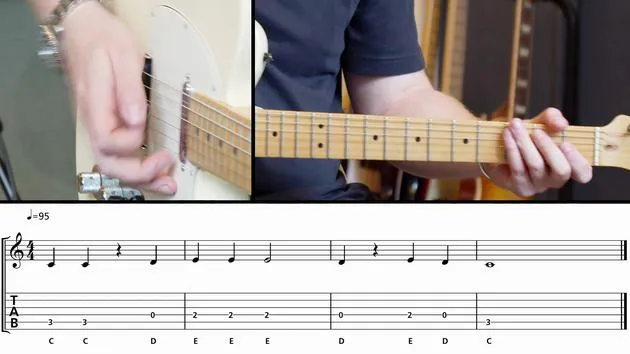
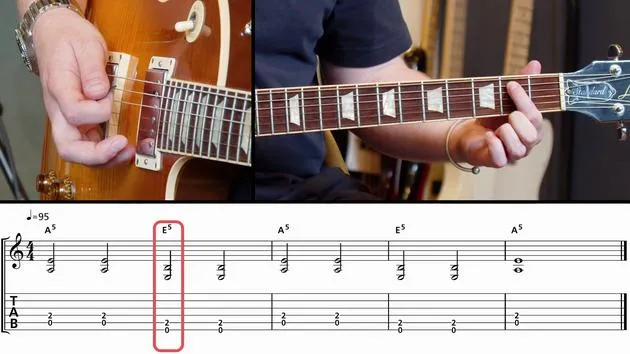
Example 2 of this section is our first look at a key signature.
Previously, we encountered sharps and needed that little hashtag to indicate where to play the sharp note. The key signature conveys this information at the beginning of the piece.
Importance of Key Signatures
- It's advisable to use key signatures if every note we're playing is a sharp.
- For instance, if every note in F is actually F sharp, it seems unnecessary to write the sharp symbol in front of every single note.
- Instead, we place it at the start of the music, indicating that every note represented as F will be F sharp, unless a natural sign appears to indicate otherwise.
Example Breakdown
In this example:
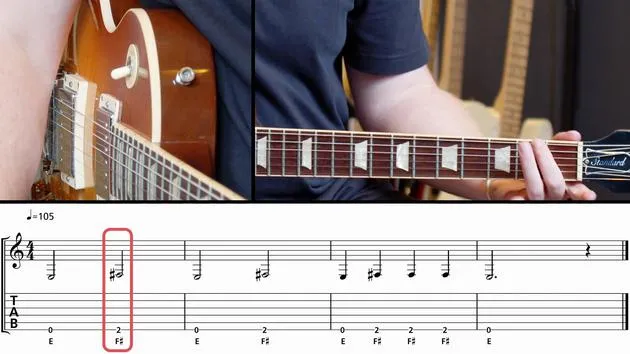
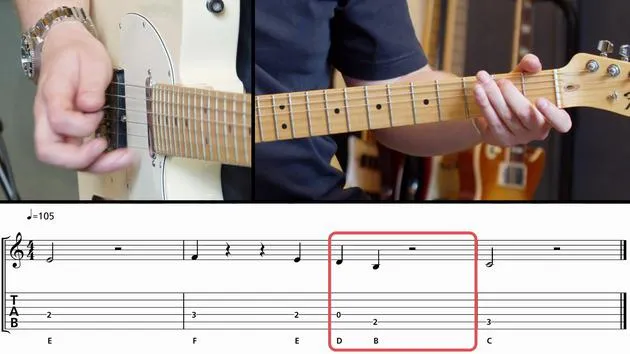
- In the first bar, we see F sharp leading to E.
- The F note does not have a sharp in front of it because the key signature at the start, placed between the treble clef and the time signature, indicates that F is sharpened.
Rhythm and Playing Technique
This example is quite straightforward in terms of rhythms:
- We have quarter notes at the second fret on the E string for our F sharp.
- This F is an upper semitone, thus F sharp.
- There's a repetition of this for three bars.
Key Points to Watch
- At the end, in the last bar, we have an open E that lasts for two beats.
- It's a half note followed by a half note rest, so we need to be mindful of cutting that note short.
Technique Reminder
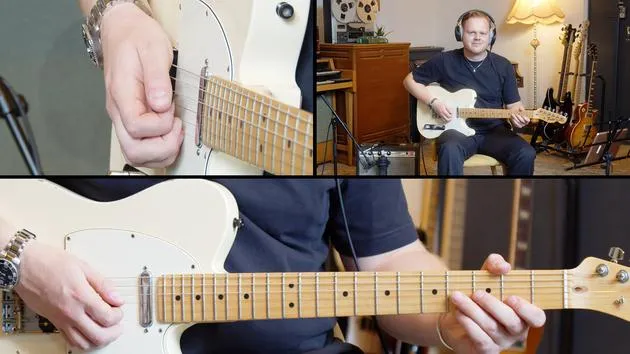
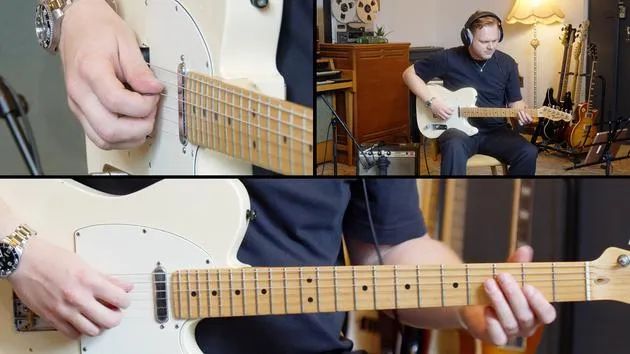
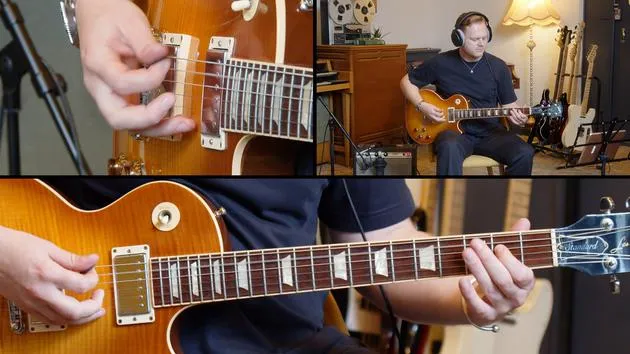
- To execute this, we can use the palm to stop the note dead by resting our palm on the string.
Practice with Backing Track
Let's give this a go, nice and slowly, before we try it with the backing track.
Count with me:
1, 2, 3, 4.
1, 2, 3, 4.
30 lessons
0h 55m of structured video lessons
Advanced video features
Slow down, loop a passage, follow along
Mobile, tablet & desktop
Practise wherever you are
100% satisfaction guarantee
30-day money-back guarantee
Meet your guru
Meet your guru
Tommy Webb is a London-based guitarist who completed a BA(Hons) Degree in guitar at the Academy of Contemporary Music in Guildford, studying under Sandy Beales (One Direction, Wheatus) and Nicolas Meier (Jeff Beck). His own playing moves freely across rock, pop, indie, hip-hop, country and metal - the exact ground his guitar methods cover.
Tommy has worked with a wide range of artists and bands across the country, including Jarki Monno and Indira May, sharing stages and sessions with guitarists Paul Murray (Jess Glynne, Zak Abel) and Adam Chetwood (Paolo Nutini, Mark Ronson), and drummers Alex Woodward (Black Honey), Luke Robinson and “Bambi Music” (N-Dubz, Lethal Bizzle, Wretch 32, Tinie Tempah).
On stage, he has performed at the Jazz Cafe opening for soul singer Jocelyn Brown, plus venues and festivals including Ronnie Scott's, Troy Bar, The Watford Colosseum, Camden Assembly, Kensington Roof Gardens, Notting Hill Arts Club, Meraki Festival and Sundown Festival.
On record and radio, Tommy has played live sessions for BBC Three Counties Introducing, Vibe FM and Pulse 88, with tracks featured on BBC Radio 1 and Radio 2. He has recorded at studios including South Lanes Brighton, Hempstead Road and Titan Studios with producers such as Steph Carter (Gallows, Lyoness) and TMS / Froe Barnes (Lewis Capaldi, Dua Lipa).
In his guitar methods, Tommy passes all of that working-musician know-how on to you - teaching the techniques, tones and feel behind real styles, from rock and pop to indie, hip-hop, country and metal, so you can play the music you actually love.