



I Want To Break Free – Queen (Analysis)
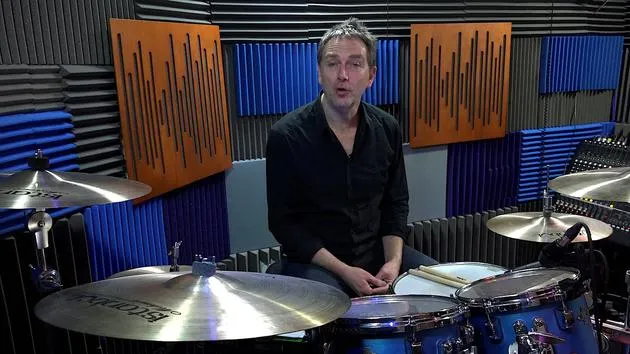
Pete Riley analyses the drum part to Queen's I Want To Break Free, focusing on keeping your eighth notes even and holding your place through the verse.

What's in the course
28 lessons (1h 51m) · 2 free
01. Soul Man – Sam And Dave
1:27
02. I Want To Break Free – Queen
1:04
03. Liberation – Wretch 32
1:11
04. In The Midnight Hour – Wilson Pickett
1:11
05. Yeah – Usher
1:07
06. Billie Jean – Michael Jackson
1:25
07. Kaiser Roll
1:10
08. Bend & Snap
1:09
09. Jangle Road
1:21
10. West Coast Rollin'
1:24
11. Deep Trouble
1:12
12. Munky Fusic
Free lesson1:14
01. Soul Man – Sam And Dave (Analysis)
4:55
02. Billie Jean – Michael Jackson (Analysis)
13:28
03. In The Midnight Hour – Wilson Pickett (Analysis)
8:40
04. Yeah – Usher (Analysis)
10:26
05. I Want To Break Free – Queen (Analysis)
You are here3:18
06. Liberation – Wretch 32 (Analysis)
7:45
07. Kaiser Roll (Analysis)
8:56
08. Bend & Snap (Analysis)
7:25
09. Jangle Road (Analysis)
5:12
10. West Coast Rollin' (Analysis)
Free lesson3:53
11. Deep Trouble (Analysis)
7:38
12. Munky Fusic (Analysis)
2:45
Lesson transcript
Music Lesson: I Want to Break Free by Queen
Here we're looking at I Want to Break Free by Queen. We have an essential groove throughout the piece:
- Hi-Hat: Eighth notes
- Snare: Beats 2 and 4
- Bass Drum:
- Beat 1
- The and of beat 2
- Beat 3
Key Focus: Evenness of Eighth Notes
One of the vital qualities we're aiming for in that pattern is even spacing of the eighth notes. It's crucial for these to be as even as possible to ensure the groove sits well within the track.
Here's the basic pattern that runs throughout, along with the evenness of the eighth notes.
Retaining Your Place
The next challenge within the piece is retaining your place. We have a 12-bar verse section followed by a guitar solo, where we're essentially playing the same part.
To help keep your place, try counting the bars as you play:
1, 2, 3, 4,
2, 2, 3, 4,
3, 2, 3, 4,
etc.
As I mentioned, that first section is 12 bars long, ending on the downbeat of the 12th bar. I'll play the last four bars of that first verse.
Transition to the Guitar Solo
From the point where we've stopped on the downbeat of the bar:
- The drums are out for the next three beats of that bar.
- We then re-enter for the guitar solo.
Notice: There is not a crash cymbal on the beginning of this bar, so we go straight back into the same groove we had during the verse.
We then play that same pattern for the next eight bars.
Ending of the Piece
When we reach the last four bars of the piece, we will play a crash cymbal on the downbeat.
I am going to take it from Bar 19, two bars before we hit that crash cymbal to the end of the piece.
Practice Tip: Crash Cymbal Transition
When playing a crash cymbal within a groove, it can be quite challenging to move away from the hi-hat to the crash cymbal.
It's worth practicing this by trying to crash on the downbeat of every bar while moving away from the eighth notes on the hi-hat.
Conclusion
Those are all the parts you need to play the track. Have fun playing along!
28 lessons
1h 51m of structured video lessons
Advanced video features
Slow down, loop a passage, follow along
Mobile, tablet & desktop
Practise wherever you are
100% satisfaction guarantee
30-day money-back guarantee







