



Sight reading tips
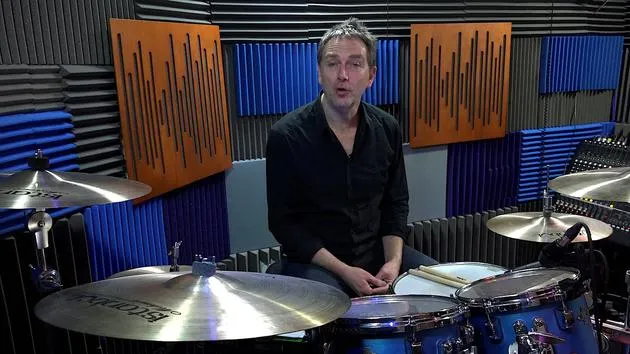
Paul Elliott shares tips for the drum sight-reading exam, from single-line reading to composite groove reading, and how to break a phrase down.

What's in the course
28 lessons (1h 51m) · 2 free
01. Soul Man – Sam And Dave
1:27
02. I Want To Break Free – Queen
1:04
03. Liberation – Wretch 32
1:11
04. In The Midnight Hour – Wilson Pickett
1:11
05. Yeah – Usher
1:07
06. Billie Jean – Michael Jackson
1:25
07. Kaiser Roll
1:10
08. Bend & Snap
1:09
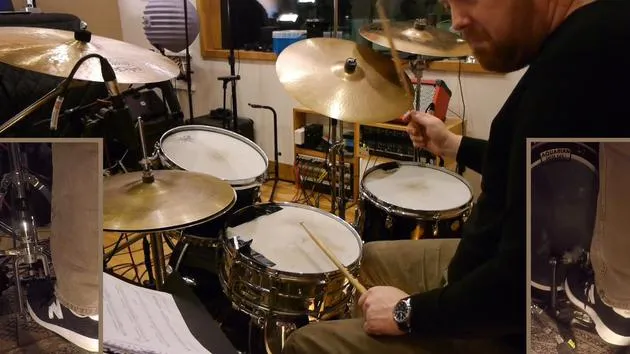
09. Jangle Road
1:21
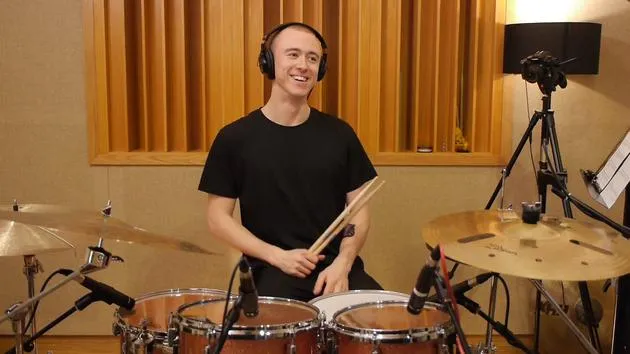
10. West Coast Rollin'
1:24
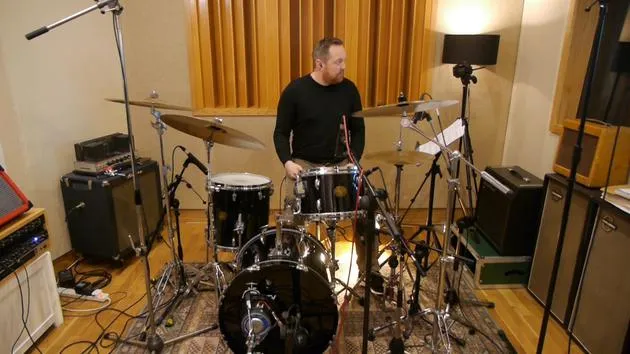
11. Deep Trouble
1:12
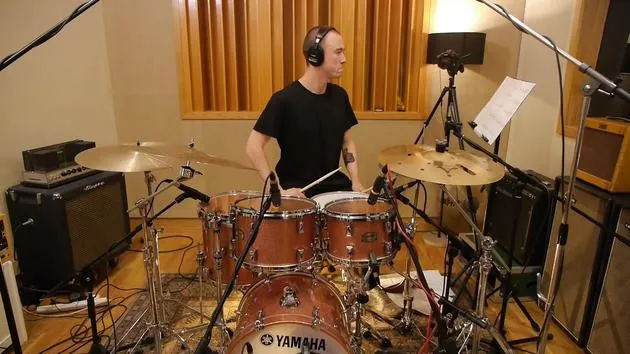
12. Munky Fusic
Free lesson1:14
01. Soul Man – Sam And Dave (Analysis)
4:55
02. Billie Jean – Michael Jackson (Analysis)
13:28
03. In The Midnight Hour – Wilson Pickett (Analysis)
8:40
04. Yeah – Usher (Analysis)
10:26
05. I Want To Break Free – Queen (Analysis)
3:18
06. Liberation – Wretch 32 (Analysis)
7:45
07. Kaiser Roll (Analysis)
8:56
08. Bend & Snap (Analysis)
7:25
09. Jangle Road (Analysis)
5:12
10. West Coast Rollin' (Analysis)
Free lesson3:53
11. Deep Trouble (Analysis)
7:38
12. Munky Fusic (Analysis)
2:45
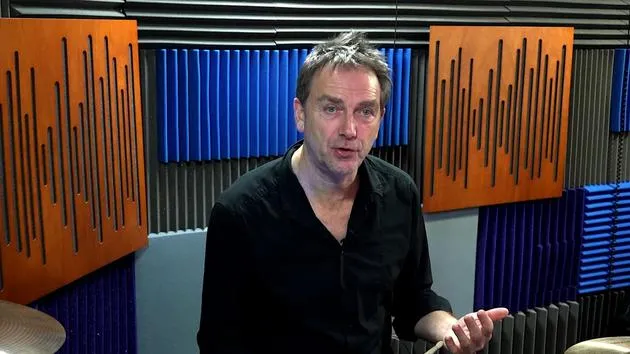
01. Sight reading tips
You are here7:19

Lesson transcript
Music Lesson: Sight Reading and Interpretation
In grades one to five, you'll be required to choose between sight reading and interpretation/improvisation.
Why is Sight Reading Important?
You might ask, "Why do I need to read?" Well, sight reading is a crucial professional skill with many benefits:
- Professional Context: If you find yourself in a situation where you need to read a chart, being able to read is vital.
- Examination Criteria: At Rock School, we emphasize sight reading as a critical component of our examination package.
Tips for Sight Reading
To get started, I'll provide some tips on single-line reading and what we call composite groove reading, which will aid in interpretation and improvisation.
The Process of Sight Reading
- Look at Notes: Begin by examining the notes.
- Put Together Phrases: Assemble these notes into recognizable phrases.
Initially, when working on phrases, you'll break them down slowly. For example, consider this 16th note phrase:
- Count: 1, 2, 3, 4
- Identify: Work out the appearance and reason for its notation.
- Internalize Sound: Once recognized, you can hear and anticipate: "1 and a 2 and a 3 and a 4."
In practice, aim for a natural, automatic response to these rhythms, just as you would when reading sentences in a book.
Phrase Recognition
Every subdivisional note and pulse has an associated phrasing system. For instance, with eighth notes at a tempo of 1, 2, 3, 4:
- Breakdown of Eighth Notes:
- Quarter note: 1, 2, 3, 4
- Half beats: 1 and 2 and 3 and 4
- Two eighth notes: 1 and 2 and 3 and 4
These combinations create phrases.
Triplet Phrases
When playing triplet phrases, break them into manageable groups:
- Count: 1, 2, 3, 4
- Identify Groups:
- Example: 1 triplet, 2 triplet, 3 triplet, 4 triplet.
Recognize combinations, such as first and third, or use different configurations.
16th Note Phrases
With 16th note phrases, more notes per beat means more phrases in sight reading exercises.
- Tempo: 1, 2, 3, 4.
- Example Count:
- 1 E and A, 2 E and A, 3 E and A, 4 E and A.
You can create various phrases by selecting different notes, such as:
- Common Phrases:
- First, third, and fourth notes.
Practice Exercises
- Last Three Notes: 1, 2, 3, 4; 1 E and 2 E and 3 E and 4 E.
- First Two Notes: 1 E, 2 E, 3 E, 4 E.
- Middle Two Notes: 1, 2; 3 E and 4 E.
Conclusion
As you practice, recognize how the notes look and how the rhythms sound. With enough work, you will become a better sight reader in both musical and professional contexts.
We can also explore 16th note triplets and 32nd notes, especially as you progress through the higher grades. The key takeaway is the importance of recognition, note values, and subdivisions in your music practice.
28 lessons
1h 51m of structured video lessons
Advanced video features
Slow down, loop a passage, follow along
Mobile, tablet & desktop
Practise wherever you are
100% satisfaction guarantee
30-day money-back guarantee







