



West Coast Rollin' (Analysis)
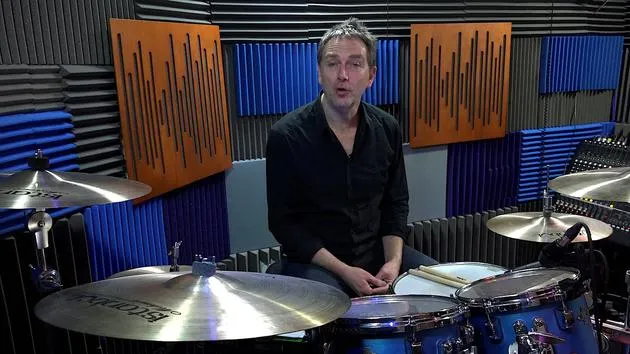
Harry Pope breaks down the Grade 1 hip-hop piece 'West Coast Rollin'', explaining why rock-solid, steady timing on the bass and snare is the drummer's main job in this style.

What's in the course
28 lessons (1h 51m) · 2 free
01. Soul Man – Sam And Dave
1:27
02. I Want To Break Free – Queen
1:04
03. Liberation – Wretch 32
1:11
04. In The Midnight Hour – Wilson Pickett
1:11
05. Yeah – Usher
1:07
06. Billie Jean – Michael Jackson
1:25
07. Kaiser Roll
1:10
08. Bend & Snap
1:09
09. Jangle Road
1:21
10. West Coast Rollin'
1:24
11. Deep Trouble
1:12
12. Munky Fusic
Free lesson1:14
01. Soul Man – Sam And Dave (Analysis)
4:55
02. Billie Jean – Michael Jackson (Analysis)
13:28
03. In The Midnight Hour – Wilson Pickett (Analysis)
8:40
04. Yeah – Usher (Analysis)
10:26
05. I Want To Break Free – Queen (Analysis)
3:18
06. Liberation – Wretch 32 (Analysis)
7:45
07. Kaiser Roll (Analysis)
8:56
08. Bend & Snap (Analysis)
7:25
09. Jangle Road (Analysis)
5:12
10. West Coast Rollin' (Analysis)
You are here3:53
11. Deep Trouble (Analysis)
7:38
12. Munky Fusic (Analysis)
2:45
Lesson transcript
West Coast Rolling Hip Hop - Grade One Rock School
It's a really, really fun piece, and I really, really like it!
Understanding the Hip Hop Genre
Since we're in the hip hop genre, it's essential to stay steady.
- As a drummer in a hip hop band, your job is to be steady for everybody else.
- This steadiness allows the keys to be free and the rapper to wrap over the top without feeling like the bottom is going to drop out of the whole piece.
Key Points:
-
Steady Rhythm: Consistency in sound is paramount.
- Ensure that the bass drum and the snare drum sound exactly the same each time you hit them within this groove.
-
Accent on the Hi-Hat:
- I am accenting the hi-hat on the beat each time.
- There is absolutely no pressure on you to do that. If you want to do it, it sounds really cool and adds a bit of extra depth to the groove , emphasizing that quarter note pulse.
Important Tips for Playing
-
Be careful that whenever you play:
- Bass drum and hi-hat
- Bass drum and crash cymbal
- Snare drum and hi-hat
- Snare drum and bass drum
They should all sound exactly the same.
-
Avoid Accidental Misses:
Unless you mean to miss, it can be really dangerous to not play them together. At this level, don't let that happen. -
Open Hi-Hat Sound:
- Aim for a nice sizzle on the open hi-hat.
- If you want this sound, we would just hit a crash cymbal.
- (We have two of them, and they're great!)
Think of bacon sizzling in a pan , that's the sound you're after!
Developing Your Groove
-
I'm also playing rim shots in the groove, which is when you hit the rim and the snare head at the exact same time.
-
This adds a lovely crack to the sound that enhances the overall experience.
Note:
- No Pressure: It's not on the chart, so you don't have to do it. But if you want to, be my guest! No rapper will ever get angry at you for playing a rim shot.
Evolving Your Grooves
There's so much potential for these grooves to develop as you progress on your musical journey. I'm just going to play one of these grooves from this piece and let it evolve to see where I want to take it.
These are techniques that you might pick up on as you continue your musical journey, but you don't have to do it all now.
Enjoy playing this piece! I did.
Take care. Bye!
28 lessons
1h 51m of structured video lessons
Advanced video features
Slow down, loop a passage, follow along
Mobile, tablet & desktop
Practise wherever you are
100% satisfaction guarantee
30-day money-back guarantee







