



In The Midnight Hour – Wilson Pickett (Analysis)
Paul Elliott shares how to approach this classic Wilson Pickett soul track - playing with gentle dynamics, conviction and a strong sense of the time feel.

What's in the course
28 lessons (1h 51m) · 2 free
01. Soul Man – Sam And Dave
1:27
02. I Want To Break Free – Queen
1:04
03. Liberation – Wretch 32
1:11
04. In The Midnight Hour – Wilson Pickett
1:11
05. Yeah – Usher
1:07
06. Billie Jean – Michael Jackson
1:25
07. Kaiser Roll
1:10
08. Bend & Snap
1:09
09. Jangle Road
1:21
10. West Coast Rollin'
1:24
11. Deep Trouble
1:12
12. Munky Fusic
Free lesson1:14
01. Soul Man – Sam And Dave (Analysis)
4:55
02. Billie Jean – Michael Jackson (Analysis)
13:28
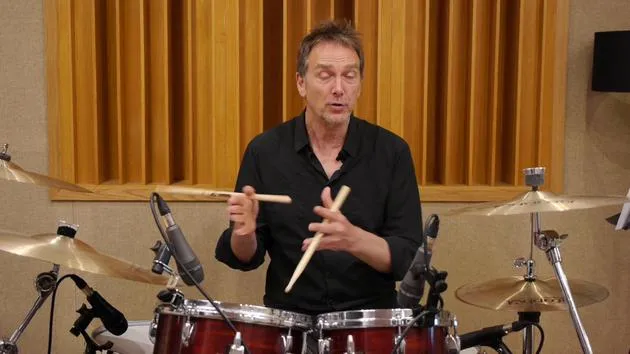
03. In The Midnight Hour – Wilson Pickett (Analysis)
You are here8:40
04. Yeah – Usher (Analysis)
10:26
05. I Want To Break Free – Queen (Analysis)
3:18
06. Liberation – Wretch 32 (Analysis)
7:45
07. Kaiser Roll (Analysis)
8:56
08. Bend & Snap (Analysis)
7:25
09. Jangle Road (Analysis)
5:12
10. West Coast Rollin' (Analysis)
Free lesson3:53
11. Deep Trouble (Analysis)
7:38
12. Munky Fusic (Analysis)
2:45
Lesson transcript
Music Lesson: "In the Midnight Hour" by Wilson Pickett
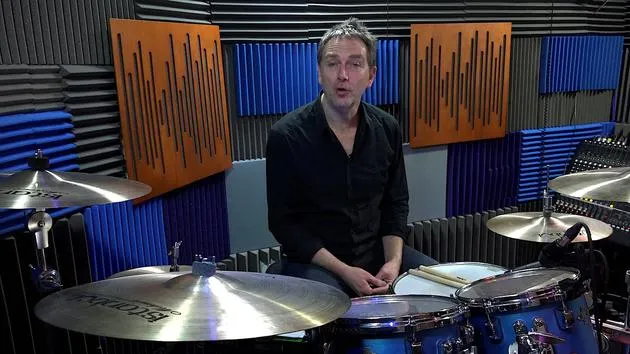
Okay, let's take a look at "In the Midnight Hour" by the great Wilson Pickett, featuring the drummer Al Jackson. This is a classic soul track.
If you listen to the original, it's very gentle, with a lovely time flow.
Dynamics and Approach
This is not a track to play with a real heavy style. I would approach this with a nice, gentle dynamic but with a lot of conviction and energy. That's how I approach any tune in any style.
Time Feel
There's quite a lot going on here with quite a few changes. It's essential to sing the time feel, as you'll hear me emphasize a lot. Always strive to come in with some kind of time feel, almost preceding the first bar. It's important to not come in cold.
In this track, we have these two cymbal crashes, which create a very definite rhythmic motif. Anticipate those cymbal crashes:
"1, 2, 3, 4."
That's a really great intro. It's crucial to plan how you're going to come in and anticipate those hits.
Right Cymbal and Crash Approach
I find it easier to prepare for the right cymbal by using my right hand for the crash. This ensures I'm ready to hit the right cymbal. I'll demonstrate how I approach this:
- Position myself on the right hand side.
- Stay close to the right cymbal to prevent unnecessary movement.
- Play eighth notes on the right.
Another key feature of this piece is the movement between the right cymbal and hi-hat, which is largely eighth-note dominated. This requires an understanding of dynamics and the two very distinct sounds.
I'll show you how I handle this dynamically to create the best possible feel.
"Boom chat. Boom boom chat."
I'm not reading any parts from the chart, but you can hear the kind of time feel I'm aiming for. I don't play too heavy, avoiding a rim shot on the snare. Instead, I play center snare, nice and tight on top of the hi-hat with a slight downbeat on those eighth notes.
When I move to the right cymbal, I maintain that same feel with a slight downbeat:
- With downbeat: Adds movement and variation.
- Without downbeat: May sound too monotonic and robotic.
Experiment and Feel
This track is excellent for experimenting with hi-hat and right cymbal sounds. Here's the dynamic version:
I give a slight inflection, a very slight accent on the downbeat to inspire movement.
Now, here's an undynamic version. While it's acceptable, it might not sound as groovy or feel as good.
Remember, what's on the paper is just a guideline:
"We always have to interpret notation into actual music."
This track is great for moving between different sounds and textures.
Open Hi-Hat Technique
The repetition throughout the piece features open hi-hats. When using an open hi-hat:
- Aim for a smooth sound.
- Avoid a loud, splashy effect, it should not sound like a barking dog.
Here's a quick demo of that eighth-note open hi-hat, pushing into those sounds without excess volume.
Transitioning to Hi-Hat
As we reach the end of the piece, we transition from the right cymbal back to the hi-hat. This requires physical preparation to go from a big open ride cymbal and crashes back down to a tight hi-hat with tight unisons among hi-hat, snare, and bass drum.
Let's play that final four bars:
"1, 2, 3, 4."
From here, I transition smoothly to get back to those tight hi-hat and snare unisons. Keep it tight. If you hear flams while recording or listening back, go back and work on it. We all go through that process of differentiating between unisons and flams.
Conclusion
That's a classic soul technique!
Summary:
- Be aware of different sounds.
- Focus on maintaining that nice tight eighth-note feel.
- Enjoy the flow of notes.
I'm sure you'll have a lot of fun with this track!
28 lessons
1h 51m of structured video lessons
Advanced video features
Slow down, loop a passage, follow along
Mobile, tablet & desktop
Practise wherever you are
100% satisfaction guarantee
30-day money-back guarantee







