



Mood: tempo & dynamics
With
Annabel Thwaite
What's in the course
21 lessons (0h 41m) · 2 free
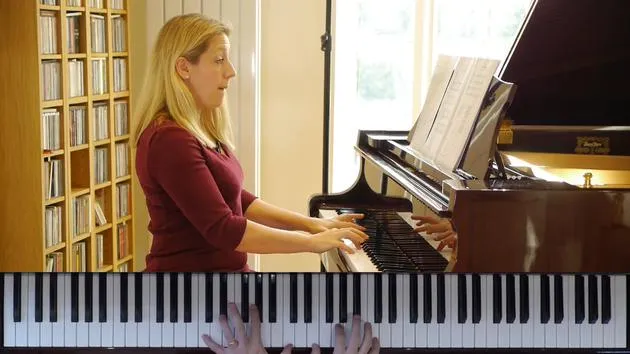
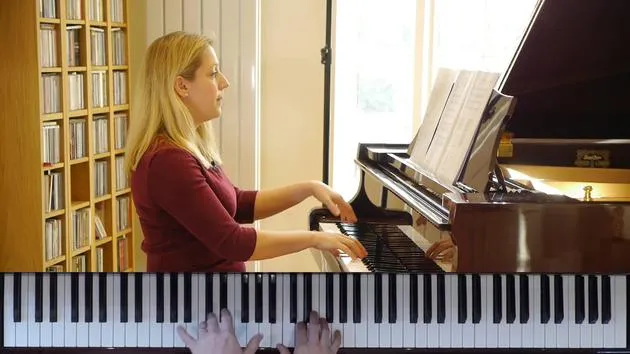
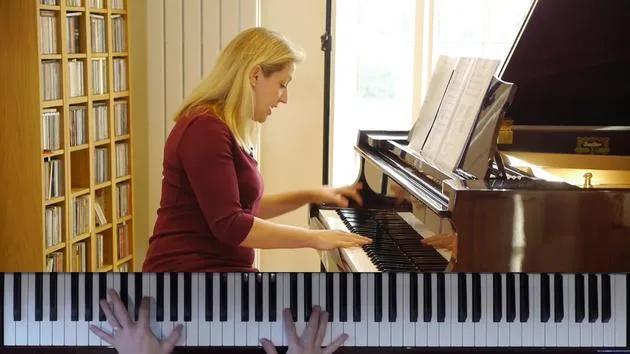
Lesson transcript
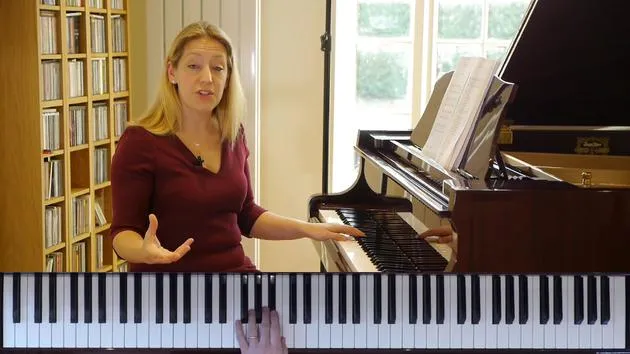
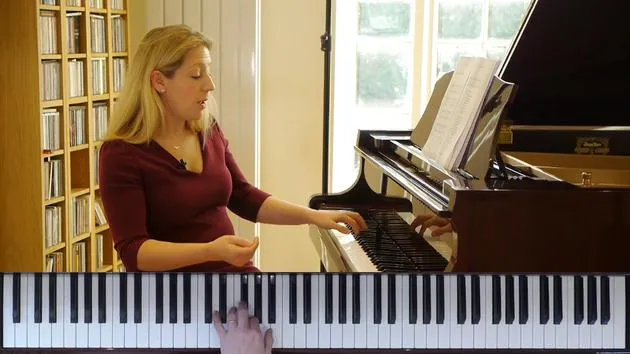
Understanding the Mood and Dynamics of the Piece
Tempo and Mood
- Time Signature: 3/4
- Tempo: Crotchet = 85 (fairly slow)
- Mood:
- The piece is meant to be played with feeling, giving it a gentle lilt.
- Historically, it was often sung to children, introducing a lullaby-like quality.
Key Points:
- Beat Emphasis:
- Beat one is slightly heavier than beats two and three.
- Beat three can have an uplifting feel.
Musical Line
- It's essential to keep the piece moving.
- Remember to think of phrase and text, developing a continuous musical line that doesn't abruptly stop.
Color and Dynamics
- Dynamics in the piece are scarce:
- PP at the beginning.
- A slight crescendo around measures 27 and 29.
Important Note on Crescendos:
- A common teaching in Grade Five theory states that a crescendo means to get louder.
- However, consider it as starting softer:
- Drop the initial sound to bring the listener closer, then grow out of that softness.
"At measure 25, I'm going to drop, and then drop again, it's much more effective. You gain the power to draw the audience in."
Additional Dynamics
-
At the beginning, as mentioned, the piece is marked PP.
-
Since the bars are repeated (two and then another two), consider varying the dynamics:
- Perhaps make the second repetition softer or louder.
-
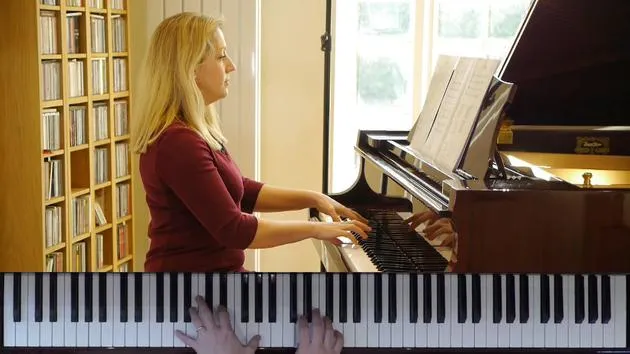
Using the unicorda, the left pedal, can help in achieving desired effects.
Starting Softly
- When beginning a piece marked PP, I advise not to start too softly:
- You may be uncertain how the piano will sound.
- It's much easier to decrease volume than to start extremely softly and risk some notes not being heard.
21 lessons
0h 41m of structured video lessons
Advanced video features
Slow down, loop a passage, follow along
Mobile, tablet & desktop
Practise wherever you are
100% satisfaction guarantee
30-day money-back guarantee
Meet your guru
Meet your guru
Recognised as one of Britain's most versatile and charismatic pianists, Annabel Thwaite enjoys a diverse career as a soloist, chamber musician, recording artist, educator and examiner, and has won all the major accompanying prizes, including the prestigious Kathleen Ferrier, Gold Medal, and Richard Tauber Piano Prizes. She has collaborated with renowned artists such as Roberto Alagna, Bryn Terfel, David Kempster and "Only Men Aloud!"
Annabel has recorded for Universal records with the "Scottish Tenor", whose album was nominated for a Classical Brit Award and is regularly played on Classic FM. Twice the accompanist for the Festival of Welsh Male choirs, her performances at the Royal Albert Hall were recorded by Sain and have been aired on S4C. She is also a film session pianist, having recorded at Abbey Road the music for the film "Awake", the BBC Jane Austen series "Emma", "The Secret Diaries of Miss Anne Lister" and, most recently, she has appeared on both Blue Peter and "The Rob Brydon Show".
"...no doubt helped by the obviously brilliant piano accompaniments from Annabel Thwaite...highly enjoyable."
In her MusicGurus courses - Learn Christmas Classics on Piano, Learn Classical Favourites on Piano, and Growing Chamber Groups and Small Ensembles - Annabel shares the musicianship behind that versatile career. You will learn how to bring well-loved Christmas and classical pieces to life at the piano, develop your touch and phrasing, and, drawing on her award-winning experience as an accompanist, discover how to listen, lead and play together when making music with other musicians in chamber groups and small ensembles.







