



Articulation & Tone Production

With
Annabel Thwaite
What's in the course
21 lessons (0h 41m) · 2 free
Lesson transcript
Understanding the Bach Style
Because we're going to talk about the Bach style, we should be very careful about tone.
Historical Context
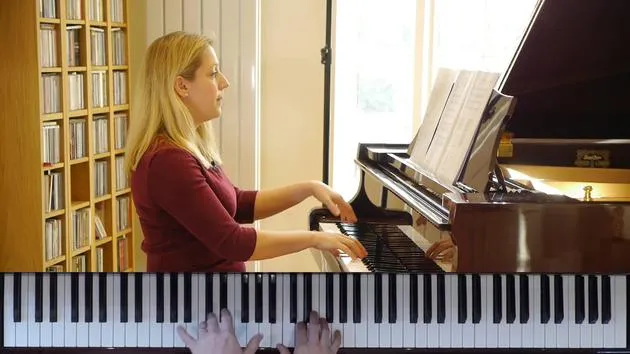
Now, Bach was written at a time when the piano was very underdeveloped; it was primarily the harpsichord. We are playing on a modern piano, so you need to decide whether you're going to play this as if you were playing on a harpsichord, where the tone is quite different, or whether you're going to play it on a modern piano.
I've decided to play it on a modern piano, which offers much more variety to really develop that kind of sweetness, the cantabile, the ringing bell-like, singing quality.
Refinement in Playing
We want real refinement.
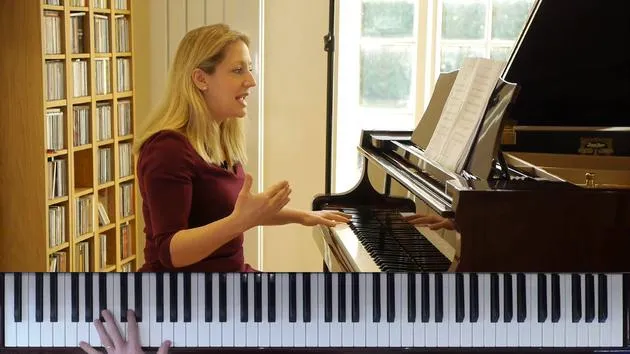
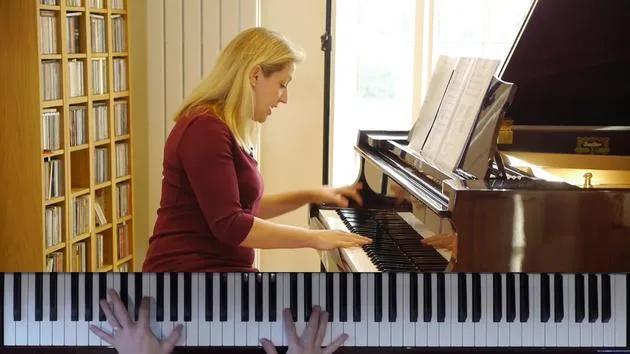
- When you play the notes, rather than just allowing your fingers to execute downwards, which sounds quite harsh and percussive, we want to draw the sound out.
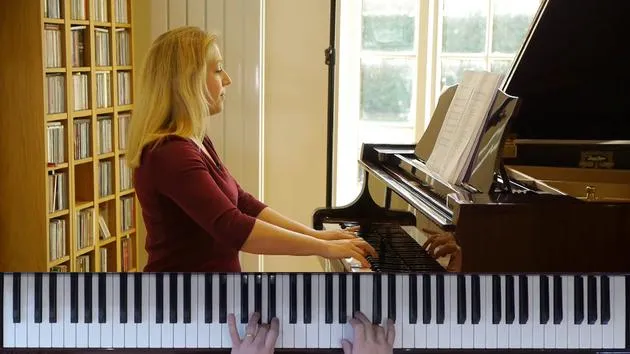
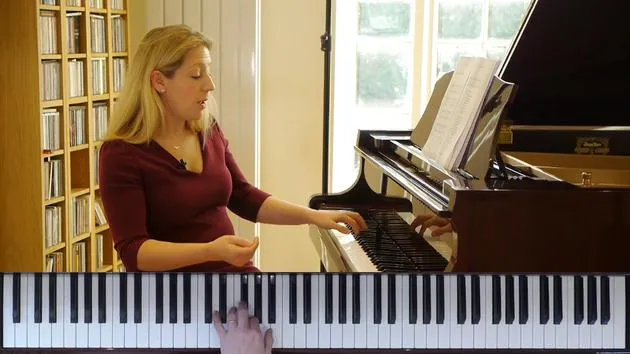
- I'm always a strong advocate for posture and freedom.
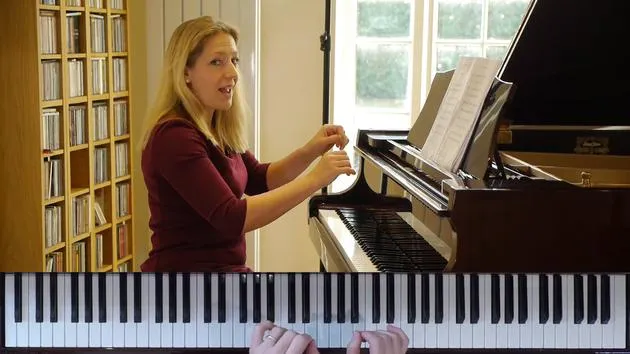
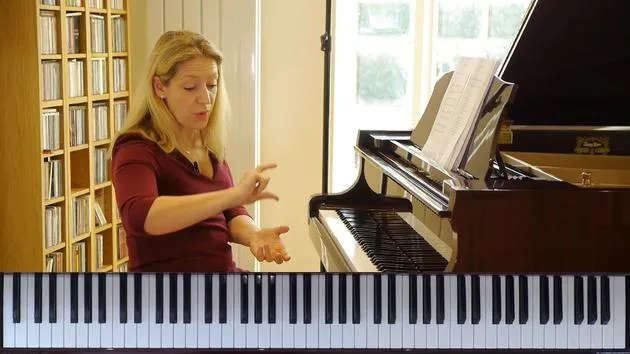
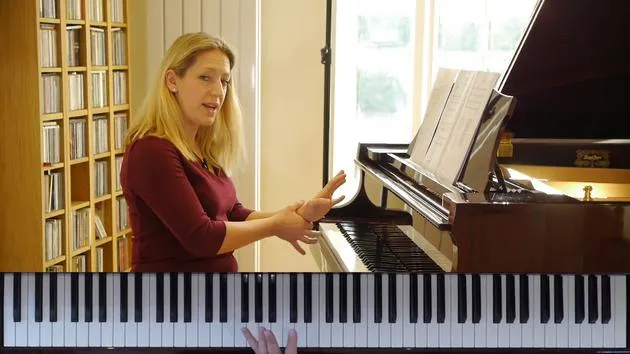
So, we need to have a very relaxed, moving elbow. I often tell my students to "air their armpits" to ensure freedom in their arms.
Avoiding Tension
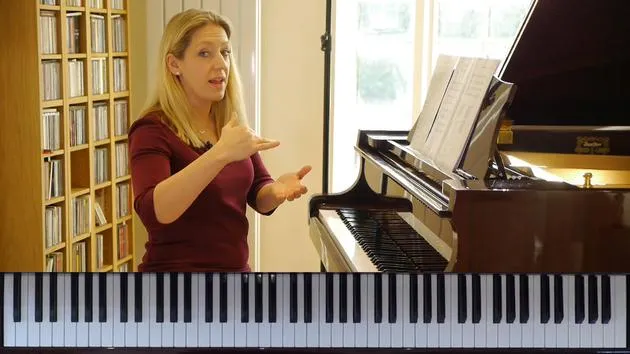
We should strive for relaxation in the arms so that the muscles (since the fingers are connected to the arm) remain free and not tense.
- We never want to have repetitive strain injuries or tennis elbow.
- It's all about being very free!
In fact, it's well-known that pianists can play well into their 90s or even 100s because it's such a natural instrument; the fingers are literally an extension of the arm, unlike the more awkward position of a violinist.
Left Hand Importance
Looking more closely at the piece, apart from the very last chord, the left hand consists of single notes, as does the right hand.
- I believe the left hand is just as important as the melody that we all know.
- The left hand bass part, or if we were thinking in Bach terms, is a continuo, similar to a flowing bass line.
It drives the harmony through and twists and turns the phrase, but that doesn't mean we should play it louder.
Subtlety in Sound
It's about having subtlety and moving the direction of sound rather than being extremely prominent in volume.
- We could play this legato at the beginning, or we could incorporate the idea of footsteps, which I demonstrated later on, or you could do a combination of both.
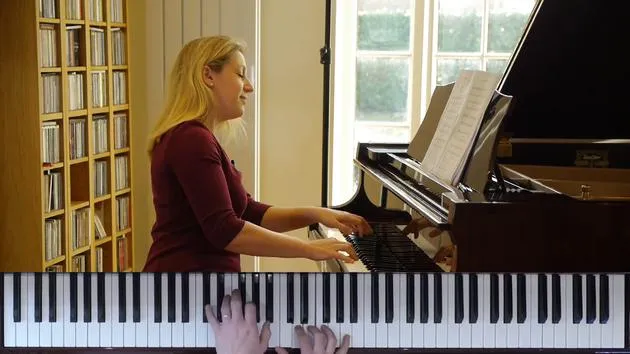
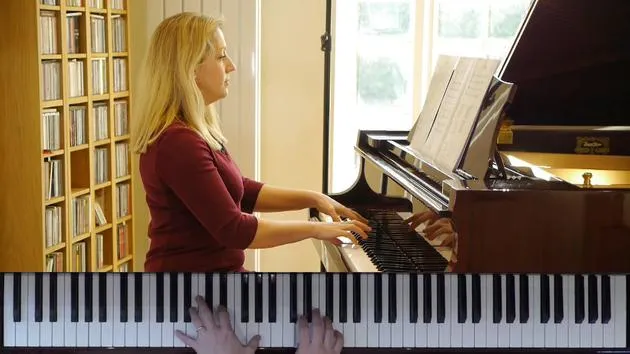
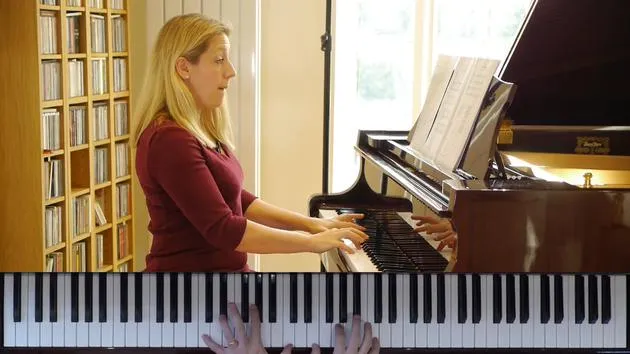
I'm not necessarily playing staccato; I'm using what we call portamento, which is weighted and somewhat detached.
- I'm not lifting my hands off the keys; rather, I'm just lifting the finger from the key and allowing it to come up, without actually leaving the key.
21 lessons
0h 41m of structured video lessons
Advanced video features
Slow down, loop a passage, follow along
Mobile, tablet & desktop
Practise wherever you are
100% satisfaction guarantee
30-day money-back guarantee
Meet your guru
Meet your guru
Recognised as one of Britain's most versatile and charismatic pianists, Annabel Thwaite enjoys a diverse career as a soloist, chamber musician, recording artist, educator and examiner, and has won all the major accompanying prizes, including the prestigious Kathleen Ferrier, Gold Medal, and Richard Tauber Piano Prizes. She has collaborated with renowned artists such as Roberto Alagna, Bryn Terfel, David Kempster and "Only Men Aloud!"
Annabel has recorded for Universal records with the "Scottish Tenor", whose album was nominated for a Classical Brit Award and is regularly played on Classic FM. Twice the accompanist for the Festival of Welsh Male choirs, her performances at the Royal Albert Hall were recorded by Sain and have been aired on S4C. She is also a film session pianist, having recorded at Abbey Road the music for the film "Awake", the BBC Jane Austen series "Emma", "The Secret Diaries of Miss Anne Lister" and, most recently, she has appeared on both Blue Peter and "The Rob Brydon Show".
"...no doubt helped by the obviously brilliant piano accompaniments from Annabel Thwaite...highly enjoyable."
In her MusicGurus courses - Learn Christmas Classics on Piano, Learn Classical Favourites on Piano, and Growing Chamber Groups and Small Ensembles - Annabel shares the musicianship behind that versatile career. You will learn how to bring well-loved Christmas and classical pieces to life at the piano, develop your touch and phrasing, and, drawing on her award-winning experience as an accompanist, discover how to listen, lead and play together when making music with other musicians in chamber groups and small ensembles.







