



Practice tips

With
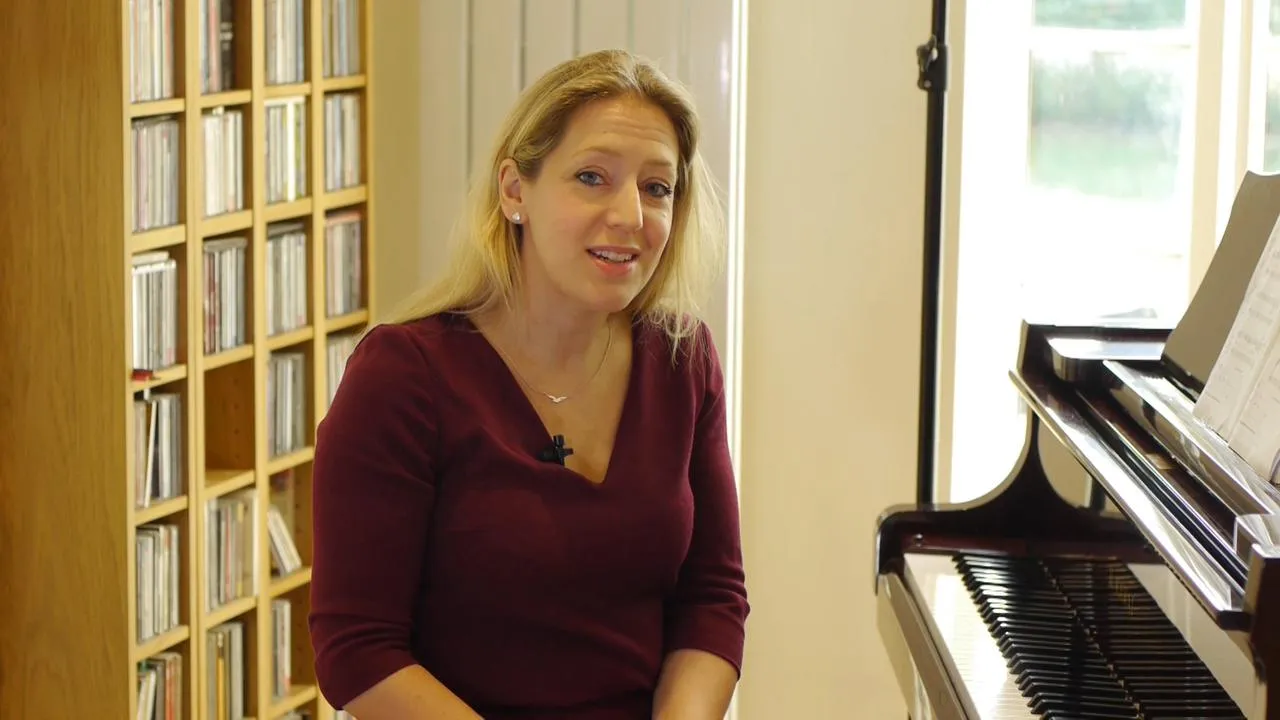
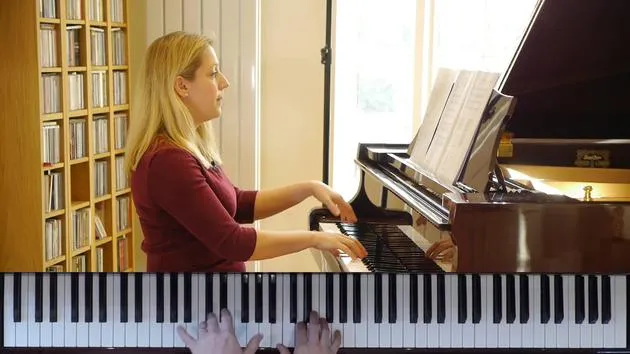
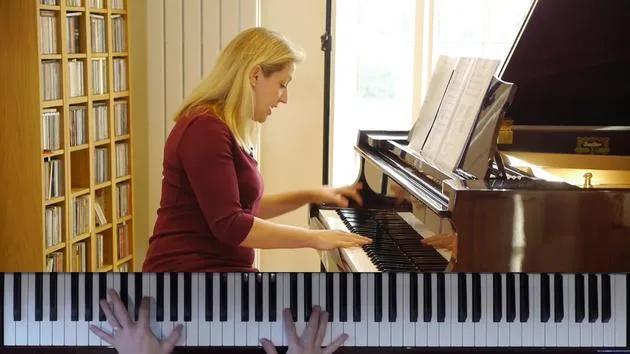
Annabel ThwaiteAnnabel Thwaite's practice tips for O Little Town of Bethlehem, working through the F major scales and the trickier fingering and hand positions in the piece.
What's in the course
21 lessons (0h 41m) · 2 free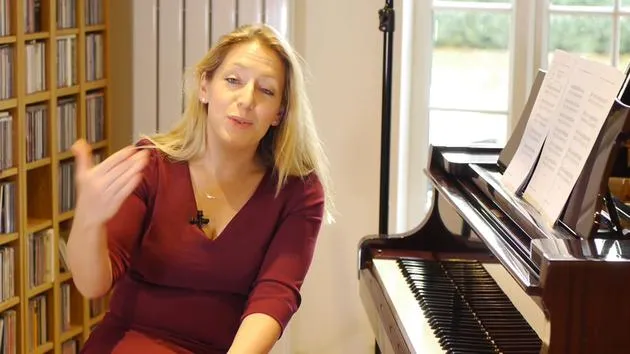




Lesson transcript
How to Practice in F Major
Well, it's in F major. I can't stress more:
-
Scales are brilliant.
I'd practice F major scales, making sure your fourth fingers are very concentrated on B flats.
-
Left Hand Practice:
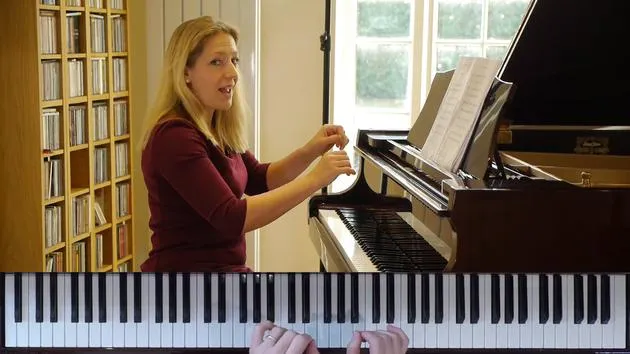
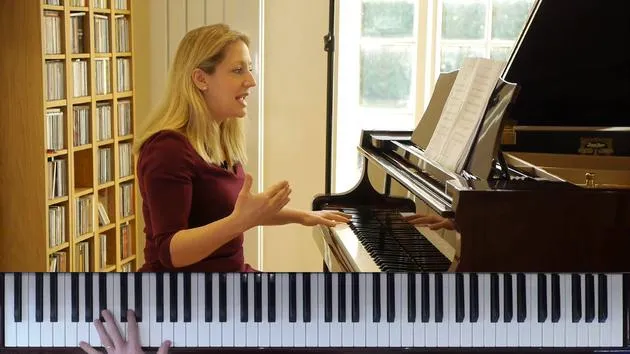
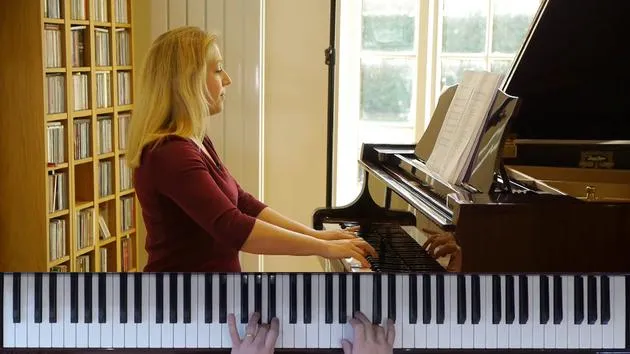
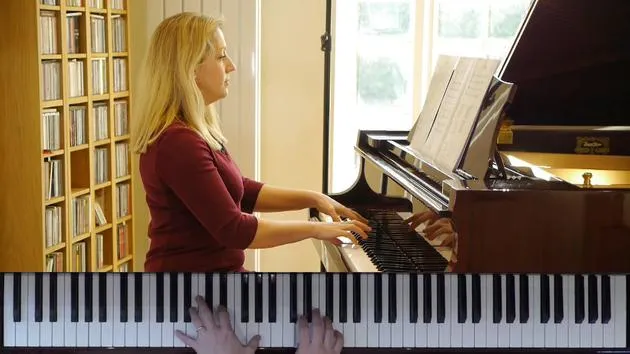
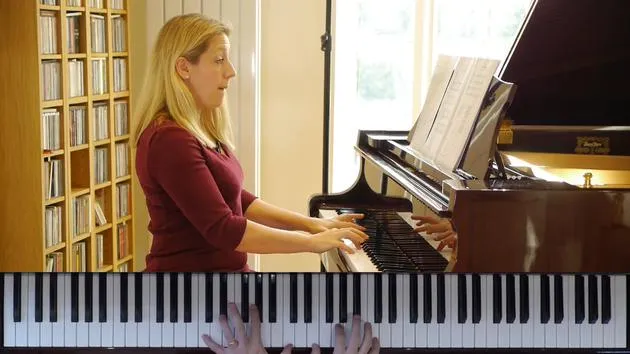
You can practice legato and also staccato. Have a good look at the fingering because it's not as easy as you first think it is.
Finger Positioning:
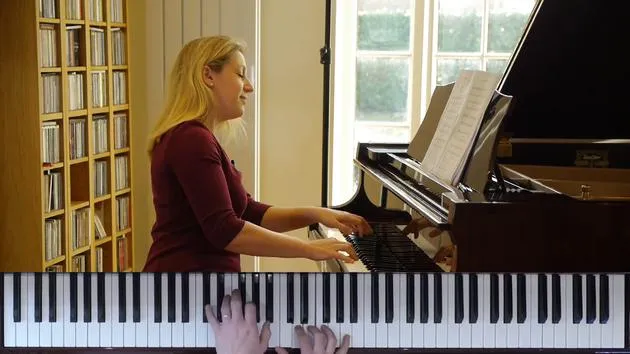
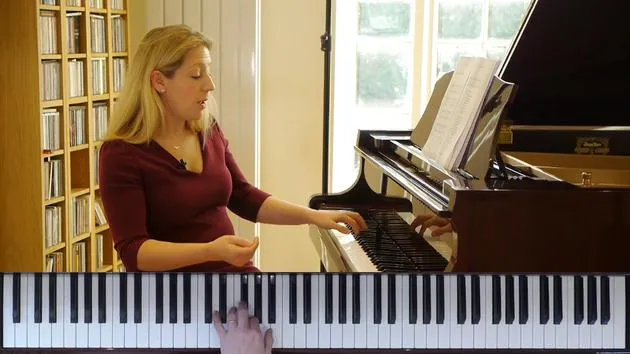
I've written almost every finger on there, especially at the start of the phrase. I look at the fifth finger to begin, and I'm always looking at hand positions.
In the second bar, I use 1, 2, and 3, and then I go again by using the fifth.
-
Marking Fingering:
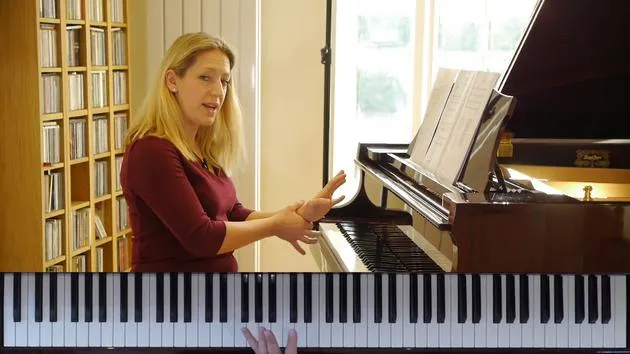
When you're marking fingering, look at the easiest hand position. Then, use the thumb or the third finger and sometimes the fourth to kind of 'turn the corner' as if you were driving a car and you're just going around the roundabout.
It's not jagged; it just needs to be smoothly done because everything is very malleable and fluent.
Pedal Usage
And finally, let's look at pedal.
-
Use Sparingly:
There's very minimal pedal here. Use the pedal wisely and sparingly. I am not one for writing pedal markings in because I think pedal is literally that bit of spice that you just add as if you were cooking.
You're just going to put a bit more chili powder or something stronger to influence it, making it resonate a little bit more.
-
Be Aware of Sound:
So you always have to be aware. If you're not listening, you'll end up with a muddled sound. I often hear that in young students; they put the pedal down and forget to take it off.
I also think it's a bit like driving a car. You never think about when you put your accelerator or clutch down, or even if you have an automatic; you just put your accelerator down.
It becomes second nature. So try not to think about the foot but think about the ear. And the foot will follow the ear, meaning it won't smudge or blur any harmonies.
Random Practice Techniques
Finally, if you're finding this a little tricky at some points in the day, I would recommend block random practice.
-
Engaging Games:
I often play a game with my students where I say, "Go from that bar." You have to find out which finger you're on, where it begins, and move to the other, maybe the end of the second bar.
This way, you always focus on various points.
It's very easy to get bogged down in your practice by just always practicing the beginning rather than the end; sometimes the middle is forgotten. So, random practice is my biggest tip I can give you here.
21 lessons
0h 41m of structured video lessons
Advanced video features
Slow down, loop a passage, follow along
Mobile, tablet & desktop
Practise wherever you are
100% satisfaction guarantee
30-day money-back guarantee
Meet your guru
Meet your guru
Recognised as one of Britain's most versatile and charismatic pianists, Annabel Thwaite enjoys a diverse career as a soloist, chamber musician, recording artist, educator and examiner, and has won all the major accompanying prizes, including the prestigious Kathleen Ferrier, Gold Medal, and Richard Tauber Piano Prizes. She has collaborated with renowned artists such as Roberto Alagna, Bryn Terfel, David Kempster and "Only Men Aloud!"
Annabel has recorded for Universal records with the "Scottish Tenor", whose album was nominated for a Classical Brit Award and is regularly played on Classic FM. Twice the accompanist for the Festival of Welsh Male choirs, her performances at the Royal Albert Hall were recorded by Sain and have been aired on S4C. She is also a film session pianist, having recorded at Abbey Road the music for the film "Awake", the BBC Jane Austen series "Emma", "The Secret Diaries of Miss Anne Lister" and, most recently, she has appeared on both Blue Peter and "The Rob Brydon Show".
"...no doubt helped by the obviously brilliant piano accompaniments from Annabel Thwaite...highly enjoyable."
In her MusicGurus courses - Learn Christmas Classics on Piano, Learn Classical Favourites on Piano, and Growing Chamber Groups and Small Ensembles - Annabel shares the musicianship behind that versatile career. You will learn how to bring well-loved Christmas and classical pieces to life at the piano, develop your touch and phrasing, and, drawing on her award-winning experience as an accompanist, discover how to listen, lead and play together when making music with other musicians in chamber groups and small ensembles.







