



Bonus exercices
With
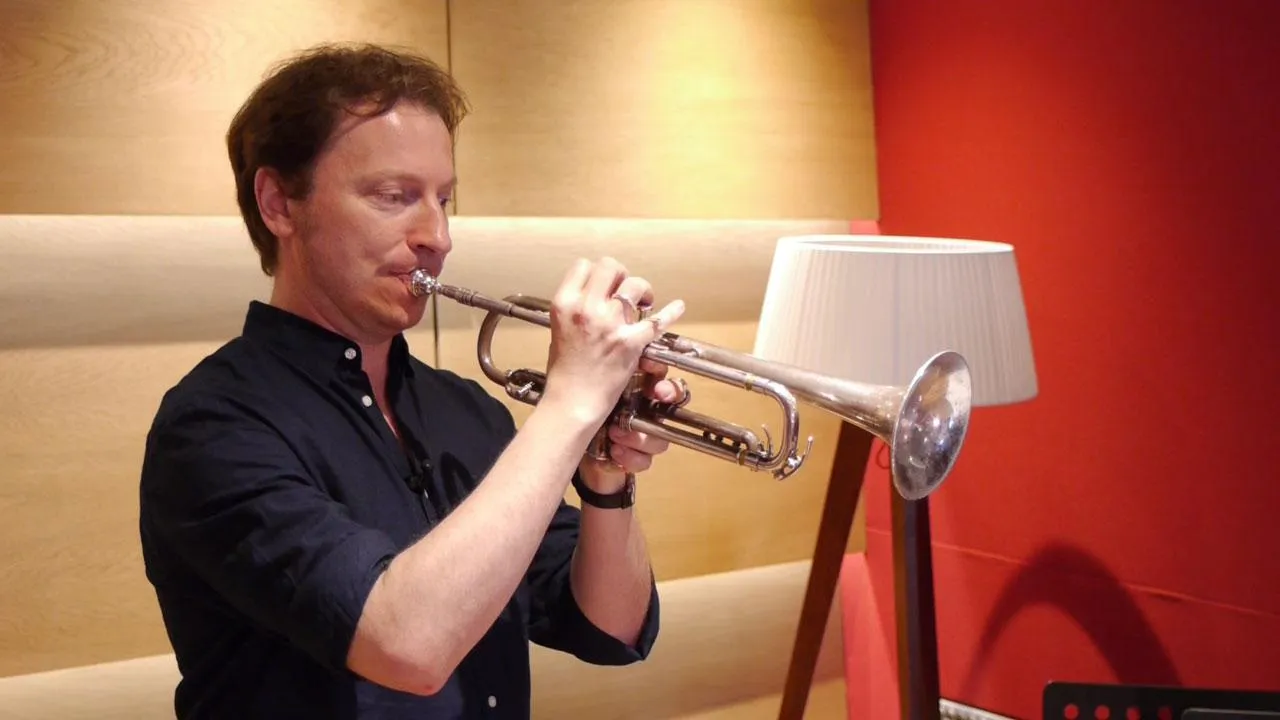
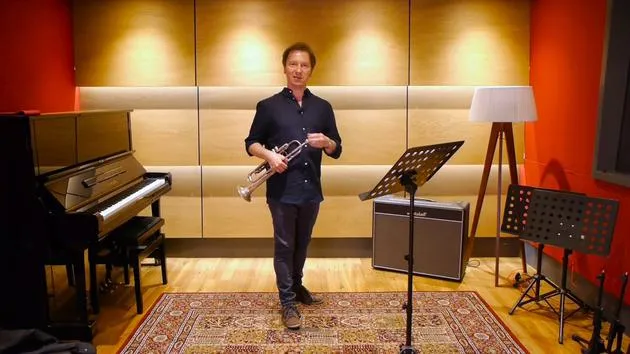
Gerard PresencerGerard Presencer shares two short warm-up exercises to refocus your airstream, open your embouchure aperture and find a central tongue position.
What's in the course
12 lessons (1h 49m) · 1 free
01. Bonus exercices
You are here4:57
Lesson transcript
Airstream and Embouchure Exercises
I now have two small exercises for you. Neither of them are designed to sound particularly nice, but they should help you to:
- Focus again on your Airstream
- Open the aperture of your embouchure
Exercise 1: Central Tongue Position and Airstream Control
These exercises can help create a sense of airflow and also allow you to feel the central tongue position and where it is.
-
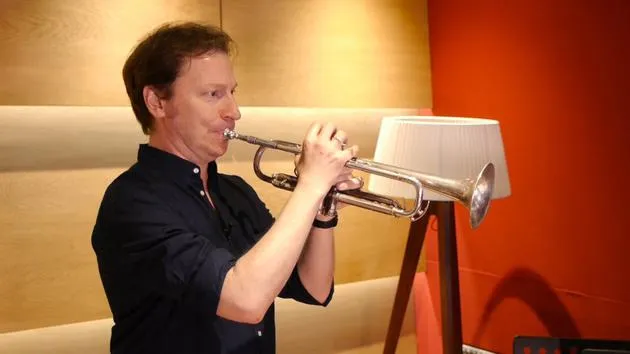
Lead Pipe Variation:
- This exercise is similar to the lead pipe exercise I showed you from Bill Adam, but this time, I don't take my lead pipe out.
- I often use this in between tunes. If I'm rehearsing with a band and want to regain my Airstream control and awareness of my tongue, I do the following:
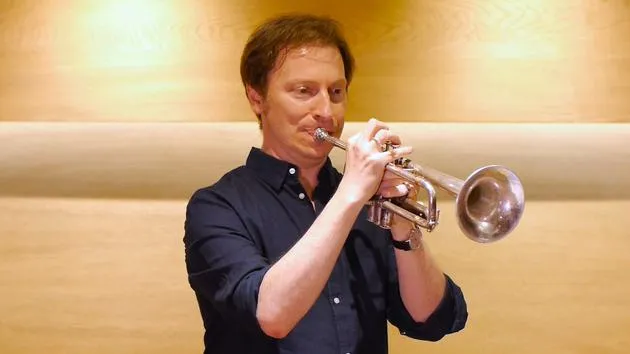
- Put the 1, 2, and 3 valves halfway down.
- Blow a note.
This helps you feel good about your tone.
-
Feeling Faster Air:
-
To really feel the central tongue position, I play with a bit faster air, especially when thinking about playing higher or louder.
-
Repeat the previous exercise but focus on playing a little faster or even with very fast air.
-
Key Insight: When you push your tongue further forward in the airflow with faster air, it might feel a bit more buzzy around your mouth. It may not sound as nice as when played quieter, but it's important to feel the tongue position moving forward in the central air position.
-
-
Tongue Movement:
-
Additionally, I practice moving my tongue back and forth in the central tongue position within the Airstream.
-
This will produce a sound that is almost like a didgeridoo.
-
Important Note: Your Airstream isn't speeding up; it remains at the same speed, but the tongue movement alters the sound quality. Try to maintain the same pitch throughout.
-
Exercise 2: Chops Relaxer and Aperture Opening
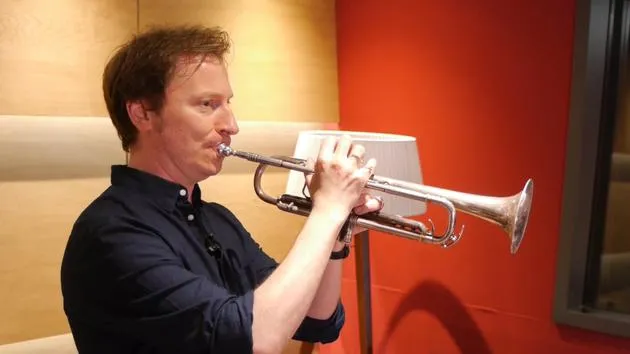
The second exercise is similar to the chops relaxer. I often do it when I want to relax, loosen up, and get my lips vibrating a bit while opening the aperture.
-
Playing Legato:
-
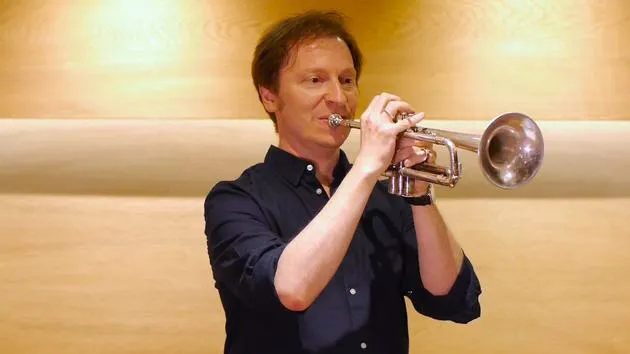
Play from bottom F sharp up to C and back down again, legato, at about mezzo forte.
-
Technique: Stay on the F sharp throughout, which means that for every note I play, I must adjust something in my mouth. This includes:
- The central tongue position
- My Airstream position on my embouchure
-
Perform this nice and slowly. I will be doing it a little faster for the sake of demonstration, as I am more familiar with the positions inside my mouth.
-
-
Crescendo and Decrescendo:
-
On the penultimate note, when I play the fingering for G while maintaining the F sharp, I actually crescendo a little more.
-
Benefit: This technique allows me to hit the note more in the middle than I would if the crescendo wasn't applied. Without it, you might find that the F hits too low.
-
-
Final Note Technique:
- When I hit the F sharp on the correct fingering at the end, I perform a decrescendo and hold the note for as long as I can, challenging myself to play it as quietly as possible.
- If the note cuts out, I suggest:
- If there's some air left, try to get back to the F sharp and start decrescendoing again.
Good luck with those!
12 lessons
1h 49m of structured video lessons
Advanced video features
Slow down, loop a passage, follow along
Mobile, tablet & desktop
Practise wherever you are
100% satisfaction guarantee
30-day money-back guarantee
Meet your guru
Meet your guru
Over the past 25 years Gerard Presencer has carved out a formidable reputation as one of the most respected trumpeters on the European scene. He exploded onto the international scene aged 18, when US3 asked him to play the solo part on Blue Note's Cantaloupe Island (re-imagined as Cantaloop Flip-Fantasia), which became one of the biggest selling jazz records of the 1990s. Since then he has performed with a who's who of international jazz artists, and continues to push himself and his instrument, moving outside his comfort zone in order to develop as a player and writer.
In other genres, Gerard has recorded as a session musician with artists such as Sting, Jamiroquai, Zero 7, James Brown, Ray Charles, Joni Mitchell and Jonny Greenwood.
Gerard has also been an essential member of Charlie Watts' various jazz groups over the last 25 years, touring the world and releasing several albums with the jazz-loving Stone.
As an educator, Gerard was Head of Jazz Studies at the Royal Academy of Music in London from 1999 to 2010, and is currently Head of the Brass Department at the Jazz Institut in Berlin. In this course he shares his internal approach to playing the trumpet - the mental and physical habits behind a great sound - so you can develop tone, control and musicianship from the inside out.







