



Studying the score
With
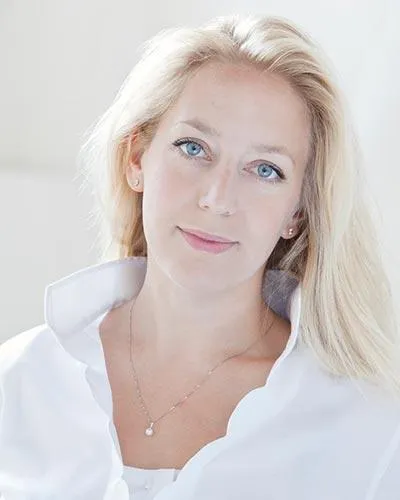
Annabel ThwaiteAnnabel Thwaite on why every player in a chamber group should study the full score, using a tricky Beethoven piano-quintet passage to show how the strings lock in with the piano.
What's in the course
8 lessons (0h 25m) · 1 free
01. Introduction to Annabel and developing a pre-formed chamber group
Free lesson1:45
02. The complete sound (the invisible group member)
3:28
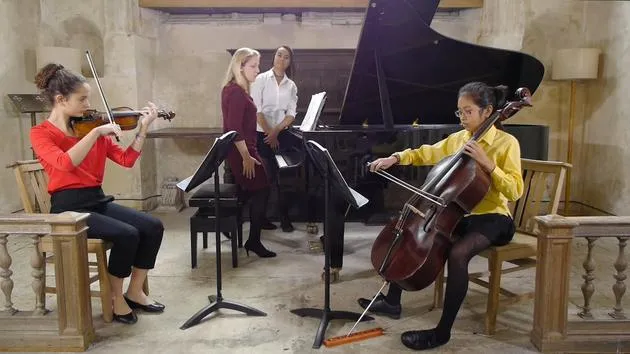
03. Body language
3:44
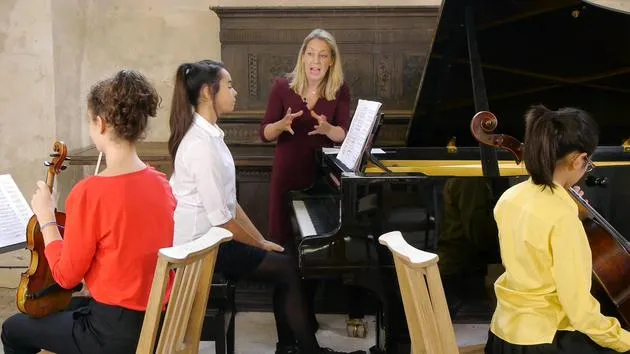
04. The importance of breath
3:28
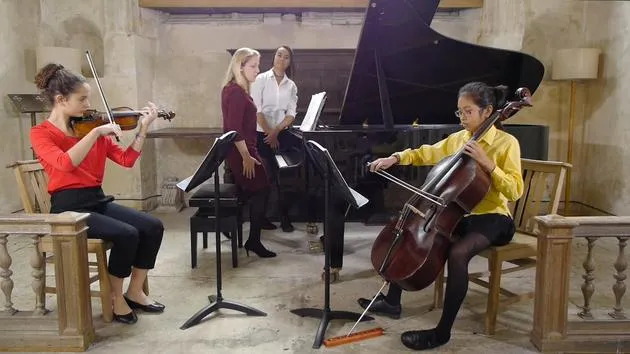
05. Follow my leader! A fun game
4:00
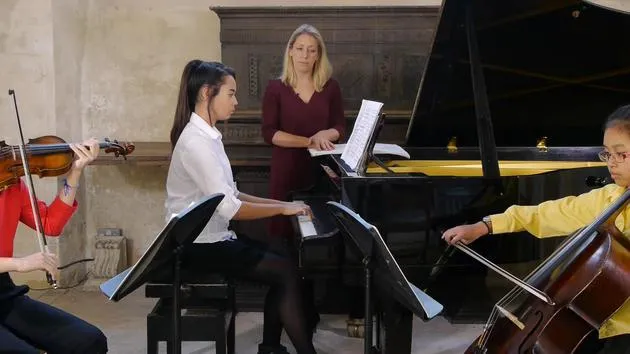
06. Studying the score
You are here4:05
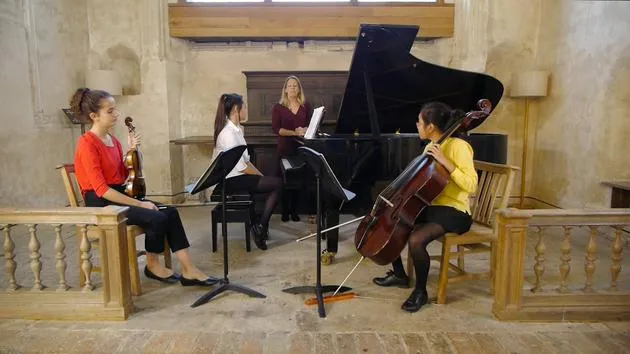
07. A Musical Conversation and Pareto's Law
2:44
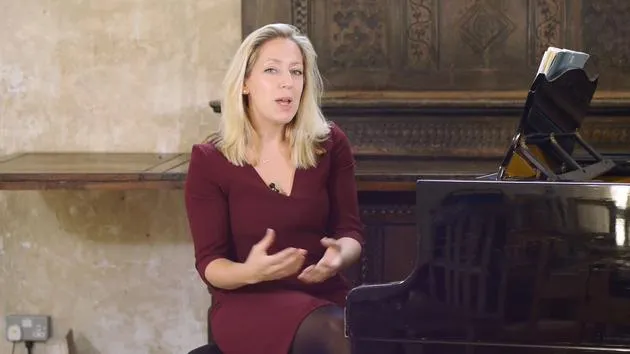
08. Beyond the rehearsal room
2:14
Lesson transcript
Understanding the Score in a Piano Quintet
Studying the score is incredibly important for each member to know what's happening in the other parts.
The Pianist's Perspective
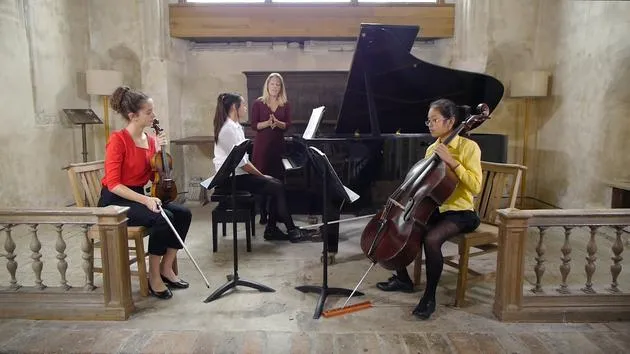
As pianists, we are lucky. We receive the score for all instruments playing. In a piano quintet, we have the other four instruments represented in our part. However, the four string players do not have the same advantage.
The Role of Strings
It's crucial for the strings to:
- Listen: They should go home and listen to, or memorize, the piano score.
- Follow: They need to follow the pianist's part and respond accordingly.
For instance, if the violinist is playing, she should listen closely to the cello. This awareness is particularly important because:
- It solidifies difficult rhythms and passages.
- It helps maintain rhythm and pulse during performance.
When performers get carried away with the music, those with the most notes might experience anxiety.
Practical Application: A Beethoven Passage
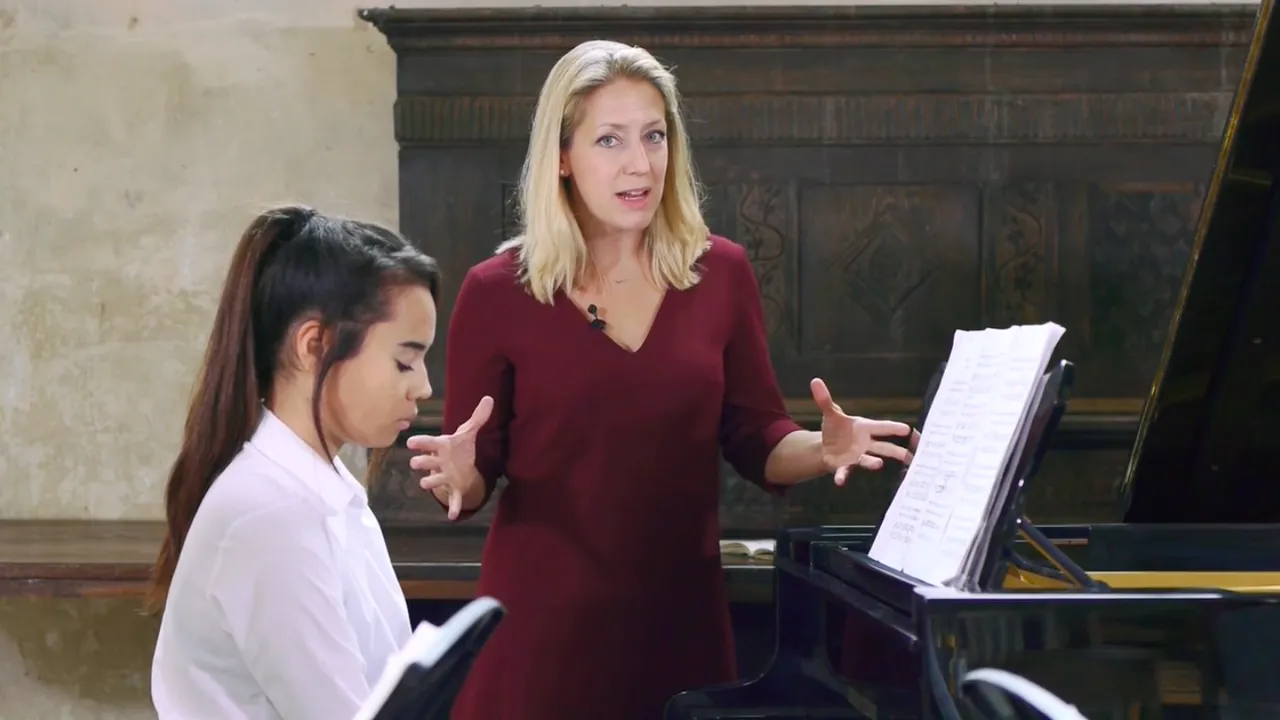
Let's consider a passage from Beethoven. Nicky, the pianist, has a challenging section with 12 semiquavers to every one note from the strings.
Playing Under Tempo
We will be playing this passage under tempo. I'll ask the strings to:
- Play dynamics softer than marked (double forte).
- Focus entirely on locking into every single note that Nicky is playing.
Slow Practice
Taking it slowly allows us to see the results. This practice can be done individually, away from the teacher, helping them become accustomed to the complexity of the piano part.
Supporting the Pianist
In past experiences, I've often noticed that viola players tend to help the pianist by focusing on the inner parts of difficult passages. This attention can help ease the tension in ensemble dynamics.
Exploring Semiquavers
Now, let's touch on semiquavers and very fast passages. Using Nicky as an example, when she has 12 semiquavers, she likely focuses on Beats 1, 2, and 3 during practice. However, it's also imaginative to concentrate on the less significant beats.
Exercise for Improvement
Here's a little exercise we can do together, applicable to any complex passage:
- Play One Bar: Nicky will play one bar and accentuate the first note of every group of four semiquavers.
- Accent Variations:
- Accent the second note.
- Accent the third note.
- Accent the fourth note.
This exercise can be repeated in various combinations such as:
- 3 and 4
- 1 and 2
- 1 and 3
The goal is to keep your brain engaged.
Collaborative Practice
You can also perform this exercise collectively as a trio or in any ensemble.
Conclusion
Hopefully, this method will push you out of your comfort zone and help you bring it all together for a seamless performance!
8 lessons
0h 25m of structured video lessons
Advanced video features
Slow down, loop a passage, follow along
Mobile, tablet & desktop
Practise wherever you are
100% satisfaction guarantee
30-day money-back guarantee
Meet your guru
Meet your guru
Recognised as one of Britain's most versatile and charismatic pianists, Annabel Thwaite enjoys a diverse career as a soloist, chamber musician, recording artist, educator and examiner, and has won all the major accompanying prizes, including the prestigious Kathleen Ferrier, Gold Medal, and Richard Tauber Piano Prizes. She has collaborated with renowned artists such as Roberto Alagna, Bryn Terfel, David Kempster and "Only Men Aloud!"
Annabel has recorded for Universal records with the "Scottish Tenor", whose album was nominated for a Classical Brit Award and is regularly played on Classic FM. Twice the accompanist for the Festival of Welsh Male choirs, her performances at the Royal Albert Hall were recorded by Sain and have been aired on S4C. She is also a film session pianist, having recorded at Abbey Road the music for the film "Awake", the BBC Jane Austen series "Emma", "The Secret Diaries of Miss Anne Lister" and, most recently, she has appeared on both Blue Peter and "The Rob Brydon Show".
"...no doubt helped by the obviously brilliant piano accompaniments from Annabel Thwaite...highly enjoyable."
In her MusicGurus courses - Learn Christmas Classics on Piano, Learn Classical Favourites on Piano, and Growing Chamber Groups and Small Ensembles - Annabel shares the musicianship behind that versatile career. You will learn how to bring well-loved Christmas and classical pieces to life at the piano, develop your touch and phrasing, and, drawing on her award-winning experience as an accompanist, discover how to listen, lead and play together when making music with other musicians in chamber groups and small ensembles.







