



Beyond the rehearsal room

With
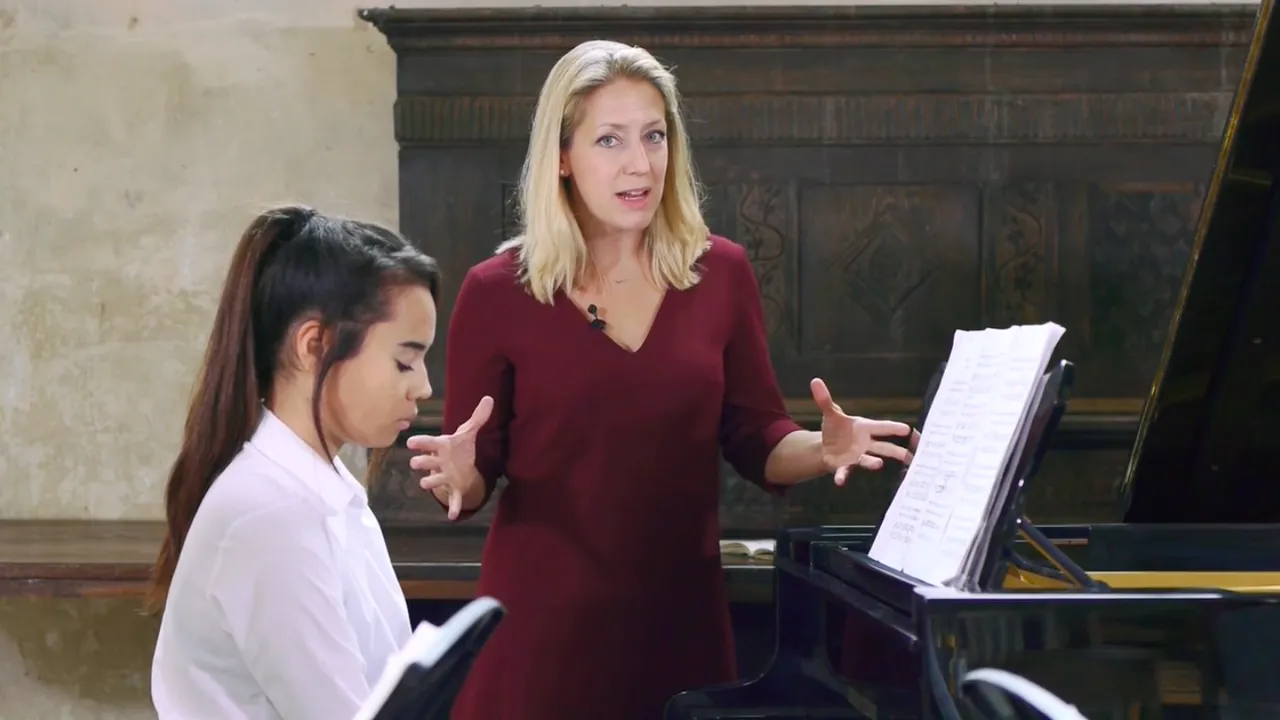
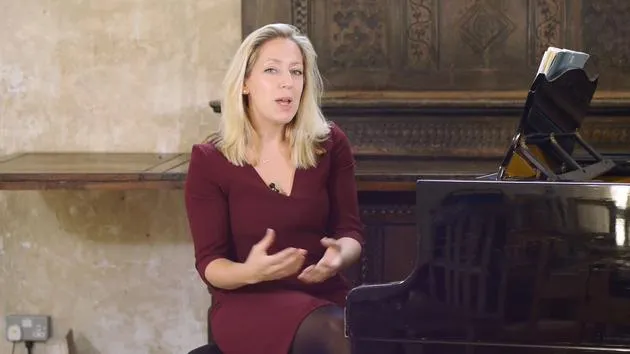
Annabel ThwaiteAnnabel suggests working away from the instruments by observing the score and using the human voice
What's in the course
8 lessons (0h 25m) · 1 free
01. Introduction to Annabel and developing a pre-formed chamber group
Free lesson1:45
02. The complete sound (the invisible group member)
3:28
03. Body language
3:44
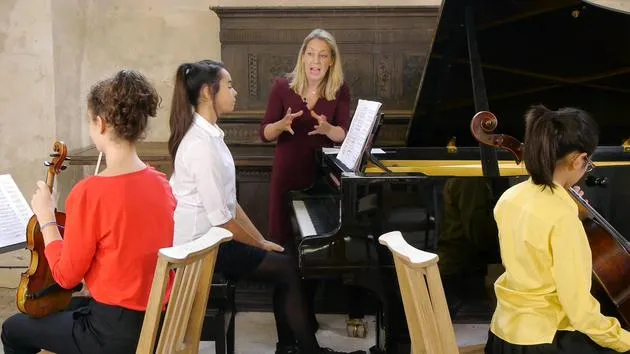
04. The importance of breath
3:28
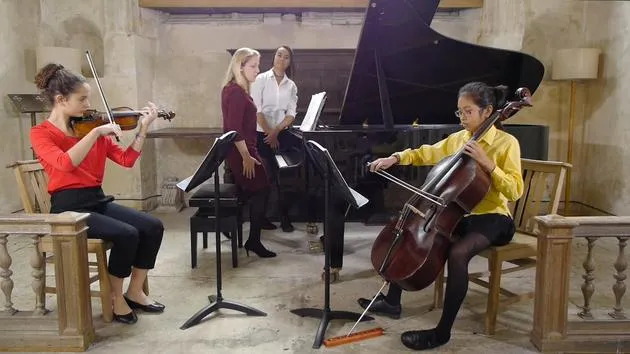
05. Follow my leader! A fun game
4:00
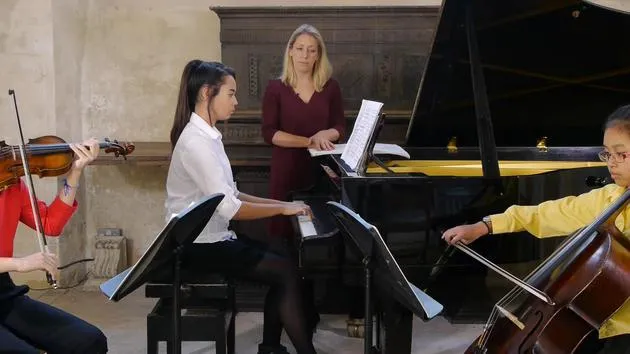
06. Studying the score
4:05
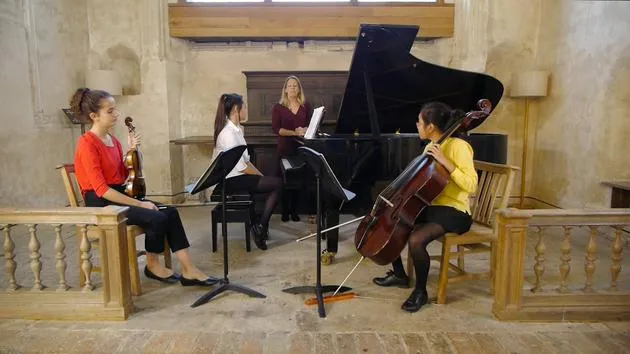
07. A Musical Conversation and Pareto's Law
2:44
08. Beyond the rehearsal room
You are here2:14
Lesson transcript
Beyond the Rehearsal Room
I wanted to go back to why we play chamber music. It's a social event. People used to get together and play in chamber salons.
Sometimes, when we're with our instruments, they can become a hindrance. We can get too involved with the intricate technical aspects and start to feel a bit of anxiety.
A Different Approach
So, I thought that perhaps the students could:
- Take away their instruments
- Get together on a social occasion outside of a rehearsal room
- Look at the score in a different way
They could sing their parts. They can get back to the rawness of the inner voice, the human voice. They could perhaps walk around and feel the pulse together.
Mapping the Music
They could map out where they're going within the structure of the music. In the Beethoven Piano Trio, we have:
- An exposition
- A development
- A recapitulation
Are the exposition and recapitulation different in emotion? Are they trying to say something?
- Is one more final?
- Is one more questionable?
They could also explore the emotions they want to transmit within the music. This might differ in the concert hall or performance situation.
The Power of Imagination
I love working with young people because they're very alive with their imaginations. Perhaps they could get together and think of a silent movie.
Every dynamic has a meaning behind it. They need to be so convincing to lift the notes and make them dance off the page, transmitting it to the audience.
Enjoying the Process
So, it's got to be fun.
The students can get together, have a giggle, and get to know each other and their personalities. They can be more sensitive and negotiate with each other, creating magic as a group.
8 lessons
0h 25m of structured video lessons
Advanced video features
Slow down, loop a passage, follow along
Mobile, tablet & desktop
Practise wherever you are
100% satisfaction guarantee
30-day money-back guarantee
Meet your guru
Meet your guru
Recognised as one of Britain's most versatile and charismatic pianists, Annabel Thwaite enjoys a diverse career as a soloist, chamber musician, recording artist, educator and examiner, and has won all the major accompanying prizes, including the prestigious Kathleen Ferrier, Gold Medal, and Richard Tauber Piano Prizes. She has collaborated with renowned artists such as Roberto Alagna, Bryn Terfel, David Kempster and "Only Men Aloud!"
Annabel has recorded for Universal records with the "Scottish Tenor", whose album was nominated for a Classical Brit Award and is regularly played on Classic FM. Twice the accompanist for the Festival of Welsh Male choirs, her performances at the Royal Albert Hall were recorded by Sain and have been aired on S4C. She is also a film session pianist, having recorded at Abbey Road the music for the film "Awake", the BBC Jane Austen series "Emma", "The Secret Diaries of Miss Anne Lister" and, most recently, she has appeared on both Blue Peter and "The Rob Brydon Show".
"...no doubt helped by the obviously brilliant piano accompaniments from Annabel Thwaite...highly enjoyable."
In her MusicGurus courses - Learn Christmas Classics on Piano, Learn Classical Favourites on Piano, and Growing Chamber Groups and Small Ensembles - Annabel shares the musicianship behind that versatile career. You will learn how to bring well-loved Christmas and classical pieces to life at the piano, develop your touch and phrasing, and, drawing on her award-winning experience as an accompanist, discover how to listen, lead and play together when making music with other musicians in chamber groups and small ensembles.







