



Body language

With
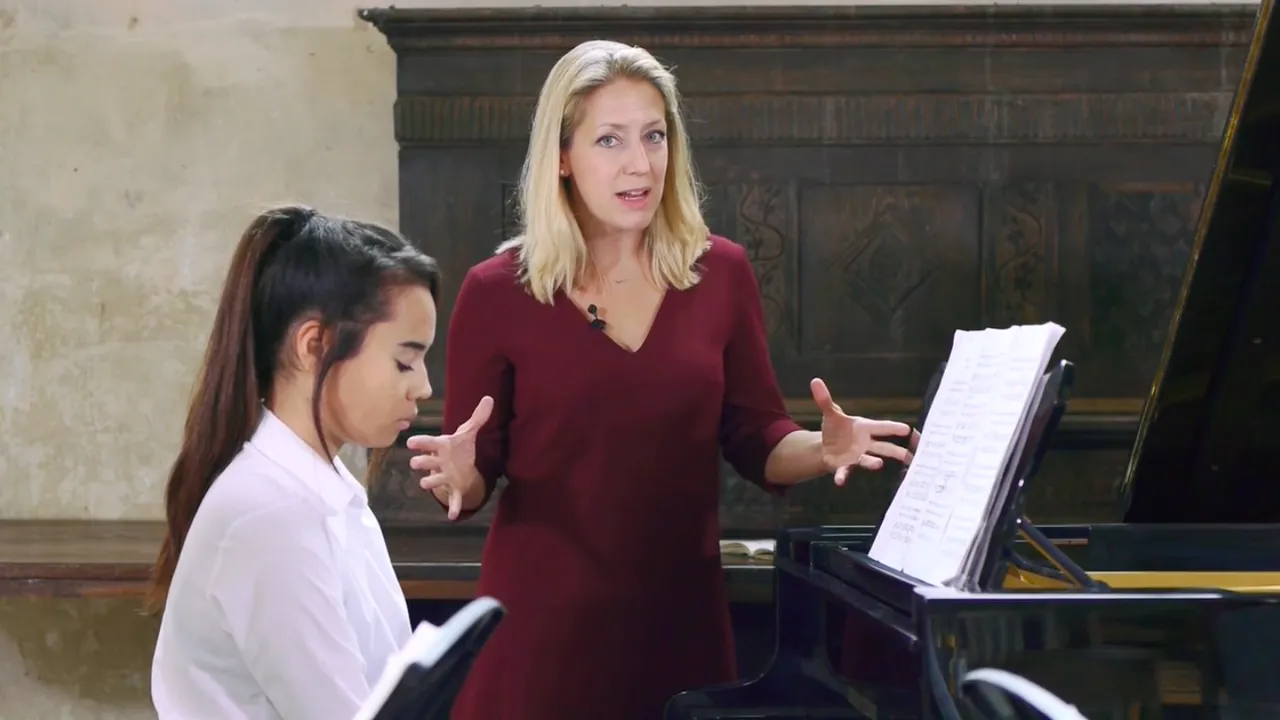
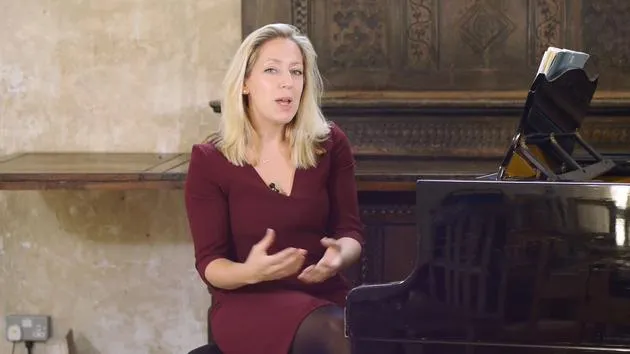
Annabel ThwaiteAnnabel Thwaite explores how posture and body language help chamber players release sound freely, reduce tension and stay connected to each other.
What's in the course
8 lessons (0h 25m) · 1 free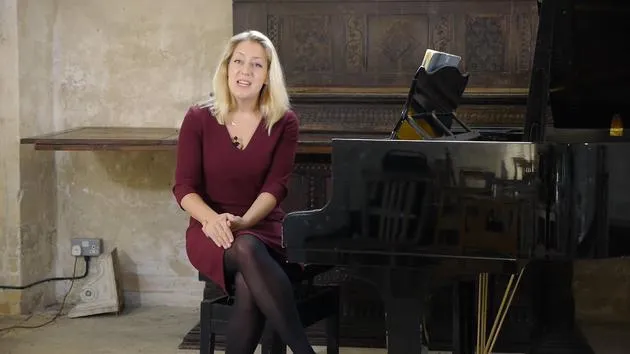
01. Introduction to Annabel and developing a pre-formed chamber group
Free lesson1:45
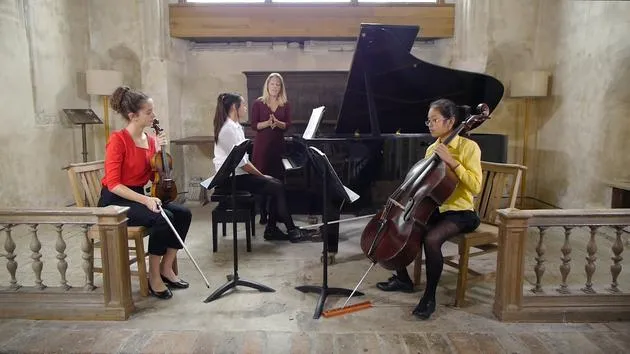
02. The complete sound (the invisible group member)
3:28
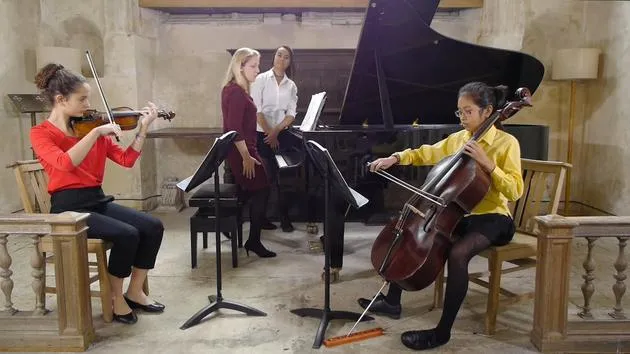
03. Body language
You are here3:44
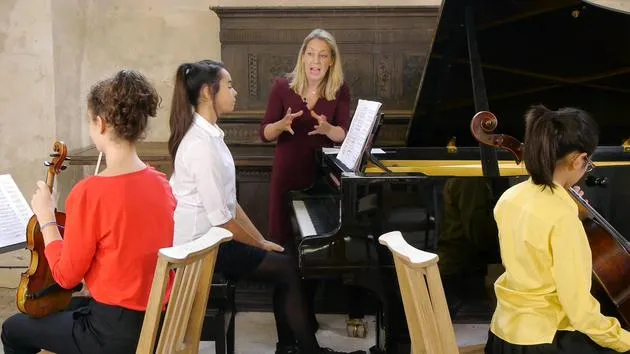
04. The importance of breath
3:28
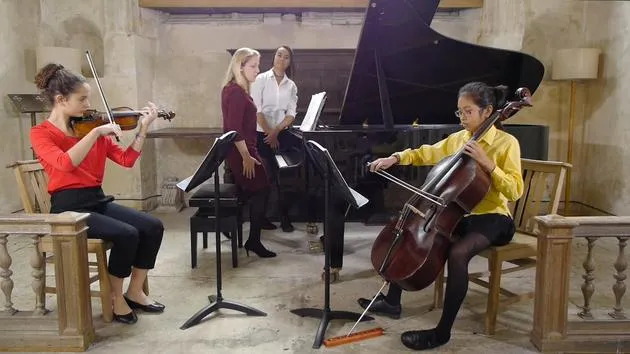
05. Follow my leader! A fun game
4:00
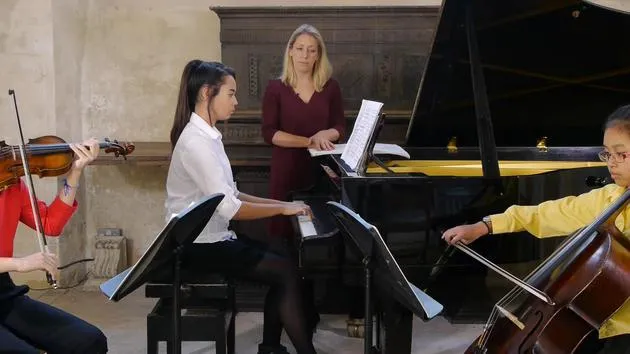
06. Studying the score
4:05
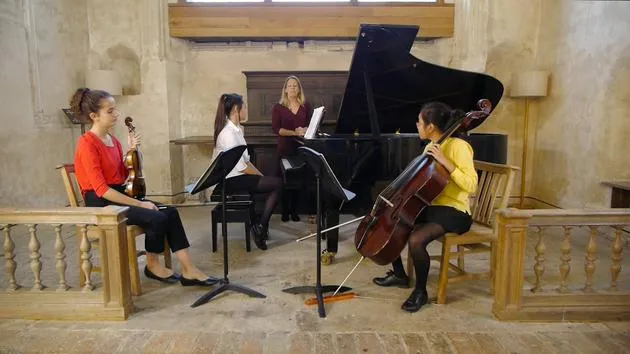
07. A Musical Conversation and Pareto's Law
2:44
08. Beyond the rehearsal room
2:14
Lesson transcript
Music Lesson: Body Language and Posture
The Importance of Body Language
I think your demeanor and posture are incredibly important as a musician.
- Using your body to maximum effect allows the sound from your instrument to be released very freely and naturally.
- In a chamber group, body language is crucial; the aura you project should transmit energy while also allowing you to receive it.
Music Stands
Often, people see music stands as a barrier between the performer and the audience, but we certainly don't want to view them as barriers between our beautiful musicians.
- Ideal Height:
- Having your music stand at the correct height is perfect.
- If it's too low, instruments may appear cramped, making it difficult to play.
Imagine if the stand were smaller, playing would feel quite cramped, wouldn't it?
Practicing with Confidence
You could allow a shy first violinist or recorder player to stand and be more aware of their posture, embracing a more soloistic approach.
- Activity:
- Family, you wouldn't mind standing and imagining you were a soloist. Please play the beginning for me.
- Response: "Lovely! How did that feel?"
- It felt more free, and I was able to move around more freely.
Practical Tips for Musicians
- Practice Suggestions:
- In their practice room, the teacher should encourage students to practice standing up.
- They should also keep the feeling of freedom and incorporate it while practicing with the stand low.
Brief Word About Posture
When sitting down, these musicians should aim for stability.
- Foot Placement:
- Both feet should be planted on the ground, providing a sense of stability.
- This approach works the major muscle groups from the waist down and allows for more freedom in the upper body.
- Both feet should be planted on the ground, providing a sense of stability.
Peripheral Vision in Practice
In the practice room, students could work on their peripheral vision.
- Moving to a pianist, this concept applies to a bass quartet or any musician left or right of center.
- For example, if Nikki started to turn her head a lot, it might disrupt her and make her nervous about the notes, especially later in the piece when there are more complexities.
Recommendations for Practice:
- I would really suggest that in the practice room, she remains aware and practices moving her eyes away from the score. This will enhance her compatibility with the rest of the group.
This isn't always possible, and I personally prefer looking at the score while doing something else.
- Now, let's move on to discussing breath, which is our next topic.
8 lessons
0h 25m of structured video lessons
Advanced video features
Slow down, loop a passage, follow along
Mobile, tablet & desktop
Practise wherever you are
100% satisfaction guarantee
30-day money-back guarantee
Meet your guru
Meet your guru
Recognised as one of Britain's most versatile and charismatic pianists, Annabel Thwaite enjoys a diverse career as a soloist, chamber musician, recording artist, educator and examiner, and has won all the major accompanying prizes, including the prestigious Kathleen Ferrier, Gold Medal, and Richard Tauber Piano Prizes. She has collaborated with renowned artists such as Roberto Alagna, Bryn Terfel, David Kempster and "Only Men Aloud!"
Annabel has recorded for Universal records with the "Scottish Tenor", whose album was nominated for a Classical Brit Award and is regularly played on Classic FM. Twice the accompanist for the Festival of Welsh Male choirs, her performances at the Royal Albert Hall were recorded by Sain and have been aired on S4C. She is also a film session pianist, having recorded at Abbey Road the music for the film "Awake", the BBC Jane Austen series "Emma", "The Secret Diaries of Miss Anne Lister" and, most recently, she has appeared on both Blue Peter and "The Rob Brydon Show".
"...no doubt helped by the obviously brilliant piano accompaniments from Annabel Thwaite...highly enjoyable."
In her MusicGurus courses - Learn Christmas Classics on Piano, Learn Classical Favourites on Piano, and Growing Chamber Groups and Small Ensembles - Annabel shares the musicianship behind that versatile career. You will learn how to bring well-loved Christmas and classical pieces to life at the piano, develop your touch and phrasing, and, drawing on her award-winning experience as an accompanist, discover how to listen, lead and play together when making music with other musicians in chamber groups and small ensembles.







