



Third position blues scales

With
Mat Walklate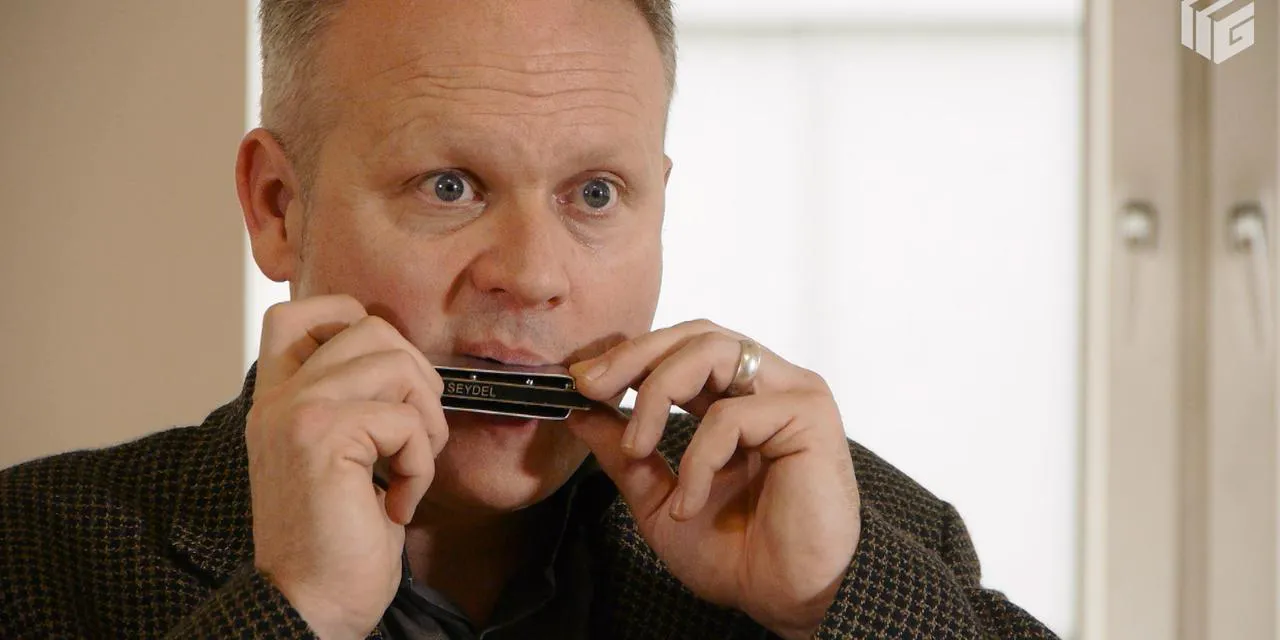
What's in the course
11 lessons (1h 4m) · 2 free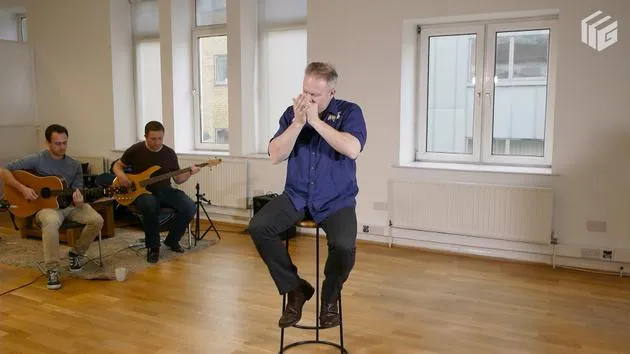
01. Playing the blues, a demonstration
Free lesson2:14
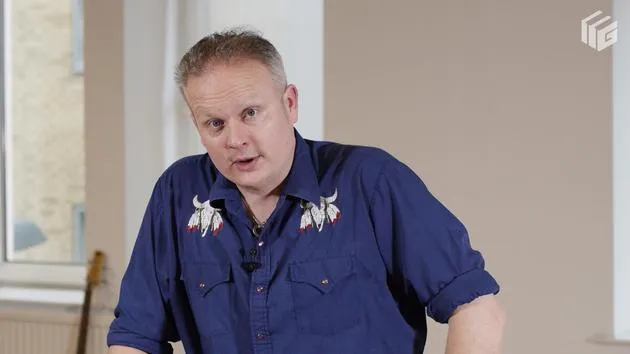
02. G blues scale review
2:31
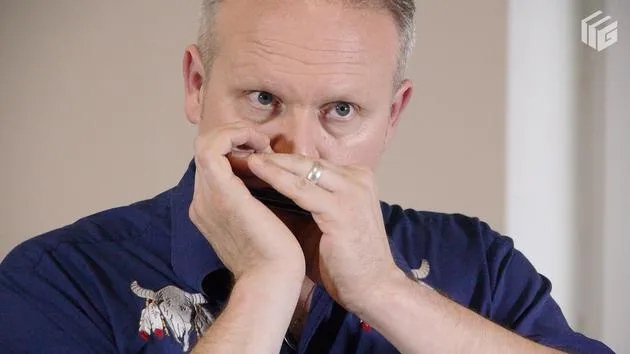
03. Note bending for additional notes
9:12
04. Simple 12 bar solo
3:50
05. Soloing using the root note of blues progression chords
5:57
06. Vibrato
6:37
07. Developing more interesting solos
7:43
08. Advanced tongue blocking
10:22
09. First position blues scales
5:48
10. Third position blues scales
You are here6:22
11. BONUS: Learn how to play Ian Dury's "Sex & Drugs & Rock & Roll" on the blues harmonica
Free lesson3:36
Lesson transcript
Understanding Third Position on the Harmonica
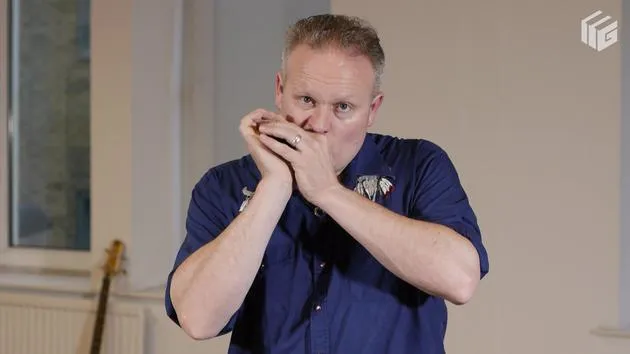
So now we'll look at the other position that's widely used, which is third position. This involves using a minor scale that exists in the harmonica without having to bend or do any difficult techniques.
The Basics
- Starting Hole: It starts on hole number four draw, allowing you to play a minor pentatonic scale.
- Comparison with Second Position: When we play in second position, we're using a major pentatonic scale. In this case, it's a minor one.
"If you check out the site, there'll be a PDF with this scale written out for your reference."
Easy Entry into Third Position
If you want an easy way into third position:
- Stay away from the first three holes.
- Play from hole four upwards.
Key Compatibility
Play over:
- D minor
- D major
This is one of the key aspects of third position: it works over both the minor and the major key. It sounds best, if I'm honest, over the minor key, but it will still work over the major.
"The scale that we're using there is a scale in the key of D."
Hole Number Three Considerations
- The reason for staying away from the first three holes is primarily to avoid hole number three.
- This hole cannot be played in its normal state in third position; you have to bend it.
"If you're going to venture down to the first three holes, or if you're going to venture down to hole number three, you have to be able to bend it. Otherwise, it sounds off."
Freedom Beyond Hole Four
Above hole number four, you can:
- Play great big draw chords.
- Experiment with glissando (glissandi) to your heart's content.
- If you can play octaves, you can make great use of them in third position.
"It's what people who play blues on the chromatic harmonica tend to use, the one with the push button. Because if you play those in third position, you don't have to use the button, which makes life a lot easier."
Hole Number Three Demonstration
The problem with hole number three is that you always have to bend it:
- You can jump over it if you want to use one and two, that kind of thing.
- If you've never done third position before, then obviously stay away from holes one, two, and three. Focus on hole four upwards.
Characteristics of Third Position
- It allows for a looser, freer playing style.
- It sounds quite bluesy due to the use of a minor scale.
Bending in Third Position
You can use the bend in hole number six quite freely. The bend in six draw is a powerful tool if we're using it in second position.
"If we use it too much, it's a bit like putting too much chili in food. It's a little overpowering and becomes a little bit irritating if you use it too much."
However, in third position, you can use it as often as you like because it serves a different role.
Recording Session
In a moment, we'll record a couple of 12 bars in D minor and possibly also a couple in D major to show you how you can use third position effectively over these keys.
Let's Play!
-
D Minor (third position): Here we go!
1, 2, 3, 4. -
Blues in D Major (still third position for the C harmonica):
Oh.
1, 2, 3, 4.
11 lessons
1h 4m of structured video lessons
Advanced video features
Slow down, loop a passage, follow along
Mobile, tablet & desktop
Practise wherever you are
100% satisfaction guarantee
30-day money-back guarantee
Meet your guru
Meet your guru
Mat Walklate is a Manchester-based harmonica player and teacher working in blues and folk, who also plays flute, whistle and uilleann pipes and sings. He won the British Blues Harmonica Championship in 1992 and the All-Britain Fleadh Cheoil on harmonica in 1993, and is a Seydel-endorsed artist.
Over a thirty-year career he has toured Europe with bands including The Moochers and the Irish-music group The House Devils, recorded and mixed some fourteen albums between 2001 and 2021 - among them Sea of Blues and Traditional Harmonica - and now performs in a duo with singer-guitarist Alex Haynes and alongside blues scholar Dr Tom Attah. He teaches harmonica at Leeds Conservatoire and privately.
On MusicGurus his courses take you from your first notes on a C harmonica - embouchure, the cross-harp position, bending and your first improvisation - through to fluent blues playing, with vibrato, alternative positions and the phrasing that makes a solo sing.







