



Advanced tongue blocking

With
Mat WalklateMat Walklate shows how to use advanced tongue blocking to drive rhythms behind your blues lines and create a vibrato effect on the harmonica.

What's in the course
11 lessons (1h 4m) · 2 free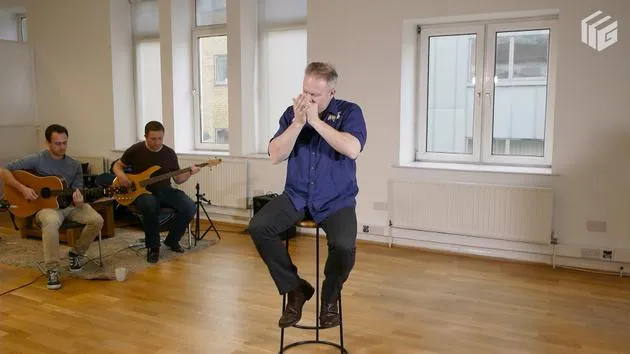
01. Playing the blues, a demonstration
Free lesson2:14
02. G blues scale review
2:31
03. Note bending for additional notes
9:12

04. Simple 12 bar solo
3:50
05. Soloing using the root note of blues progression chords
5:57
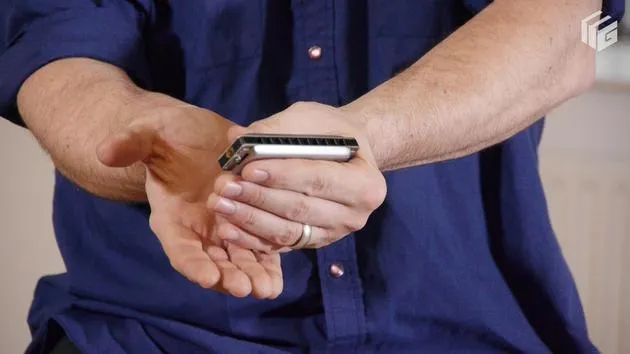
06. Vibrato
6:37
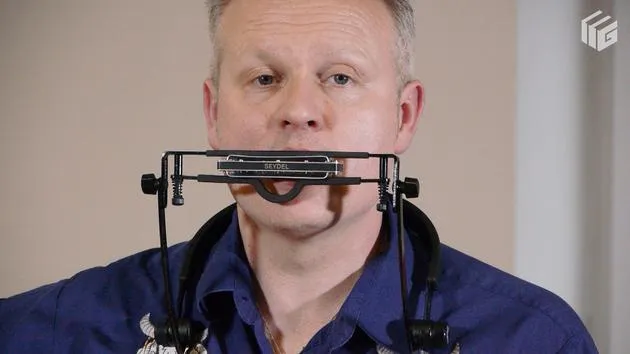
07. Developing more interesting solos
7:43
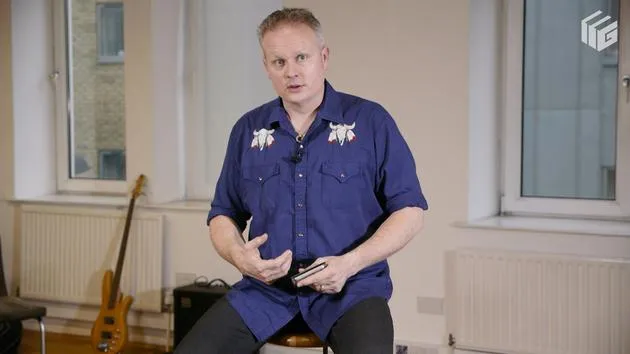
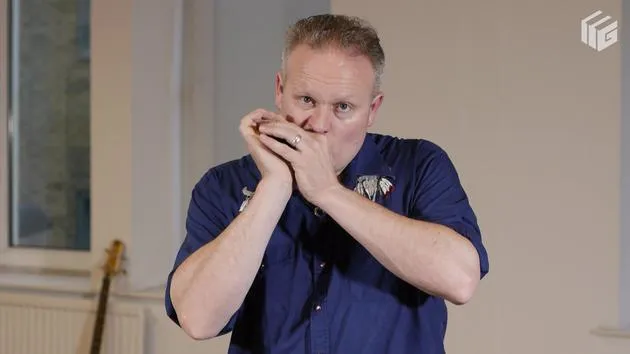
08. Advanced tongue blocking
You are here10:22
09. First position blues scales
5:48
10. Third position blues scales
6:22
11. BONUS: Learn how to play Ian Dury's "Sex & Drugs & Rock & Roll" on the blues harmonica
Free lesson3:36
Lesson transcript
Advanced Tongue Blocking Techniques in a Blues Context
Hello, my name is Matt, and in this lesson, we're going to talk about advanced tongue blocking techniques in a blues context.
Understanding Tongue Blocking
Tongue blocking involves:
-
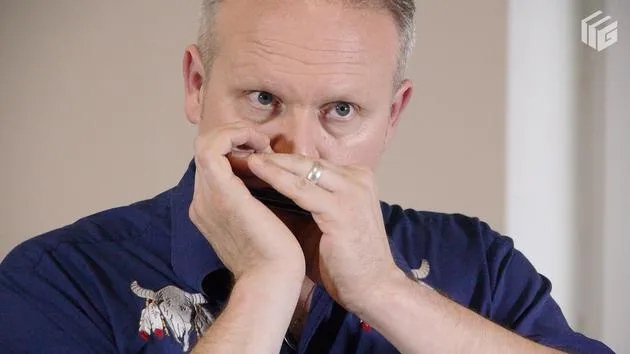
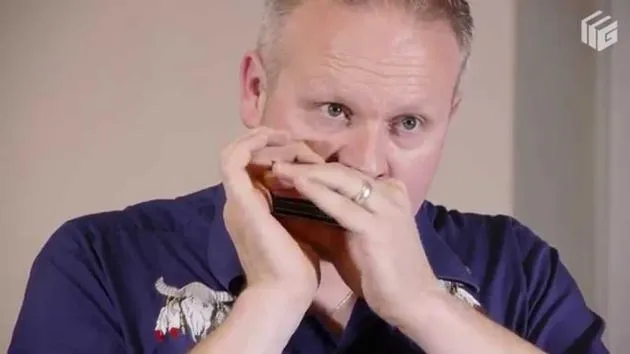
Positioning: Putting usually four holes of the harmonica in your mouth and blocking off the preceding three.
- Exception: If you're on hole three, cover holes one, two, and three, blocking off one and two.
-
Creating Rhythm: You can use the tongue block to create rhythms behind what you're playing.
Example:
- Something off the top of my head, something like this...
You can create a fairly consistent rhythm or make it as syncopated and jazzy as you like.
Increasing Speed and Creating Vibrato
With practice, you can increase the speed at which you hit the harmonica with your tongue, creating a vibrato effect.
Example:
-
Vibrato sound: (Demonstrate with harmonica)
-
Technique: In this case, the tongue goes on and off the harmonica, not side to side.
- Side Movement: If you move your tongue side to side, it's a different technique called fanning, and it sounds different.
Benefits of Tongue Blocking
Blow Notes
Tongue blocking enhances the use of blow notes in the first six holes. When playing in second position (cross harp), the draw notes in holes one to six are powerful and sound good. However:
- Some blow notes, while in tune, may sound weak because not much can be done with them.
- Contrast: The draw notes can bend and sing out, while corresponding blow notes may lack that capability.
Tongue Slapping Technique
Using tongue slapping, which involves:
- Taking your tongue back and slapping it onto the harmonica,
You can add more power to the blow notes.
Example:
- Four blow:
- Lip first: "It's okay."
- With a tongue slap: "You get a lot more power!"
Richer Tone
Tongue blocking tends to give you a richer tone because:
- You have to drop your chin.
- You need to open your mouth more to make the technique work effectively.
This access to the cavities inside your head enhances the sound you produce.
Comparison:
- Lip Pursing: Draw notes sound less rounded compared to tongue blocking.
- Bending notes is slightly harder when tongue blocking, but it can be done.
Playing Octaves
Tongue blocking also allows you to play octaves:
- Example: Hole one and hole four simultaneously produce two notes of C.
Technique:
- Position your mouth over holes 1, 2, 3, and 4, block off holes 2 and 3 with the tip of your tongue, and blow into both sides of your mouth.
Octave Examples
- Blowing into holes 1 and 4: produces a rich octave sound.
- Higher notes: For example, holes 10 and 7 sound fuller than when played solo.
Draw Octaves
- While blow octaves are two holes apart (1 & 4, 2 & 5, 3 & 6), draw octaves can be a bit tricky:
- First octave: One draw & four draw (two D notes).
- Near holes two and five: Produce a seventh which can be powerful in blues context.
Techniques for Transitioning
If transitioning between blow and draw octaves, keep in mind:
- Change in embouchure size when switching can look comedic, but it's effective!
Additional Techniques
Tongue Switching
- Example: With your tongue covering holes 1, 2, and 3, if you move it right to cover 2, 3, and 4, you can play hole 1 without moving your head.
U Blocking
- Involves rolling your tongue into a U shape.
- Benefits: Channels air into a specific hole for accuracy, particularly useful for jumpy playing.
Demonstration:
- Start with 4 draw, tongue in U shape, and move to 5 and back.
Conclusion
Tongue blocking is a versatile technique that unleashes many possibilities on the harmonica. Spend some time practicing these methods, and happy tongue blocking!
11 lessons
1h 4m of structured video lessons
Advanced video features
Slow down, loop a passage, follow along
Mobile, tablet & desktop
Practise wherever you are
100% satisfaction guarantee
30-day money-back guarantee
Meet your guru
Meet your guru
Mat Walklate is a Manchester-based harmonica player and teacher working in blues and folk, who also plays flute, whistle and uilleann pipes and sings. He won the British Blues Harmonica Championship in 1992 and the All-Britain Fleadh Cheoil on harmonica in 1993, and is a Seydel-endorsed artist.
Over a thirty-year career he has toured Europe with bands including The Moochers and the Irish-music group The House Devils, recorded and mixed some fourteen albums between 2001 and 2021 - among them Sea of Blues and Traditional Harmonica - and now performs in a duo with singer-guitarist Alex Haynes and alongside blues scholar Dr Tom Attah. He teaches harmonica at Leeds Conservatoire and privately.
On MusicGurus his courses take you from your first notes on a C harmonica - embouchure, the cross-harp position, bending and your first improvisation - through to fluent blues playing, with vibrato, alternative positions and the phrasing that makes a solo sing.







