How the Hammond Organ works

With
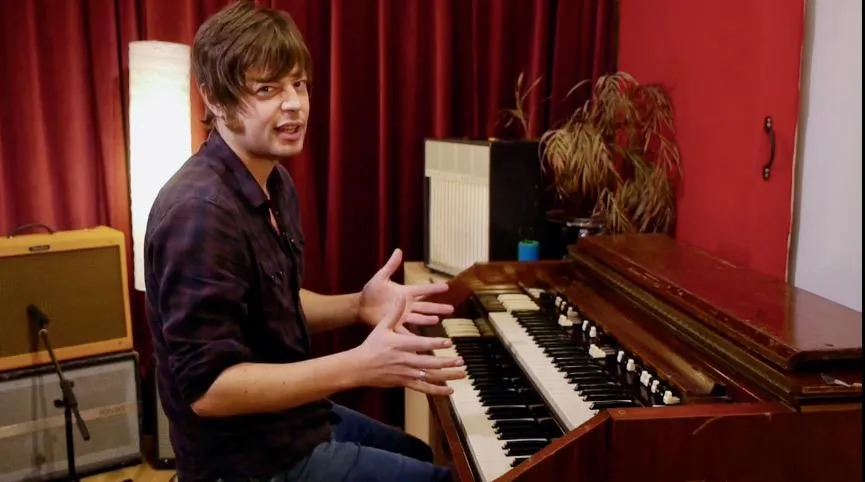
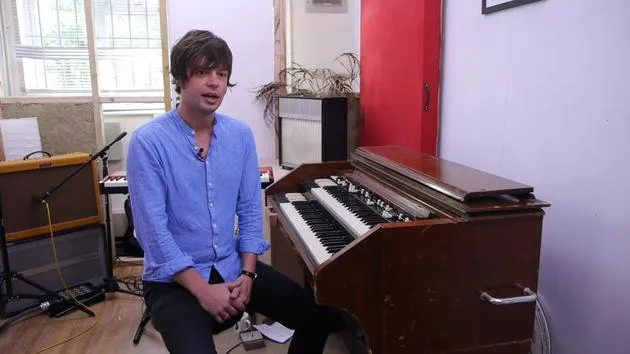
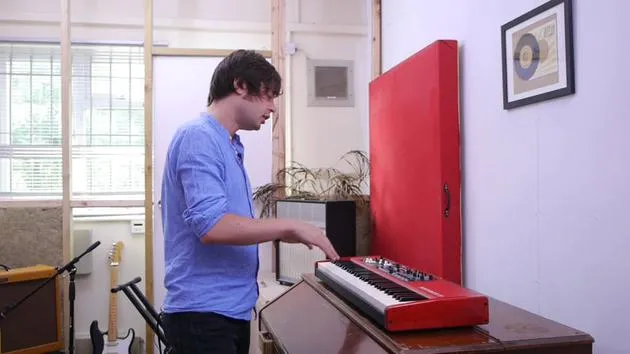
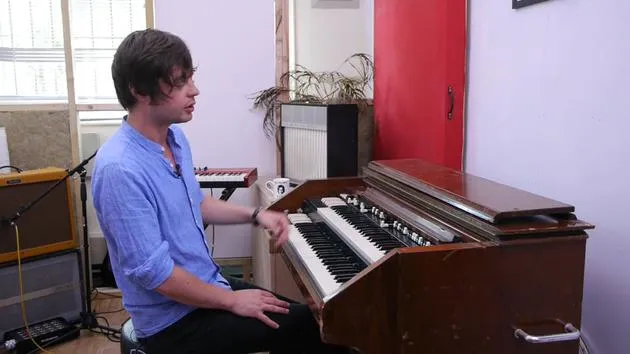
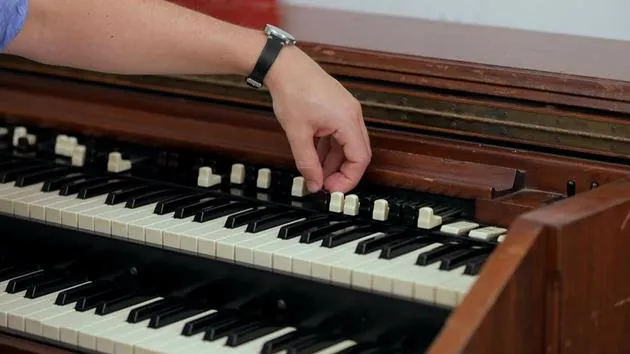
Joe GlossopJoe Glossop explains what's going on inside a Hammond - the tone-wheel generator, the nine contacts per key and how the drawbars recreate the pipes of a church organ.
What's in the course
21 lessons (1h 25m) · 1 free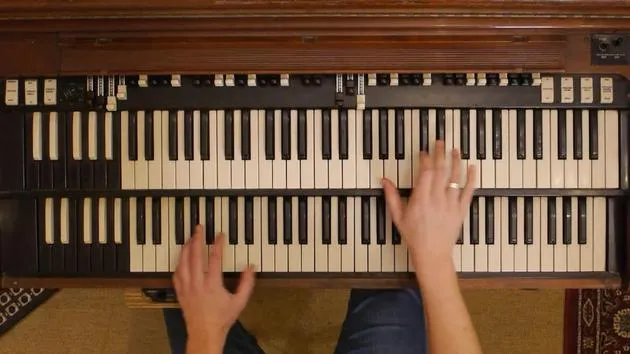
01. The Small Faces - Tin Soldier (performance)
1:16
02. The Small Faces - Tin Soldier (analysis)
7:03
03. Deep Purple (John Lord) - Smoke On The Water (performance)
1:02
04. Deep Purple (John Lord) - Smoke On The Water (analysis)
8:38
05. Allman Brothers - Whipping Post (performance)
1:23
06. Allman Brothers - Whipping Post (analysis)
8:39

Lesson transcript
Understanding the Tone Wheel Generator
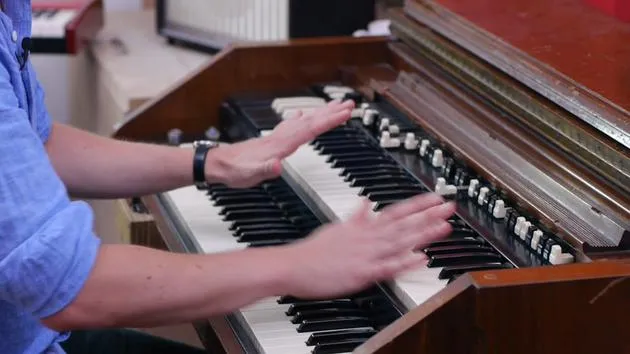
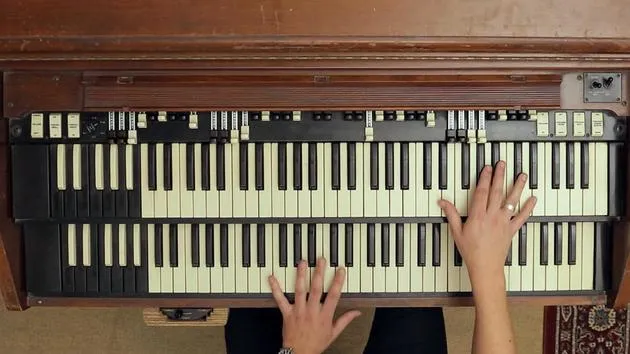
The guts of it are this tone wheel generator that has 96 tone wheels on a rod. They spin in an electric current, and each time the little cog cuts through the current, a tone is produced.
Key Features
- Each key has nine contacts which correspond to nine drawbars.
- As you press the key down, you gradually get from high to low as the contacts engage one by one.
Complexity and Design
- In each key, there are nine contacts going up and down vertically.
- It's a very complicated system, and I don't know how he came up with it.
- It's amazing that they still work all this time later, considering the design is about 70 to 80 years old.
Differences from Traditional Organs
- It's different from a church organ in that it is electric to begin with.
- These drawbars are modeled on lengths of pipe from a church organ. The original idea was to recreate a church organ.
Drawbar Specifications
If you see on slightly later models from the late 60s onward through the 70s, the drawbars had the lengths of pipe written on:
- 16
- 5 and a third
- 8
- 4
- 2 and 1
- Sub fundamentals, fundamentals, and fifths are structured as follows:
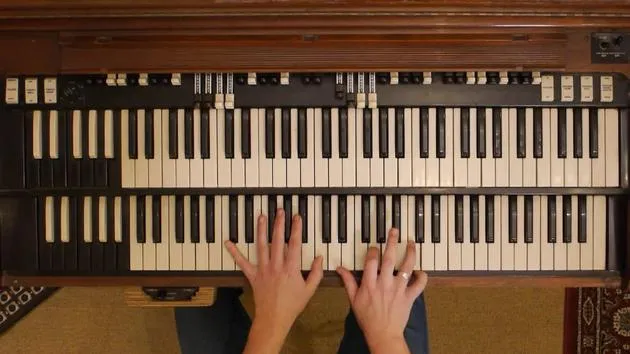
- The white ones are all fundamentals.
- The colored ones are sub fundamentals and fifths.
This model was made from 1955 to 1975. It is truly an incredible bit of engineering!
21 lessons
1h 25m of structured video lessons
Advanced video features
Slow down, loop a passage, follow along
Mobile, tablet & desktop
Practise wherever you are
100% satisfaction guarantee
30-day money-back guarantee
Meet your guru
Meet your guru
Joe Glossop is a keyboard player from Sheffield who has made his name on the Hammond organ. He currently holds the organ chair in Tom Jones's touring band, and has played with Van Morrison and James Hunter, as well as on piano and Rhodes. His courses get the real Hammond sound out of any keyboard - drawbar registration, the Leslie, the walking-bass left hand, and the comping and soloing vocabulary of the soul-jazz, blues and rock organ traditions, from Jimmy Smith to Booker T.