



Effets flamboyants - scratching
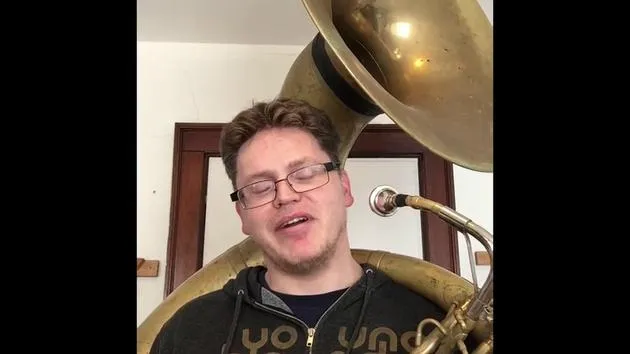
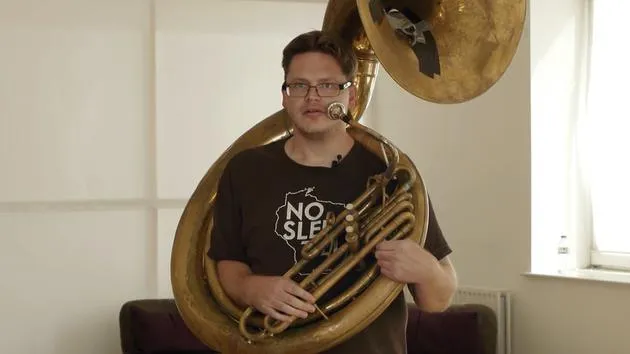
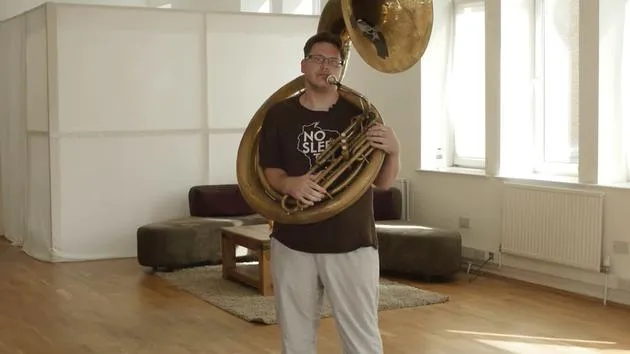
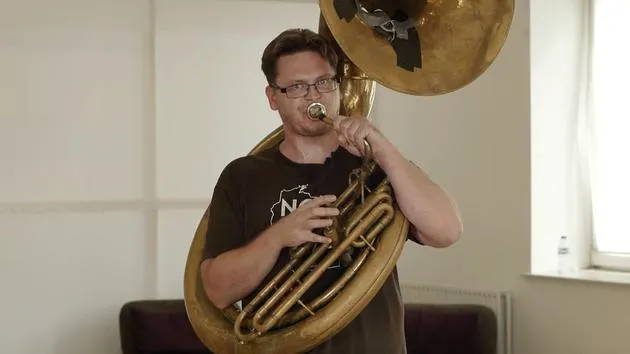
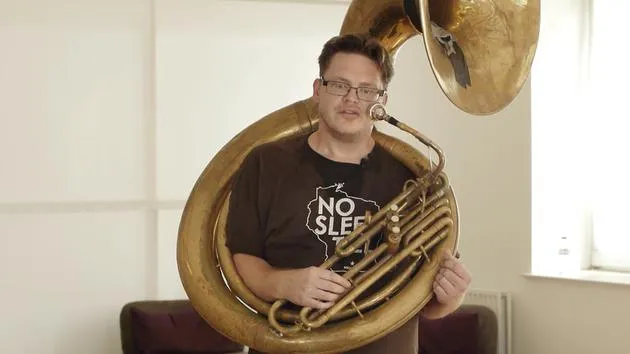
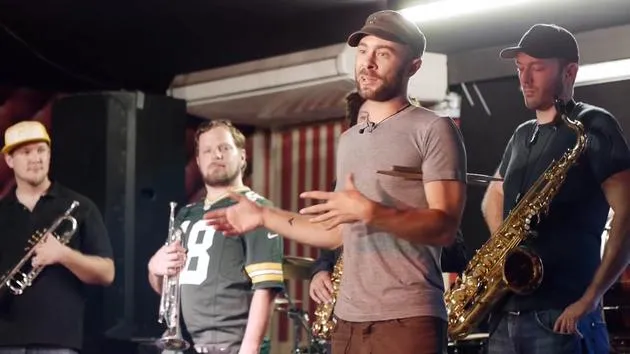
Nat McIntosh montre étape par étape comment il crée son son 'scratching' caractéristique et d'autres effets flamboyants au sousaphone.
Le contenu du cours
20 leçons (3h 4min) · 2 gratuites
Transcription de la leçon
Scratching Effect in Music
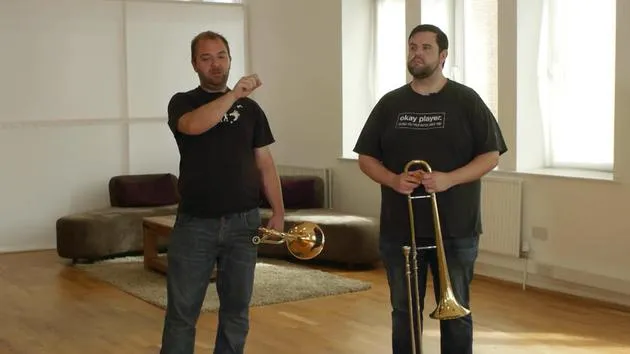
Let's get on to some of the more flamboyant effects that I do, one of which is the scratching effect.
Origin of the Scratching Effect
A lot of people ask where the scratching effect comes from. They question whether it's all in the voice or if it's played.
- Answer: It's both. It can be anything.
Working on Upper Range
The scratching effect is about:
- Working on your upper range.
- Getting good at playing up there while you're in your upper range.
Notice how I wasn't hitting any partials? That was all a pure GLISP with no valves down. That's part of the key to being able to articulate within that gliss.
Articulation
If you can go, that's going to be where those notes live.
- You don't want it to sound too much like:
- "That's just double tonguing. That's nothing."
The important thing is that it moves within.
That's all just played right there. Okay? And you can do it with your voice. That's all, just with the voice.
Mixing Techniques
You mix them together, and you get something new. For example, again, the key to this stuff is rhythm.
- If you're not in time, it's just a bunch of messing around.
- It makes no sense to anybody.
Usage of the Effect
The important thing is that you use it sparingly, very sparingly.
- While you're using it sparingly, make sure that you're thinking about the landing, not the journey.
- The essential aspect is that it ends and that it ends in the right place where the bass drum comes in.
Not just that you're making this sound.
Effectiveness and Surprising the Audience
This technique only works if you can come up with really spare places to put it and ensure that it stays surprising every time that you do it.
- If it just starts to sound like you have one sound, and you do the same thing every single time...
- Really quickly, the audience is going to get bored with it.
Keeping It Moving
So, the key to it is to keep everything moving. All right?
20 leçons
3h 4m de leçons vidéo structurées
Fonctions vidéo avancées
Ralentissez, bouclez un passage, suivez la partition
Mobile, tablette et ordinateur
Pratiquez où vous voulez
Satisfaction garantie à 100 %
Garantie remboursement 30 jours
Rencontrez votre guru
Rencontrez votre guru
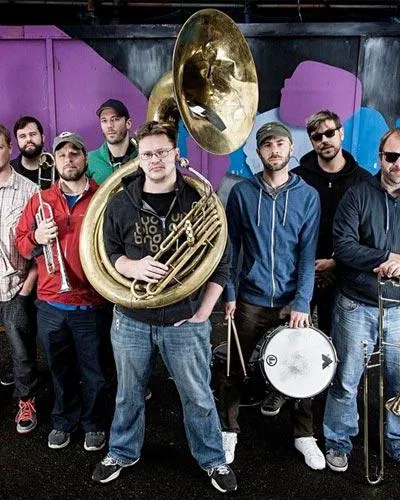
Youngblood Brass Band fusionne les cuivres sans concession de La Nouvelle-Orléans avec l'énergie et le lyrisme du hip-hop. Issu de Madison, Brooklyn, Minneapolis et Chicago, ce groupe de dix musiciens tourne dans le monde entier depuis 2000 et a collaboré avec des artistes tels que Questlove et Talib Kweli. Il est tout aussi à l'aise à mener une fanfare sur ses propres compositions qu'à faire la tête d'affiche d'un festival de punk. Sur MusicGurus, ils décomposent leur son mêlant La Nouvelle-Orléans et hip-hop : comment ils composent et arrangent pour les cuivres, le vocabulaire rythmique et harmonique qui relie le tout, et comment jouer une ligne de cuivre au sein d'une section soudée, y compris les parties complètes de leur morceau 'Brooklyn'.







