



Maîtriser le tambourin
Lesson time: (6min 0sec)
Dave Henzie-Skogen aborde la technique du tambourin au sein d'un brass band, en s'appuyant sur la tradition gospel, avec Matt Reschke en démonstration.
Course preview
This lesson is part of the course Musicalité et improvisation en brass band avec Youngblood
Watch a preview of the full course below.
Lesson transcript:
Accessory Instruments: The Tambourine
Today, I want to discuss a few thoughts on accessory instruments, specifically the tambourine.
The Tambourine
Overview
The tambourine is often woefully underplayed, in my opinion. Many people think of the tambourine as an instrument where you simply shake it or hit it lightly. However, during our first visit to New Orleans, I was amazed by the diverse ways people were playing the tambourine. It all stems from the gospel tradition, and there are nearly as many ways to play it as there are rhythms!
Playing Techniques
Basic Techniques
Here are a few key points about playing the tambourine effectively, especially within a brass band groove:
-
Downbeats & Upbeats
- When playing, think of it as having more of a conversational feel.
- All downbeats (considered on counts "1" and "2") should involve downward motions on the tambourine.
- Upbeats will involve upward motions.
-
Angle Matters
- The angle at which you hold the tambourine is crucial. The placement of your hand affects the sound and rhythm.
- Aim for a consistent motion: that's your downbeat, and that's the offbeat.
- Play straight 16th notes to keep the tambourine moving smoothly.
Integrating with the Rhythm
The Role of the Tambourine
The tambourine can act like a second snare drum or fill in during moments where the snare drum isn't accenting. For example, consider the "wambar clave" , a common beat in brass band music:
- Bass Drum Pattern
- 1, 2, 3, 4: The bass drum accents in the pattern typically fall on beats 1 and 4.
- While the snare drum commonly accents backbeats (2 and 4), the tambourine can fill in the gaps:
- Place tambourine accents where the snare drum isn't playing.
- Alternatively, match the snare drum for added volume.
Example Exercise
Practical Play
Let's explore that tambourine style within the context of a kick drum pattern.
- Note that almost all phrases begin or end on the "ands".
- Reference point for playing: one e and a, one e and a...
- You can choose to play some notes while omitting others ? this is controlled by how your hand strikes the tambourine.
When playing, I often hit it with the heel of my hand:
- Dynamics:
- Use the heel for down and up motions.
- For louder notes, hit with your entire hand or even your fist.
- Some players might incorporate their wrist, elbow, knee, or hip in their technique.
Exploring Sound
Sound Variations
The sound you produce can vary:
- Jigga Diggity: A quick, light sound.
- Pops: Clear, distinct notes.
- Rolls: A smoother or rolling sound.
Concluding Thoughts
Many musicians I've spoken to haven't discussed these techniques, leaving them somewhat secretive and unspoken. But understanding and experimenting with these methods can greatly enhance your tambourine playing!
Getting Loud
As you progress to louder sections of a song, consider how the tambourine fits into this dynamic:
- Hold it higher, get into the groove with others, and make the way you hold it part of your performance's expressiveness.
Ultimately, the tambourine is an incredibly versatile instrument ? one that allows for personal expression and creativity. So, enjoy exploring all its possibilities!

About the instructor
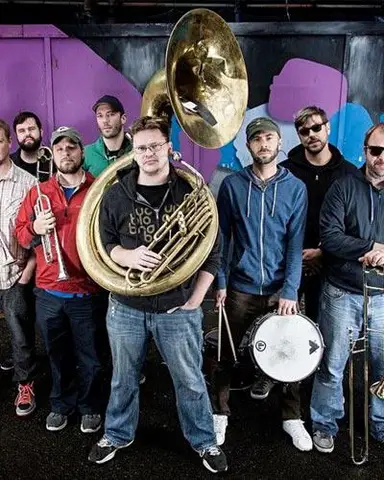
Youngblood Brass Band fusionne les cuivres sans concession de La Nouvelle-Orléans avec l'énergie et le lyrisme du hip-hop. Issu de Madison, Brooklyn, Minneapolis et Chicago, ce groupe de dix musiciens tourne dans le monde entier depuis 2000 et a collaboré avec des artistes tels que Questlove et Talib Kweli. Il est tout aussi à l'aise à mener une fanfare sur ses propres compositions qu'à faire la tête d'affiche d'un festival de punk. Sur MusicGurus, ils décomposent leur son mêlant La Nouvelle-Orléans et hip-hop : comment ils composent et arrangent pour les cuivres, le vocabulaire rythmique et harmonique qui relie le tout, et comment jouer une ligne de cuivre au sein d'une section soudée, y compris les parties complètes de leur morceau 'Brooklyn'. read more