



Gamme de blues avec accords de neuvième

Avec
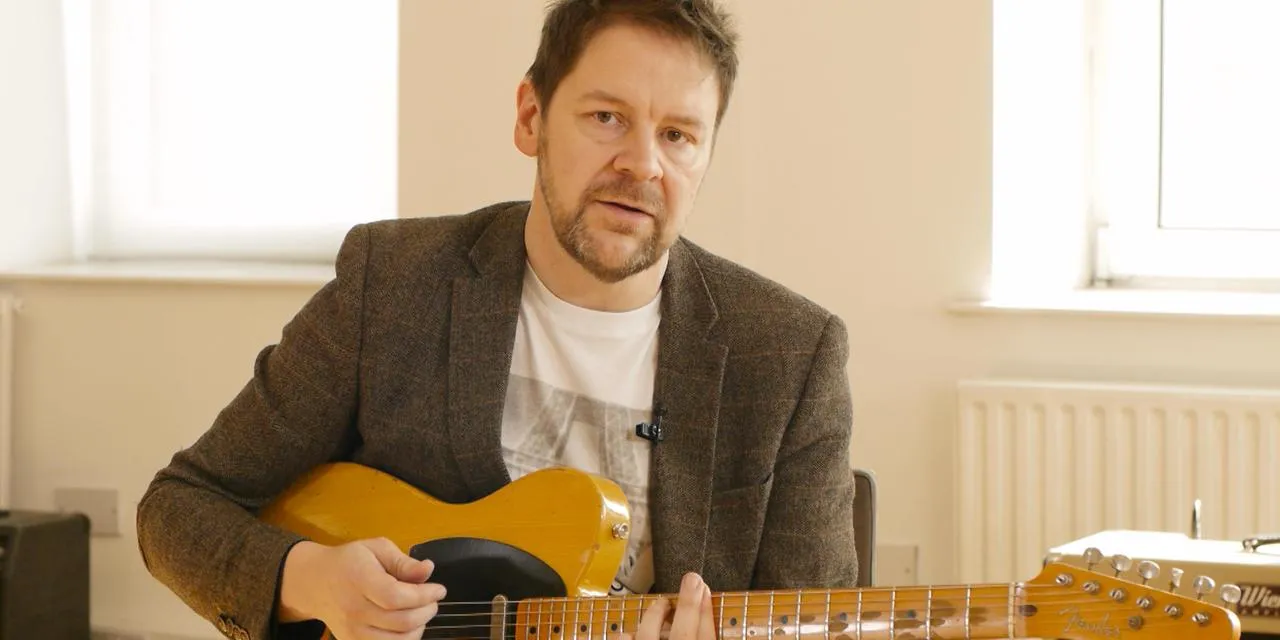
Ron SayerRon Sayer transforme les formes d'harmonie en accords des leçons précédentes en accords de neuvième, en déplaçant une seule note pour ajouter une couleur plus riche à ton blues.
Le contenu du cours
12 leçons (1h 27min) · 2 gratuites
01. Jam de bienvenue au cours
Leçon gratuite2:21
02. Utiliser les arpèges dans ton blues
Leçon gratuite8:23
03. Gammes ton/demi-ton dans ton blues
8:49
04. Arpèges de septième diminuée dans ton blues
10:14
05. Plus d'arpèges de septième diminuée
10:32

06. Glisser des accords de 9e à la 6e dans ton blues
8:16
07. Quartal Harmony Blues Scale
4:46
08. Gamme de blues avec accords de neuvième
Tu es ici3:24

09. Accords de septième mineure et quartaux dans ton blues
4:36
10. Les arpèges de septième majeure dans ton blues mineur
12:48

11. Gammes altérées dans ton blues mineur
9:56
12. LEÇON BONUS : Santana - Black Magic Woman
3:16
Transcription de la leçon
Chordal Harmony and Ninth Chords
Well, hello there!
Hopefully, you enjoyed that last lesson on chordal harmony and moving around a blues scale. If you did enjoy the lesson, this one hopefully will make you smile as well.
Introducing Ninth Chords
Basically, it's a very, very similar concept:
- Instead of using that chordal harmony chord, you're going to move one of the notes up.
- It's only one note that changes, but it becomes a ninth chord.
If you remember a few lessons ago, we looked at sliding sixth to ninth chords. This concept is sort of a mixture between both of those lessons.
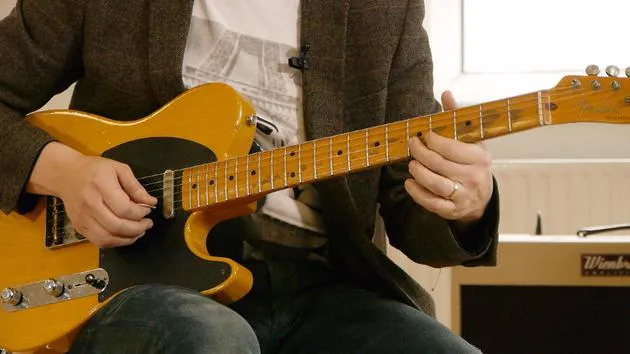
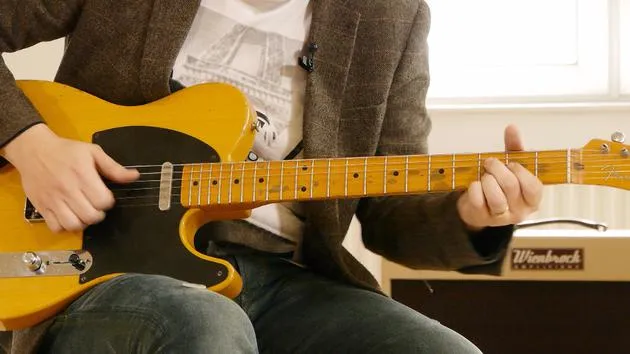
Playing the A9 Chord
Here's what you're going to do:
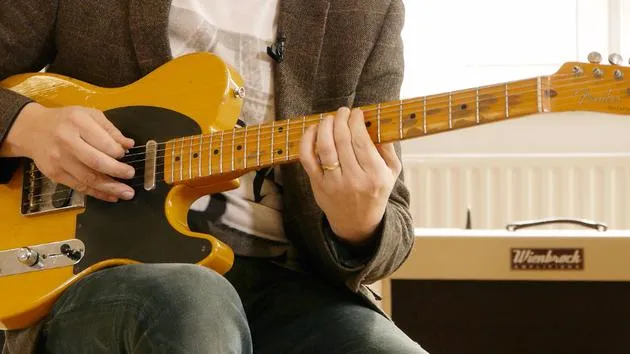
- Play the ninth chord by positioning your fingers as follows:
- Fifth fret on the D
- Fourth fret on the G
- Fifth fret on the B
- Fifth fret on the E
So, there's our A9 chord.
Using the Blues Scale
The same concept applies:
- You'll be playing a blues scale, and your top note is the one you need to watch.
- Follow the top note while playing a blues scale in ninth chords over the top.
It sounds slightly different from the previous lesson using the stack nine or chordal harmony, but it has a definite flavor to it.
Jamming It Out
Okay, let's have a little go and jam over that then.
- Same thing: Vamp on the A.
- Count: 1, 2, 3.
That's some idea of ways you can have fun with this!
Practical Application
It's something that you can use when playing:
- A slow blues
- Some kind of funky groove
It always sounds quite nice if you're actually coming down to play that. It's not one that really suits blasting away, but if you have a section in the song where you bring it down, it always works spooky.
Okay, hope you enjoyed that!
12 leçons
1h 27m de leçons vidéo structurées
Fonctions vidéo avancées
Ralentissez, bouclez un passage, suivez la partition
Mobile, tablette et ordinateur
Pratiquez où vous voulez
Satisfaction garantie à 100 %
Garantie remboursement 30 jours
Rencontrez votre guru
Rencontrez votre guru
Ron Sayer est un guitariste de guitaristes du circuit blues britannique et un mentor pour des musiciens comme Oli Brown et Sol Philcox. Il a été nommé quatre fois aux British Blues Awards - pour l'album 'Better Side', le single 'Don't Make Me Stay' et sa coécriture sur 'Here I Am' d'Oli Brown - et a remporté le prix du guitariste de l'année. Dans ses cours, il décompose le phrasé, la sonorité et le feeling qui se cachent derrière le jeu solo de blues électrique.







