



Harmoniques naturelles

Le contenu du cours
43 leçons (3h 55min) · 1 gratuites
01. Introduction aux approches de l'improvisation
1:00
02. Embellir une mélodie
5:36

03. Défi : envoie ta mélodie
0:26
04. Accords de septième
6:38

05. Composer ton solo
8:53
06. Grattage avancé et ornementations
5:40
07. Comping sur différents styles musicaux
8:36

08. Extensions supplémentaires et accords sus
4:19
09. Mélanger comping rythmique et mélodique
4:24














Transcription de la leçon
Understanding Natural Harmonics
Okay then, guys, let's take a look at another technique. We're going to explore two types of harmonics today: Pinched harmonics and Natural harmonics.
Natural Harmonics
Let's get the natural harmonics out of the way first, it's slightly easier. These are signified by a diamond shape around the note in the tablature.
- For example, if you see a 12 on the tab with a diamond around it, that indicates you need to play that note as a natural harmonic.
How to Play Natural Harmonics
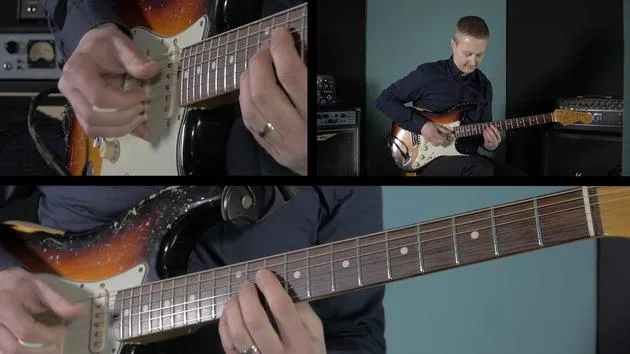
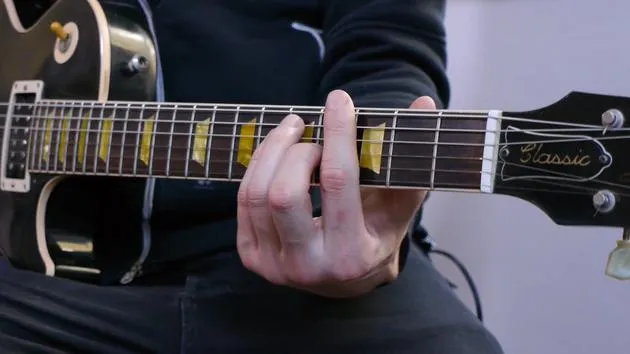
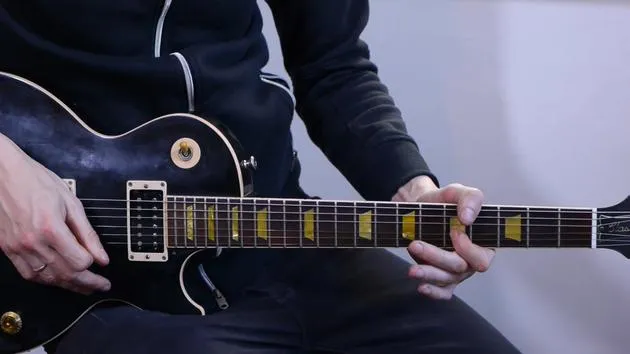
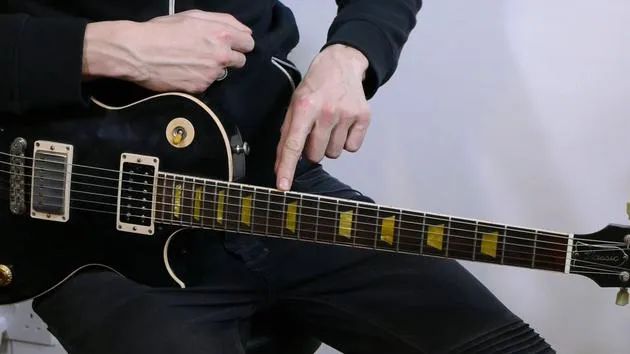
To play a natural harmonic, it's dead simple. Here's how to play the 12th fret on the E string as a harmonic:
-
Normal Fret Harmonic: Listen to the difference in sound.
-
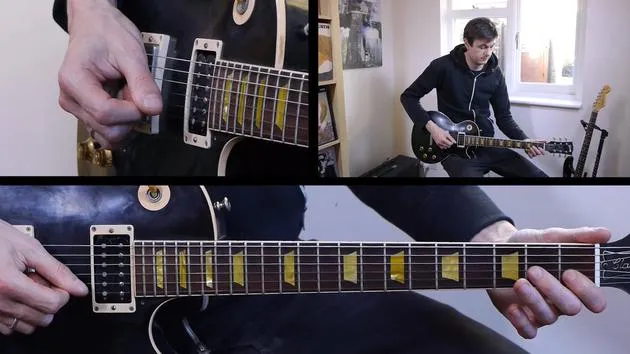
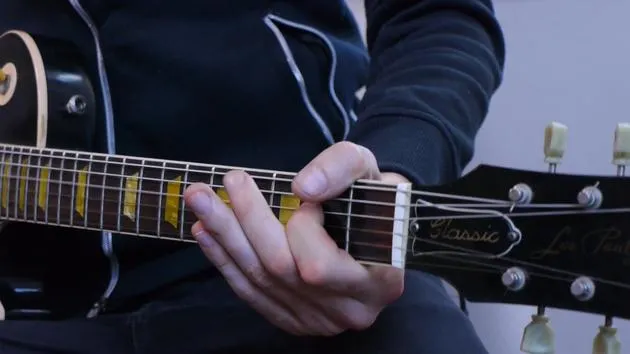
Positioning:
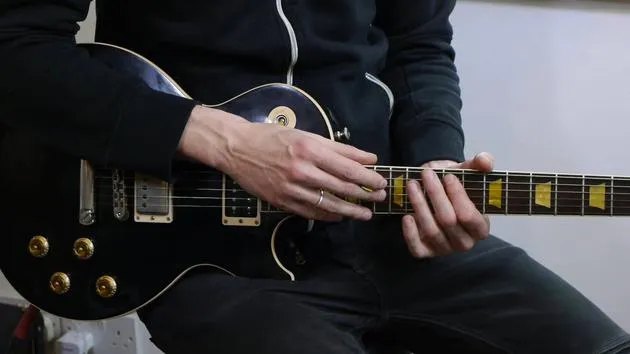
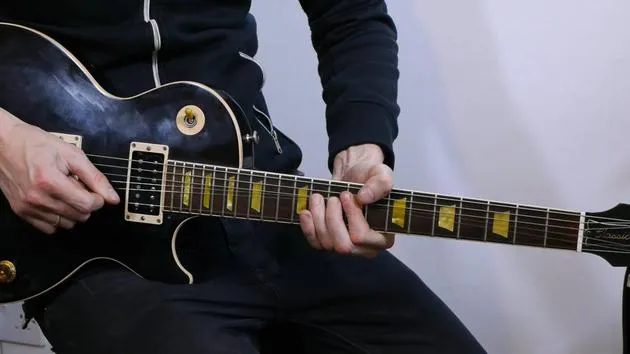
- Place your finger directly above the metal fret wire.
- Normally, when you fret a note, you want to be just the other side of that wire.
- For a natural harmonic, however, you want to be directly above the metal fret.
-
Touching the String:
- Only lightly touch the string without applying enough pressure for it to touch the fret or fretboard.
-
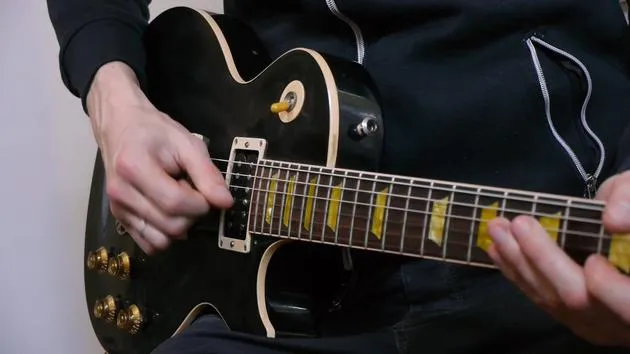
Pick the Note:
- As soon as you've caught the harmonic, move your left hand out of the way.
- You'll hear that the harmonic will continue to ring.
Example: Here it is! And that will continue to ring.
Difference in Sound
The difference between that and a fretted note is significant:
- If I play the fretted note and take my hand away, it doesn't continue to ring.
- You can hear the difference in tone: pitched and harmonic.
Common Locations for Natural Harmonics
There are three really predominant places on the guitar where you can achieve easy natural harmonics:
- 12th fret: Probably the easiest place to start.
- 7th fret: Another really cool place to play.
- 5th fret: Pitch gets even higher here.
Tips for Playing Harmonics
- As soon as you've caught the harmonic, get your hand out of the way.
- You can even play these as chords.
- Generally, the closer you get to the note for the harmonics, the sound will be very delicate.
Applications of Natural Harmonics
This technique is really cool and crops up in quite a few rock songs. Remember, it's always signified by the diamond symbol either around the note head or the tabbed number, and it might even have NH above it, short for natural harmonic.
You can create some really cool melodies with those. Chords can sound fantastic with a bit of delay, offering some ambient sounds.
But yeah, quite an unusual sound for a guitar to make!
That's the first type of harmonic we're going to talk about.
43 leçons
3h 55m de leçons vidéo structurées
Fonctions vidéo avancées
Ralentissez, bouclez un passage, suivez la partition
Mobile, tablette et ordinateur
Pratiquez où vous voulez
Satisfaction garantie à 100 %
Garantie remboursement 30 jours







