



Accords de septième
Comment gérer les accords de septième en improvisant, et pourquoi l'intervalle de septième compte tant — avec les voicings et arpèges à travailler tirés du programme Rockschool.

Le contenu du cours
43 leçons (3h 55min) · 1 gratuites
01. Introduction aux approches de l'improvisation
1:00
02. Embellir une mélodie
5:36
03. Défi : envoie ta mélodie
0:26
04. Accords de septième
Tu es ici6:38
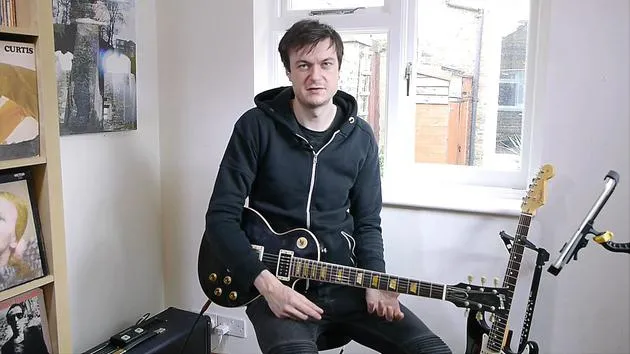
05. Composer ton solo
8:53
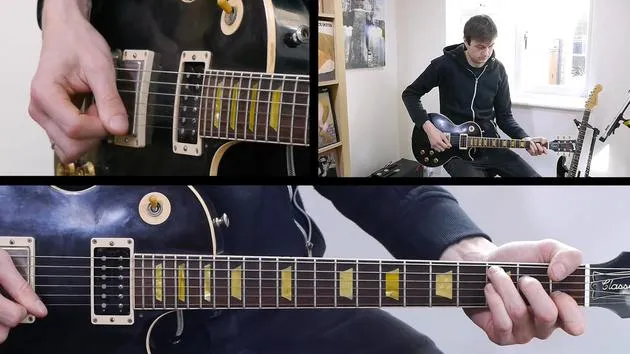
06. Grattage avancé et ornementations
5:40
07. Comping sur différents styles musicaux
8:36
08. Extensions supplémentaires et accords sus
4:19
09. Mélanger comping rythmique et mélodique
4:24
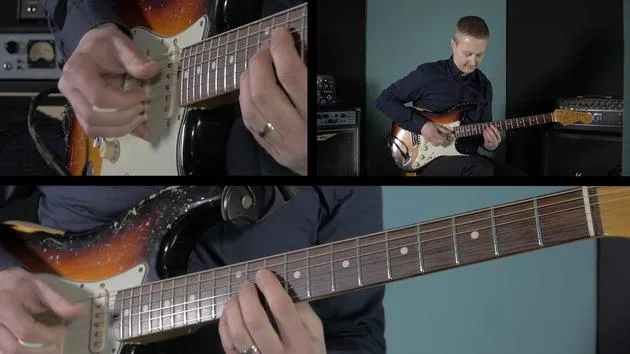
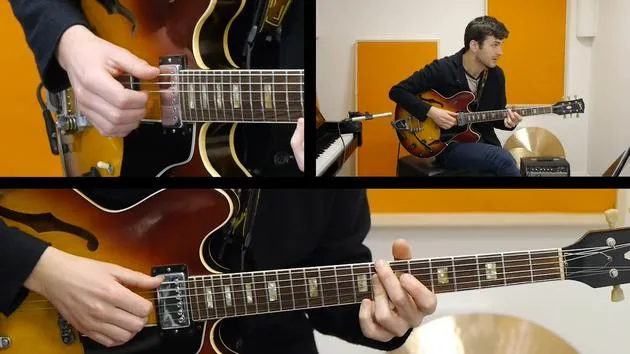
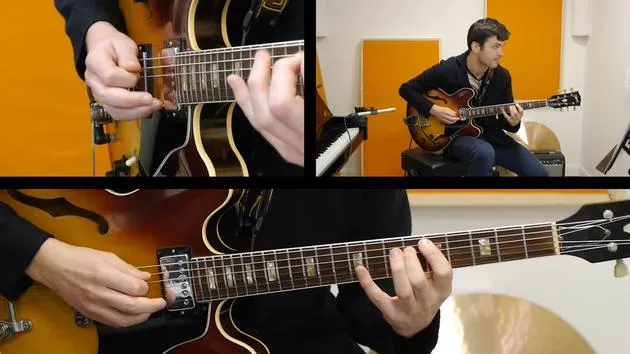

Transcription de la leçon
Improvisation and Seventh Chords
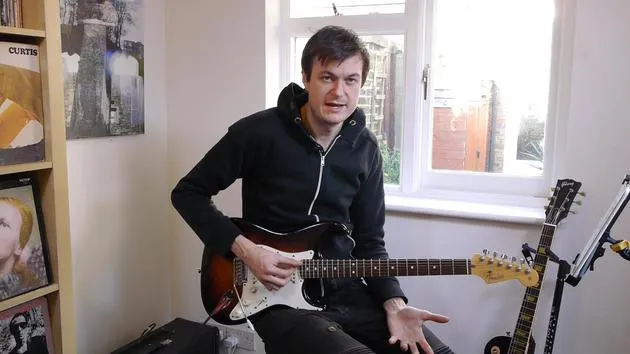
Okay, so the next thing I'd like to talk about regarding improvisation is when we come across seventh chords.
Introduction to Seventh Chords
If you're unfamiliar with these and you've got the Rock School syllabus, do check out the technical exercises. They're really useful. You'll find lots of examples of seventh chord voicings and arpeggios that go with those as well. So they'll really help you out.
What is a Seventh Chord?
To briefly cover what a seventh chord is:
- It's a type of extended chord.
- This means we've taken a triad, which is a three-note chord (the chords we've probably used since day one when you picked up the guitar, such as major and minor chords).
- An extended chord adds notes to those triads, resulting in a more complex sound due to the additional notes competing for your attention.
The three types of seventh chords are:
- Minor Seventh
- Major Seventh
- Dominant Seventh
Examples of Seventh Chords
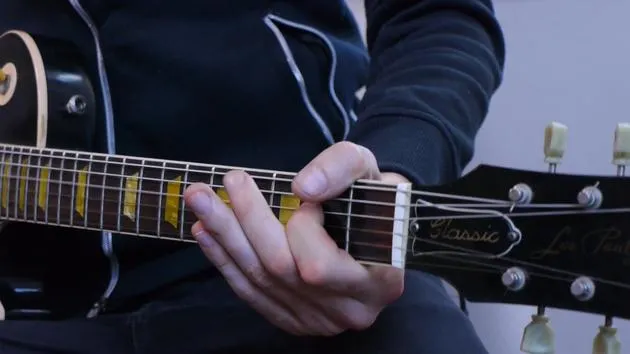
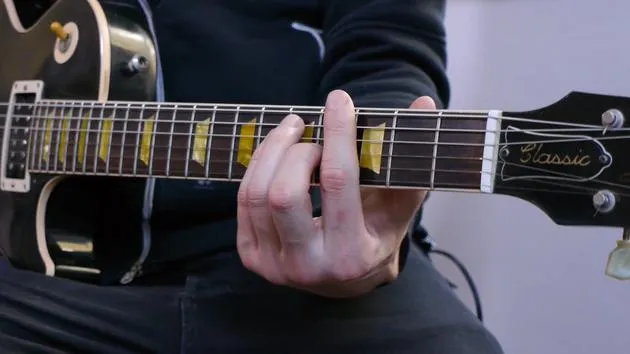
Let me just play you an example of each of those now:
- Minor Seventh: This has a kind of moody, bluesy vibe.
- Major Seventh (C major 7): To me, this has a much more dreamy, jazzy vibe.
- Dominant Seventh: This one leans more towards an upbeat blues feel.
Chord Construction
There are varying constructions of those chords, and if you're interested, it's definitely worth chatting with your teacher about the chord construction of those chords. Again, this is something covered in the Rock School syllabus if you have those books.
Blues-Based Improvisation Ideas
Let's take a look at some blues-based improvisation ideas and how we can really target the seventh note.
We've talked about chord tones before, and with seventh chords, we now have an additional chord tone to consider, which is the seventh degree.
Practical Application
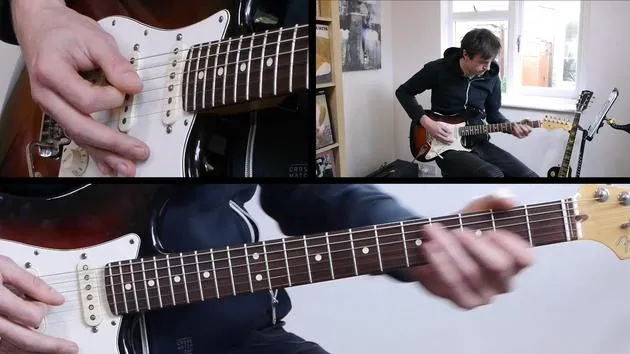
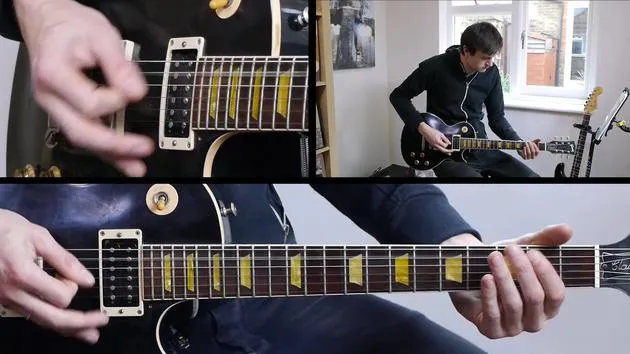
The two seventh chords I'm going to play with now are:
- Dominant Seven (A7): Similar to a standard A major chord, but with the additional G note (the flattened seventh).
- D7
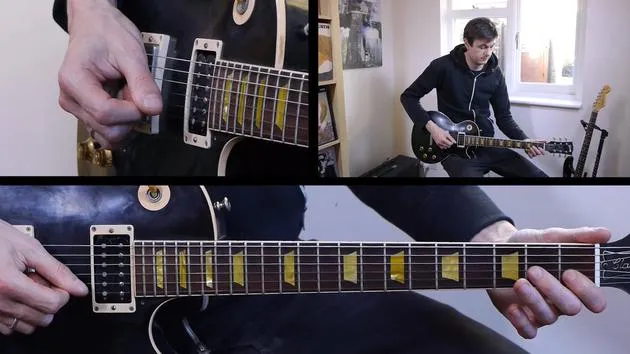
I'm going to set these up on a loop and start playing through the chord tones of each chord. You'll hear how the seventh sounds in relation to the root, third, and fifth.
Here we go:
- A7
- D7
Let's play some seventh zone!
So that's my seventh to the root, third to the seventh.
Exploring the Seventh
I got a bit carried away there; that was good fun! You can see how enjoyable it can get.
What I wanted to demonstrate to you is how cool the seventh sounds over those dominant seventh chords. It has a real pull to it.
In those early phrases I played, I resolved the seventh up to the root note of each chord. You can come up with some really cool, authentic blues ideas just with those two notes alone, playing with their octaves and the positions you place them in.
I started to branch out and improvise with the other chord tones as well.
Core Chord Tones
You'll often find that the two chord tones that have the strongest relationship to the sound of a chord are the third and the seventh. They play a huge role in the sound.
While you might think the root note plays a significant role, it usually gets covered by other instruments within an ensemble, meaning the guitarist doesn't necessarily have to play it.
Creating Interesting Blues Ideas
You can create some really interesting blues ideas by playing smaller sections of a seventh chord. Let me show you this again, with an A7 to D7, but only using the flattened seventh and the third.
Here's how it sounds over the A and D chords:
While not having the root note in the bottom, you can still imagine what those chords sound like in their fuller contexts.
Conclusion
It's essential to experiment with and have control over spotting where that seventh is, alongside the third. Try to come up with rhythmic or melodic ideas that focus on these two core chord tones.
This is something well worth giving a try next time you encounter any type of seventh chord.
- For minor sevenths, use the flattened third and the flattened seventh.
- For major sevenths, use the major third and the major seventh.
So give it a go and have fun!
43 leçons
3h 55m de leçons vidéo structurées
Fonctions vidéo avancées
Ralentissez, bouclez un passage, suivez la partition
Mobile, tablette et ordinateur
Pratiquez où vous voulez
Satisfaction garantie à 100 %
Garantie remboursement 30 jours







