



Walking Basses
Nous voyons comment les walking basses sont employées dans les morceaux de boogie-woogie
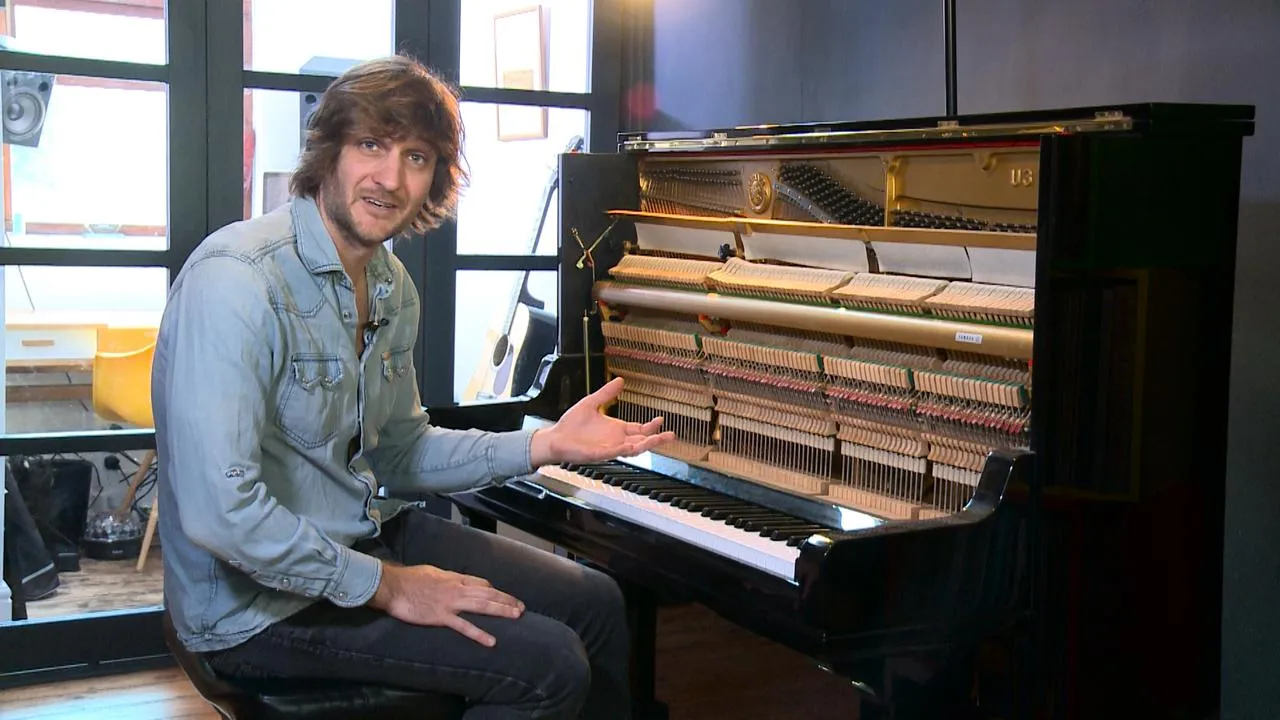
Le contenu du cours
24 leçons (2h 1min) · 2 gratuites
01. Introduction aux basses et conseils de pratique
2:23

02. Construire des basses boogie
Leçon gratuite6:22

03. Développer davantage les basses
8:57
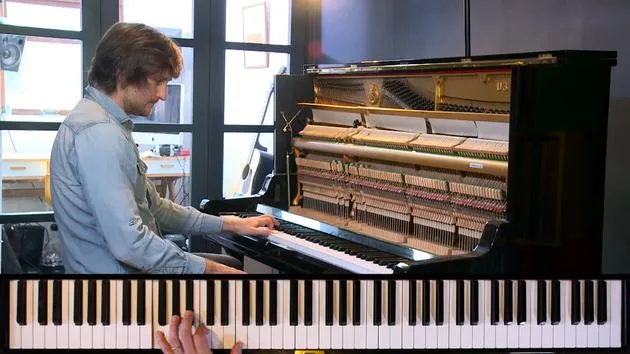
04. Basses mineures
3:02

05. Walking Basses
Tu es ici7:05

06. Faire preuve de créativité avec les basses à huit par mesure
5:33

07. Basses latines à la manière de Jimmy Yancey
2:07
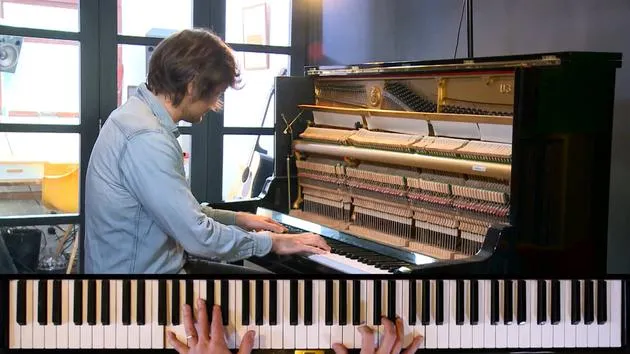
08. Développe tes propres basses - Idées rythmiques
6:04

09. Développer tes propres basses - Idées harmoniques et étude de Suitcase Blues
8:08
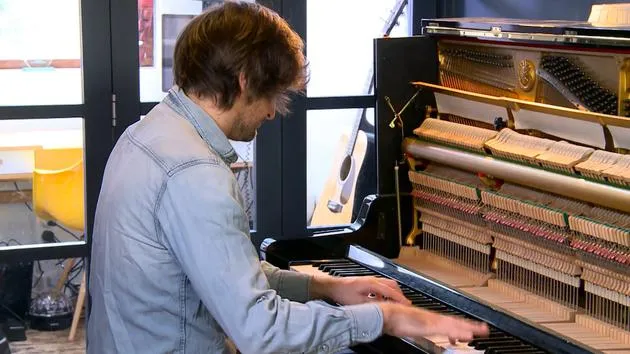
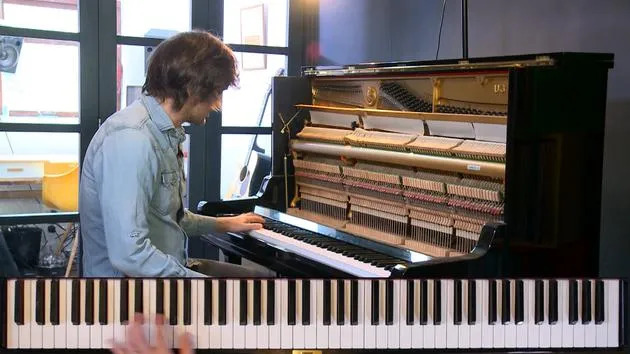


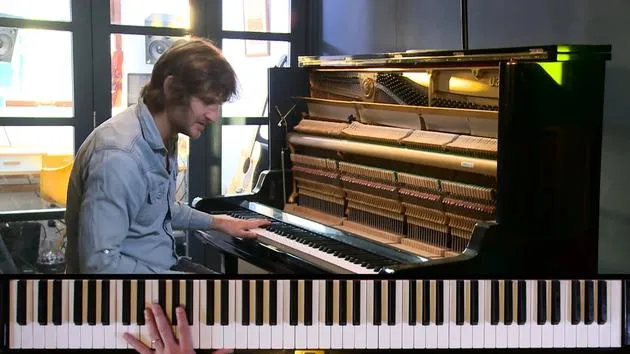
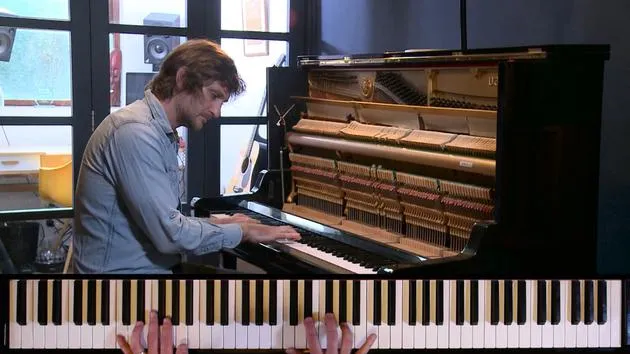
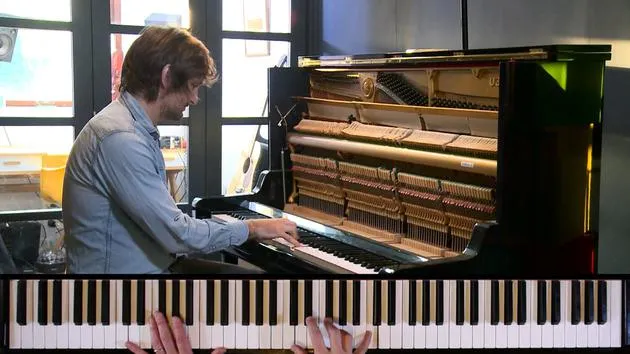
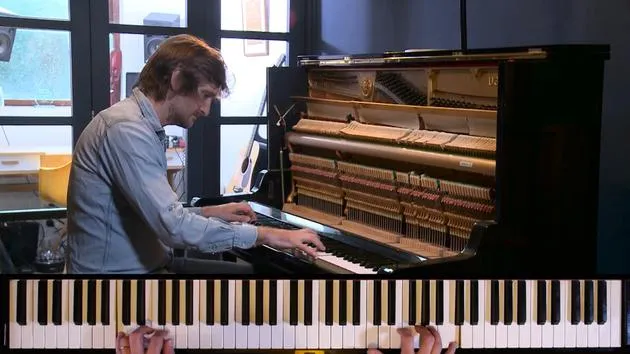
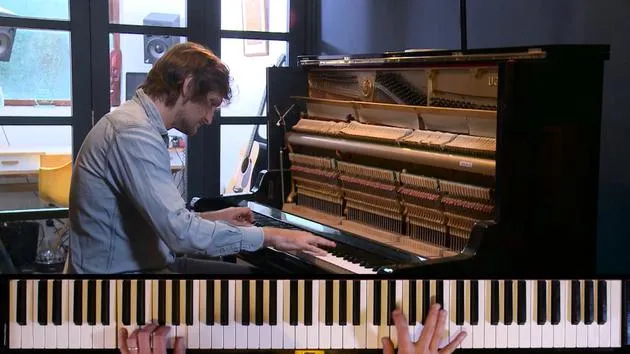
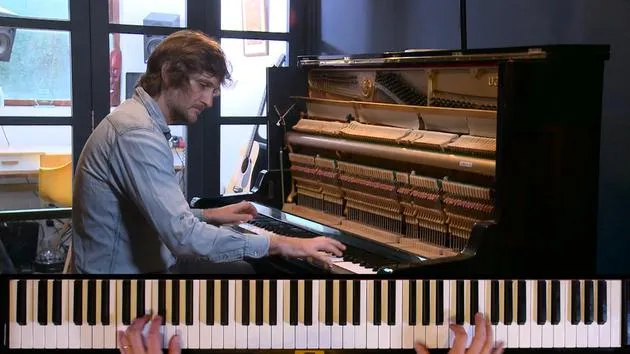
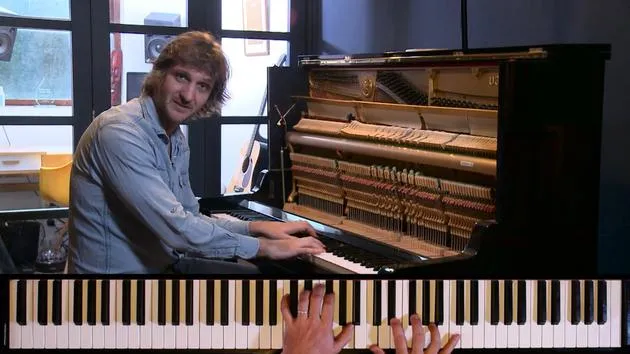
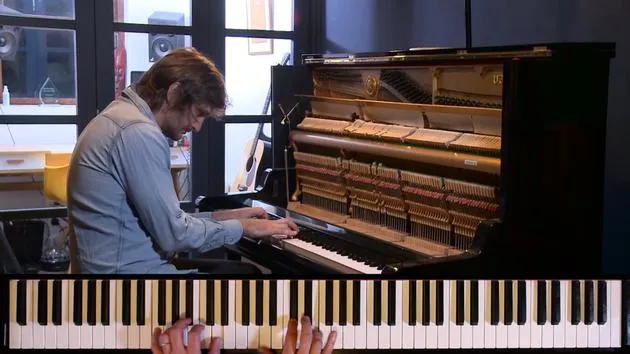
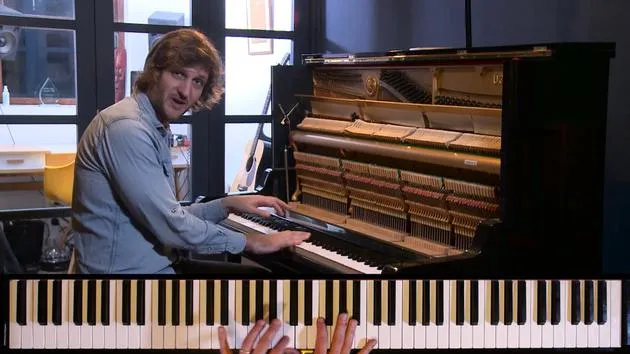
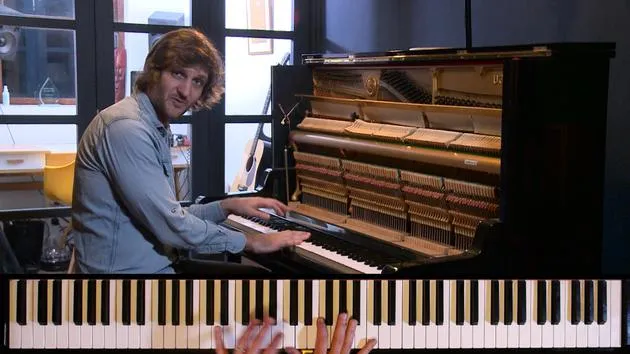
Transcription de la leçon
Exploring the Walking Bass Line
So yeah, let's look at another kind of bass line: the walking bass line. Let's explore it in as many different ways as we can.
The Basics
A walking bass line outlines the chord. For example, a 12-bar blues might go like this:
- Very simply, just outlining a C6
- Maybe to the 7
- Then the F
- Back to the C7
- Then to the G
- Maybe the F
It could stay on the G as well, but then there's a little turn around there. So there's a very simple walking bass line outlining the 12-bar blues.
Adding Excitement
What these early boogie players realized is that they could make it more exciting and intense by adding:
- An octave, which adds a bit of weight instantly.
- Breaking it up to create a skipping element, making it much more danceable.
So, you might get something like this. I might have even gone a little too harmonically advanced there with the little 2-5-1, then a different way down to the G, which you can do. The idea is that it's rocking between the octaves.
Exploring Variations
There are some things, like perhaps the Kaukau blues, where it's almost a sort of half-time feel. Feel free to explore different ways of playing it:
- Instead of going up and then down, why not start going down?
- Rather than going all the way up the chords, you might want to just go up, up, and down the triad.
You might do something like this, still based on the sixth chord.
Albert Ammons' Approach
Let's look at what Albert Ammons does sometimes with that walking bass line. He often adds the fifth, which again adds an extra layer of weight.
- So there you go.
- Then on the F.
- When he gets to the G or on Bass Gone Crazy, for example, he simply plays.
"Do check out that tune. It's great. And it's in the key of G as well."
If we put that in context, you can hear the difference going from the walking bass line without the fifth to the bass line with the fifth. It adds this extra weight, which I think is really hip.
Syncopation
Another thing that Albert Ammons does with that walking bass line with the fifth in it is to displace it by an eighth note or a quaver.
Rather than the bottom note being on the downbeat, that becomes the downbeat. For example:
- Instead of 1, 2, 3, 4, 1, you get something like 1, 2, a 1, 2, 3, etc.
This may sound slightly disjointed when you're familiar with the normal walking bass line, but when you put it in context, it works.
"It adds an extra kind of syncopation to it."
So something like this:
- 1, 2, 1, 2
adds a little bit of spice!
24 leçons
2h 1m de leçons vidéo structurées
Fonctions vidéo avancées
Ralentissez, bouclez un passage, suivez la partition
Mobile, tablette et ordinateur
Pratiquez où vous voulez
Satisfaction garantie à 100 %
Garantie remboursement 30 jours
Rencontrez votre guru

Rencontrez votre guru
Paddy Milner est reconnu comme l'un des meilleurs pianistes de blues au monde : il est actuellement le claviériste attitré de Sir Tom Jones, après plusieurs années aux côtés du grand et regretté Jack Bruce, mais c'est aussi un superbe auteur-compositeur original et un chanteur au timbre singulier. Il suffit de lire les éloges de personnalités comme Dave Brubeck ci-dessous ! Son jeu figure sur la bande originale du film à succès 'Rocketman' (2019).
Il a remporté à deux reprises le prix du Meilleur claviériste aux British Blues Awards et occupe de longue date une résidence en tant que membre fondateur du Ronnie Scott's Blues Explosion au club mondialement réputé Ronnie Scott's.
Son groupe actuel LONDONOLA joue une musique britannique maison teintée d'une bonne dose d'esprit de La Nouvelle-Orléans, et son projet collectif JAWBONE va de succès en succès depuis la sortie de son premier album éponyme.
- « J'adore... voilà un gars qui sait vraiment jouer du piano » - Dave Brubeck
- « Je le recommande vivement. D'une certaine manière, tout se met à aller beaucoup mieux ! » - Jack Bruce
- « Le meilleur pianiste de blues d'Europe... » - Blues Access, USA
- « Impressionnant et original » - The Times
- « Éblouissant » - The Independent
Au fil de ses cours, Paddy décortique l'authentique shuffle de blues, le slow blues, le boogie-woogie, le rock 'n' roll et le piano de La Nouvelle-Orléans - jusqu'à trois grands classiques du boogie-woogie - pour que vous appreniez ces styles auprès de l'un des tout meilleurs du métier.







