



Utiliser les introductions comme breakdowns
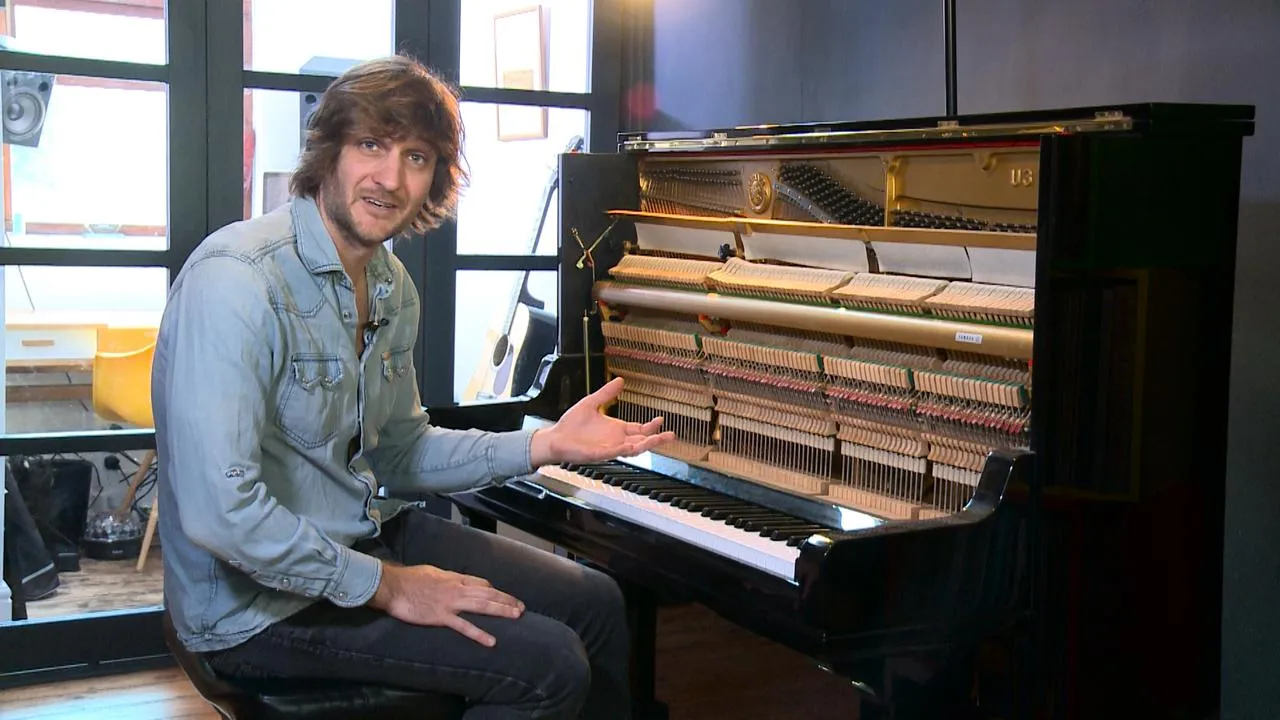
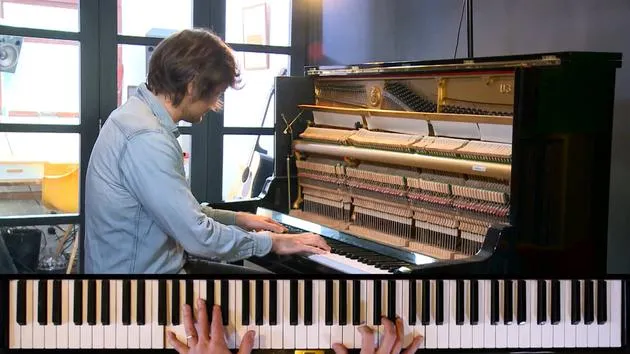
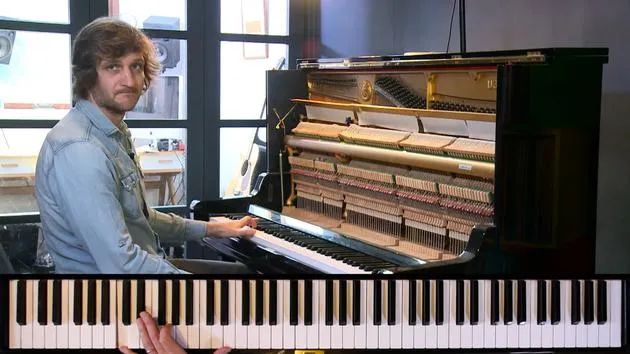
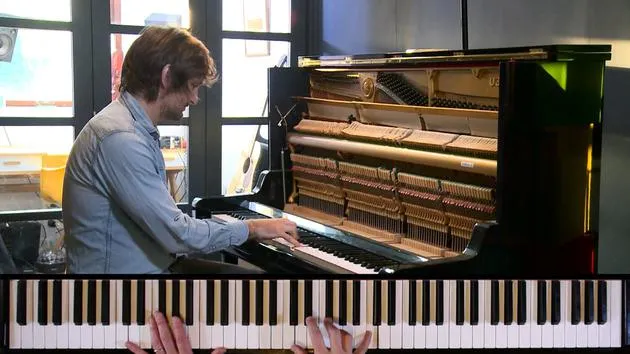
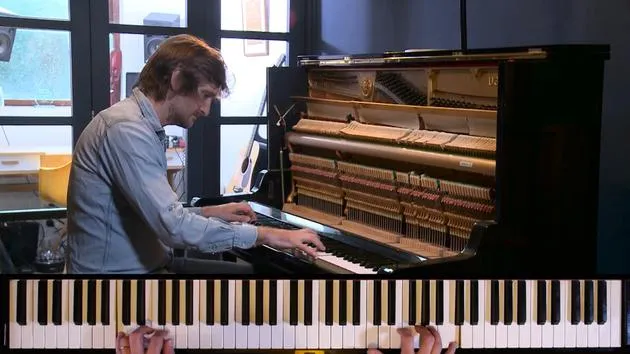
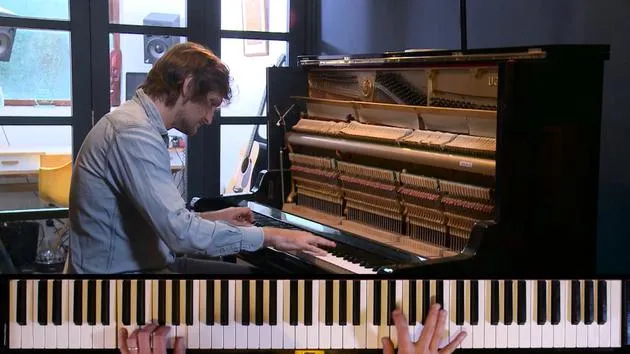
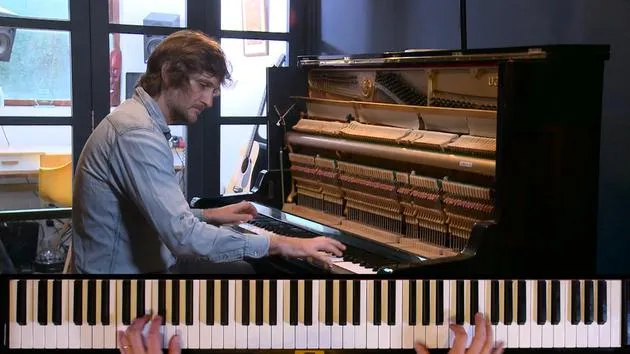
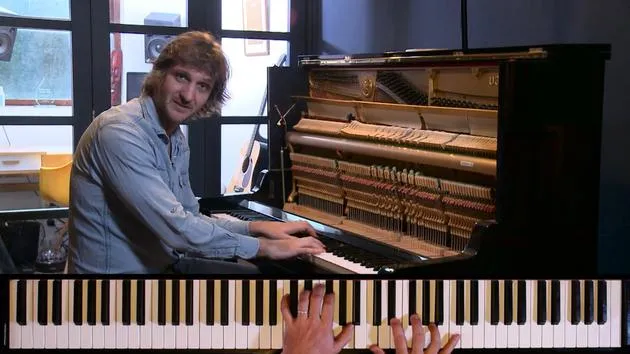
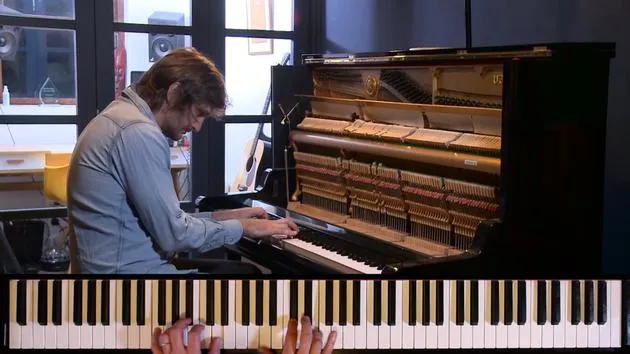
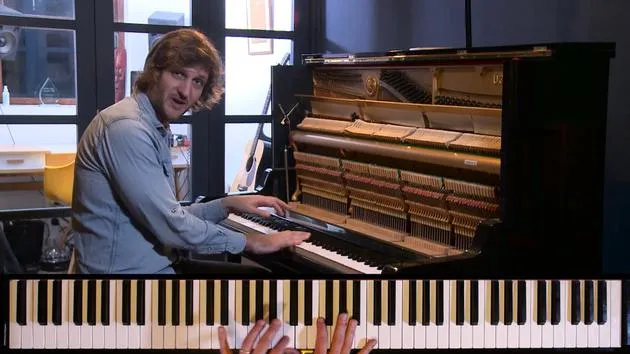
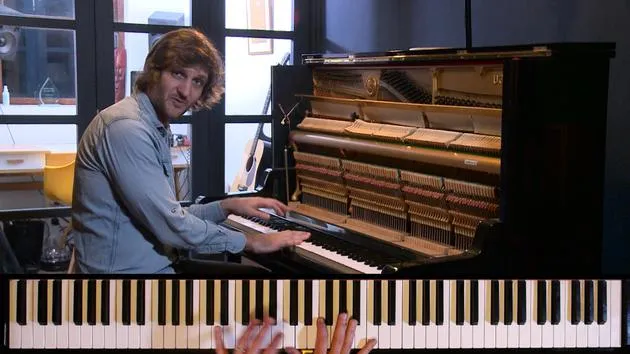
Paddy Milner transforme les intros boogie en breakdowns : il arpège les accords et utilise une descente de C7 à Do diminué pour créer et relâcher la tension.
Le contenu du cours
24 leçons (2h 1min) · 2 gratuites
01. Introduction aux basses et conseils de pratique
2:23
02. Construire des basses boogie
Leçon gratuite6:22
03. Développer davantage les basses
8:57
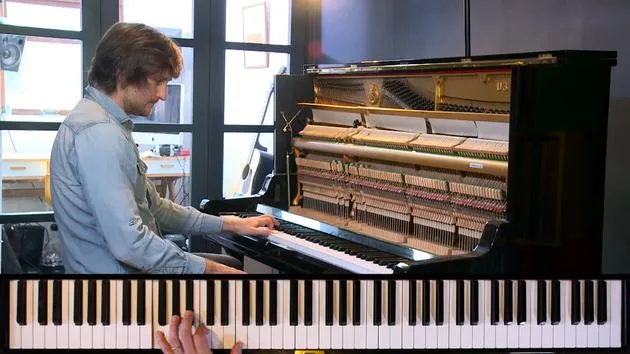
04. Basses mineures
3:02
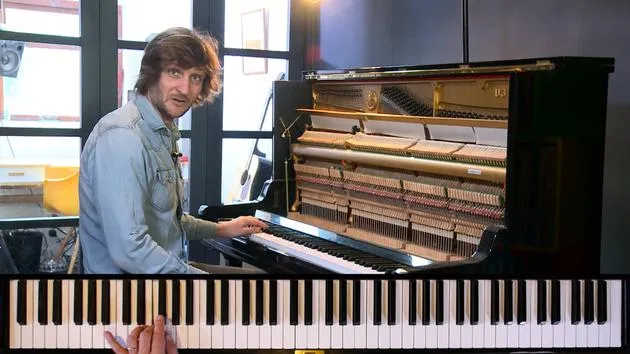
05. Walking Basses
7:05
06. Faire preuve de créativité avec les basses à huit par mesure
5:33
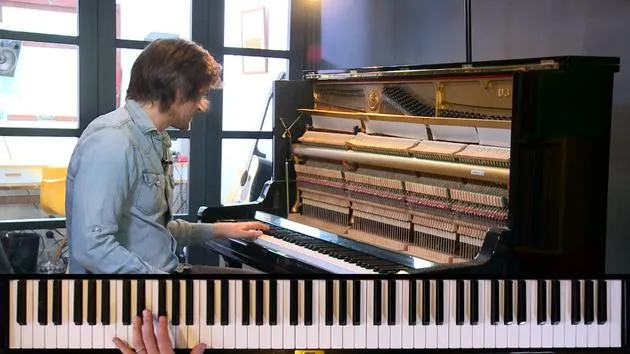
07. Basses latines à la manière de Jimmy Yancey
2:07
08. Développe tes propres basses - Idées rythmiques
6:04
09. Développer tes propres basses - Idées harmoniques et étude de Suitcase Blues
8:08
Transcription de la leçon
Music Lesson: Intros and Breaks in Harmony
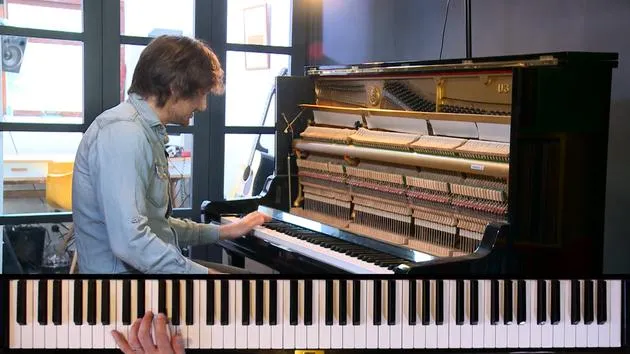
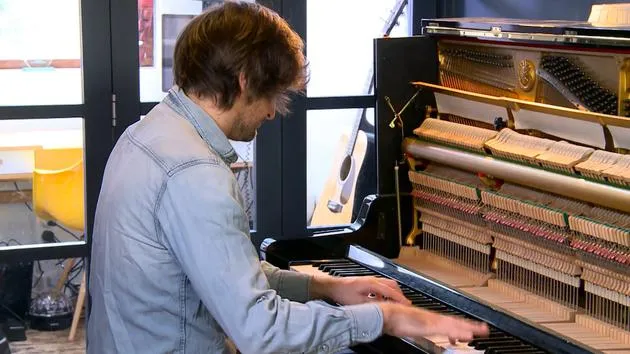
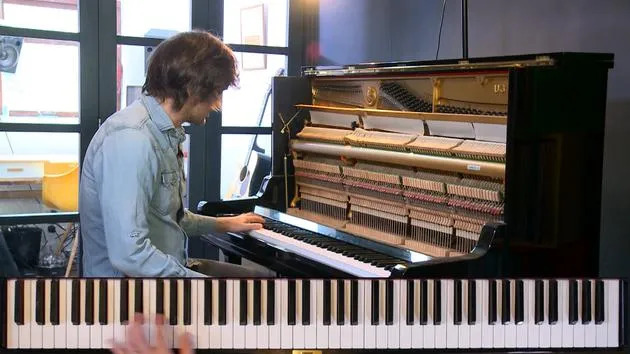
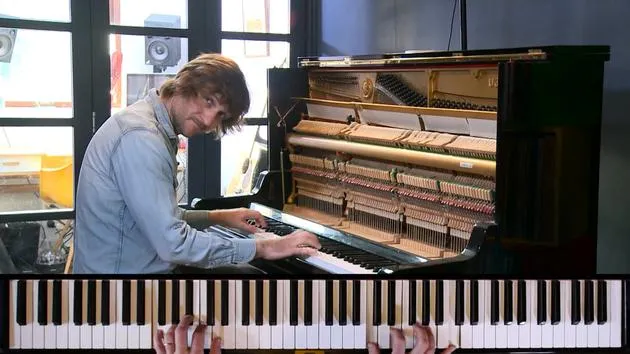
So, there's all kinds of introductions and breakdowns that are based on this harmony. Rather than using chunky and rhythmic patterns, we can create something a little more pretty, an arpeggiated version of those chords.
Arpeggiated Ideas
For example, you could play something simple based on an arpeggiation of the chords, finishing with a going down a ninth chord. Feel free to play around with different voicings:
- Explore Options:
- "I don't know... the possibilities are endless, really."
- Have fun with arpeggiating those harmonies.
Intro Breakdown Example
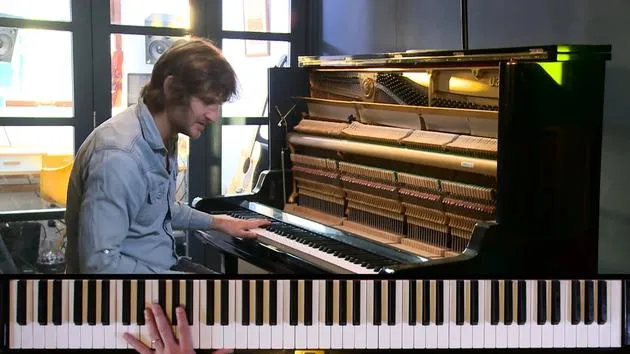
Here's another intro idea that you can also use as a breakdown, which again is based on those harmonies. Let's try it:
- Count In: "1, 2, 3."
- Description: "Yeah, I think it's quite a deep one."
Analyzing the Structure
So, essentially, it goes from C7 to C diminished 7, adding a little bluesy rundown. Here's how the whole run goes:
- There's a neat little intro idea for you.
- Some people extend that rundown, so the end of that intro could go like this:
- Adding an extra bar just creates a bit of unexpectedness, which resolves when it goes to the four.
Moving to Breaks
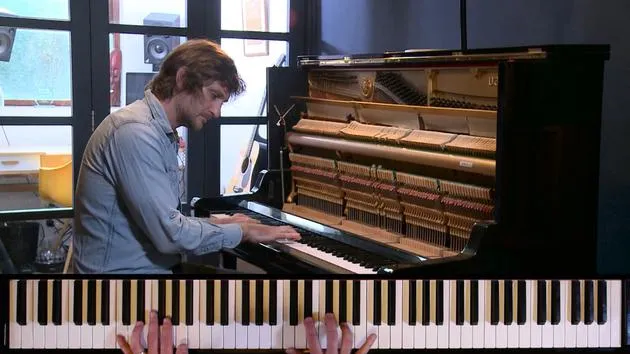
Now, moving on from intros, let's look at breaks. This is a perfect example of a boogie break.
Understanding Breaks
- Breaks help create more excitement in dancing. In any genre, things calm down for a moment, and then the music starts again.
- In Boogie Woogie, they use breaks. For example, in Pinetop's Boogie Woogie, Pinetop says, "Hey, when I say stop, don't move a peg. When I say Boogie Woogie, you shake it!"
Another Break Idea
Let's look at another break idea, which gives you a lot of freedom to do your thing. It's built on this, in fact, that's basically it:
- Structure: That leaves you two bars to fill with anything you want to do.
- Use ideas based on thirds and sixths, or simple riffs. Albert Ammons does just that!
Contextual Example
Let me show you it in context. Here we go, starting from the five:
- Count In: "One, two, three, four."
- Filling: "So I'm just filling it in with... base notes or something like that."
You might jump up to an octave with the fifth idea. Here's another idea using that arpeggiated ninth chord, still from the five:
- Count In: "1, 2, 3."
- Creativity: "The two-bar gap can be filled with anything you want. Let your creativity go wild!"
Feel free to experiment with a whole tone scale or anything else that resonates with you.
Conclusion
Ultimately, this music should be fun! There you have some intros and breaks. You can often interchange the two, using these ideas for either introductions or breaks in the middle of the tune. Enjoy!
24 leçons
2h 1m de leçons vidéo structurées
Fonctions vidéo avancées
Ralentissez, bouclez un passage, suivez la partition
Mobile, tablette et ordinateur
Pratiquez où vous voulez
Satisfaction garantie à 100 %
Garantie remboursement 30 jours
Rencontrez votre guru

Rencontrez votre guru
Paddy Milner est reconnu comme l'un des meilleurs pianistes de blues au monde : il est actuellement le claviériste attitré de Sir Tom Jones, après plusieurs années aux côtés du grand et regretté Jack Bruce, mais c'est aussi un superbe auteur-compositeur original et un chanteur au timbre singulier. Il suffit de lire les éloges de personnalités comme Dave Brubeck ci-dessous ! Son jeu figure sur la bande originale du film à succès 'Rocketman' (2019).
Il a remporté à deux reprises le prix du Meilleur claviériste aux British Blues Awards et occupe de longue date une résidence en tant que membre fondateur du Ronnie Scott's Blues Explosion au club mondialement réputé Ronnie Scott's.
Son groupe actuel LONDONOLA joue une musique britannique maison teintée d'une bonne dose d'esprit de La Nouvelle-Orléans, et son projet collectif JAWBONE va de succès en succès depuis la sortie de son premier album éponyme.
- « J'adore... voilà un gars qui sait vraiment jouer du piano » - Dave Brubeck
- « Je le recommande vivement. D'une certaine manière, tout se met à aller beaucoup mieux ! » - Jack Bruce
- « Le meilleur pianiste de blues d'Europe... » - Blues Access, USA
- « Impressionnant et original » - The Times
- « Éblouissant » - The Independent
Au fil de ses cours, Paddy décortique l'authentique shuffle de blues, le slow blues, le boogie-woogie, le rock 'n' roll et le piano de La Nouvelle-Orléans - jusqu'à trois grands classiques du boogie-woogie - pour que vous appreniez ces styles auprès de l'un des tout meilleurs du métier.







