



Développer davantage les basses
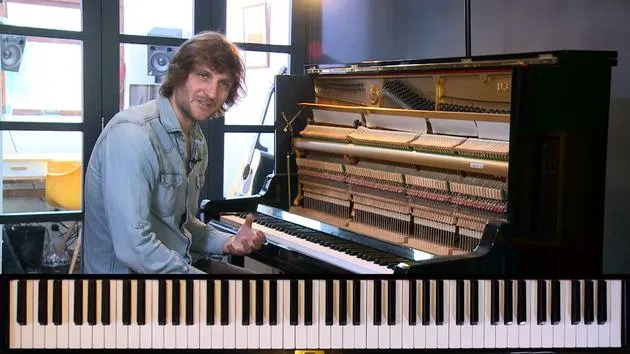
Paddy Milner ajoute des tierces et des renversements à des lignes de basse boogie-woogie simples, en s'inspirant de « Honky Tonk Train Blues » de Meade Lux Lewis pour les rendre plus intéressantes.
Le contenu du cours
24 leçons (2h 1min) · 2 gratuites
01. Introduction aux basses et conseils de pratique
2:23
02. Construire des basses boogie
Leçon gratuite6:22
03. Développer davantage les basses
Tu es ici8:57
04. Basses mineures
3:02
05. Walking Basses
7:05

06. Faire preuve de créativité avec les basses à huit par mesure
5:33
07. Basses latines à la manière de Jimmy Yancey
2:07
08. Développe tes propres basses - Idées rythmiques
6:04

09. Développer tes propres basses - Idées harmoniques et étude de Suitcase Blues
8:08
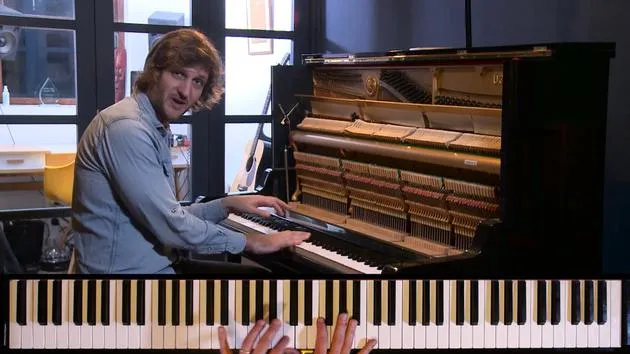
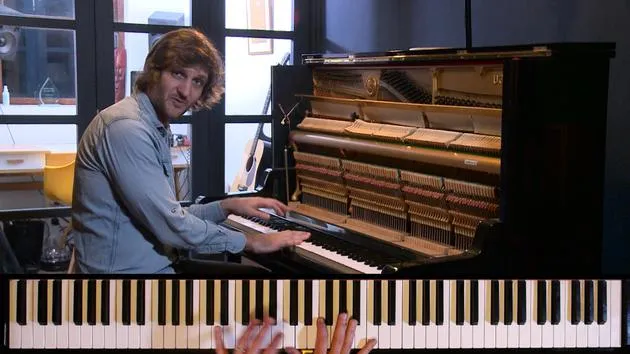
Transcription de la leçon
Bass Lesson: Adding Complexity to Simple Lines
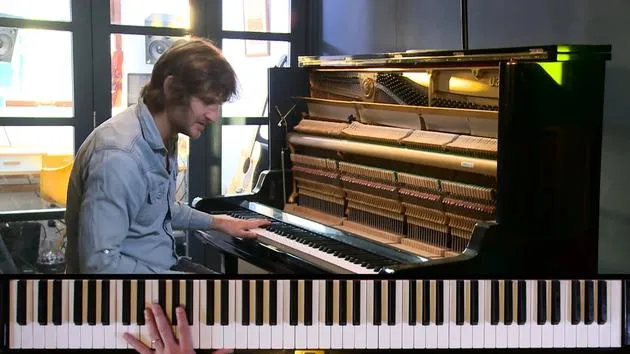
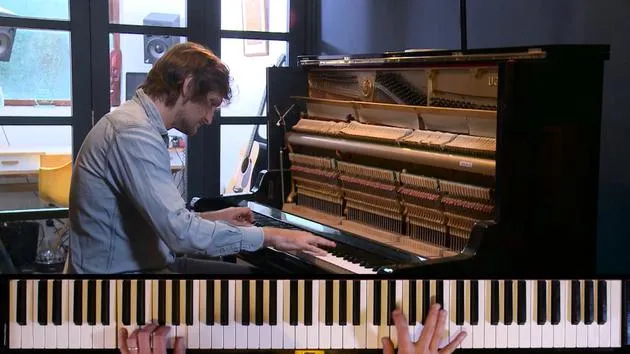
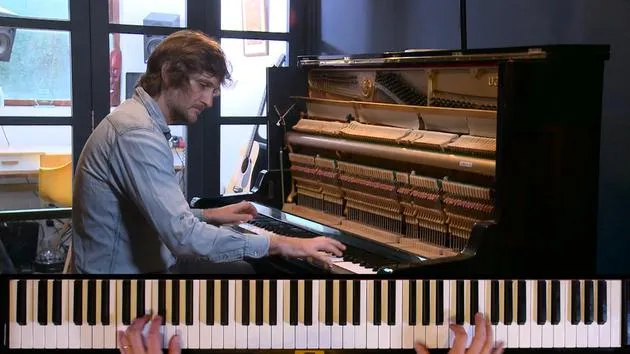
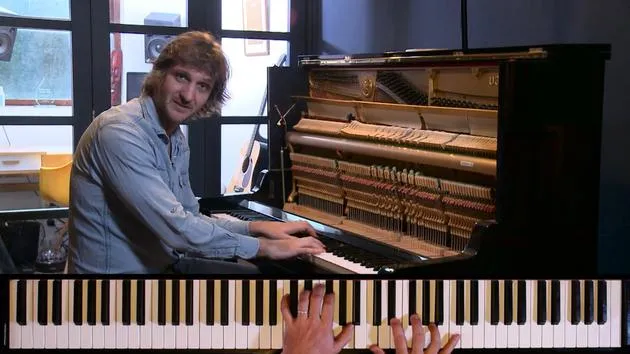
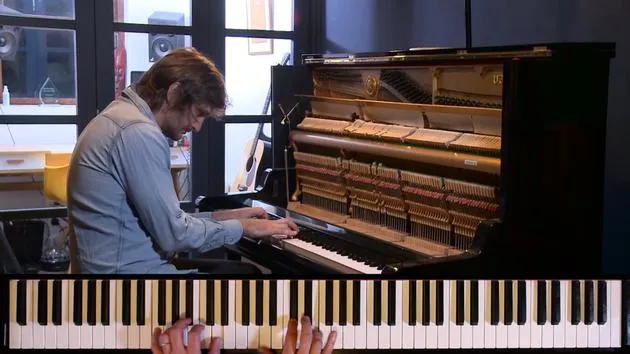
Now we could go back to one of the early basses we looked at. Obviously very simple. Why not add a third to it like this?
Again, it instantly makes it more interesting and fun. You know, that's fairly simple. It kind of works. It's fine.
Honky Tonk Train Blues Connection
But definitely add something. You might hear it sounds a bit like Honky Tonk Train Blues by Meadlux Lewis. It's a very similar bass based on what he uses in that.
In fact, what he does is invert it and put the fifth at the bottom of the voicing. So rather than this, you get:
- Original Bass:
- Modified Bass:
It's not a direct copy because with the original one, you've got the top two notes moving:
- The G going to the A
- The E going to the F
And at the bottom:
- The E goes to the F
- The C goes to the D
So it's the same in the sense that the top two notes are moving while the bottom note stays on the C, that kind of drone C. But in the Honky Tonk Train version, the G stays on the G, so the fifth is in the bass, which gives it a kind of rich sound.
Key Importance
I think Honky Tonk Train Blues is actually in the key of G, by the way.
- Key of G: Important!
- If I played it in C, when you go to the F, it sounds very muddy.
- In the key of G, when you go to that C, it still sounds cool.
So yeah, when it jumps up to the D, it doesn't play, which would be the direct transposition of this with the fifth in the bass. What it does is stay on the D:
- D Note:
And there's some debate about whether it actually introduces that third or not. I'm not sure; that's not what I play when I play the tune.
Adding Octaves for Intensity
So, there you go! Great Milux Lewis bass there.
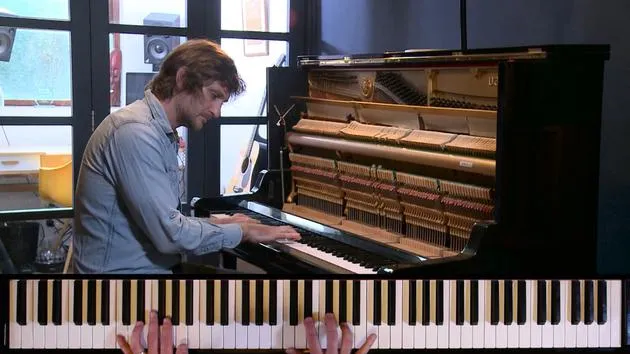
Let's go back to this bass in thirds. Why not, for some extra weight, add the octave at the top and keep playing it?
If you want to add a bit more intensity or excitement to the next chorus, you could play the previous chorus with another bass line or a bass line in thirds.
- Next Chorus:
- When it comes to the next chorus and the octave, you can instantly hear that it is more intense.
- Use that towards the end of a song for extra kick.
Boogie Woogie Stomp Comparison
If you listen to Boogie Woogie Stomp by Albert Ammons, it's based on the Pine Top Smith original, Pine Top Spoogie Woogie. In the last few choruses, he takes it out with some big bass lines, actually based on sixth chords, which I'll discuss later.
Rocking the Bass Lines
Some other ideas we can utilize with these bass lines placed in thirds include:
- Rocking the Notes:
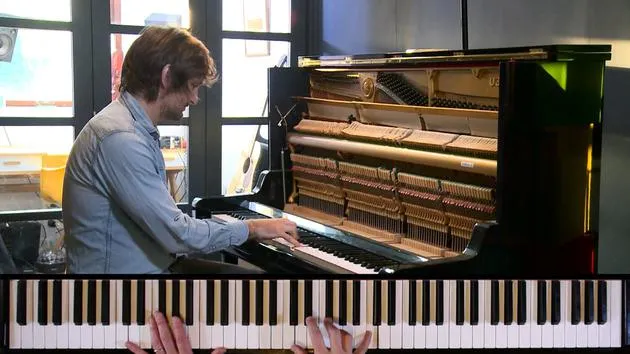
- Rather than playing them together, try something like this:
This approach enables you to play it a lot quicker, should you wish to do that.
Remember, playing quick just sounds rushed. At the end of the day, you've got to remember this is music for people to dance to. It should be at a tempo that people can dance to.
Staying on the Chord
You could also rock with the octave. Rather than going on the four chord, you could actually stay a little like in Honky Tonk Train Blues.
- When it changes to the V chord, the root note stays the same. You can do the same when it goes up to the four chord.
Example:
1, 2, 3, 4.
I'll show you that again:
- It's got that C, that bottom C as a pedal note, which I think gives it some real excitement.
Expanding the Hand Span
That's a good little tip for you! Why not move that top note as well?
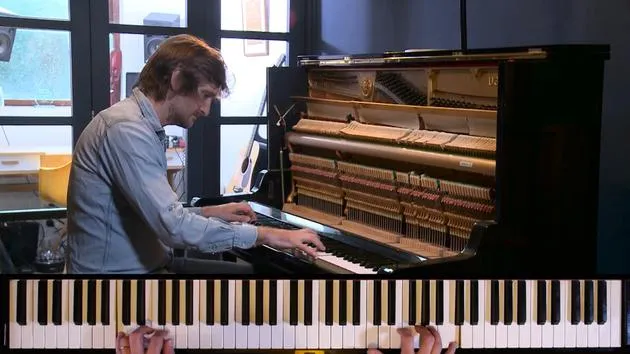
We're getting quite a big hand span here, but it sounds good and fattens it out. The top note of the chord is doing that maybe on the four chord.
Example:
On the four chord, maybe something like this again:
- It's a big fat bass line there, which I'm not sure you hear very often, if at all.
Conclusion
I think it's something I occasionally use, and it's something I've kind of developed from that simple bass line.
- Add the third,
- Add the octave,
- Move the octave,
- Why not rock that as well?
I use that on the tune I played for you, 21st Century Boogie.
So there we go! Some basses in thirds with the octave added for some extra weight.
24 leçons
2h 1m de leçons vidéo structurées
Fonctions vidéo avancées
Ralentissez, bouclez un passage, suivez la partition
Mobile, tablette et ordinateur
Pratiquez où vous voulez
Satisfaction garantie à 100 %
Garantie remboursement 30 jours
Rencontrez votre guru

Rencontrez votre guru
Paddy Milner est reconnu comme l'un des meilleurs pianistes de blues au monde : il est actuellement le claviériste attitré de Sir Tom Jones, après plusieurs années aux côtés du grand et regretté Jack Bruce, mais c'est aussi un superbe auteur-compositeur original et un chanteur au timbre singulier. Il suffit de lire les éloges de personnalités comme Dave Brubeck ci-dessous ! Son jeu figure sur la bande originale du film à succès 'Rocketman' (2019).
Il a remporté à deux reprises le prix du Meilleur claviériste aux British Blues Awards et occupe de longue date une résidence en tant que membre fondateur du Ronnie Scott's Blues Explosion au club mondialement réputé Ronnie Scott's.
Son groupe actuel LONDONOLA joue une musique britannique maison teintée d'une bonne dose d'esprit de La Nouvelle-Orléans, et son projet collectif JAWBONE va de succès en succès depuis la sortie de son premier album éponyme.
- « J'adore... voilà un gars qui sait vraiment jouer du piano » - Dave Brubeck
- « Je le recommande vivement. D'une certaine manière, tout se met à aller beaucoup mieux ! » - Jack Bruce
- « Le meilleur pianiste de blues d'Europe... » - Blues Access, USA
- « Impressionnant et original » - The Times
- « Éblouissant » - The Independent
Au fil de ses cours, Paddy décortique l'authentique shuffle de blues, le slow blues, le boogie-woogie, le rock 'n' roll et le piano de La Nouvelle-Orléans - jusqu'à trois grands classiques du boogie-woogie - pour que vous appreniez ces styles auprès de l'un des tout meilleurs du métier.







