



Premier chorus et turnaround
Avec
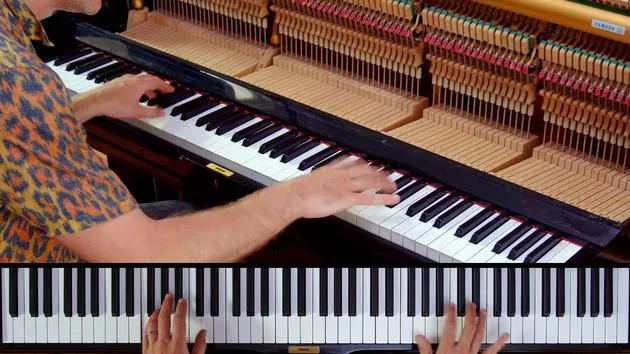
Paddy MilnerPaddy Milner décompose le premier chorus et le turnaround de 'Honky Tonk Train Blues' de Meade Lux Lewis, y compris son feel pointé et ses voicings d'accords de neuvième.
Le contenu du cours
35 leçons (2h 23min) · 1 gratuites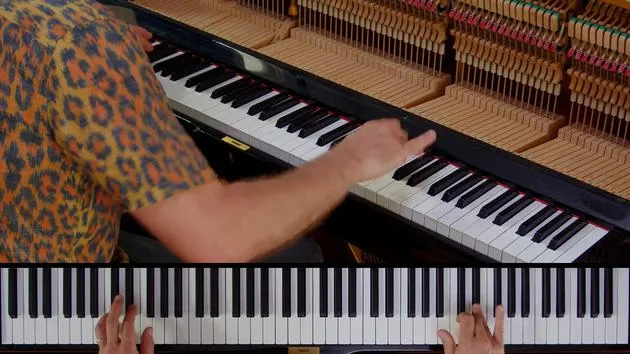
01. Dive Bomber (Pete Johnson) - interprétation au piano par Paddy Milner
3:00
02. Introduction au morceau
Leçon gratuite5:30
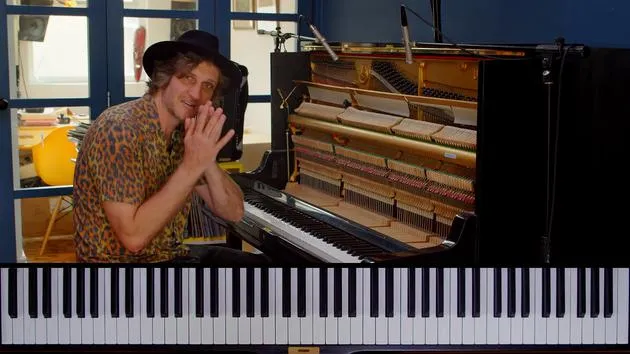
03. Premier refrain
6:09
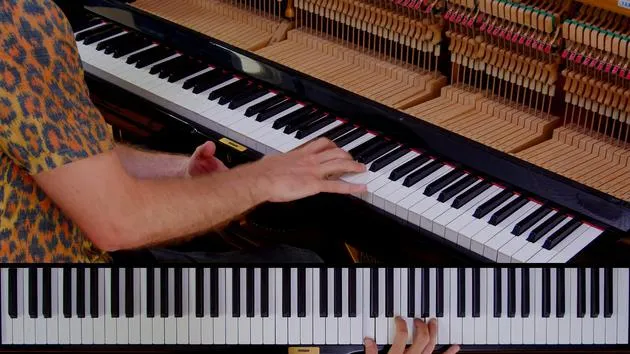
04. Deuxième chorus
1:49
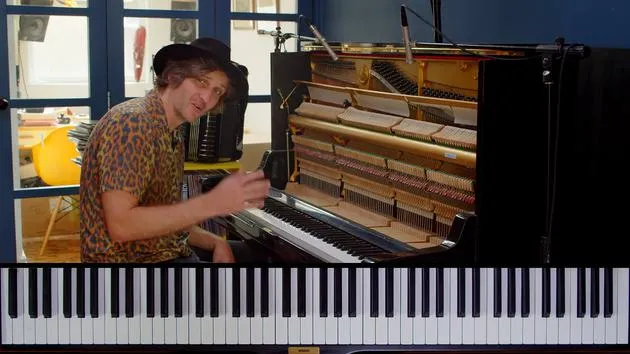
05. Section suivante
2:36
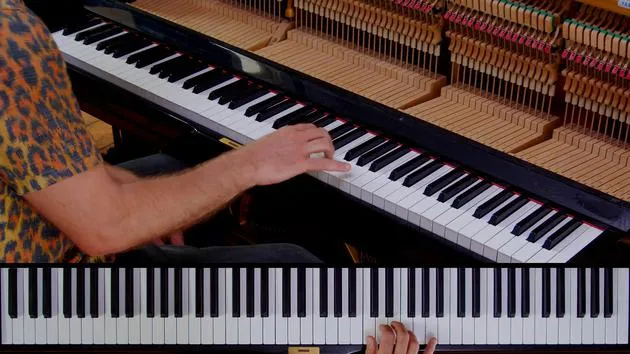
06. Turnaround
0:49
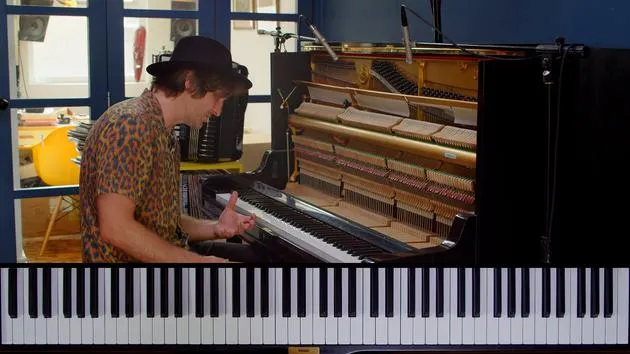
07. Premier break
4:17
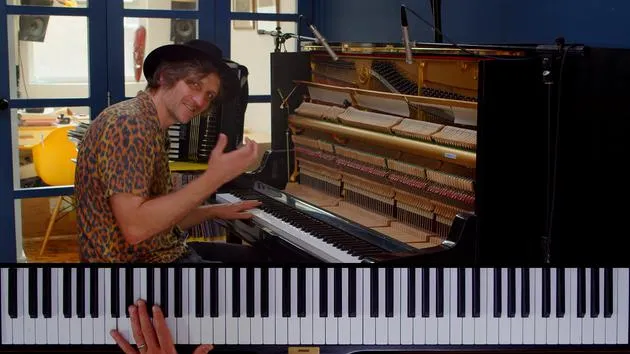
08. Ligne en notes seules
2:26
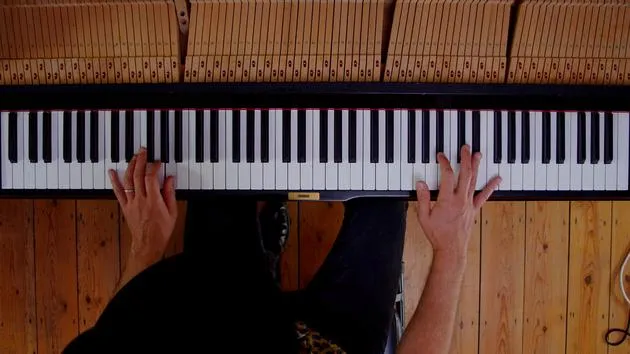
09. Chorus suivant
2:43
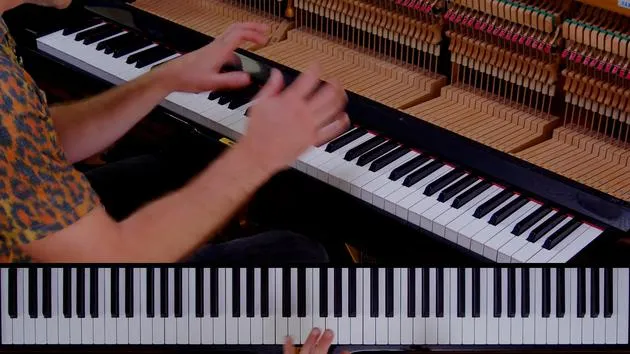
10. Le break suivant
4:25
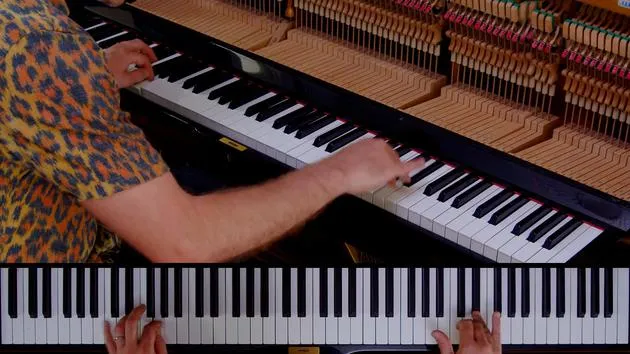
11. Le chorus suivant
5:15
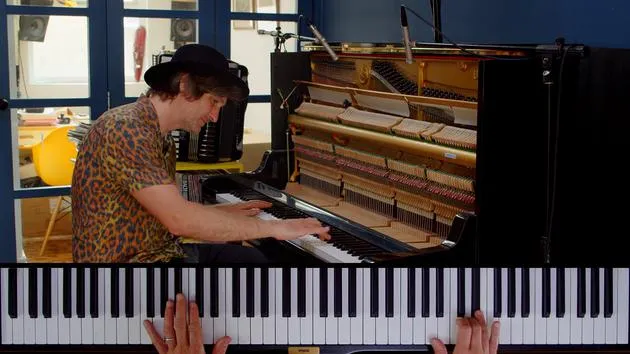
12. Riff de l'accord IV
2:04
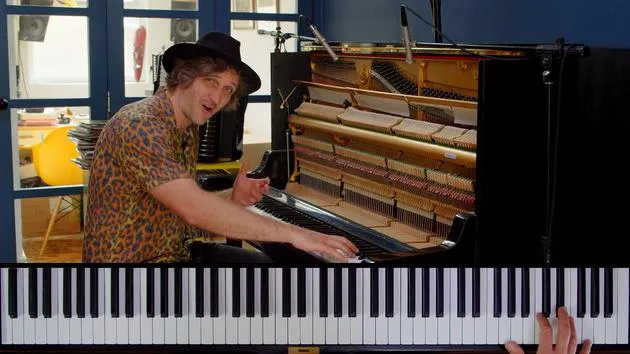
13. Section aiguë
8:24
14. Dernier refrain
5:00
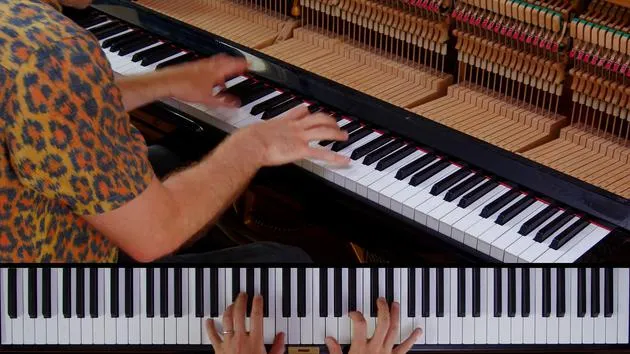
01. Honky Tonk Train Blues (Meade Lux Lewis) - interprétation au piano par Paddy Milner
3:01
02. L'intro - En voiture !
2:56
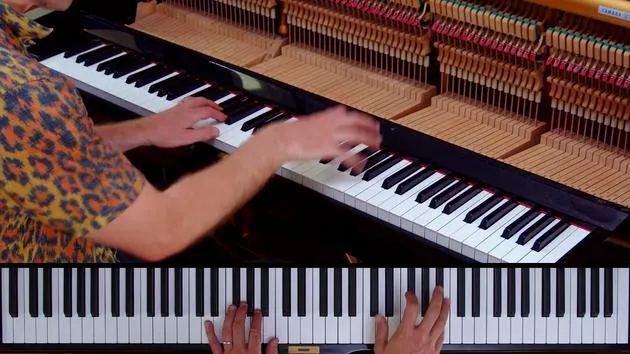
03. La main gauche - Le moteur
4:03
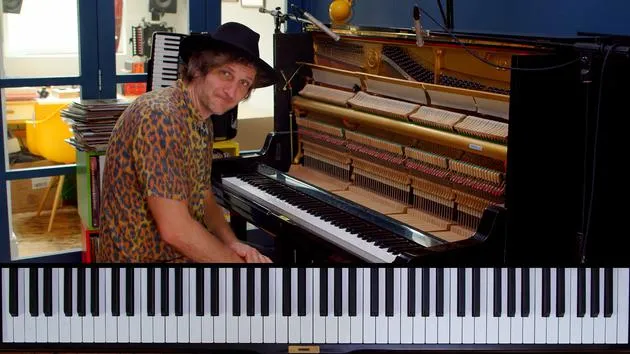
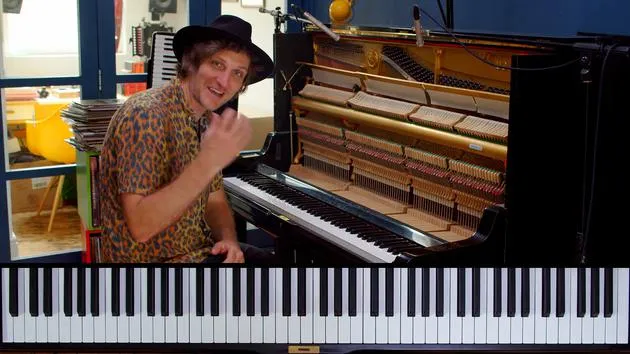
04. Premier chorus et turnaround
Tu es ici8:11
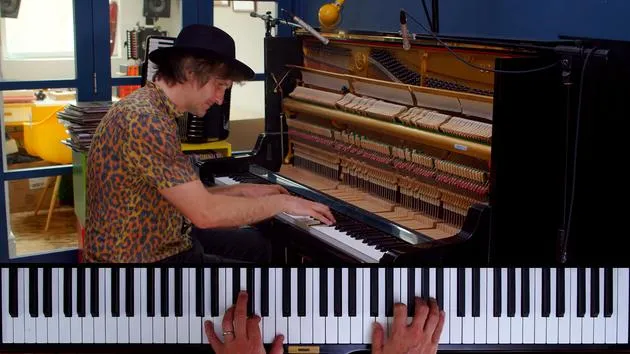
05. Deuxième chorus - Polyrythmie 3 contre 2
1:54
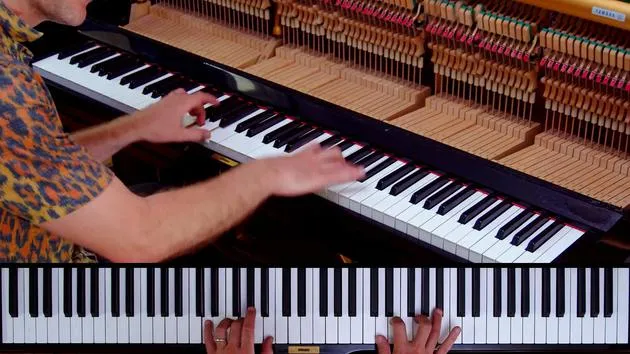
06. Troisième chorus - Trille de sifflet de train
4:44
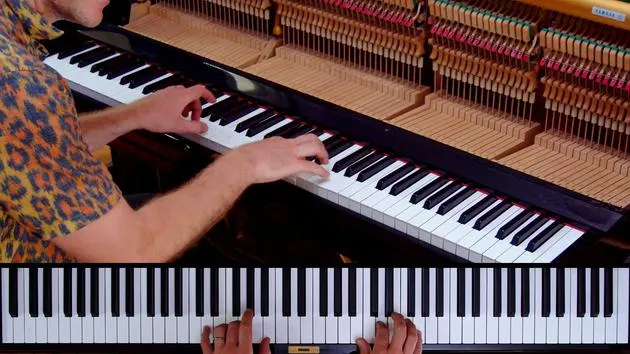
07. Quatrième chorus - Triolets répétés
2:56
08. Sixième chorus - harmonie Em G6
7:03
09. Septième chorus
2:33
10. Huitième chorus
2:51
11. Fin du dernier chorus - Arrivée en gare
2:28
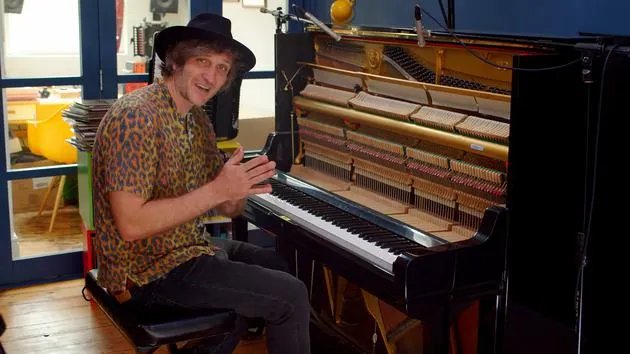
Transcription de la leçon
Music Lesson: Exploring the Choruses
Cool. So let's dive into the choruses.
Feel of the Tune
Now, you know, if you listen to the feel of this tune, it's definitely more dotted than like Pinetop's Boogie Woogie, which has a slightly straighter feel.
- It's kind of got this slightly, slightly bouncier, more dotted feel.
Fingering Techniques
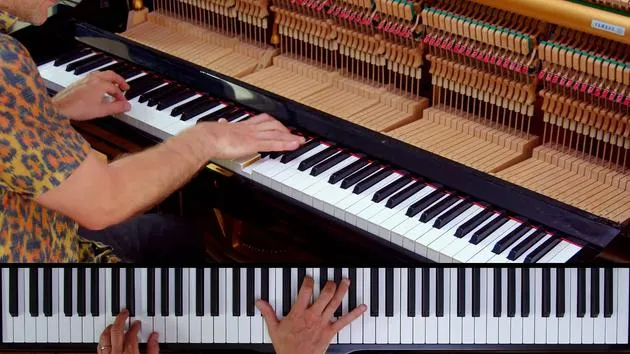
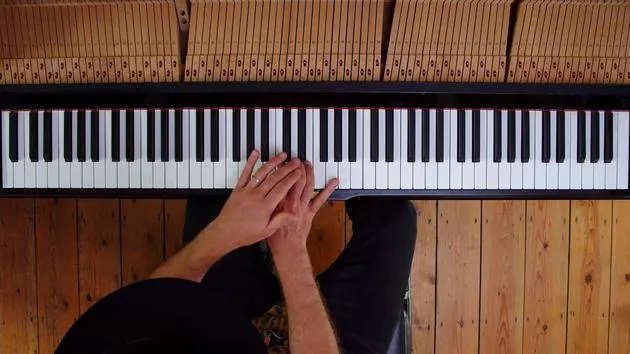
So, this is the fingering I'm using:
- I'm sliding off the B flat.
- We've got that nice kind of ninth chord there. So, we've got A.
A G9 would normally be 1, 3, 5, 7, 9. He's just voiced it like that.
I think the 9th is in there. It's difficult to tell on these recordings. It's possible it might just be a seventh, but I think I've transcribed it and played it as a ninth up to the chord four, which is a kind of ninth chord.
Again, that's a riff he uses a lot in this tune. Instead of just going down the G6, it includes a C as well, which adds a slightly different color to it.
Distinctive Turnaround
Then we go to this turnaround, which is the most distinctive right-hand thing in this tune. It's the repetitive part that comes back every single 12 bars.
It sounds like the train whistle coming round the bend.
There's a run before, so you've got a jump. It can either be that or something else.
- Again, this right-hand riff, sometimes that B flat will be held, or maybe it would just be played as a kind of crushed thing.
- It doesn't make a huge amount of difference either way.
Feel free to choose whatever you like. The important thing is that it's there because that B flat or A sharp makes it into an augmented chord, which has this sort of extra quality to it.
Challenging Sections
Now, this bit is pretty tough as well. We've got a tough left hand going on, and then this tough right hand thing with kind of two elements:
- It's kind of going on in the top and then at the bottom.
Ultimately, it's kind of:
- [Insert musical notation or riffs here]
This is really tough to do at speed, as I just demonstrated, because that fourth finger is normally the weaker finger in the hand.
This is definitely a riff to practice slowly and gradually build up to the full tempo.
- Set a slow tempo.
- Just do that for ages so it gets into your muscle memory.
- It also builds strength in that fourth finger before going at full tempo.
Then you sort of come off it.
Fingering Variations
I think it starts from the A for that run, and there are different ways of fingering that:
- You could do it like that, or
- You could approach it like this, which enables you to have a bit more strength, which I kind of prefer.
It does need a little bit of hand movement, though, from there to there.
There are slightly different compromises on each hand position.
Do try both options because they're used a lot in this tune and find the one that works for you.
Finishing Up: Turnaround Section
To finish up on this turnaround section, if you really listen to the recording, sometimes it sounds like there's a kind of descending thing going on as well.
- It's really difficult to do at speed, so do have a listen for that. You can try that:
[Insert musical notation or descending riff here]
To actually articulate that is pretty tough, as I just demonstrated.
Feel free to give that a go too!
35 leçons
2h 23m de leçons vidéo structurées
Fonctions vidéo avancées
Ralentissez, bouclez un passage, suivez la partition
Mobile, tablette et ordinateur
Pratiquez où vous voulez
Satisfaction garantie à 100 %
Garantie remboursement 30 jours
Rencontrez votre guru
Rencontrez votre guru
Paddy Milner est reconnu comme l'un des meilleurs pianistes de blues au monde : il est actuellement le claviériste attitré de Sir Tom Jones, après plusieurs années aux côtés du grand et regretté Jack Bruce, mais c'est aussi un superbe auteur-compositeur original et un chanteur au timbre singulier. Il suffit de lire les éloges de personnalités comme Dave Brubeck ci-dessous ! Son jeu figure sur la bande originale du film à succès 'Rocketman' (2019).
Il a remporté à deux reprises le prix du Meilleur claviériste aux British Blues Awards et occupe de longue date une résidence en tant que membre fondateur du Ronnie Scott's Blues Explosion au club mondialement réputé Ronnie Scott's.
Son groupe actuel LONDONOLA joue une musique britannique maison teintée d'une bonne dose d'esprit de La Nouvelle-Orléans, et son projet collectif JAWBONE va de succès en succès depuis la sortie de son premier album éponyme.
- « J'adore... voilà un gars qui sait vraiment jouer du piano » - Dave Brubeck
- « Je le recommande vivement. D'une certaine manière, tout se met à aller beaucoup mieux ! » - Jack Bruce
- « Le meilleur pianiste de blues d'Europe... » - Blues Access, USA
- « Impressionnant et original » - The Times
- « Éblouissant » - The Independent
Au fil de ses cours, Paddy décortique l'authentique shuffle de blues, le slow blues, le boogie-woogie, le rock 'n' roll et le piano de La Nouvelle-Orléans - jusqu'à trois grands classiques du boogie-woogie - pour que vous appreniez ces styles auprès de l'un des tout meilleurs du métier.







