



Premier refrain

Lesson time: (6min 9sec)
Paddy Milner parcourt le premier refrain du boogie-woogie 'Dive Bomber' de Pete Johnson, en se concentrant sur une ligne de basse solide à la main gauche et sur le doigté.
Course preview
This lesson is part of the course Apprends trois classiques du boogie-woogie
Watch a preview of the full course below.
Lesson transcript:
First Chorus Overview
So, yeah, let's move on and look at the first chorus.
Left Hand Technique
- We hit the left hand.
- It's nice to have this nice and solid from the word go.
- For the bass line, I'm playing it with my third finger to the second, then playing the G and the A with the thumb.
- You could also use the fourth finger.
- In fact, I might actually switch between the two different points in the song.
Tip: Start practicing at a low tempo. Get that nice and solid under your fingers.
Practice Tips
- Practice it around the whole 12-bar sequence until it's really solid.
- Increase the tempo gradually.
- Always practice with a metronome. It's really useful for getting to know where you're speeding up and slowing down in relation to a tempo.
Note: Music can't speed up and slow down, it's got to breathe.
Performance Context
- Especially in this music, which would have been played for dancing and entertaining, consider the energy of the room.
- If you're in a room full of people dancing, you're going to want to go with the energy.
- If there's more energy coming at you, it doesn't matter if things speed up a little. It's all about reciprocating that energy.
Key Insight: That's where the excitement is.
Right Hand Technique
In this first chorus, we've got the left hand, and then we got this figure in the right hand.
- Listening to the transcription, it's hard to tell if it's just the G and C at the top, or the full octave.
- It doesn't drastically change things, but feel free to play it how you want.
- This is a very classic Pete Johnson thing to do.
Improvisation Ideas
You could imagine this in a more improvisational context around 12 bars.
- I was overdoing it there, using it quite a lot, but it's a great little musical idea you can put into your own improvisations.
- Consider doing slight variations with that kind of riff.
Practicing the Riff:
- Have a go with that little riff and link it with other ideas.
- It's a nice little one, very Pete Johnson.
Turnaround
Then we go into the turnaround on the V chord of this first chorus.
- There are little embellishments, so get those under your fingers at speed.
- Those can be quite fast, especially those embellishments.
- Really practice them.
Classic Riffs: That's another very classic Pete Johnson swinging, jazz-influenced riff.
Incorporating Lines
Maybe you could practice incorporating these into your own phrases.
- Lines like that are very much in the Pete Johnson style.
- There are lots of little, single-note lines that Pete Johnson uses, which is kind of different from a lot of Albert Ammons' stuff that is very riff-based.
Conclusion: We'll get to the other lines as we move forward.
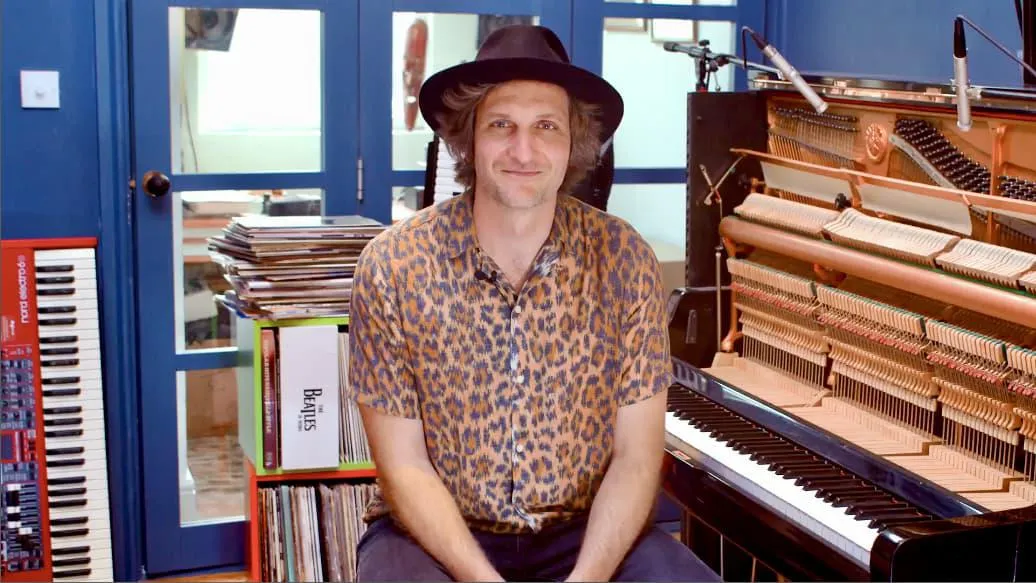
About the instructor
Paddy Milner est reconnu comme l'un des meilleurs pianistes de blues au monde : il est actuellement le claviériste attitré de Sir Tom Jones, après plusieurs années aux côtés du grand et regretté Jack Bruce, mais c'est aussi un superbe auteur-compositeur original et un chanteur au timbre singulier. Il suffit de lire les éloges de personnalités comme Dave Brubeck ci-dessous ! Son jeu figure sur la bande originale du film à succès 'Rocketman' (2019). Il a remporté à deux reprises le prix du Meilleur claviériste aux British Blues Awards et occupe de longue date une résidence en tant que membre fondateur du Ronnie Scott's Blues Explosion au club mondialement réputé Ronnie Scott's. Son groupe actuel LONDONOLA joue une musique britannique maison teintée d'une bonne dose d'esprit de La Nouvelle-Orléans, et son projet collectif JAWBONE va de succès en succès depuis la sortie de son premier album éponyme. « J'adore... voilà un gars qui sait vraiment jouer du piano » - Dave Brubeck « Je le recommande vivement. D'une certaine manière, tout se met à aller beaucoup mieux ! » - Jack Bruce « Le meilleur pianiste de blues d'Europe... » - Blues Access, USA « Impressionnant et original » - The Times « Éblouissant » - The Independent Au fil de ses cours, Paddy décortique l'authentique shuffle de blues, le slow blues, le boogie-woogie, le rock 'n' roll et le piano de La Nouvelle-Orléans - jusqu'à trois grands classiques du boogie-woogie - pour que vous appreniez ces styles auprès de l'un des tout meilleurs du métier. read more