



Idées d'ornementation

Avec
Tom SealsTom Seals montre comment orner un standard de swing avec tes propres idées, en utilisant la gamme pentatonique de Sol et des licks bluesy en tierce mineure.

Le contenu du cours
23 leçons (1h 39min) · 1 gratuites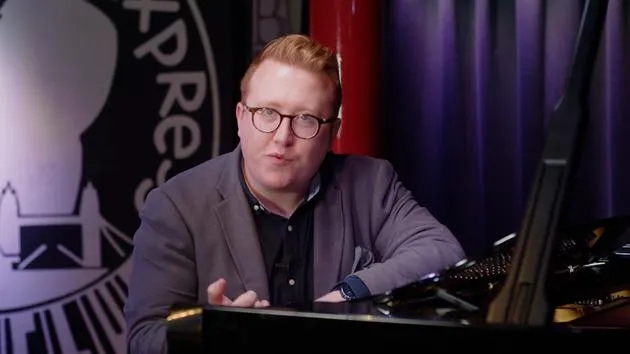
01. Introduction à Jumpin' At The Woodside
1:19
02. La mélodie de la main droite de la section 'A'
Leçon gratuite1:19
03. La main gauche de la section 'A'
8:09
04. Travaille la section 'A' avec Tom
3:31
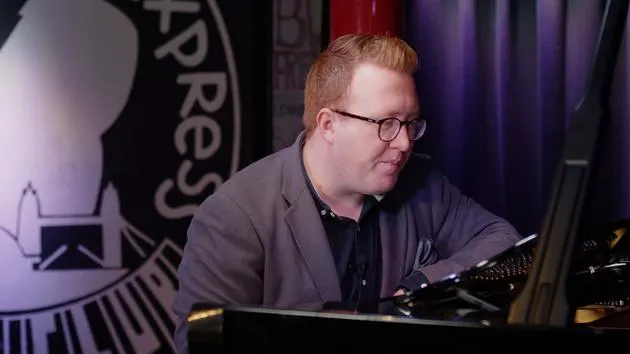
05. La section « B » à la main droite
6:48
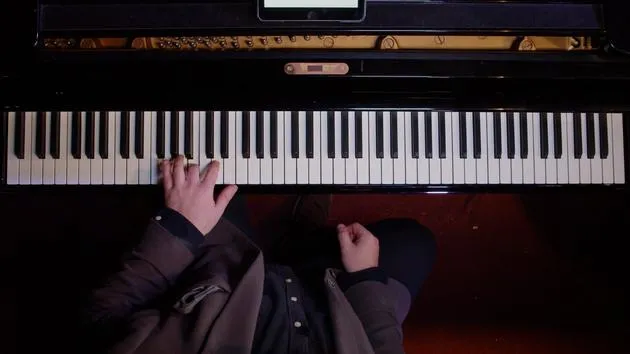
06. La section 'B' de Jumpin' At The Woodside à la main gauche
1:23
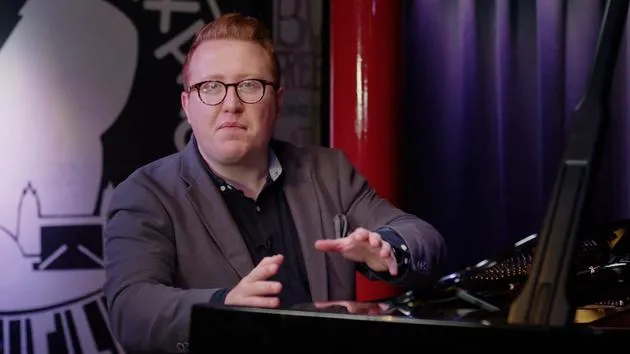
07. Travaille la section 'B' avec Tom !
3:17
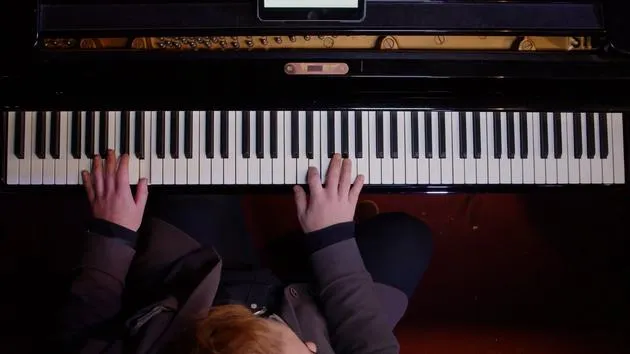
08. Travaille Jumpin' At The Woodside avec Tom
4:16
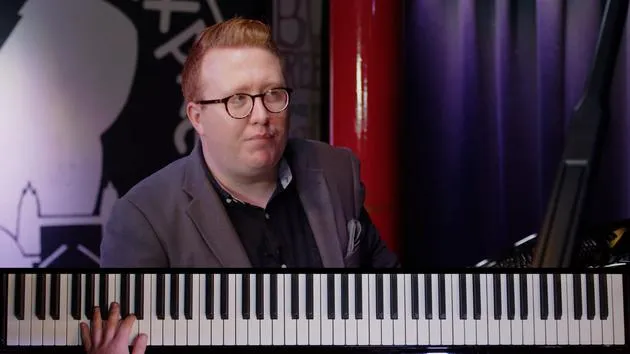
09. Comping de la main droite
6:17

10. Idées d'ornementation
Tu es ici7:05
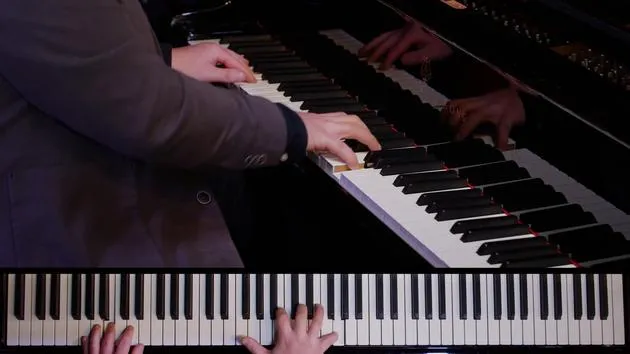
11. Interprétation de Jumpin' At The Woodside
2:08
01. La mélodie de la main droite de la section 'A'
5:13
02. La main gauche de la section 'A'
5:31
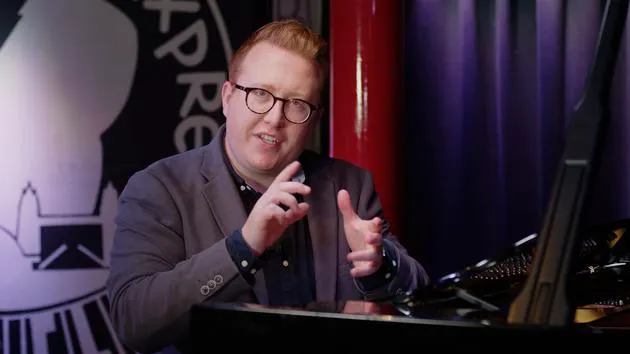
03. Ajouter les 'horn lines'
9:22

04. La section 'B' à la main droite
4:56
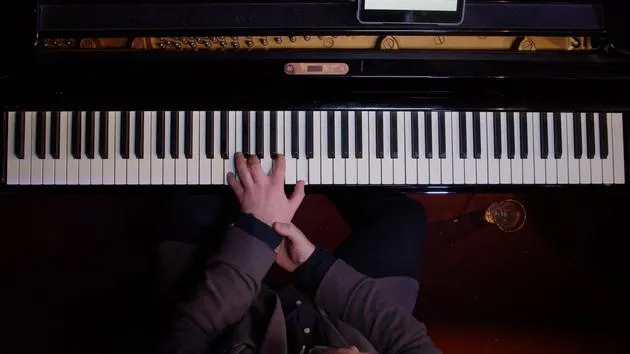
05. La section 'B' à la main gauche
9:17

06. Travaille Don't Get Around Much Anymore avec Tom
6:18
07. Conseils pour l'improvisation
1:38
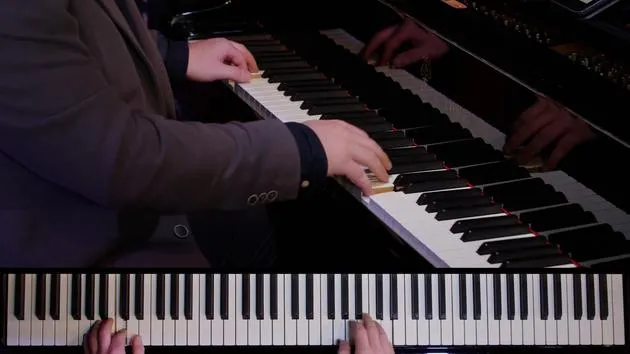
08. Idées de solo
5:47

09. Don’t Get Around Much Anymore : interprétation
3:11



Transcription de la leçon
Creating Your Own Tune
So that's it, you've got the tune. Now, this is the exciting bit where you can do your own thing with it. This is what I love about tunes like this. They're so simple and they have so much flexibility and freedom for you to really show your personality in your playing.
Exploring Styles
I love blues and boogie-woogie, which means when I get a tune like this, an old swing jazz standard, there's so much flexibility and room to do all sorts of things.
Starting Point: Pentatonic Scales
- We'll start with some nice, simple pentatonic scales and move through to some little bluesy lines.
- You should find what you like playing and add your own thing in; it's going to sound great!
Key Concept: This whole tune is based around the G pentatonic scale.
- Anything in swing, jazz, blues, or boogie-woogie, we like adding the minor third.
- So in this tune, we're actually playing a B natural.
- However, when it comes to improv and just having a bit of fun, let's go from the B flat to the B. This always adds color and a certain jazziness.
Practical Example
- When we're hitting a B, hit a B flat first and then roll onto the B.
- So let's take the A section. In the simplest form of improvisation, let's start with three notes: D, E, and G.
Tip: Get rid of the melody out of your head.
- Use just those three notes.
- If this is your first step into improvisation, just have a bit of fun! It's jazz and blues, there are no wrong notes, okay?
Playing the A Section
I'll play the left hand; here's what I would do using only these three notes:
- Remember, rhythm is important here because we don't have a lot of notes.
- Let's try to be inventive with the rhythms.
Count In:
- "1, A, 2, A. 1, 2, 3."
Note: I cheated and added an extra note at the end, but that's it!
Now, let's use those three notes.
Improvise with Right Hand
- I'll play the left hand, and you improvise with the right hand using D, E, and G, anything you want!
- It doesn't have to be the melody; just have fun!
Count In Again:
- "One, A, two, A. One, two, three. It's all yours, anything you want."
Repeat that process!
Feel free to keep playing back that left hand while you work on some more tricks with your right hand.
Expanding Your Note Range
Now that you've got the three notes, D, E, and G, let's add a few more:
- B flat and B
So now your notes are D, E, G, B flat, and B. You also have D and E up high, which gives a nice little range.
Demonstration:
- I'll just use those notes and show you a few things I would do along with the left hand.
Example Sound:
- "1, A, 2, A. 1, 2, 3."
Here's a nice little trick: B flat to B to D on a loop.
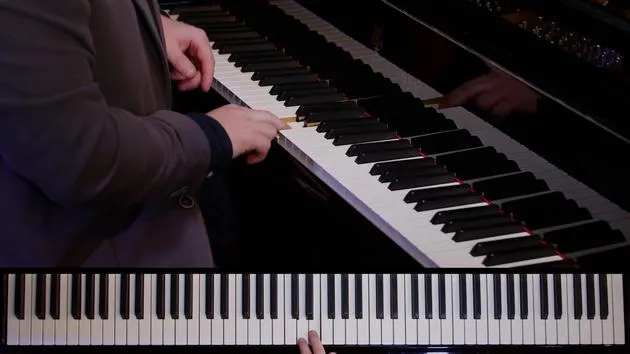
- Use your second finger on the B flat, third finger on the B, and your little finger on the D.
More Tricks
Let's throw in some more bluesy tricks:
- We have the G chord, but again we'll catch the B flat.
- This is a classic thing in blues where we go from G, moving the B and D up to a C and E, then back to the B and D.
Demonstration Speed
- At speed, you get this!
Practice:
- Chord: G, B, D
- Move to: C, E
- Then back down.
Example Sound:
- "Here we go again: 1, A, 2, A. 1, 2, 3."
Final Improv
Experiment! Have some fun. Keep playing me playing the left hand and improvise.
Once you've got those bluesy lines:
- Add the left hand in.
- Put the right hand in.
It's going to sound amazing!
I can't wait to hear you playing these tunes. I love this song so much, I got to play it with my hero, Jules Holland.
Final Note: I can't wait to be playing it with you soon. Enjoy, and you're sounding great already!
23 leçons
1h 39m de leçons vidéo structurées
Fonctions vidéo avancées
Ralentissez, bouclez un passage, suivez la partition
Mobile, tablette et ordinateur
Pratiquez où vous voulez
Satisfaction garantie à 100 %
Garantie remboursement 30 jours
Rencontrez votre guru
Rencontrez votre guru
Le titre de Piano Man du Royaume-Uni a longtemps été détenu par Elton John, Jools Holland et Jamie Cullum. Au cours des cinq dernières décennies, personne d'autre ne s'en est même approché... jusqu'à aujourd'hui !
Tout juste sorti de sa tournée à guichets fermés "Let The Good Times Roll", Tom Seals - "tout simplement peut-être l'avenir du jazz et du blues" - tient le monde au bout des doigts. Son jeu de soliste virtuose, son excellent sens de l'improvisation et sa voix singulière ont conduit de grandes figures de l'industrie à le saluer comme le meilleur pianiste et chanteur de boogie woogie et de blues du Royaume-Uni.
À peine âgé de vingt-cinq ans, Seals a déjà donné des concerts à guichets fermés aux quatre coins du globe, dont le légendaire Ronnie Scott's de Londres, une performance éblouissante au Birdland Jazz Club de Broadway à New York, et des collaborations avec Jools Holland.
Apparitions notables :
- 'Gregory Porter & Friends' du Cheltenham Jazz Festival
- 'Boogie Woogie & Blues Spectacular' de Jools Holland
- Birdland Jazz Club, New York
- British Summer Time - Hyde Park
- Ronnie Scott's Jazz Club
- Gisburne Park Pop-Up
- Montreux Jazz Festival
- Cropredy Festival
- The Steinway Two Pianos Festival
- Glastonbury
- Newark Showground "Drive-In"
- Blenheim Palace
Dans son cours, Tom dévoile les secrets de son jeu - en vous montrant comment faire swinguer les standards au piano, construire d'authentiques lignes de boogie woogie et de blues, et trouver la liberté d'improviser - pour que vous deveniez à votre tour l'ultime Piano Man.
Vous pouvez lire la biographie complète de Tom sur www.tomseals.co.uk.







