



Mr. Bojangles - Apprentissage
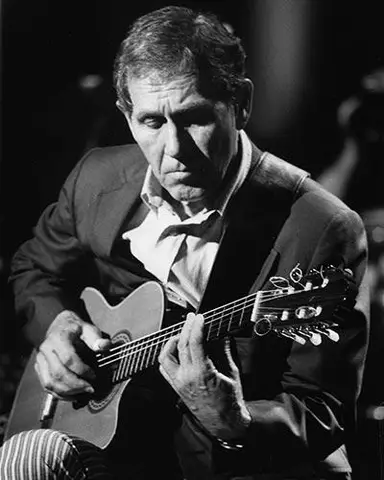
Lesson time: (6min 45sec)
Course preview
This lesson is part of the course La guitare de Chet Atkins
Watch a preview of the full course below.
Lesson transcript:
Music Lesson: "Mr. Bojangles"
Introduction
"Mr. Bojangles." Great song! You know what makes a great song? It's good lyrics and a great melody. Too often, I think writers just come up with a nice idea and then stick whatever tune comes to mind. That's not how you create a great song. However, I love to play this one.
Rhythm and Melody
- It has a unique rhythm that I play between each section.
- The song features a moving bass line throughout, blending low bass with harmony simultaneously.
- There are also little slurs that give a country sound to the melody, inspired by:
- Bob Wills on the fiddle
- Floyd Cramer on the piano
Chord Changes
Let's break down the chord changes:
- We start with F Major 7.
- I usually slide up that E A with the G in the bass.
- A minor D leads into an A minor seven and then a diminished chord (I apologize for that confusion).
- After repeating the melody, we transition back to F Major 7 and then to E minor seven.
Adding Jazz Changes
I incorporate jazz changes to make the tune a little more interesting. Then, it transitions to the chorus, which I play back to the intro.
Improvisation
Right here, I improvise on the melody because I refuse to play the same melody again.
- You have to keep it interesting.
- Think of it as telling a story: if you tell it again, you need to add more details, much like telling a joke.
I change the melody this way, adjusting where necessary. For example, I move from a B flat down to a G.
Finger Technique
It's very important, when playing, to keep your little finger anchored. This technique makes it a lot easier to navigate the strings:
- If your fingers are flying up all the time, finding the strings again can become troublesome.
- Keeping a finger anchored is crucial.
Final Chords
I enjoy that little jazz change from B flat to D minor, then returning to the chorus of "Mr. Bojangles."
I end the song with a chromatic bass line to an A flat and then a G. The ending has a flavor similar to a Beatles tune, though I can't recall which one. But, you know what? I don't care, I use it anyway!
Conclusion
That's it! Enjoy playing "Mr. Bojangles."
About the instructor
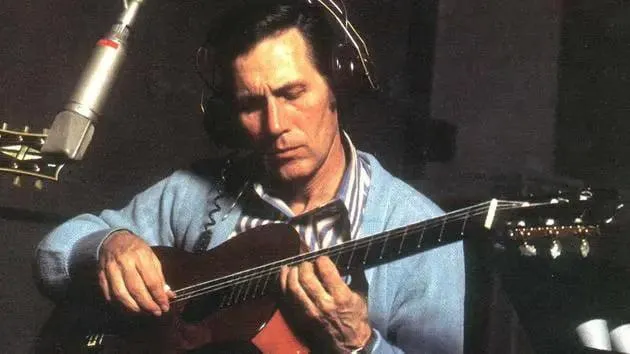
Surnommé « Mr. Guitar », Chet Atkins est l'instrumentiste soliste le plus enregistré de l'histoire de la musique. Son jeu de picking caractéristique s'inspire de Merle Travis, avec pour autres influences majeures Django Reinhardt, George Barnes, Les Paul et, plus tard, Jerry Reed. Ce jeu de picking et cette musicalité si reconnaissables lui ont valu des admirateurs au sein de la scène country et bien au-delà, aux États-Unis comme à l'international. Comme musicien de studio, son jeu a enrichi les disques d'Elvis Presley, Kitty Wells, The Everly Brothers, Hank Williams et des dizaines d'autres légendes de Nashville. Son style a fini par influencer de grands noms de la pop tels que Mark Knopfler, Duane Eddy, George Harrison, The Ventures, George Benson et Eddie Cochran, ainsi que des milliers de guitaristes country. Il a remporté neuf CMA Awards de Musician of the Year, quatre distinctions au sondage jazz de Playboy et treize Grammys. Avec plus de 35 millions d'exemplaires vendus de ses plus de 75 albums originaux, Atkins a également reçu le Grammy Lifetime Achievement Award. Il a contribué à créer le Nashville sound, un style de musique country qui devait presque autant à la pop qu'aux honky tonks — et sans lui, la country n'aurait peut-être jamais fait son entrée dans les charts pop dans les années 50 et 60. Apprends du maître : il te suffit de cliquer sur l'un des cours de cette page ! read more