



Conseils de travail

Lesson time: (7min 9sec)
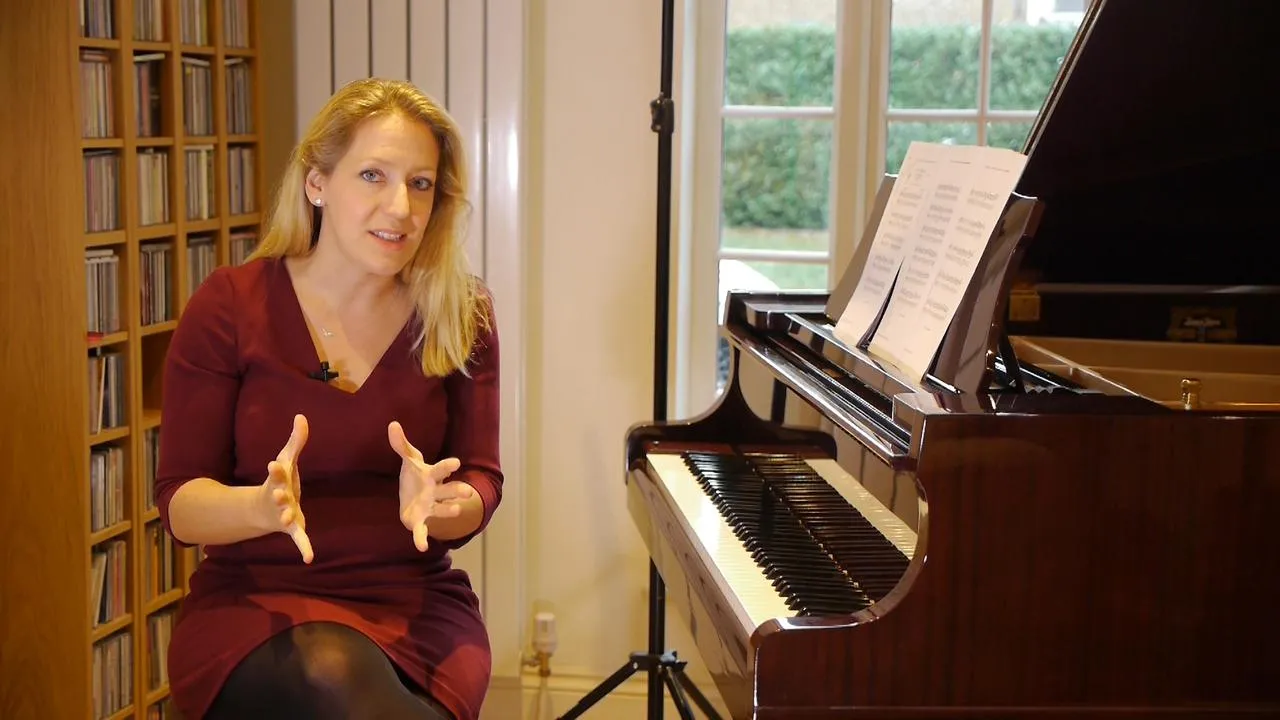
Annabel Thwaite partage une approche pratique en trois étapes pour travailler n'importe quel morceau - de la première lecture au travail technique ciblé sur de petits fragments.
Course preview
This lesson is part of the course Apprends les classiques favoris au piano
Watch a preview of the full course below.
Lesson transcript:
Practicing for a Performance
There are several ways that you can practice for a performance, and I guess the easiest way is to break it down into three steps or stages.
Stage 1: Initial Engagement
-
Choosing a Piece:
- Look at it for the first time and examine the whole structure.
- Listen to a recording or view a performance of it.
-
Methodical Review:
- Go through the piece, focusing on fingering.
- Note which passages are challenging.
-
Break It Down:
- Examine the piece by looking at the left hand, right hand, and the entire structure.
Stage 2: Detailed Technical Work
When you get to the real nitty-gritty work, keep these points in mind:
-
Self-Teaching:
- Remember, you are the best teacher for yourself.
- Identify problems like a doctor would, and find solutions.
-
Block Random Practice:
- Follow the saying "less is more."
- Focus on small snippets (e.g., two bars) for 2 minutes to target specific issues.
-
Techniques for Improvement:
-
Slow Practice:
- It's not just about slowing down; it's about your brain registering what's happening.
- For example, when practicing Bach's "Jesu, Joy of Man's Desiring," slow it down and focus on finger placement, hand position, and harmonies.
-
Reverse Techniques:
- Try playing staccato where legato is required to enhance finger agility and flow.
-
-
Posture Awareness:
- Maintain good posture; avoid raising shoulders or curling towards the piano.
- Be aware of unnecessary tension in your body which can hinder fast or loud playing.
Stage 3: Performance Practice
-
Integration:
- By this point, it feels like the piece is all in your fingers.
-
Practice Performing:
- Use your pets, neighbors, family, or an imaginary audience for practice.
- A mobile phone or recording device can serve as a good substitute audience. Record, listen back, and assess your performance for clarity and pacing.
-
Self-Awareness During Performance:
- Just like in driving, anticipate trouble areas (e.g., "black spots" of traffic).
- Avoiding a passage isn't the goal; instead, anticipate it and work on it.
Conclusion: The Why Behind Your Practice
Always revisit why you chose that piece:
-
Musical Engagement:
- You should love the sound and mood of the piece.
-
Concentration:
- Avoid going through the motions; keep your brain engaged.
Final Advice
- Practice in smaller increments but more often.
- Enjoy the process of your practice!
About the instructor
Reconnue comme l'une des pianistes les plus polyvalentes et charismatiques de Grande-Bretagne, Annabel Thwaite mène une carrière variée de soliste, de chambriste, d'artiste de studio, de pédagogue et d'examinatrice, et a remporté tous les grands prix d'accompagnement, dont les prestigieux Kathleen Ferrier, Gold Medal et Richard Tauber Piano Prizes. Elle a collaboré avec des artistes de renom tels que Roberto Alagna, Bryn Terfel, David Kempster et "Only Men Aloud!" Annabel a enregistré pour Universal records avec le "Scottish Tenor", dont l'album a été nommé aux Classical Brit Award et passe régulièrement sur Classic FM. Deux fois accompagnatrice du Festival of Welsh Male choirs, ses concerts au Royal Albert Hall ont été enregistrés par Sain et diffusés sur S4C. Elle est aussi pianiste de séance pour le cinéma, ayant enregistré à Abbey Road la musique du film "Awake", de la série de la BBC sur Jane Austen "Emma", de "The Secret Diaries of Miss Anne Lister" et, plus récemment, elle est apparue à la fois dans Blue Peter et dans "The Rob Brydon Show". "...aidée sans doute par les accompagnements de piano manifestement brillants d'Annabel Thwaite... un vrai plaisir." Dans ses cours MusicGurus — Learn Christmas Classics on Piano, Learn Classical Favourites on Piano et Growing Chamber Groups and Small Ensembles — Annabel partage la musicalité qui sous-tend cette carrière polyvalente. Tu apprendras à faire vivre au piano des pièces de Noël et classiques bien-aimées, à développer ton toucher et ton phrasé et, forte de son expérience primée d'accompagnatrice, à découvrir comment écouter, mener et jouer ensemble en faisant de la musique avec d'autres musiciens au sein de groupes de chambre et de petits ensembles. read more