



Ornements et rythmes

Avec
Annabel ThwaiteAnnabel Thwaite enseigne les ornements et le rythme baroque régulier qui donnent son caractère à 'Air on a G String'.
Le contenu du cours
21 leçons (0h 57min) · 1 gratuites
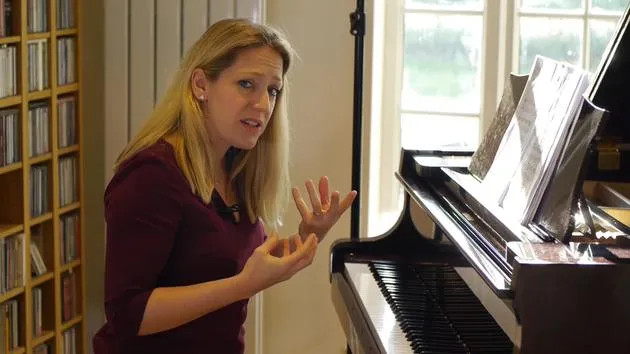
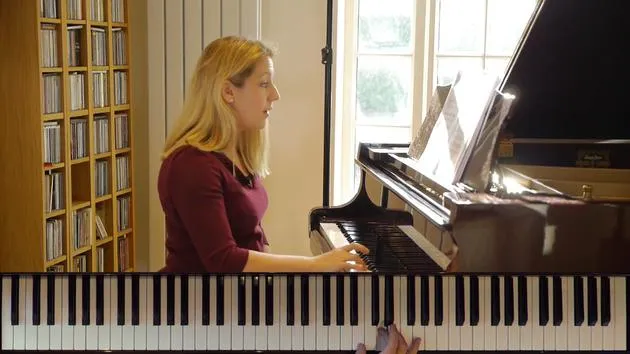
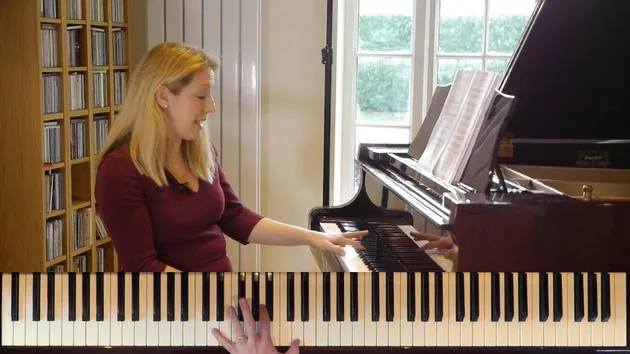
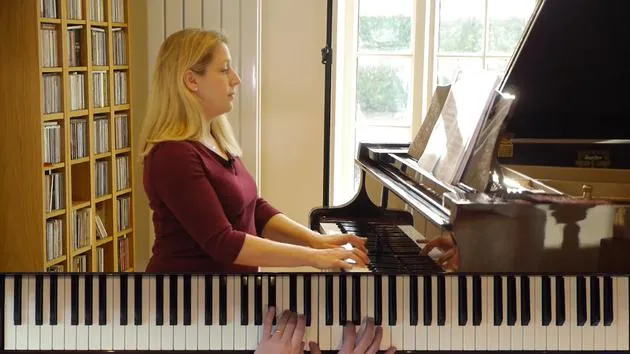
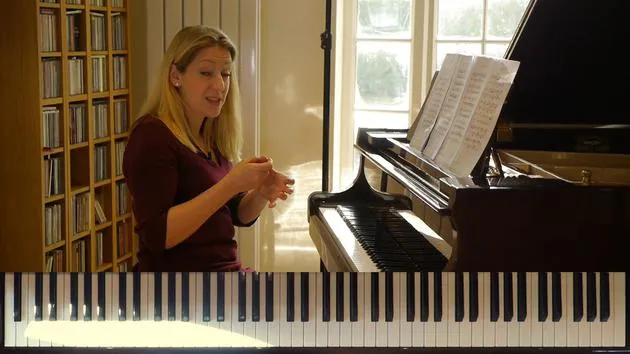
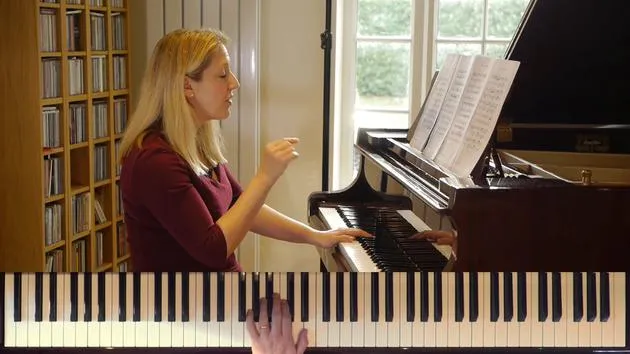
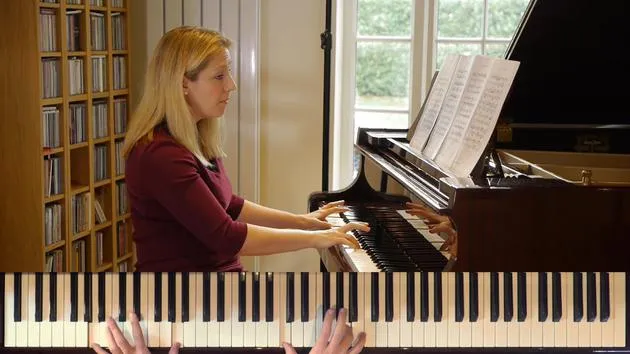
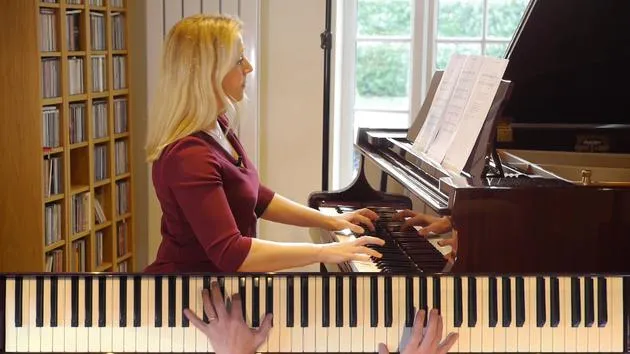
Transcription de la leçon
Understanding Rhythm and Ornaments in Music
Let's look at rhythm.
Now, rhythm is really important here because we don't want much rubato. This was very Baroque, the Baroque era was quite fixed, specifically the French Baroque. We need:
- Real pulse
- A steady pulse
- Correct rhythm
However, we have all these demisemiquaver notes, tied notes, and for somebody who first looks at this, they might think, "Oh, look at all those weird, complicated rhythms."
Analyzing Bar Six
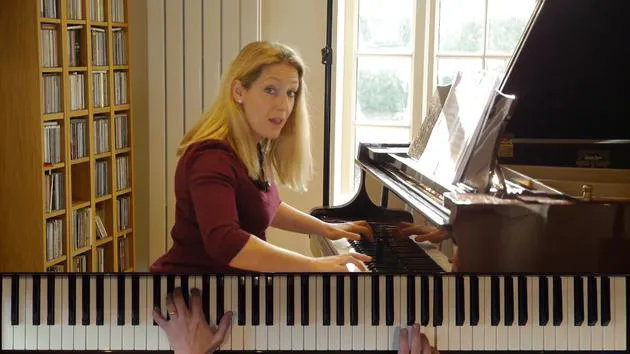
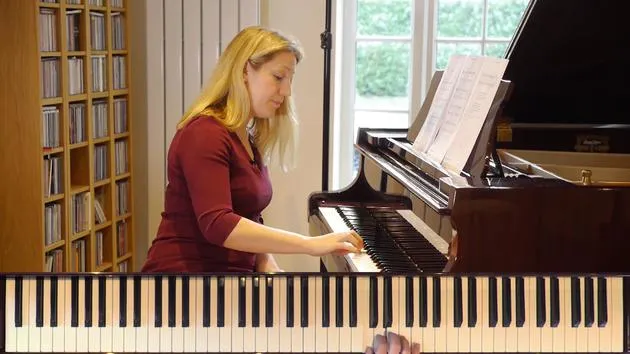
For example, look at bar six. It is actually quite simple if you structure it according to the quaver beats in the left hand. Sometimes I even put lines on to line them up to know where each right-hand melodic note fits with the accompaniment.
So looking at bar six, it's:
- 1 and
- 2 and
- 3 and
- 4
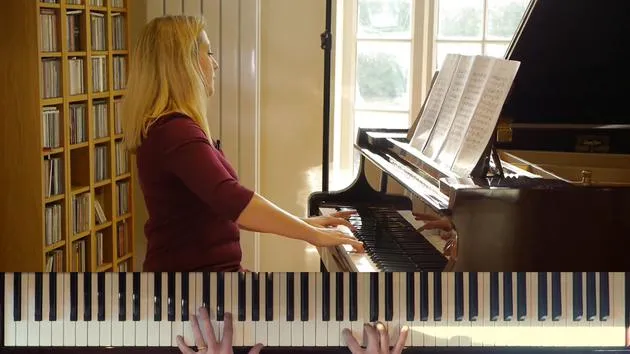
It's always a structure, and those rhythms are not as free as you think. I believe that they should be very, very exact and precise. Then the whole thing will flow much more organically.
Exploring Ornaments
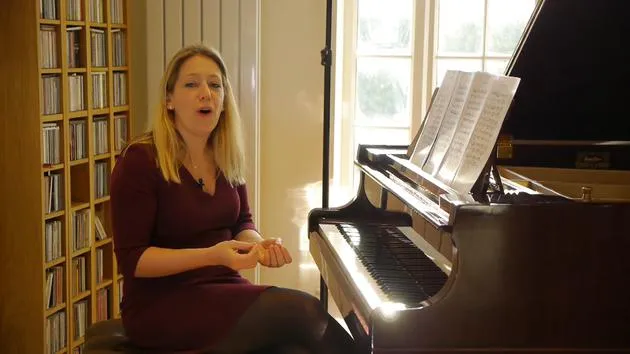
Let's have a look at ornaments. The word is there as a decoration. It literally is there as a little sort of spontaneous or semi-spontaneous idea of the composer.
- To ornate
- To decorate
- To flourish a little phrase just a little further
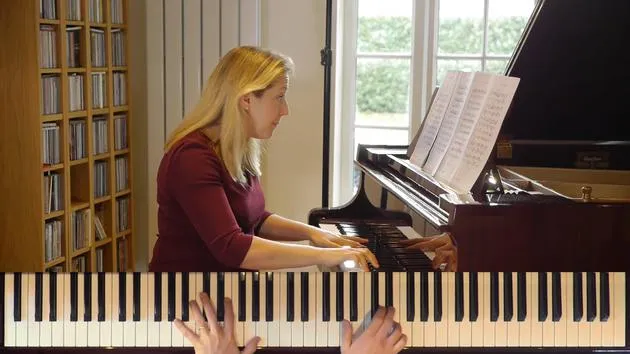
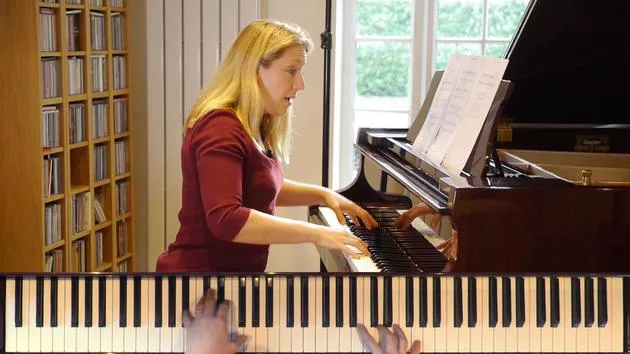
For example, in bar two, the composer could have just written a straightforward phrase, but he adds that little extra spice by incorporating a very brief acciaccatura. My Italian isn't as fluent as I'd like!
You want to have it very free. It needs to be:
- Very buoyant
- Nothing is attacked
It's just literally as if you were cooking and you were just sprinkling a few more garlic granules into something to give it a bit more flavor. That's all it is.
Some of the rhythms as well are ornaments themselves, but they're sort of written out ornaments. For example, in bar 13 we have a rhythm that serves this purpose.
Final Thoughts on Ornaments
In effect, the composer has included a few more notes to add a little bit of flavor.
Lastly, in the final bar, there's one that is written as quavers. However, I think that can be very free, imagining what kind of ritenuto (slowing down) you are doing there.
Whatever it is, remember:
- It's not very present
- The ornament is just a little idea
You always want to have this idea that it's improvised right there on the spot.
21 leçons
0h 57m de leçons vidéo structurées
Fonctions vidéo avancées
Ralentissez, bouclez un passage, suivez la partition
Mobile, tablette et ordinateur
Pratiquez où vous voulez
Satisfaction garantie à 100 %
Garantie remboursement 30 jours
Rencontrez votre guru
Rencontrez votre guru
Reconnue comme l'une des pianistes les plus polyvalentes et charismatiques de Grande-Bretagne, Annabel Thwaite mène une carrière variée de soliste, de chambriste, d'artiste de studio, de pédagogue et d'examinatrice, et a remporté tous les grands prix d'accompagnement, dont les prestigieux Kathleen Ferrier, Gold Medal et Richard Tauber Piano Prizes. Elle a collaboré avec des artistes de renom tels que Roberto Alagna, Bryn Terfel, David Kempster et "Only Men Aloud!"
Annabel a enregistré pour Universal records avec le "Scottish Tenor", dont l'album a été nommé aux Classical Brit Award et passe régulièrement sur Classic FM. Deux fois accompagnatrice du Festival of Welsh Male choirs, ses concerts au Royal Albert Hall ont été enregistrés par Sain et diffusés sur S4C. Elle est aussi pianiste de séance pour le cinéma, ayant enregistré à Abbey Road la musique du film "Awake", de la série de la BBC sur Jane Austen "Emma", de "The Secret Diaries of Miss Anne Lister" et, plus récemment, elle est apparue à la fois dans Blue Peter et dans "The Rob Brydon Show".
"...aidée sans doute par les accompagnements de piano manifestement brillants d'Annabel Thwaite... un vrai plaisir."
Dans ses cours MusicGurus — Learn Christmas Classics on Piano, Learn Classical Favourites on Piano et Growing Chamber Groups and Small Ensembles — Annabel partage la musicalité qui sous-tend cette carrière polyvalente. Tu apprendras à faire vivre au piano des pièces de Noël et classiques bien-aimées, à développer ton toucher et ton phrasé et, forte de son expérience primée d'accompagnatrice, à découvrir comment écouter, mener et jouer ensemble en faisant de la musique avec d'autres musiciens au sein de groupes de chambre et de petits ensembles.







