



The White Pass Trail (leçon)

Avec
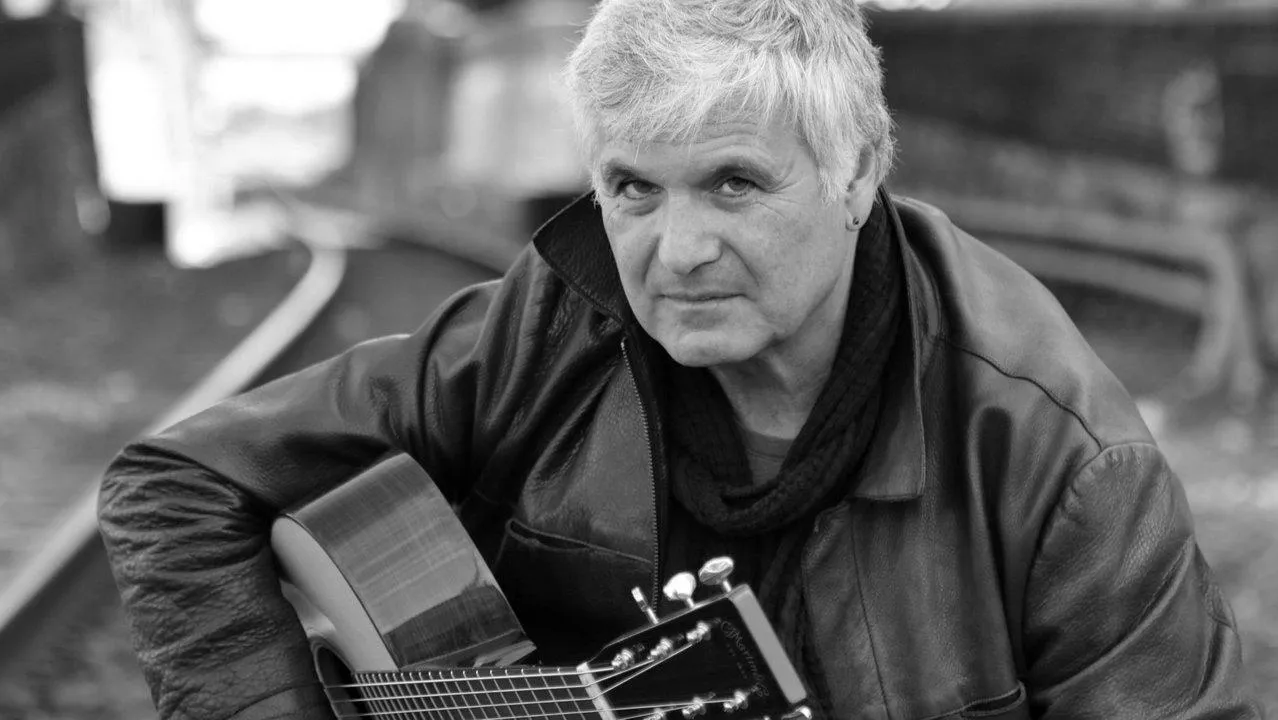
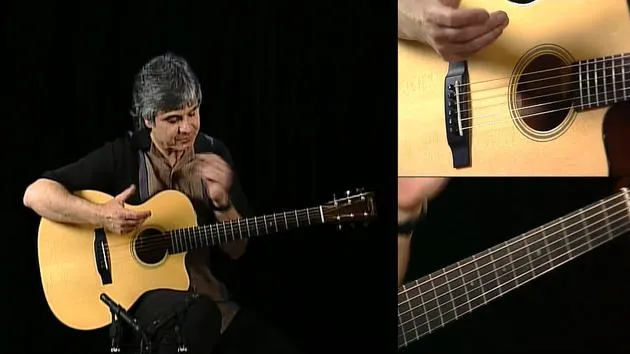
Laurence JuberLaurence Juber enseigne son morceau de guitare acoustique The White Pass Trail, en travaillant son motif celtique ondulant, les hammer-ons et pull-offs, et un grattage en frailing.
Le contenu du cours
12 leçons (1h 22min) · 1 gratuites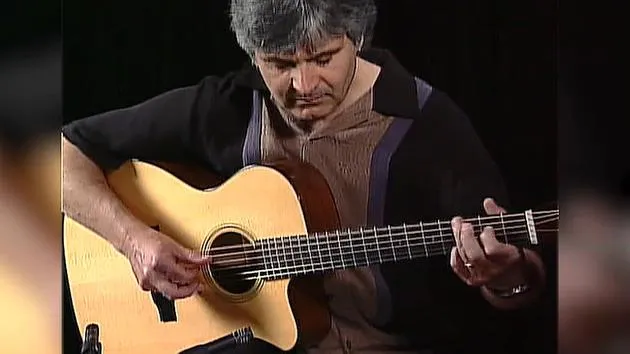
01. Cobalt Blue (interprétation)
3:20
02. Cobalt Blue (leçon)
Leçon gratuite10:18
03. The White Pass Trail (interprétation)
4:58
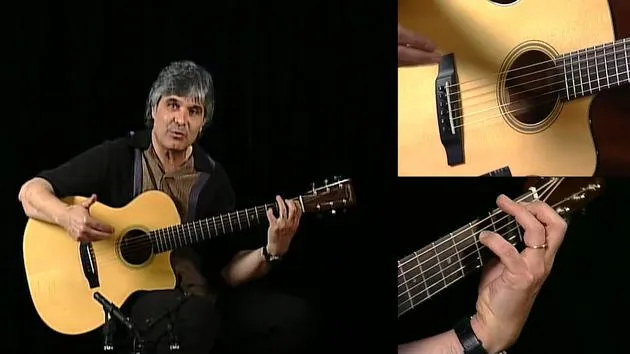
04. The White Pass Trail (leçon)
Tu es ici10:17
05. Breaking Point (performance)
3:28
06. Breaking Point (leçon)
8:35
07. Buffalo Nickel (interprétation)
3:41
08. Buffalo Nickel (cours)
10:29
09. Catch (interprétation)
3:31
10. Catch (leçon)
10:38
11. The 555 (interprétation)
2:49
12. The 5.55 (leçon)
10:44
Transcription de la leçon
White Pass Trail Lesson
Introduction
So here we go with the White Pass Trail, which starts with a kind of a rolling Celtic type pattern.
Techniques and Patterns
Left Hand Momentum
- There is a lot of hammers and pulls.
- Feel the momentum of the piece from what the left hand is doing.
- The accents come from some of these hammers.
Section Breakdown
- B Flat Bass Note: The same pattern comes over a B flat bass note and then a C.
- Low F Bend: Just a little bit of a bend on that low F.
Frailing Pattern
- Moves into a frailing pattern.
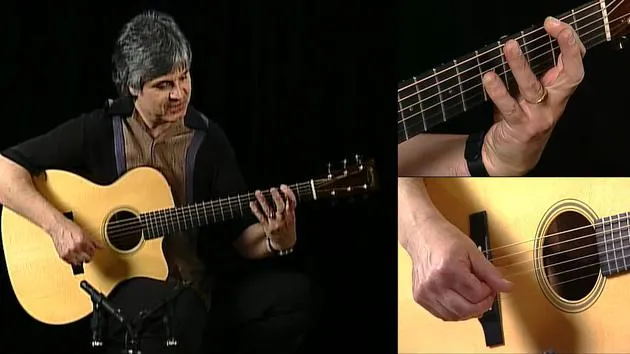
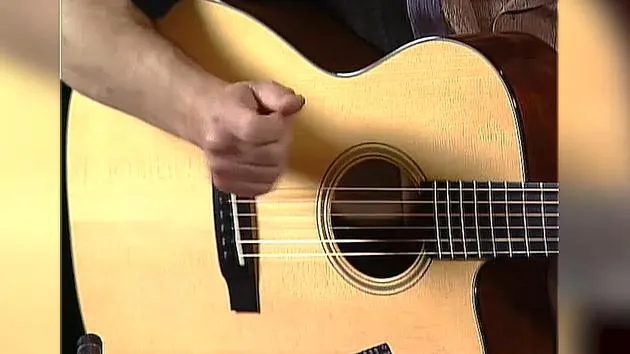
- Lightly brush the strings, hitting the bass note, and then a downward strum with the back of the second fingernail.
- A bit of an up and down strumming motion is occurring.
Expanding Melody and Strum
- The melody expands while keeping the frailing going.
- A strum comes up to signal the end of the first section of the tune.
B Section
Introduction to the B Section
- The B section, which follows, gets a little tricky.
- It has a strum happening on the C chord followed by an octave pattern.
Octave Pattern
- Hammering, hitting the octave above, and then pulling off.
- Here's how it goes: "I'll do that slowly like that."
Moving Up the Neck
- Moves up the neck. This section is pretty tricky.
- Hammering
- Sliding
- Sliding back
- Pulling off
Repetition and Power Chords
- The whole pattern repeats.
- Like in "Cobalt Blue," strum using little power chords.
- Strumming the bottom three strings with the back of the first finger.
Distant Train Impression
Creating the Sound
- A whole episode in this piece gives the impression of a distant train.
- I've got a bend with a little bit of vibrato.
- "I try and take my time on that and just let it die out naturally."
- After that, I slide up to a unison off the open string.
Unique Lick
- The particular lick is done a little differently every time, embodying a "bluesy, slightly Celtic" feel.
Percussive Section
Technique Overview
- In this section, I hit the bass note with my index finger, followed by a finger slap of the 12th fret to bring out the harmonics.
- Using hammers and pulls to punctuate it.
Keeping the Rhythm
- Slides up in the bass, keeping the rhythm going, while also hammering.
- Using the backs of the fingernails to get little strums.
Aggressive Section
Building Intensity
- This is where it gets aggressive; do a hit here and a hit here.
- Just strumming and pulling up, leading to a busy hammer-pull pattern.
- The last note is played by strumming down for a muted pattern.
Returning to the Pattern
- Return to this pattern and repeat, which brings back the strum.
Final Licks
Closing the Lesson
- Slowly slide on the second and fifth strings from the 10th fret to the 12th fret, picking strings four and one open.
- The final lick involves raking across the strings using my thumb, followed by some power chords back to the original riff.
Harmonic Analysis
Simplicity and Complexity
- Looking at the harmonic point of view, there's not a lot of complexity.
- We have this C shape in DADGAD since everything on the first two strings and the bottom string is tuned a whole step lower.
Impressionistic Quality
- The melody evolves by playing the strings across the chord.
- The B flat bass note with a G, A, and D on top gives a rich B flat major 7 with an added 6.
- Some interesting textures arise from using open strings to generate extra overtones.
Conclusion
And there's the White Pass Trail with a nice strum at the end!
12 leçons
1h 22m de leçons vidéo structurées
Fonctions vidéo avancées
Ralentissez, bouclez un passage, suivez la partition
Mobile, tablette et ordinateur
Pratiquez où vous voulez
Satisfaction garantie à 100 %
Garantie remboursement 30 jours
Rencontrez votre guru
Rencontrez votre guru
Laurence Juber s'est d'abord fait connaître comme guitariste principal des Wings, le groupe de Paul McCartney. Depuis, il a bâti une carrière de guitariste fingerstyle, compositeur et arrangeur, travaillant essentiellement en accordage DADGAD, ce qui lui a valu le surnom de 'the Duke of DADGAD'.
Élu Guitariste de l'année par les lecteurs de Fingerstyle Guitar Magazine et cité parmi les meilleurs guitaristes par le magazine Acoustic Guitar, il affiche aussi une longue liste d'albums solo et de tournées à travers le monde.
Dans ses cours, il enseigne sa technique fingerstyle et l'accordage DADGAD qui l'a rendu célèbre, comment agencer mélodie, harmonie et basse pour la guitare solo, et les morceaux - comme sa pièce phare 'Wooden Horses' - qui réunissent le tout.







