



The Crow's Nest
Avec
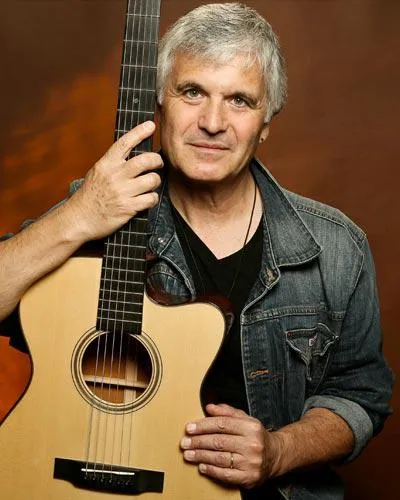
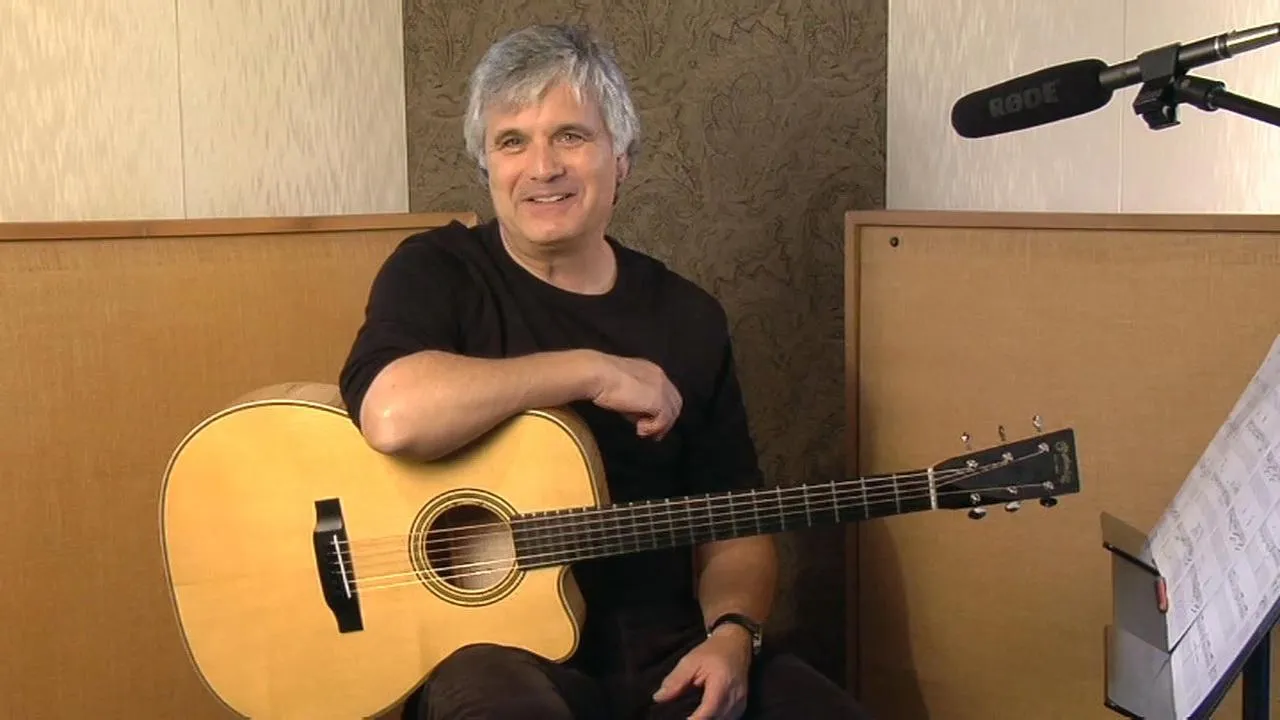
Laurence JuberLaurence Juber détaille les techniques derrière son morceau fingerstyle The Crow's Nest : le pattern de picking en mouvement perpétuel et son approche du strumming à l'ongle, à la guitare acoustique.
Le contenu du cours
14 leçons (1h 33min) · 1 gratuites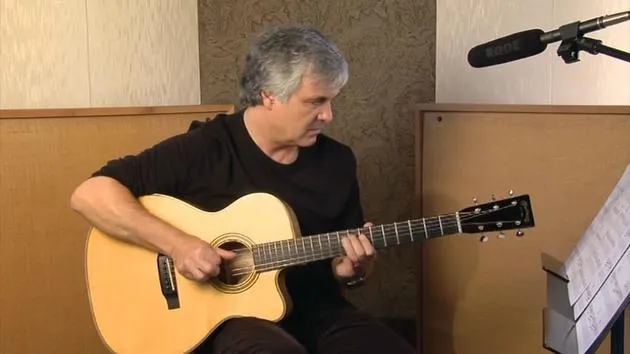
01. Enough Is Never Enough
8:12
02. Guitar Noir
5:34
03. The Crow's Nest
Tu es ici5:15
04. Maple Avenue Strut
9:05
05. The Ornament Waltz
10:38
06. Rufus
7:19
07. Highway 17
8:38
08. Being Here With You
4:51
09. Wooden Horses
7:42
10. Double Agent
7:01
11. Shebeg & Shemore
4:44
12. Around The Block
6:39
13. Portobello Road
6:28
14. Dernières réflexions
1:03
Transcription de la leçon
Lesson Overview: "Crow's Nest"
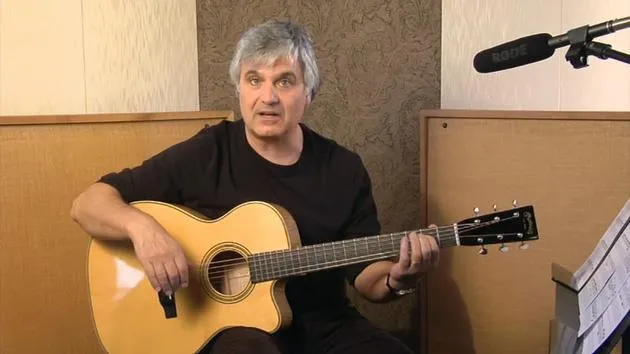
So next up on the album is a tune called Crow's Nest. For licensing reasons, I'm not able to give you an in-depth breakdown of the tune, but I will discuss some of the techniques involved.
Perpetual Motion Energy
- This tune has a kind of perpetual motion energy to it; it doesn't really stop very often.
- There's a basic pattern:
- You're picking out a melody with the thumb.
- Then, with the index and middle fingers, you're carrying the extra sixteenth notes that keep the momentum going.
For example, on a scale, that would be the approach.
Strumming Techniques
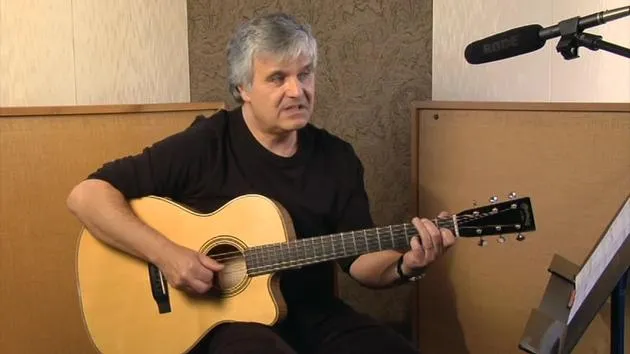
- There are places with strums and melodies that are harmonized, let's say here in thirds.
- When I strum, I use the backs of my fingernails for both up and down strokes:
- The upstroke comes with the back of the thumb.
I don't use my fingernails for much else, but I do for strumming.
Analyzing Chord Sequences
I recommend looking closely at some of the chord sequences because:
- Although there's a lot that really sits on a kind of drone, there are other spots, for example, the sequence starting at measure 17, where I have some progressions that follow chord sequences without fully articulating a chord.
Notable Measures:
- In measures 20 and 21, it transitions from 6/8 to 5/8 and then back to 4/4:
- 6/8: 1, 2, 3, 4, 5, 6
- 5/8: 1, 2, 3, 4, 5
- 4/4: 1, 2, 3
- It's tricky because you could think of it almost as 12/16:
- 1, 2, 3, 4, 5, 6, 7, 8, 9, 10, 11, 12
But I'm counting it instead as 1, 2, 3, breaking it down to half speed. You'll figure that out from the recording. Just observe what's going on with the harmonies.
Key Progressions
In measure 25, take note of these chord transitions:
- A minor to G over B
- G minor to D over A
- One of my favorite progressions is a diminished chord, in this case, a G sharp diminished in measure 26, transitioning to an A7B9 to D.
Pay attention to the underlying chords.
High Neck Technique
Another point of interest is in the bridge section, bottom system, measure 51:
- I'm moving to a G chord but playing it high up the neck.
- This G here on the fifth string is the same note as the open G string.
- What you get is a G but broken up with this perpetual motion concept.
Conclusion
Well, good luck with that one! It was originally written for guitar and string quartet, and I've adapted it for solo guitar. Pay attention to what's on the recording.
14 leçons
1h 33m de leçons vidéo structurées
Fonctions vidéo avancées
Ralentissez, bouclez un passage, suivez la partition
Mobile, tablette et ordinateur
Pratiquez où vous voulez
Satisfaction garantie à 100 %
Garantie remboursement 30 jours
Rencontrez votre guru
Rencontrez votre guru
Laurence Juber s'est d'abord fait connaître comme guitariste principal des Wings, le groupe de Paul McCartney. Depuis, il a bâti une carrière de guitariste fingerstyle, compositeur et arrangeur, travaillant essentiellement en accordage DADGAD, ce qui lui a valu le surnom de 'the Duke of DADGAD'.
Élu Guitariste de l'année par les lecteurs de Fingerstyle Guitar Magazine et cité parmi les meilleurs guitaristes par le magazine Acoustic Guitar, il affiche aussi une longue liste d'albums solo et de tournées à travers le monde.
Dans ses cours, il enseigne sa technique fingerstyle et l'accordage DADGAD qui l'a rendu célèbre, comment agencer mélodie, harmonie et basse pour la guitare solo, et les morceaux - comme sa pièce phare 'Wooden Horses' - qui réunissent le tout.







