



Première partie
Avec
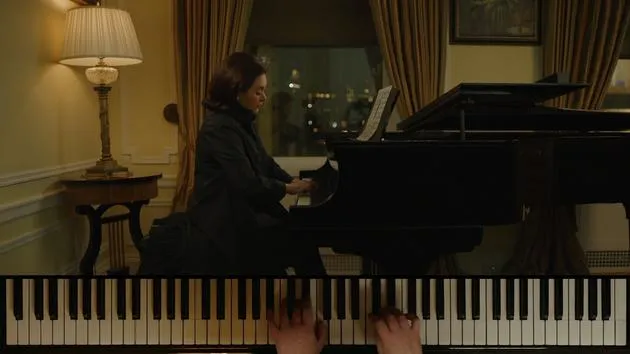
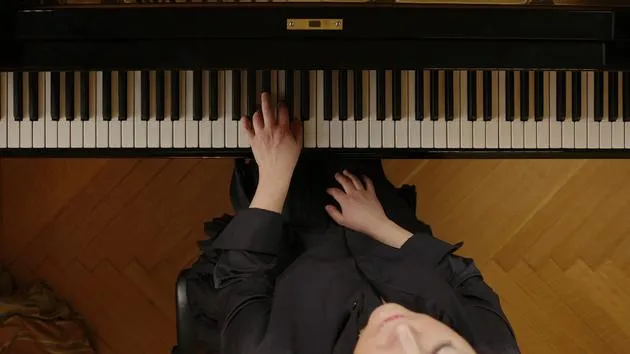
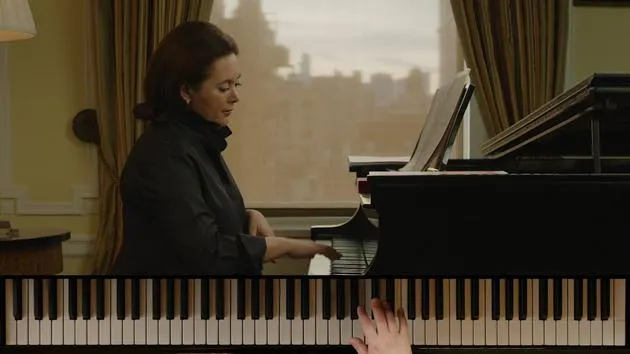
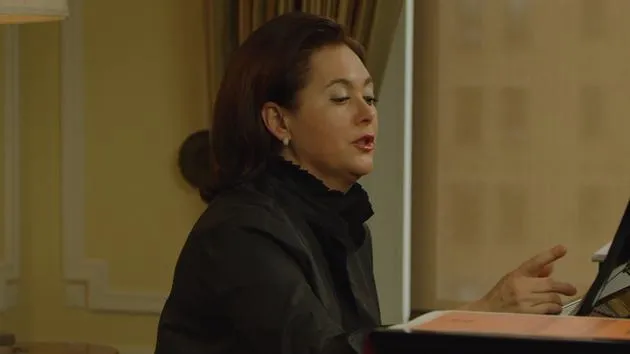
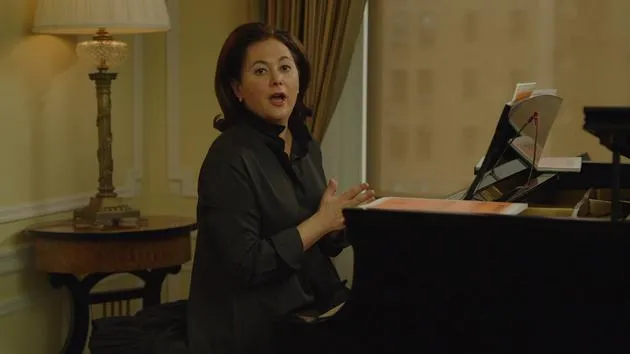
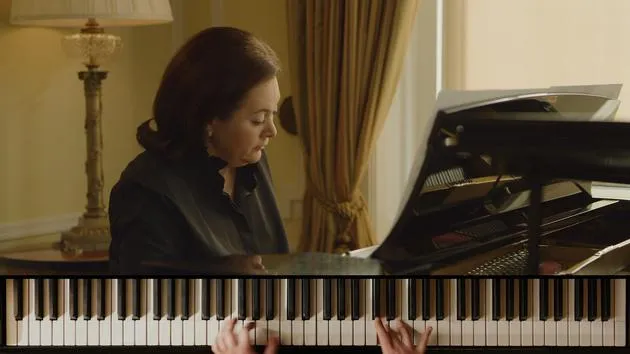
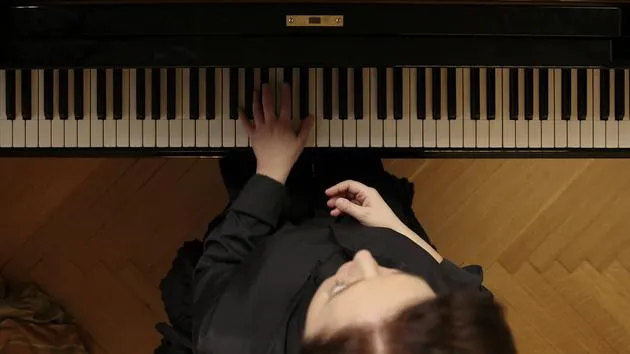
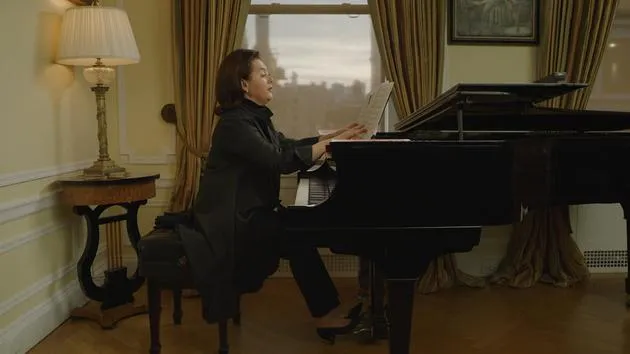
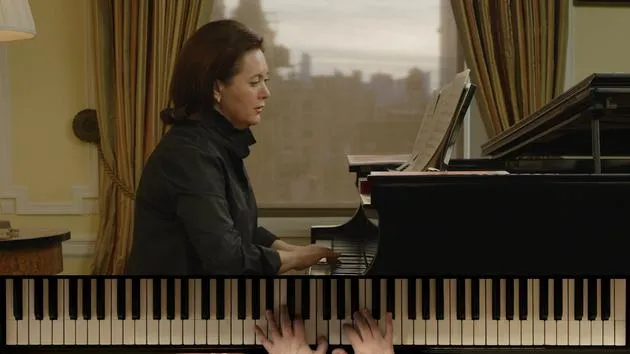
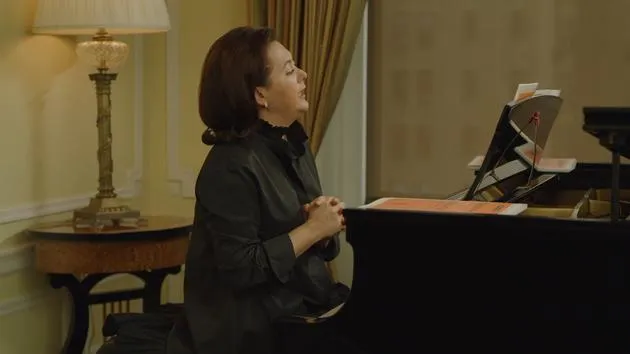
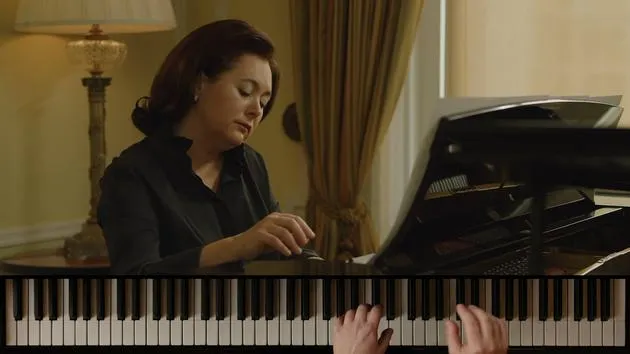
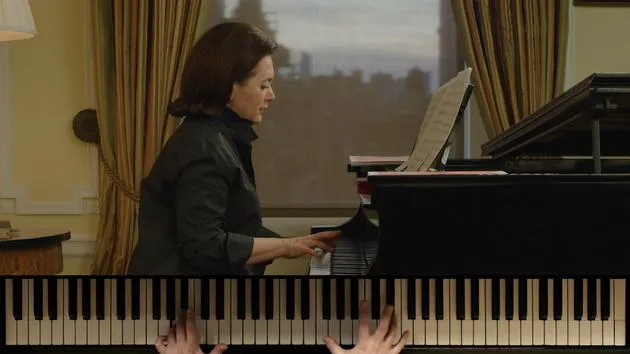
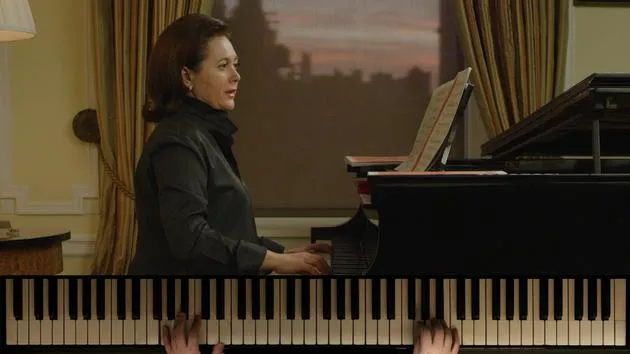
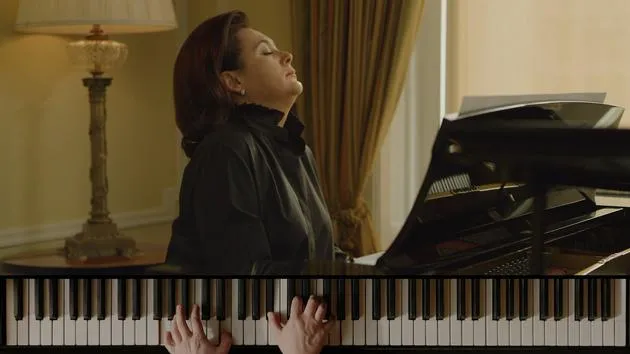
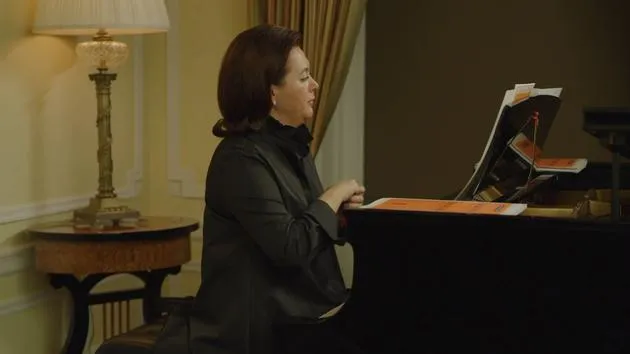
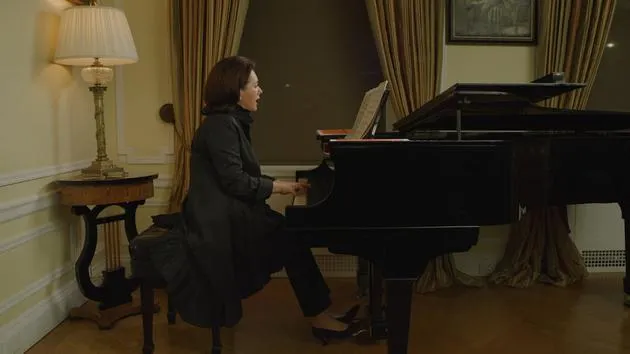
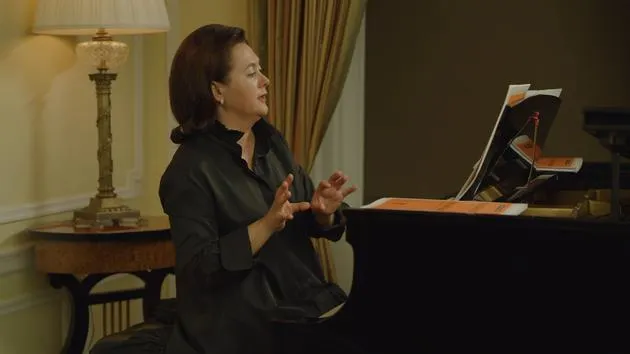
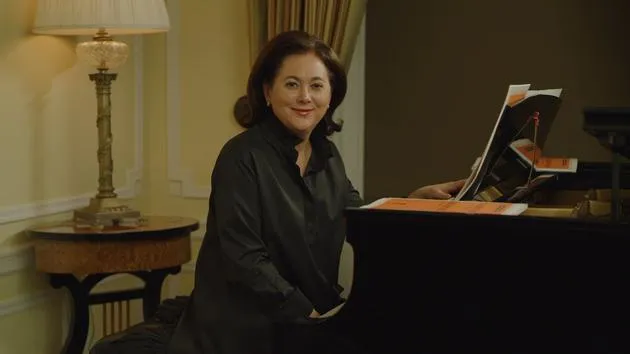
Julia ZilberquitJulia Zilberquit enseigne la première partie d'April: Snowdrop de Tchaïkovski, en travaillant les mains séparément et en montrant comment la main gauche porte le crescendo et le diminuendo.
Le contenu du cours
27 leçons (1h 57min) · 1 gratuites
Transcription de la leçon
Music Lesson
Introduction
I would start also, of course, with the left hand. You know, you could probably see I love doing separate hands. I think it brings a great perspective.
Importance of the Left Hand
There's one very important issue here with the left hand. As you know, the piano is a percussion instrument. Once we hit the sound, all it does is become softer. We cannot make the same crescendo on the sound as a voice can, or on a violin, cello, or wind instrument.
Supporting the Crescendo
So, what we can do is support the crescendo in a lonely right hand by having the left hand really provide this crescendo.
For example:
- We start with piano in the left hand.
- Then we see a crescendo in measures 3, 4, 5 and then diminuendo.
Throughout the piece, the left hand will be the most important part in creating that crescendo and diminuendo.
Technique for Left Hand
Now, regarding the repeating chords in the left hand:
- Again, the wrist is free and the elbow is out.
- We need to ensure that we hear all the notes, whether it's three or four.
The trick here is:
- Keep your fingers on the keyboard.
I'll show slowly. So you see, I'm keeping my fingers on the keyboard. As the text goes on, starting from measure nine when we have the accompaniment in both hands, I suggest practicing it separately, the same way we do with the right hand. This will be very helpful when you put the hands together.
Right Hand Focus
Now, when it comes to the right hand, Tchaikovsky puts in vocal slurs, which, of course, we're not going to be doing. However, we need a very long phrase.
Practice Strategy
What I like to do is ask my students to play the right hand for me with just one chord from the left hand. This could be:
- One thought,
- Second thought,
- Third thought.
As a result, it becomes one long phrase.
Emphasizing Melody
What we really need to accomplish here is to have a long melody that goes throughout eight measures, arriving at a certain point. Things become harder because, as I told you, Tchaikovsky loves his polyphony.
Clear Melody and Accompaniment
He wants to differentiate between parts. For example, let's say that was a soprano violin. Now, there's a cello or bass baritone turn. I always ask everyone to play that melody the way it's written, meaning between the hands, so you know exactly who is playing what.
This is a bit challenging for beginners, and we really need a clear melody with a clear accompaniment.
Musical Dynamics
There is also a perfect case of Tchaikovsky's beloved question and answer. He states, "pi? forte," meaning a little bit more, and "answer less." He then repeats the same thought and ends it in different ways.
Importance of Transition
This is very important for the future. When he comes back in the third part, he does not repeat the inner or middle voice melody twice; instead, he goes straight to the second ending.
It's crucial to keep this in mind, as it will make the third section shorter. Except, he writes a conclusion or a quarter part of the third movement, actually varying and making a variation on that very end.
Putting It All Together
Once you put together the first part, which is not very easy, you really need to capture that spring feeling, the feeling of the wind, of crescendos and diminuendos. Always ensure that you can hear your melody.
The Performer's Role
Now, there's a very simple rule:
- If the performer hears the melody, the audience will hear it.
- If you can't hear it clearly, nobody else will hear it.
Marking Tempo
I would also like to draw your attention to the composer's tempo marking: Allegretto con moto e poco rubato, meaning:
- Allegretto, not too fast, yet one of the faster tempos.
- Con moto means with movement.
We should make sure it moves.
Time Signature and Feel
Plus, the composer could have used three-quarter time but instead chose six-eighths. This always indicates it's a bit faster tempo, with molto rubato. He also mentions dolce, or gentle, reflecting the gentle idea of spring.
Conclusion: Mastering Polyphony
It's quite hard to master all these aspects together, especially when the polyphony starts. I love to compare Tchaikovsky's style of polyphony to a sort of 3D or three-dimensional printer.
We see things in different dimensions this way. When the melody appears, we must hear it between the voices, along with the accompaniment that is either on top or below.
So, it's a very interesting approach!
27 leçons
1h 57m de leçons vidéo structurées
Fonctions vidéo avancées
Ralentissez, bouclez un passage, suivez la partition
Mobile, tablette et ordinateur
Pratiquez où vous voulez
Satisfaction garantie à 100 %
Garantie remboursement 30 jours
Rencontrez votre guru
Rencontrez votre guru
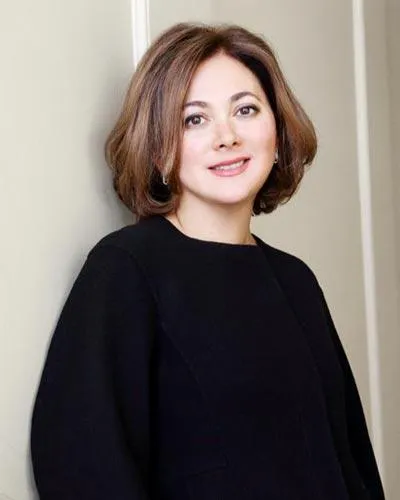
Née en Russie et américaine, la pianiste Julia Zilberquit a recueilli les éloges de la critique en tant que récitaliste, chambriste et artiste de disque. Elle a été saluée par The New York Times comme "une soliste exceptionnelle" après son interprétation au Carnegie Hall du poème symphonique Les Djinns de Cesar Franck pour piano et orchestre avec Leon Botstein et l'American Symphony Orchestra.
En 2014, Warner Classics a publié son CD Bach: Complete Solo Keyboard Concertos. Cet enregistrement présente la création de deux Concerti Grossi de Bach-Vivaldi arrangés par Mme Zilberquit pour piano et orchestre, et a été salué comme une "interprétation somptueuse" par le prestigieux Gramophone Magazine. Son arrangement du Concertino pour 2 pianos, Op. 94 de Chostakovitch pour piano et orchestre a été créé au Carnegie Hall ; elle l'a joué dans le monde entier avec un grand succès critique et l'a enregistré avec Vladimir Spivakov et les Moscow Virtuosi. Parmi ses autres enregistrements figure un disque solo, The Mystery of Bagatelles, publié par Naxos. Le CD a été salué comme une "interprétation superbe" par The Washington Post, et décrit comme un "programme audacieux, étincelant d'une clarté inhabituelle et d'une luminescence pointilliste" dans le Piano Magazine de Londres.
Ses récitals ont eu lieu dans de grandes salles de concert, notamment le Weill Recital Hall du Carnegie Hall de New York, le 92nd Street Y et l'Alice Tully Hall du Lincoln Center. Ses engagements dans de grands festivals internationaux de musique comprennent des apparitions à Seattle, Colmar (France), Klangbogen (Vienne), les "White Nights" de Valery Gergiev (Saint-Pétersbourg), les "December Nights" de Richter (Moscou), "The Palaces of St. Petersburg", le Bard Music Festival de New York et le Penderecki Festival (Pologne).
Originaire de Moscou, Julia Zilberquit est née dans une famille de musiciens. Elle est diplômée de la Moscow Gnessin School of Music et de The Juilliard School (classe de Bella Davidovich). Elle vit à New York avec son mari, son fils et sa fille.
Dans ce cours, elle puise dans cet art pour te guider à travers quatre mouvements des "Saisons" de Tchaïkovski - Mars, Avril, Juin et Octobre - afin que tu puisses toi-même façonner leur poésie et leur couleur au clavier.







